
Natural skincare has a way of making you stop and think.
What am I actually putting on my skin?
For sunscreen, that question matters even more.
Chemical formulas work, sure, but many people are stepping back from them. The problem is, going homemade isn’t always clear. Some natural recipes offer real protection.
Others barely scratch the surface.
Read on, and I’ll break down what a good natural sunscreen recipe actually needs.
Can a Homemade Sunscreen Really Protect Your Skin?
Sun protection factor (SPF) tells you how long you can stay in the sun before burning.
SPF 30 means 30 times longer than bare skin.
Simple enough.
But where DIY gets tricky is that you can’t test SPF at home.
A lab measures it under strict conditions. Your kitchen can’t do that. Even if your recipe uses the right ingredients, the actual protection level is anyone’s guess. There’s also a bigger point worth making.
Skincare moisturizes and nourishes. Sun protection blocks UV rays.
The two jobs are very different, and not every natural ingredient does both well.
What is UV Damage Before You Make Your Own Sunscreen
The sun sends out two types of rays that affect your skin.
UVA rays go deep.
They break down collagen, accelerate aging, and cause long-term damage, often without you even noticing.
UVB rays hit the surface.
They’re the ones that burn you on a hot afternoon.
Both cause real harm and need to be blocked. Over time, unprotected skin pays the price. Dark spots, fine lines, rough texture, and, in serious cases, skin cancer.
This isn’t scare talk. It’s just what repeated sun exposure does.
Knowing this makes choosing the right sunscreen, natural or not, a lot easier.
Ingredients Commonly Used in Natural Sunscreen Recipes
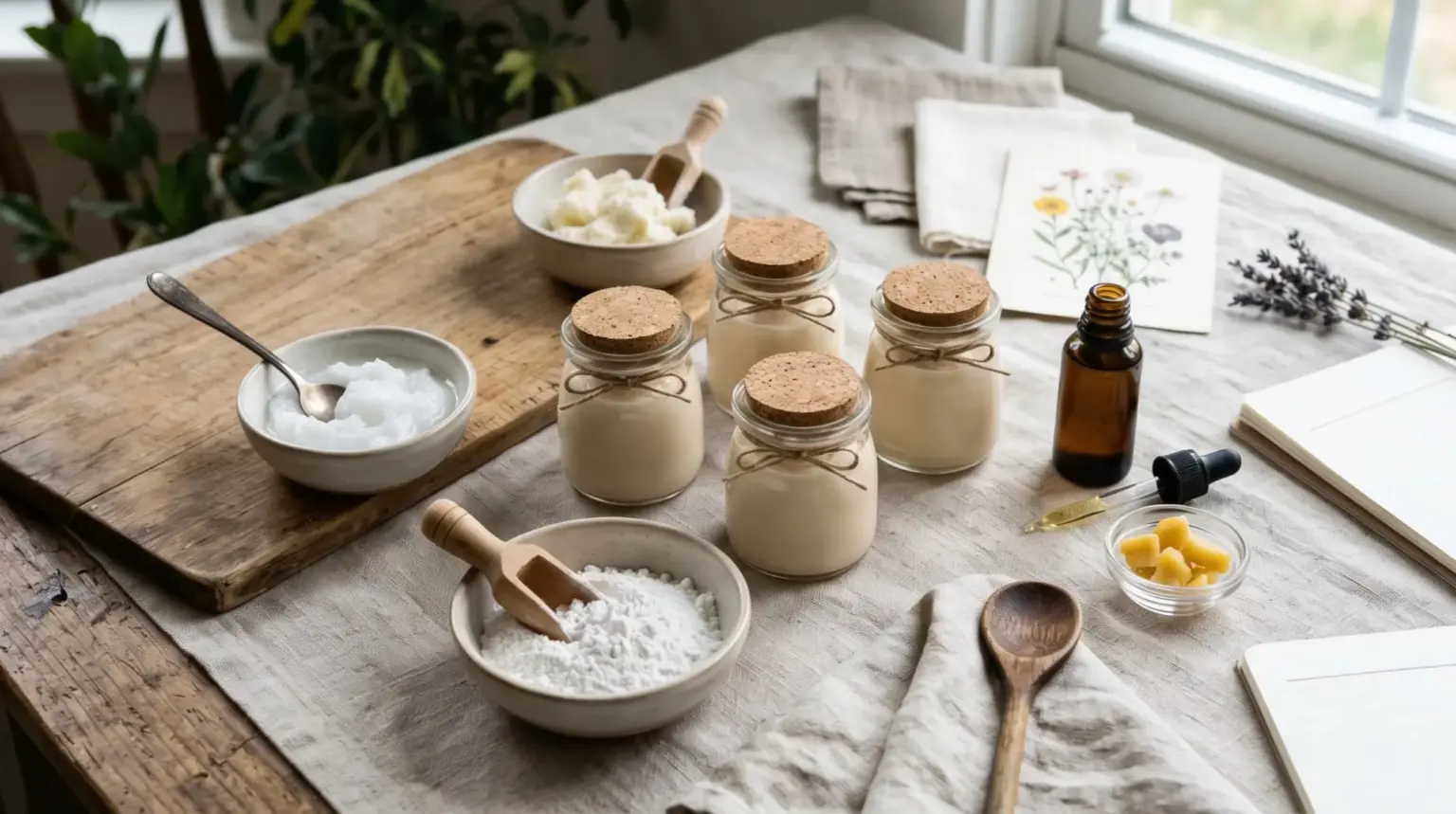
Every natural sunscreen recipe starts with a handful of key ingredients. Some protect. Some moisturize.
Here’s a clear breakdown.
Mineral-Based Protection Ingredients
| Ingredient | Role | Per 100g batch | Substitute |
|---|---|---|---|
| Zinc oxide (non-nano) | Primary UV blocker reflects both UVA and UVB rays | 15g–20g | Titanium dioxide (10–15g) |
Non-nano vs nano: Non-nano zinc oxide particles don’t absorb into the skin.
Nanoparticles are smaller and may penetrate the skin barrier. Most recipes use non-nano for safety reasons.
Oils and Butters Often Included
These ingredients improve texture and feel. They do not protect against UV rays on their own.
- Coconut oil (30g): acts as a carrier base, adds moisture. Substitute: jojoba oil.
- Shea butter (25g): thickens the formula and softens skin. Substitute: mango butter.
- Beeswax (10g): adds water resistance and holds everything together. Substitute: candelilla wax (5g).
Extras that Improve the Formula
A few simple additions can improve your natural sunscreen recipe by making it easier to apply.
- Vitamin E oil (5–10 drops): acts as a natural preservative and supports skin health. Substitute: rosehip oil.
- Arrowroot powder (5g): Reduces zinc oxide’s white cast and improves spreadability. Substitute: tapioca starch.
- Essential oils (optional, 5–10 drops): Lavender or frankincense are common for scent and skin benefits.
Skip if sensitive.
Ingredients that sound protective but aren’t reliable
| Ingredient | Common Claim | The Reality |
|---|---|---|
| Raspberry seed oil | Often said to have SPF 28–50 | Based on a misquoted study, no reliable data support this. |
| Carrot seed oil | Claimed to offer SPF 38–40 | No scientific backing. It’s a good skin oil, but not a sunscreen. |
Using these as your main protection is risky; they work best as skin-nourishing extras.
What You’ll Also Need
Getting the right tools makes the whole process much smoothe.
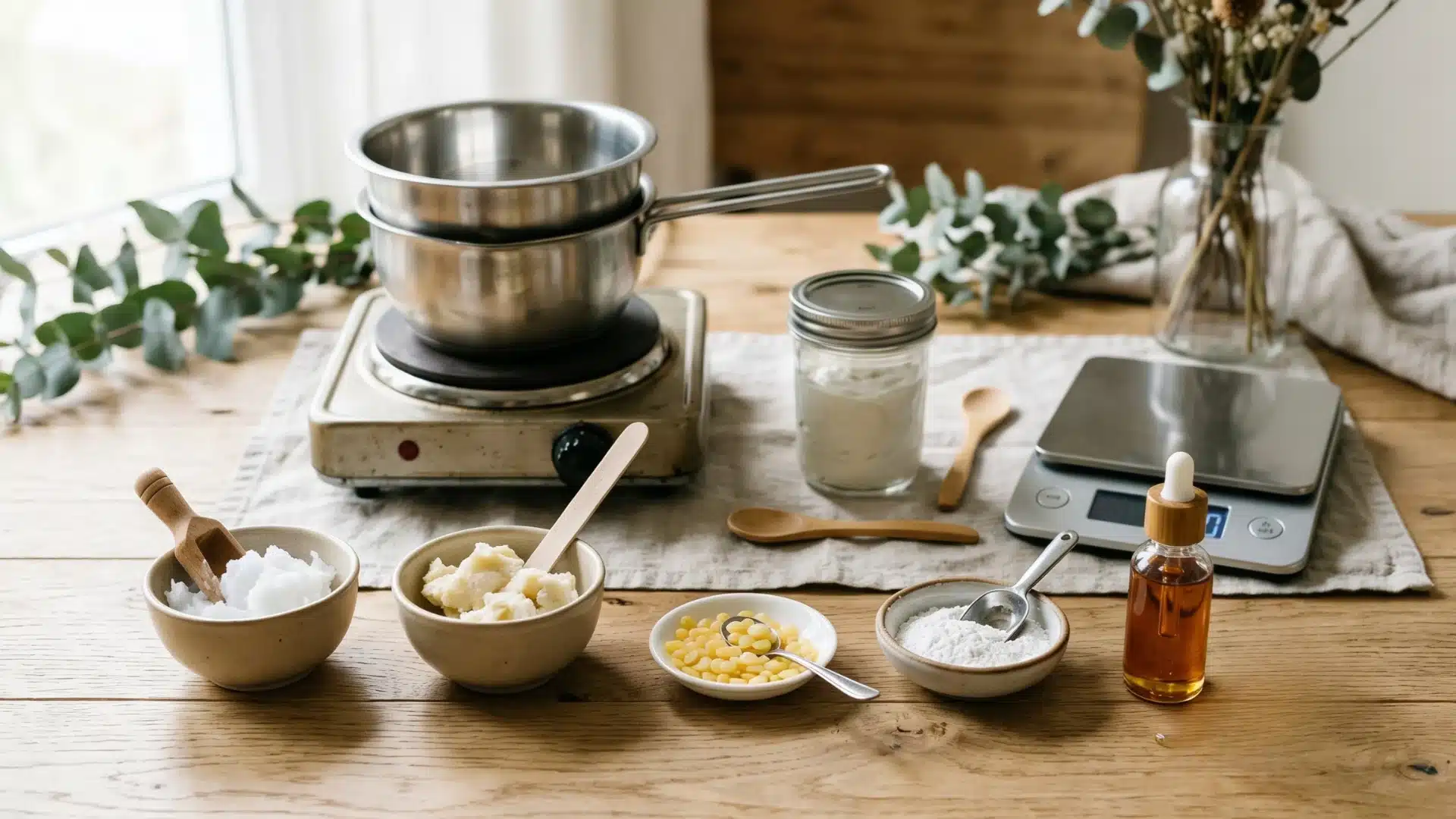
- A double boiler: to melt butter and wax without burning them.
- A glass jar or tin: for storing the finished sunscreen.
- A digital scale: measuring by weight gives far more accurate results than using spoons.
Simple Natural Sunscreen Recipes
Here are tried-and-tested recipes, each using natural ingredients you can easily find.
1. Basic Zinc Oxide Sunscreen (SPF 20–30)
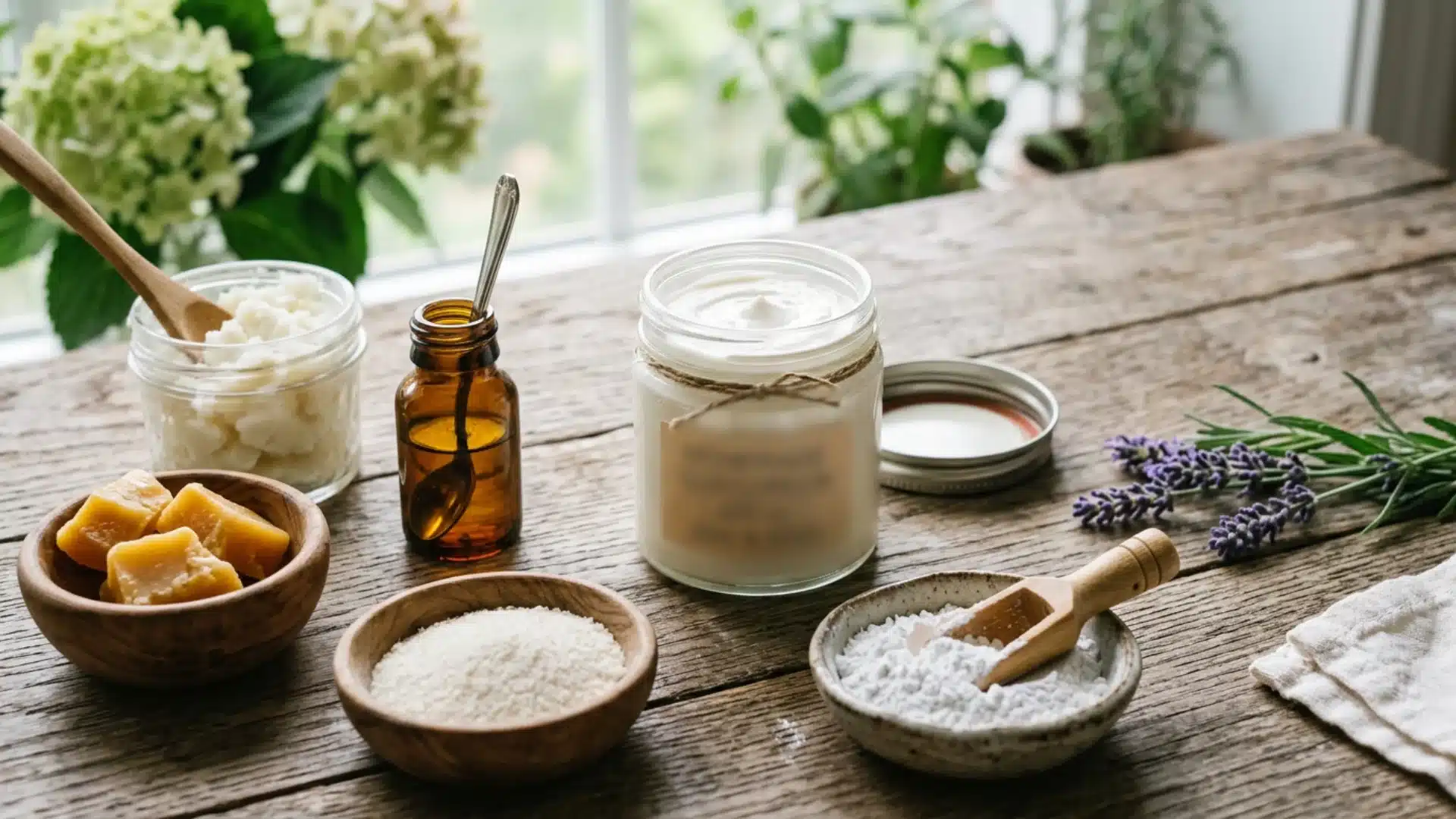
This is the most clear natural sunscreen recipe you can make. It uses the tiniest ingredients and works well for everyday outdoor use.
What you need:
- Zinc oxide (non-nano): 20g
- Coconut oil: 30g
- Shea butter: 25g
- Beeswax: 10g
- Vitamin E oil: 5 drops
How to make it:
Melt shea butter, beeswax, and coconut oil together in a double boiler.
Remove from the heat and let it cool slightly. Add zinc oxide slowly and mix well. Stir in vitamin E oil, pour into a glass jar, and let it set completely before use.
Best for: Daily use, normal to dry skin.
2. Lightweight Jojoba Oil Sunscreen (SPF 15–20)
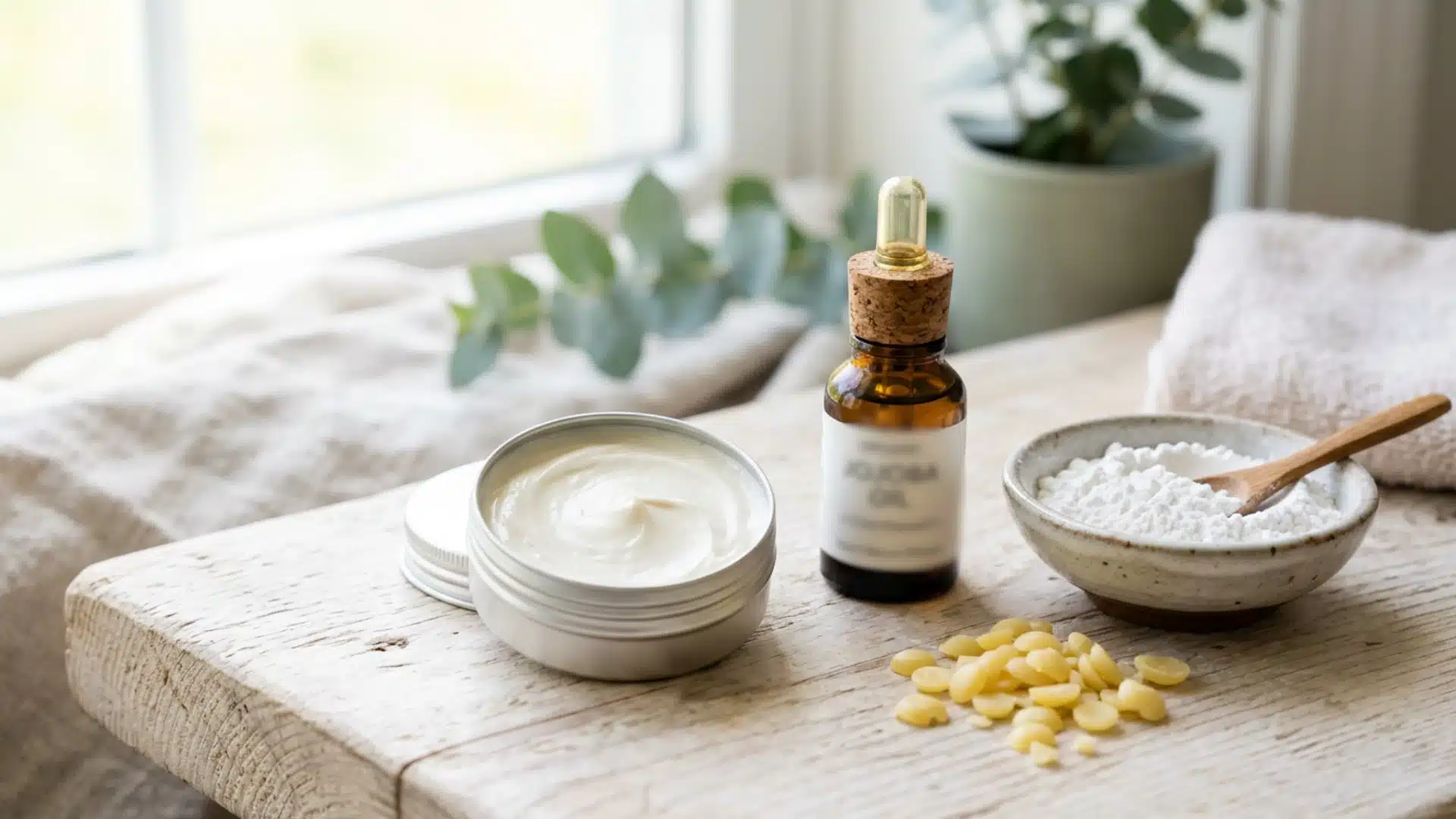
This recipe is great for people who find heavier sunscreens too greasy. Jojoba oil absorbs quickly and sits well under makeup.
What you need:
- Zinc oxide (non-nano): 15g
- Jojoba oil: 40g
- Arrowroot powder: 5g
- Vitamin E oil: 5 drops
- Candelilla wax: 5g
How to make it:
- Melt candelilla wax in a double boiler.
- Add jojoba oil and stir until combined.
- Cool slightly, then add zinc oxide and arrowroot powder.
- Mix thoroughly until smooth.
- Add vitamin E oil, pour it into a tin, and allow it to set.
Best for: Oily or combination skin, daily wear.
3. Shea Butter and Beeswax Water-Resistant Sunscreen (SPF 25–30)
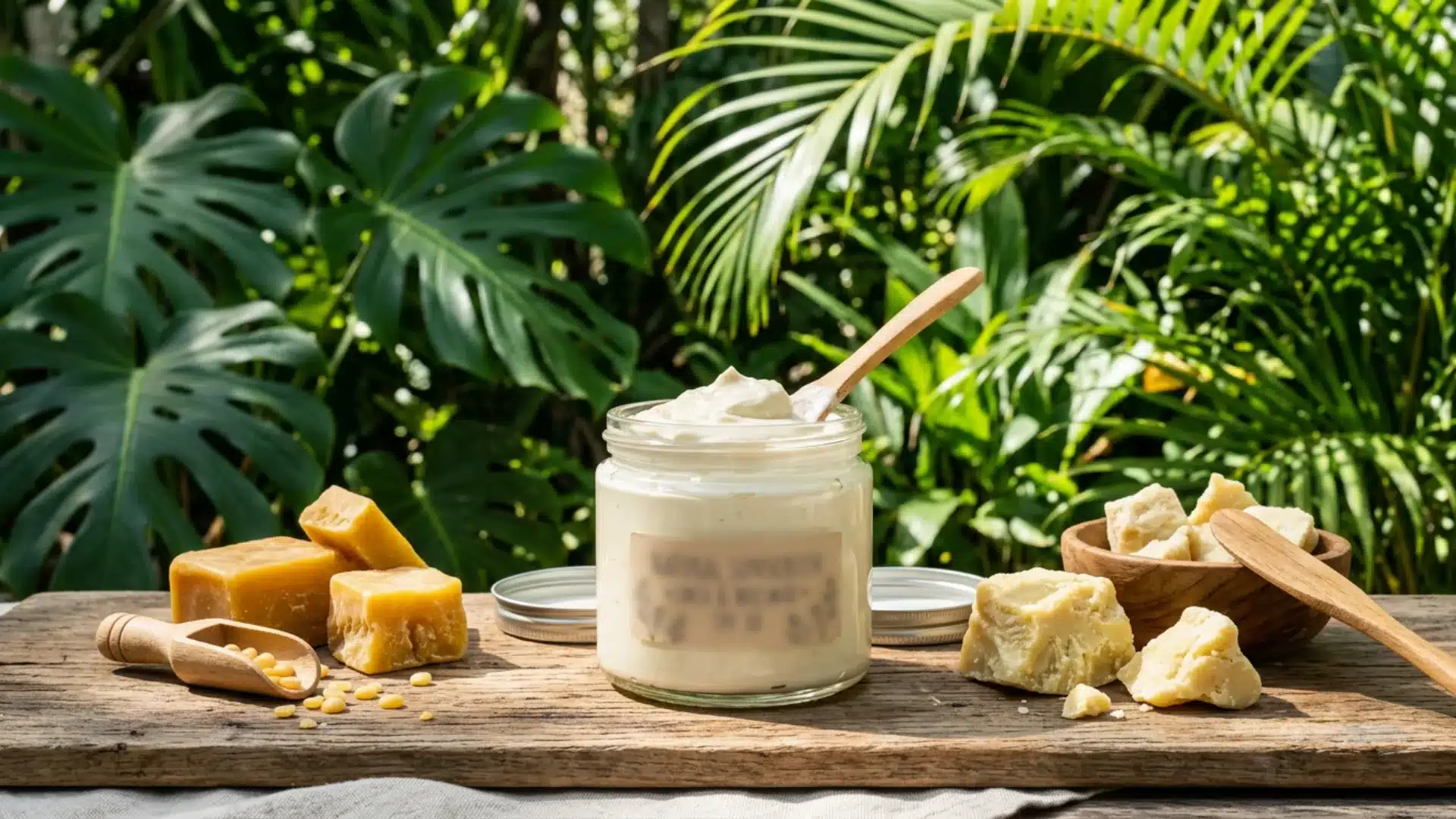
This recipe holds up better in water, making it a practical option for outdoor activities.
Beeswax creates a light barrier that slows water from washing the formula off.
What you need:
- Zinc oxide (non-nano): 20g
- Shea butter: 30g
- Beeswax: 15g
- Coconut oil: 20g
- Lavender essential oil: 8 drops
How to make it:
Melt beeswax and shea butter together over low heat.
Add coconut oil and stir until fully combined. Remove from heat, cool slightly, and add zinc oxide. Stir well to remove any lumps, then add lavender oil.
Pour into a jar and let it cool completely before use.
Best for: Outdoor use, swimming, and normal skin.
4. Sensitive Skin Sunscreen (SPF 20)
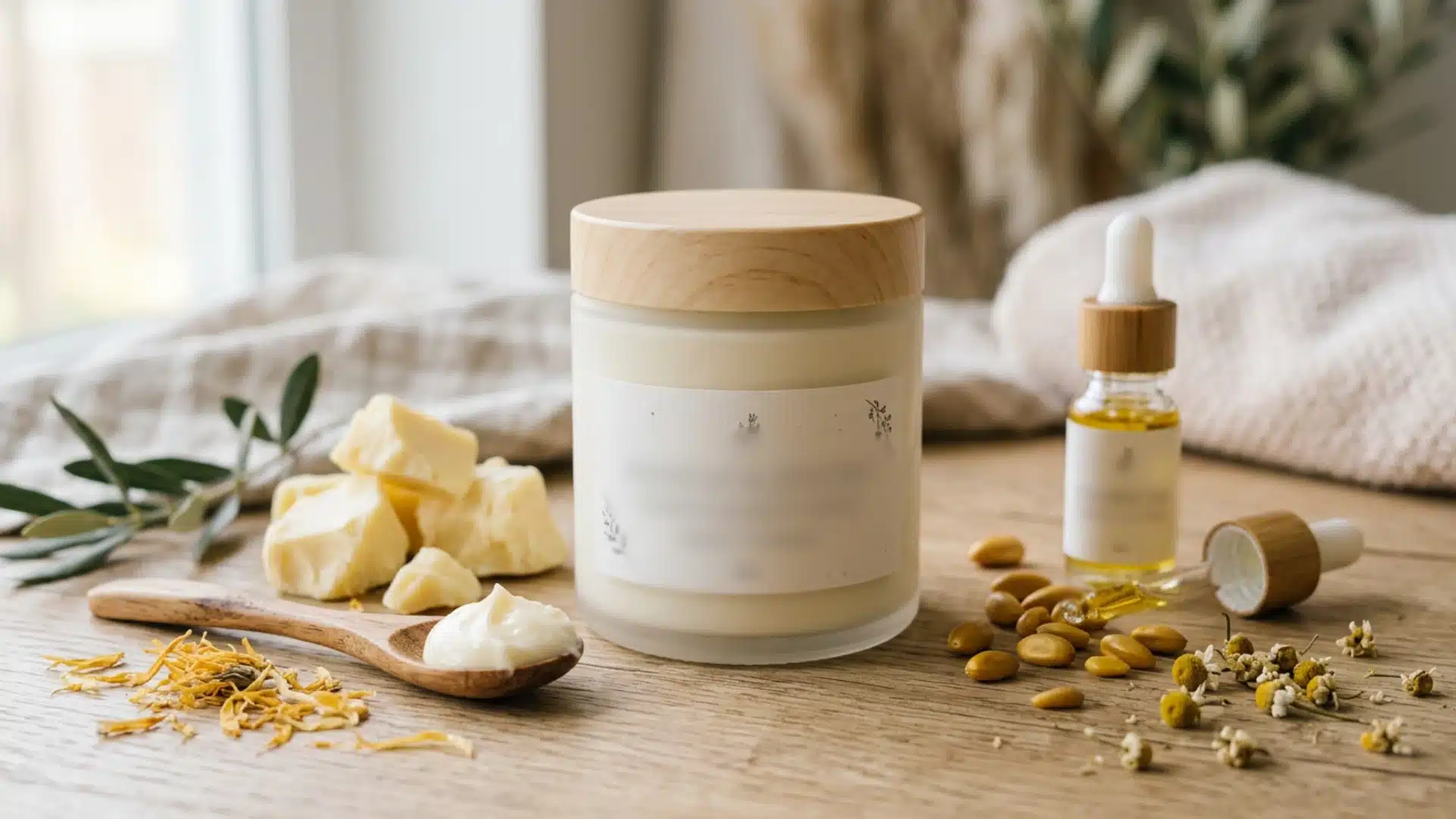
This recipe skips essential oils and keeps things as gentle as possible. It works well for people with reactive or sensitive skin.
What you need:
- Zinc oxide (non-nano): 18g
- Mango butter: 30g
- Jojoba oil: 25g
- Arrowroot powder: 5g
- Vitamin E oil: 8 drops
How to make it:
- Gently melt mango butter in a double boiler. Add jojoba oil and mix well.
- Cool the mixture slightly before adding zinc oxide.
- Add arrowroot powder and vitamin E oil.
- Stir until completely smooth and pour into a clean jar.
Best for: Sensitive, dry, or reactive skin types.
5. Tinted Natural Sunscreen (SPF 20–25)
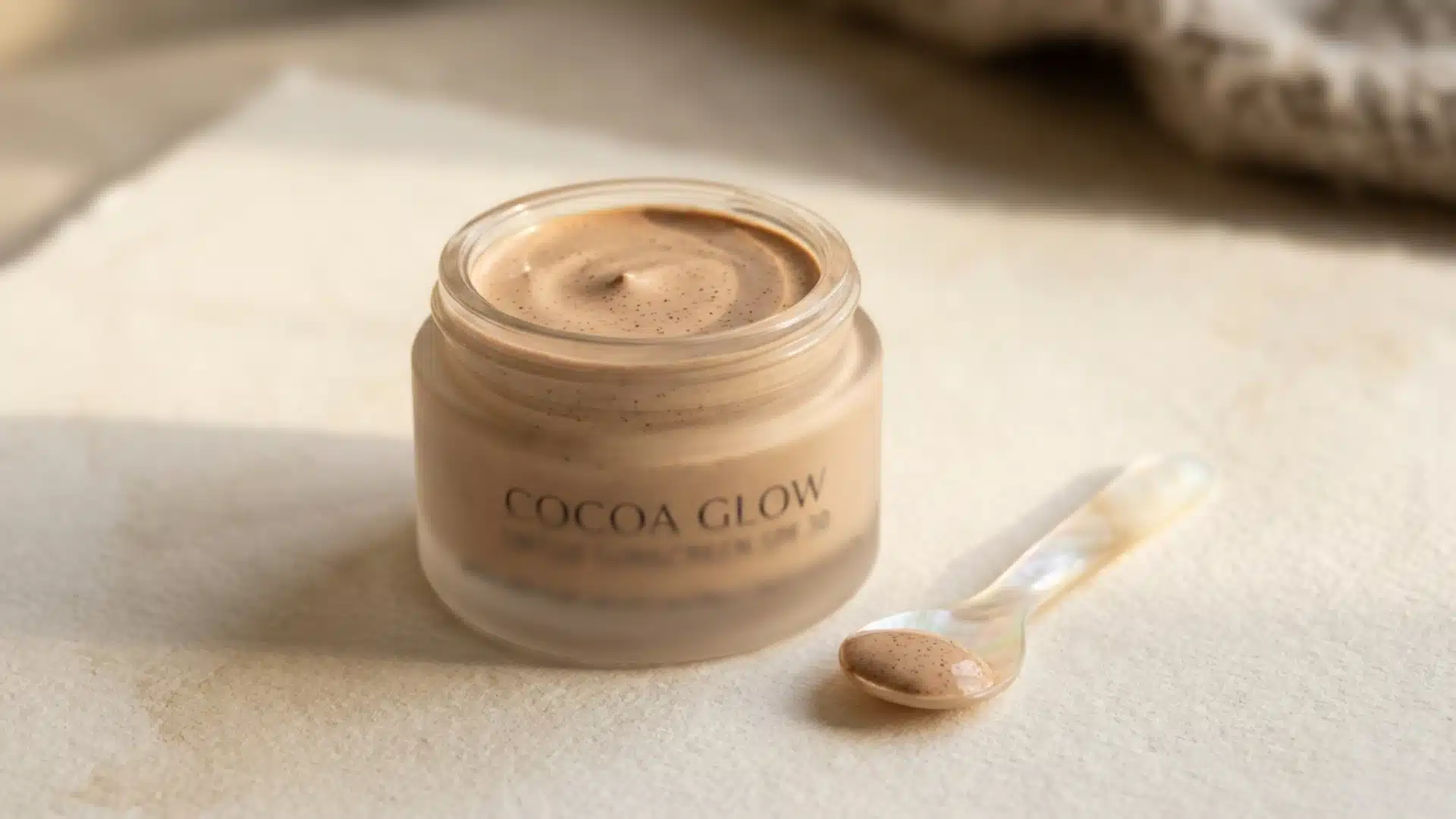
This recipe adds a light tint that helps reduce the white cast zinc oxide leaves behind.
It also slightly evens out skin tone, making it a good everyday option.
What you need:
- Zinc oxide (non-nano): 18g
- Shea butter: 25g
- Coconut oil: 25g
- Arrowroot powder: 5g
- Cocoa powder: 2–4g (adjust to your skin tone)
- Vitamin E oil: 5 drops
How to make it:
Melt shea butter and coconut oil together over low heat. Remove from heat and cool slightly.
Add zinc oxide, arrowroot powder, and cocoa powder, then mix thoroughly until the color is even throughout.
Stir in vitamin E oil, pour into a jar, and let it set fully before use.
Best for: All skin types, everyday use, those who dislike white cast.
How to Apply Homemade Sunscreen the Right Way
Most people use far too little sunscreen.
You need about a teaspoon for your face and a full shot glass worth for your body.
Apply it 15 minutes before stepping outside.
Reapply every two hours, and straight after swimming or sweating. People often forget the ears, the back of the neck, the tops of the feet, and the hands.
These spots get just as much sun, so don’t skip them.
When Natural Sunscreen Recipe is Not Enough
Natural sunscreen works well for everyday use, but in some situations, more reliable protection is needed.
Knowing when to switch matters.
- A full day at the beach means long, intense sun exposure; your homemade formula may not handle it well.
- High UV index days (anything above 6) require SPF products that have been tested and verified.
- Water and other outdoor sports require frequent reapplication, and homemade formulas wash off faster.
- Children and people with a history of skin cancer need clinically tested sunscreen, no exceptions.
- At high altitudes, UV radiation is stronger, and a DIY formula simply may not be enough.
- A dermatologist-recommended SPF 30 or above is always the safer call for prolonged sun exposure.
Being upfront about this builds more trust than overpromising what a natural recipe can do.
Common DIY Mistakes that Reduce Effectiveness
Small mistakes can seriously weaken your sunscreen.
Using too little zinc oxide is the biggest one, going below 15g, and your protection drops sharply.
Swapping non-nano zinc for nano reduces surface coverage.
Skipping beeswax or wax altogether makes the formula wash off quickly. Measuring ingredients by spoon rather than by weight throws off the whole balance.
Storing your sunscreen in heat or direct sunlight speeds up its breakdown.
Natural vs Store-Bought Sunscreen: A Practical Comparison
Both options have their place. Here’s how they stack up side by side.
| Factor | Natural Sunscreen | Store-Bought Sunscreen |
|---|---|---|
| Ingredients | Simple, recognizable | Often includes chemicals like oxybenzone |
| SPF Accuracy | Cannot be verified at home | Lab-tested and certified |
| Skin Sensitivity | Gentler for most skin types | Some formulas cause irritation |
| Water Resistance | Limited, reapply more often | Stronger, longer-lasting resistance |
| Cost | Low, affordable to make | Varies, can be expensive |
| Shelf Life | 3–6 months | 1–3 years |
| Availability | Made at home, takes preparation | Ready to use, widely available |
| White Cast | Common with zinc oxide | Varies by formula |
| Best Use | Daily, low-to-mid UV exposure | High UV, beach, outdoor sports |
Who Should Avoid DIY Sunscreen Completely?
DIY Sunscreen is not for everyone.
For some people, using an untested formula outdoors is a real risk, not just a minor concern.
- Children under 12 need SPF protection verified by the FDA, as their skin is far more sensitive to UV damage.
- People with a personal or family history of skin cancer should never rely on unverified sun protection.
- Those with active skin conditions, such as eczema or rosacea, may react poorly to DIY ingredients.
- Pregnant women should consult a doctor before using any homemade skin formula.
- Anyone spending long hours outdoors for work needs guaranteed, consistent protection every single day.
If you fall into any of the groups below, stick to a clinically tested product.
Safer Alternatives to Fully DIY Sunscreen

Not ready to go fully homemade?
These middle-ground options give you more control without giving up reliable protection.
Mineral-based store-bought sunscreens
Look for products with zinc oxide or titanium dioxide as the only active ingredients, clean, simple, and lab-tested.
Reef-safe certified sunscreens
These skip harmful chemicals like oxybenzone and octinoxate, making them safer for your skin and the environment.
Tinted mineral sunscreens
A great option for daily face use, they reduce white cast and often double as light coverage.
Sunscreen sticks with natural bases
Easy to apply, travel-friendly, and many now use cleaner ingredient lists without synthetic chemicals.
SPF-infused moisturizers with mineral filters
A practical everyday option that combines skincare and sun protection in one step.
Customizable sunscreen bases
Some brands sell tested SPF bases to mix with oils, offering a safer alternative between DIY and store-bought options.
How to Store and Handle Your Natural Homemade Sunscreen
Storage makes a bigger difference than most people realize.
Keep your DIY sunscreen in a dark glass jar or a plastic can, as some oils can react with the light over time.
Store it in a cool, dry place away from direct sunlight.
A bathroom cabinet works, but avoid leaving it near the shower where heat and moisture build up. Most natural sunscreen recipes last 3 to 6 months. Always use a clean spatula or spoon to scoop it out.
Repeatedly dipping fingers introduces bacteria and shortens shelf life faster than anything else.
End Note: Should You Rely on a Natural Sunscreen Recipe?
A sunscreen recipe can be a smart, skin-friendly choice for everyday use.
But it works best when you understand what it can and can’t do. Use it for low-to-mid UV days, short outdoor trips, and as part of a broader skincare routine.
For high UV days, long sun exposure, or vulnerable skin, reach for a tested product.
The goal isn’t to pick one over the other; it’s to make an informed call based on your situation.
Now go make something that actually works for your skin.
Frequently Asked Questions (FAQ’s)
1. What Sunscreen Works Best with Malassezia?
Zinc oxide-based mineral sunscreens work best because they don’t feed Malassezia growth.
2. What Natural Things Can I Use as Sunscreen?
Non-nano zinc oxide mixed with shea butter and coconut oil offers real protection.
3. What Oils Should Be Avoided with Malassezia?
Avoid coconut oil, olive oil, and most fatty acids, as they worsen Malassezia flare-ups.
4. How to Make 100% Organic Sunscreen?
Mix non-nano zinc oxide with organic shea butter, jojoba oil, and vitamin E oil.
5. Which is the Best DIY Sunscreen?
The basic zinc oxide recipe with shea butter and beeswax gives the most reliable protection.