
People with curls are often on the wrong haircare path and use products meant for straight hair.
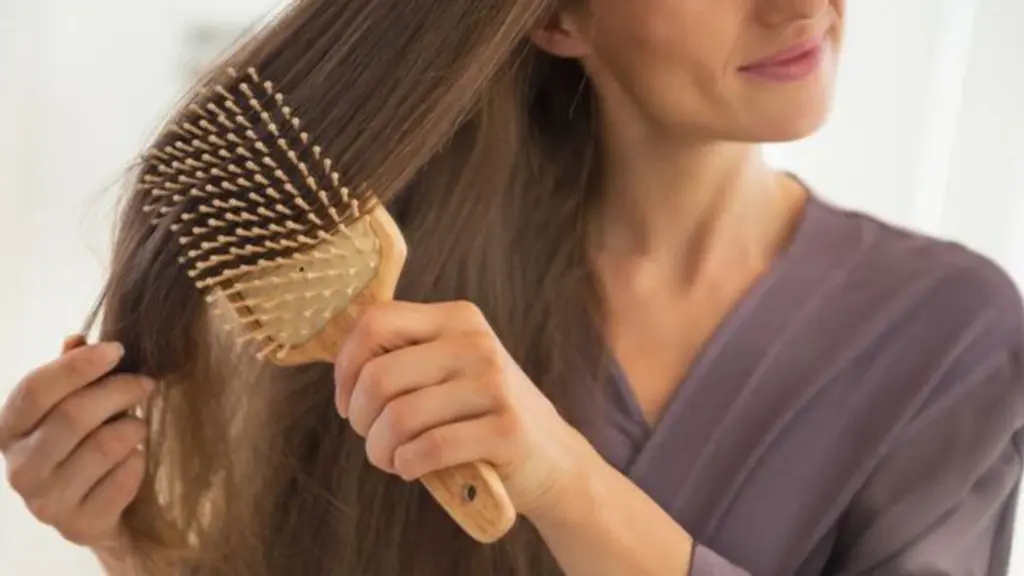
And they brush their curls when they’re dry, and wash their hair too often. And the result is hair looks frizzy and damaged, obviously.
Curly hair isn’t harder to manage. It just needs different care.
The Curly Girl Method (CGM) is a hair care approach that eliminates sulfates, silicones, and heat styling while focusing on gentle cleansing, deep conditioning, and using only curl-friendly products.
But when you are not sure which type of hair you have, it becomes difficult to manage.
Let’s walk through the curly hair routine and exactly what your curls need to do it at home.
What is so Different About Curly Hair?
Curly hair has a distinctive structure from straight hair.
The shape of your hair follicle decides your curl pattern. Curly hair grows from oval or asymmetrical follicles.
And straight hair comes from round ones.
Curly hair is naturally drier than straight hair, since the oils from your scalp struggle to travel down, making it more prone to frizz and breakage.
This is why curly hair often needs moisture replenishment mid-week, not just on wash day.
The cuticle layer also lifts more easily, making curls more sensitive to damage and moisture loss.
How to Take Care of Your Curly Hair: Quick Overview
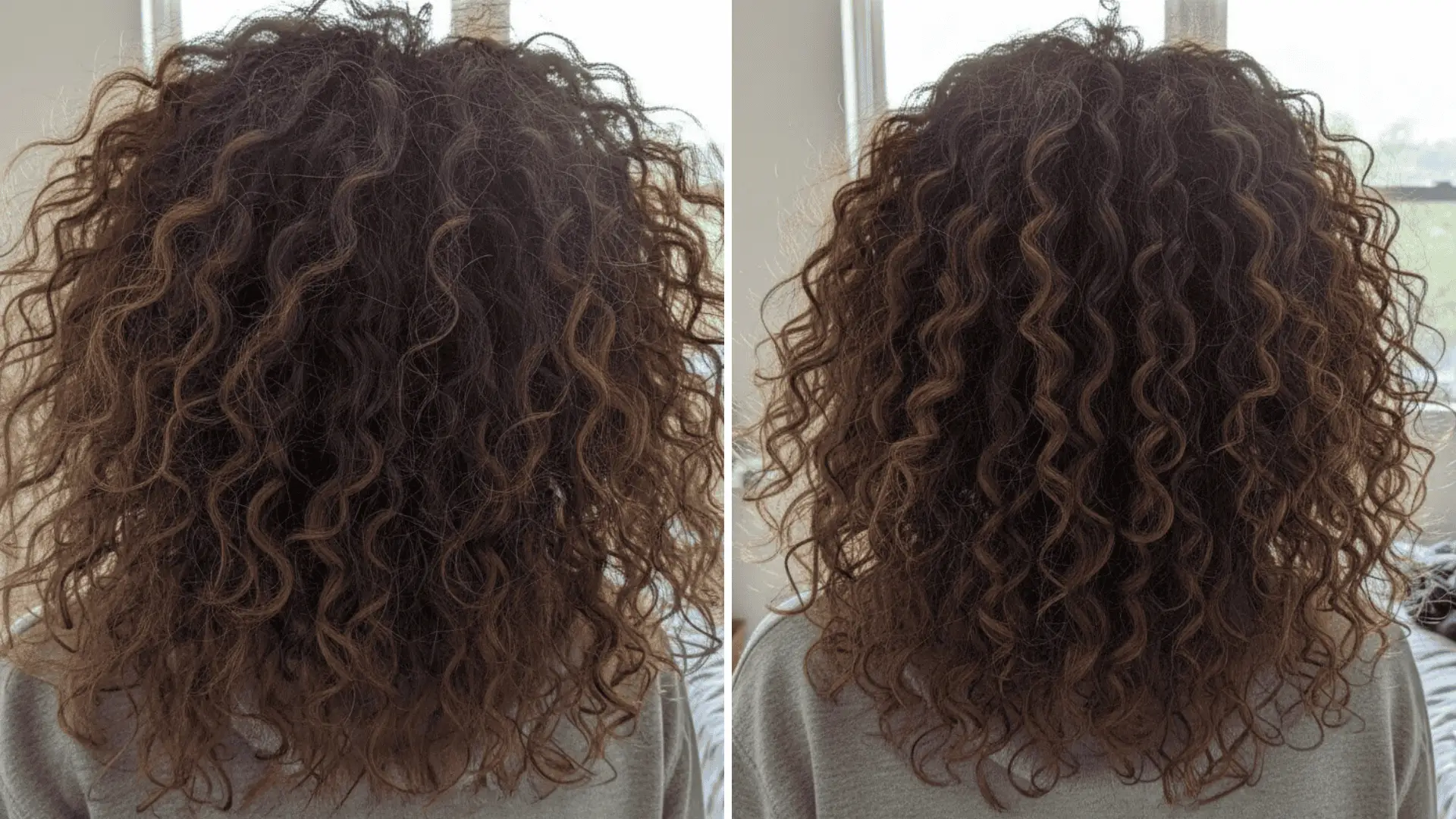
For the busy readers, here is a step-by-step overview of the curly hair care routine.
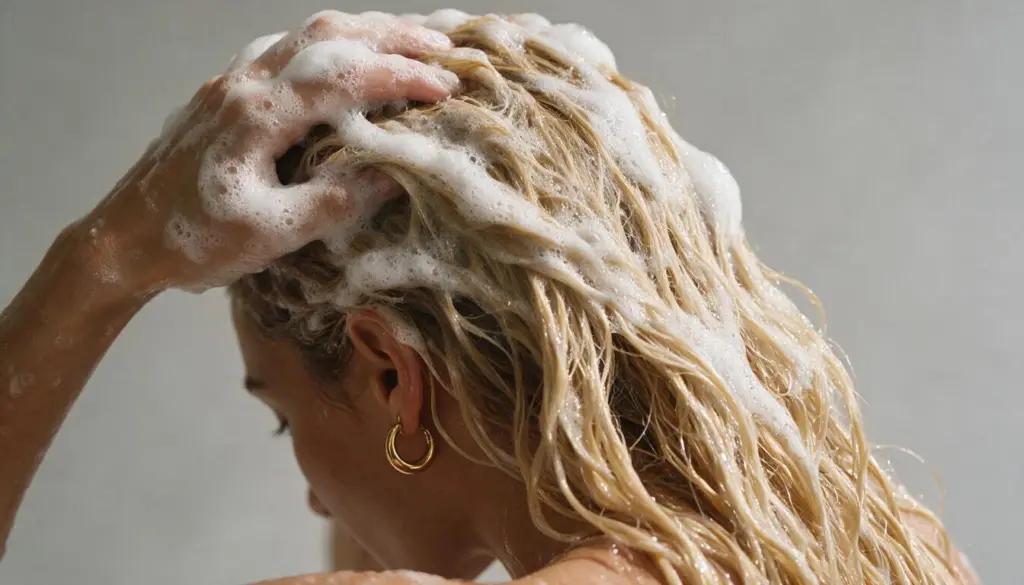
Step 1: Wash Your Hair: Wet your hair thoroughly, apply sulfate-free shampoo to your scalp, gently massage, and rinse with cool water.
Try: SheaMoisture Curl & Shine Shampoo or As I Am Curl Clarity Shampoo
Step 2: Condition Deeply: Apply conditioner from mid-lengths to ends, detangle with fingers or a wide-tooth comb, leave for 3-5 minutes, then rinse.
Step 3: Apply Leave-In Conditioner: Squeeze out excess water with a t-shirt, then apply leave-in conditioner to damp hair for base hydration.
Step 4: Add Curl Cream: Work curl cream through your hair in sections using the praying hands method to define curls.
Try: Shea Moisture Coconut & Hibiscus Curl Enhancing Smoothie or Ouidad Advanced Climate Control Featherlight Styling Cream
Step 5: Seal with Oil: Apply a few drops of lightweight oil to lock in all the moisture from previous products.
Try: Mielle Organics Rosemary Mint Scalp & Hair Oil or The Ordinary 100% Organic Cold-Pressed Argan Oil
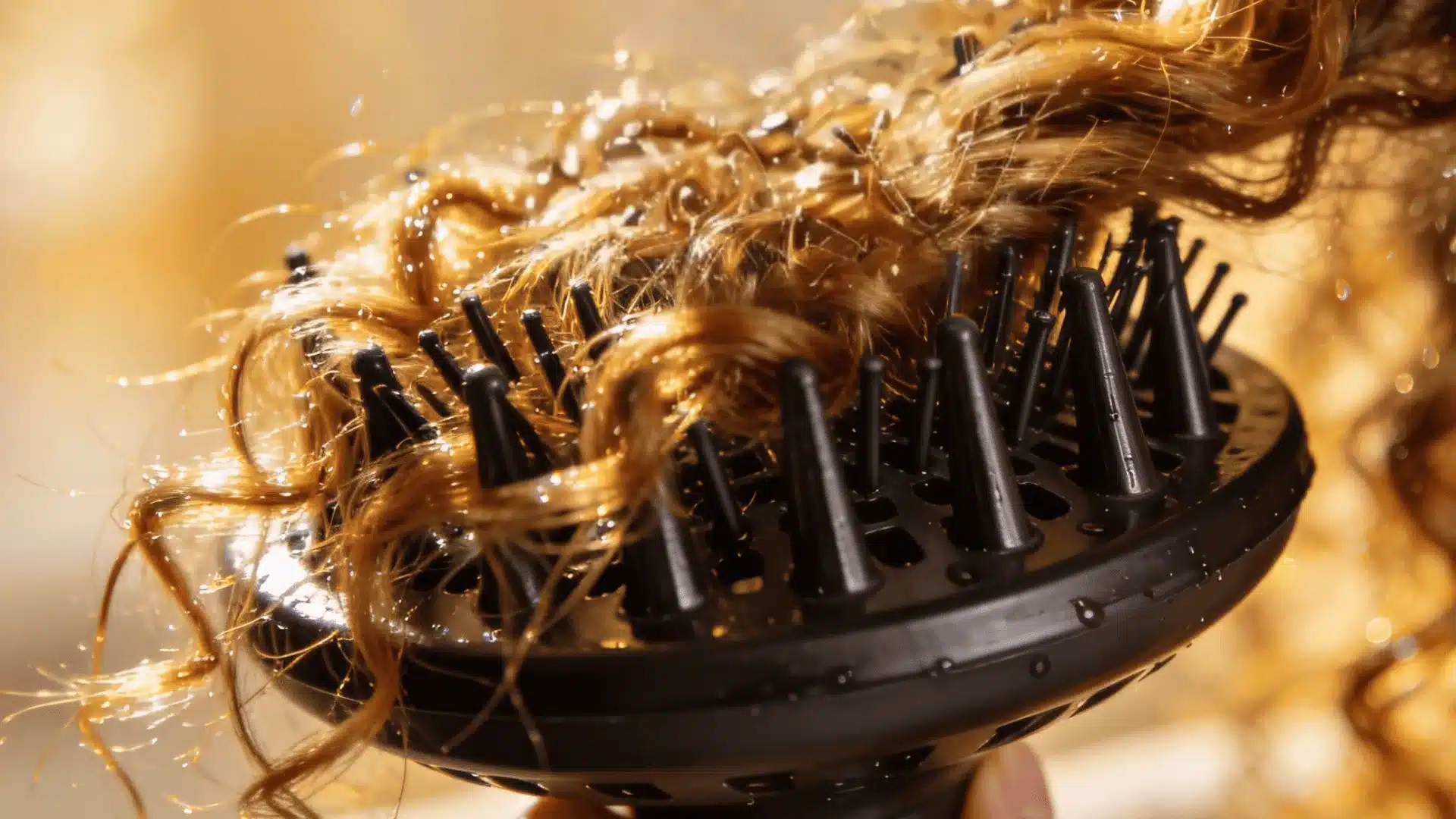
Step 6: Style and Dry: Scrunch your curls upward, then either air-dry or use a diffuser on low heat, without touching your hair.
Step 7: Scrunch Out the Crunch: Once hair is completely dry, gently scrunch to break the product cast and reveal soft, defined curls.
Try: A few drops of Moroccanoil Treatment Light or Biosilk Silk Therapy for a frizz-free, glossy finish
What are the Types of Curly Hair?
Curly hair comes in different types based on curl pattern and texture, each requiring a different curly hair care routine.
Type 2: Wavy Hair
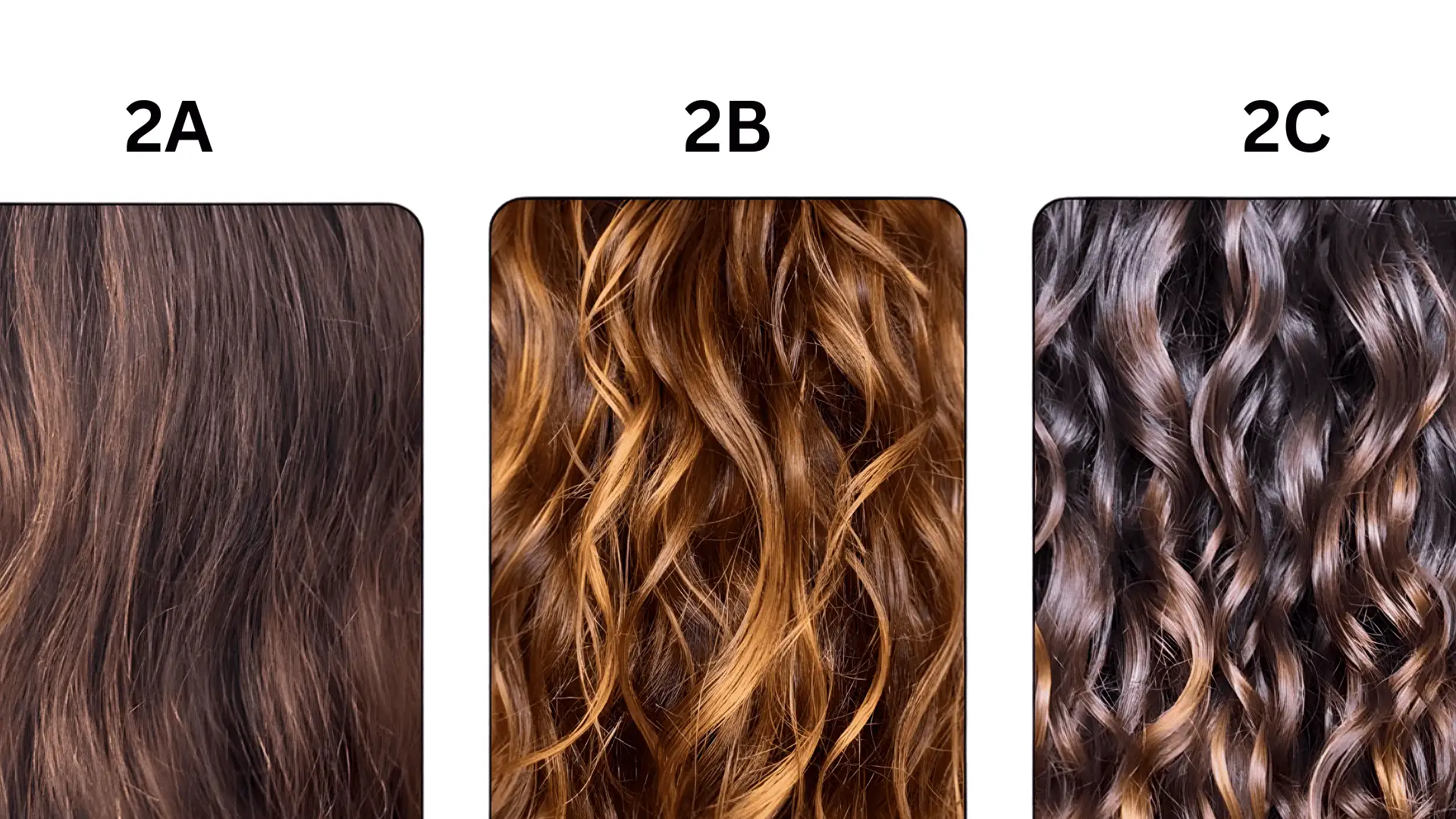
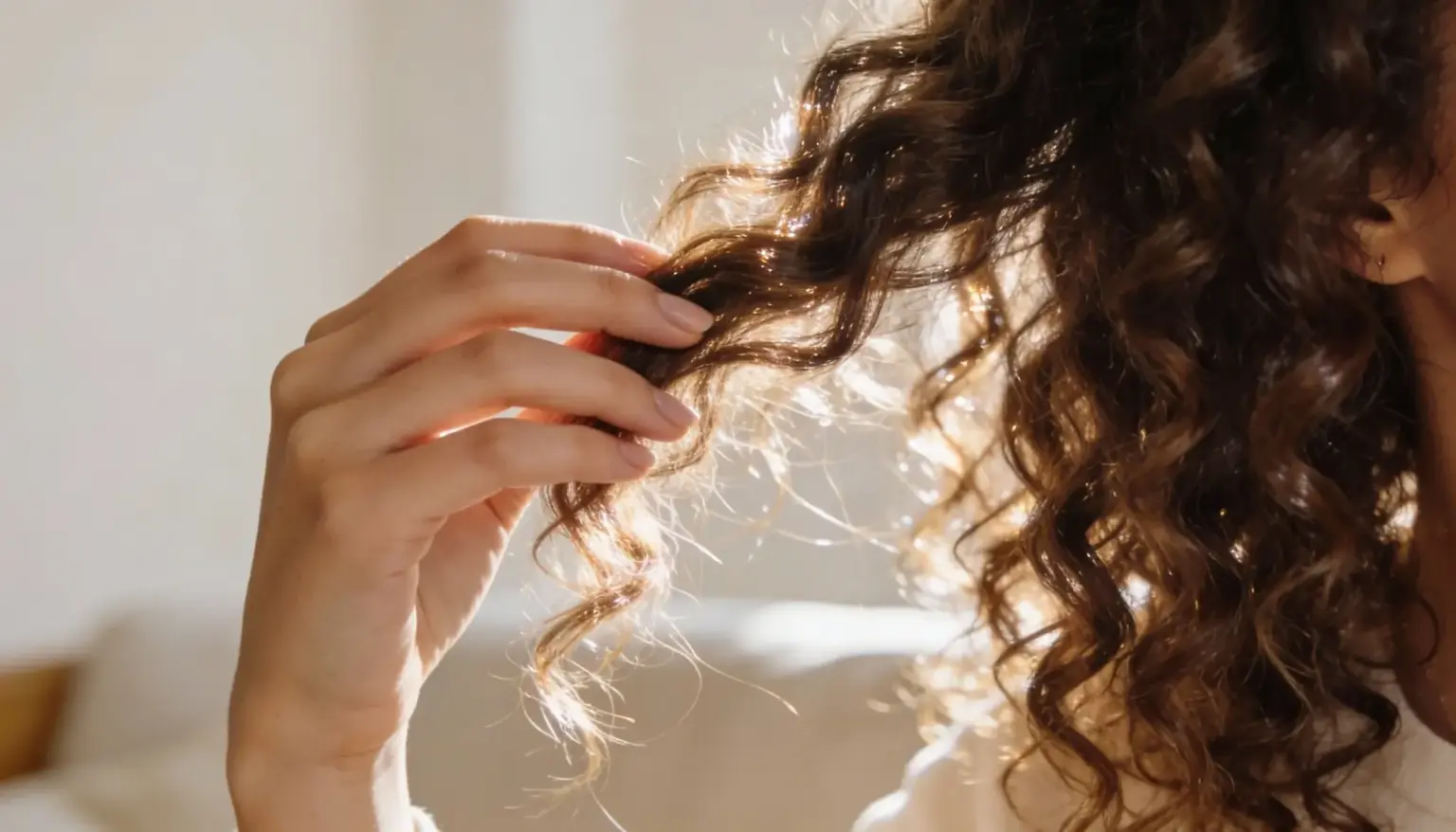
Type 2 hair forms an S-shape pattern. It’s thicker than straight hair but not as dense as curly hair, and tends to get frizzy in humid weather.
Type 2A
- These are fine, loose waves that lie close to your head.
- They’re easy to straighten and style.
- They need lightweight products to avoid losing the curls.
Type 2B
- Medium-textured waves with more defined S-patterns.
- They start forming at the mid-lengths of your hair.
- This type is more prone to frizz than 2A.
Type 2C
- The thickest wavy hair type with well-defined S-curves.
- These waves start right from the roots.
- They’re more resistant to styling and need extra moisture.
Type 3: Curly Hair
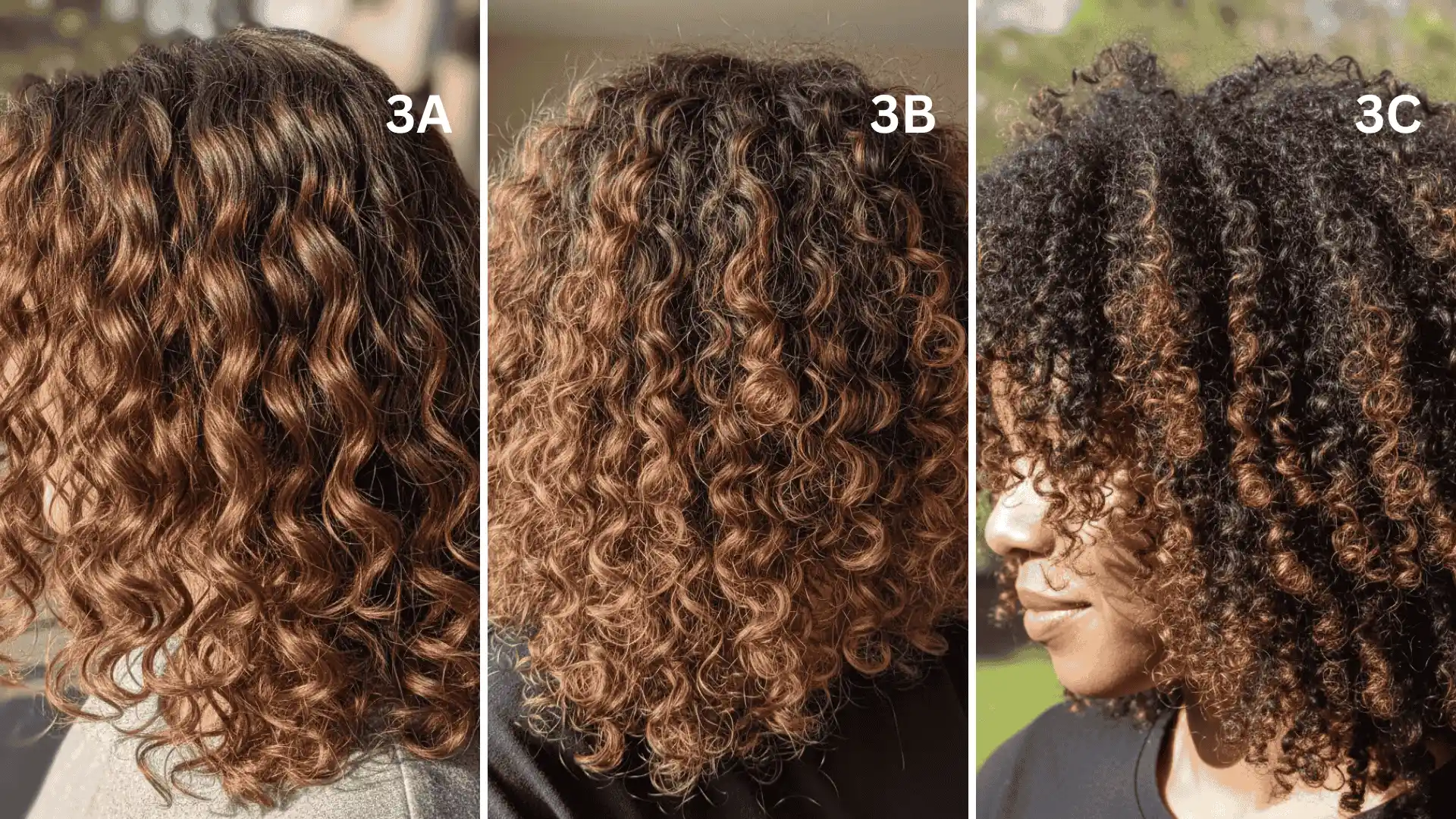
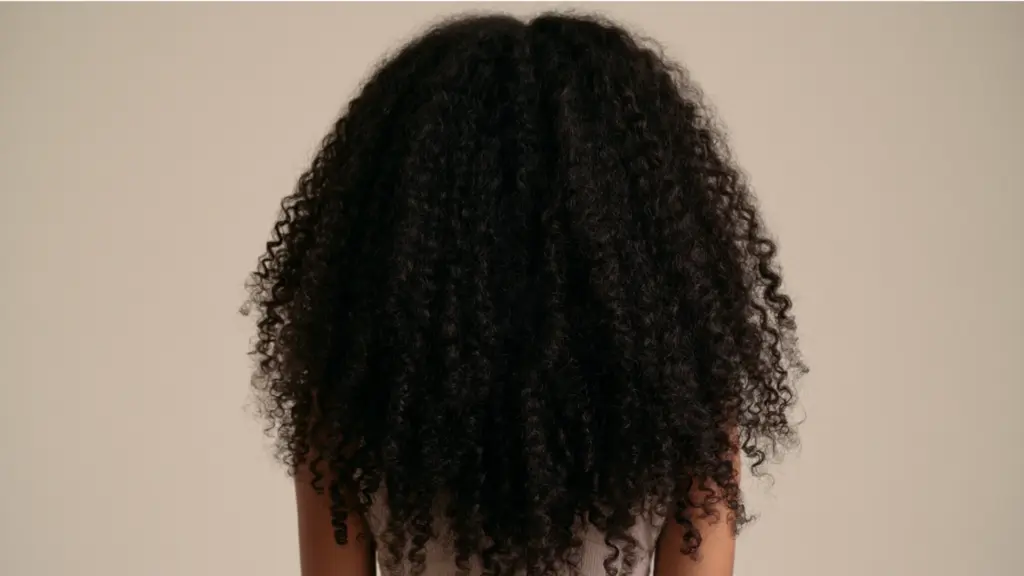
Type 3 hair has springy, corkscrew curls. The curls are defined and have lots of volume. This hair type is prone to dryness and frizz.
Type 3A
- Loose, large curls with a lot of shine.
- The curls are about the width of sidewalk chalk.
- They’re easy to style but can lose definition in humidity.
Type 3B
- Medium-sized curls similar to a Sharpie marker in width.
- These curls are springy and have more volume.
- They need regular moisture to stay defined.
Type 3C
- Tight corkscrew curls as thick as a pencil or straw.
- These curls are densely packed and have lots of volume.
- They require the most moisture of all Type 3 curls.
Type 4: Coily Hair
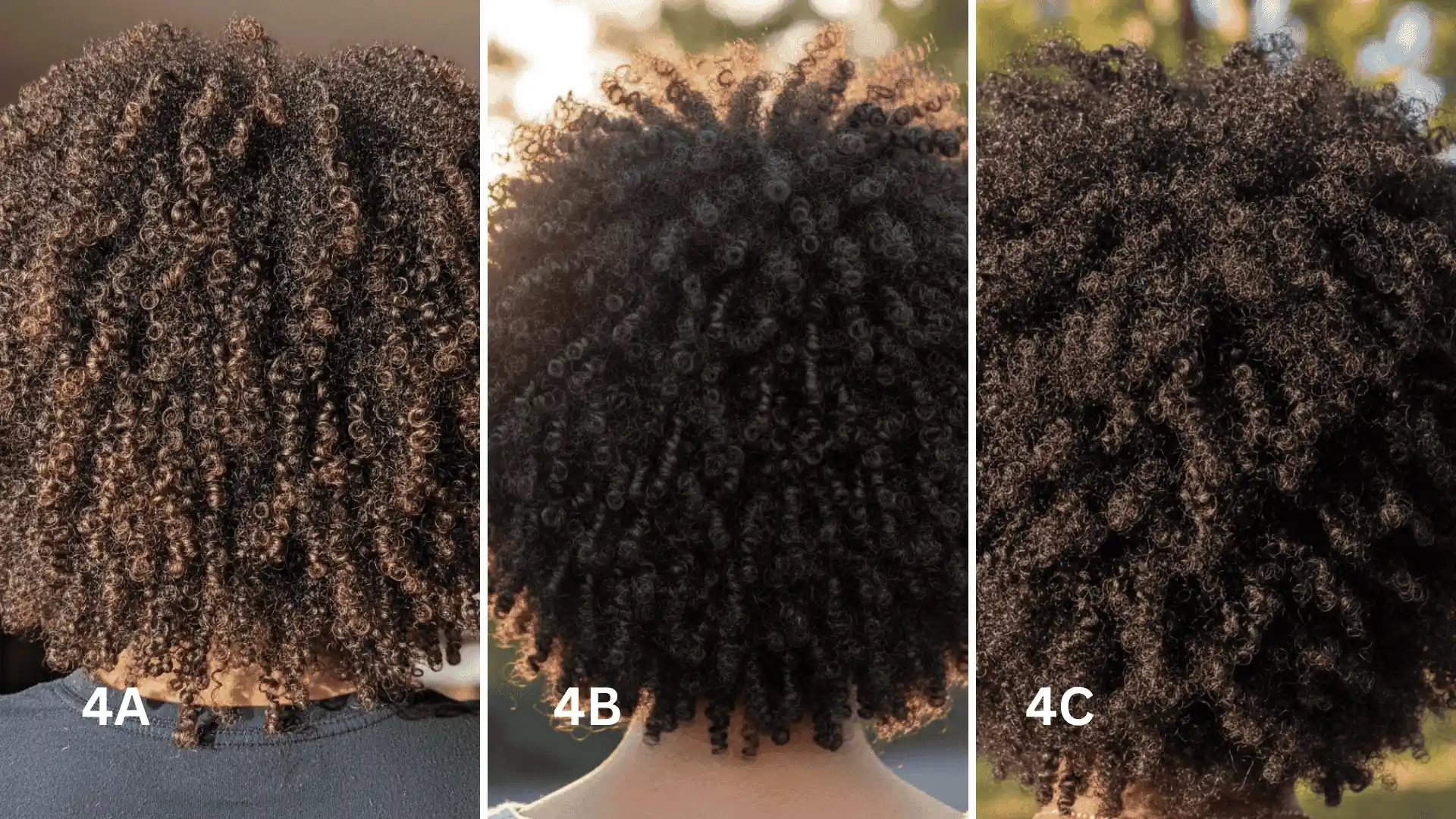
Type 4 hair has tight coils. It’s the most fragile hair type and shrinks when dry. This hair needs intense moisture and gentle handling.
Type 4A
- Tightly coiled hair with a visible S-pattern.
- The coils are springy and hold moisture better than other Type 4 hair.
- They’re about the size of a crochet needle.
Type 4B
- Z-shaped bends instead of curls.
- This hair has less definition and more shrinkage.
- It’s very fragile and breaks easily without proper care.
Type 4C
- The tightest curl pattern with less definition.
- These coils are densely packed and extremely fragile.
- They experience up to 75% shrinkage and need maximum moisture.
What is my Curl Type – How to Know?
- Wash your hair and let it air dry naturally. Don’t use any styling products, heat tools, or brushes.
- Look at the shape of your curls.
- Measure the curl width. Compare your curl size to common objects.
- Check where your curls start. This helps you know your subtype within each curl type.
- Test your hair’s texture. Fine hair feels thin. Medium hair has thickness. Coarse hair feels strong and wiry.
- Observe your curl density. High density means lots of hair strands packed together. Low density shows more scalp.
Waves make an S-shape. Curls form spirals. Coils create tight zigzags or spring-like patterns.
Curly Hair Wash Routine
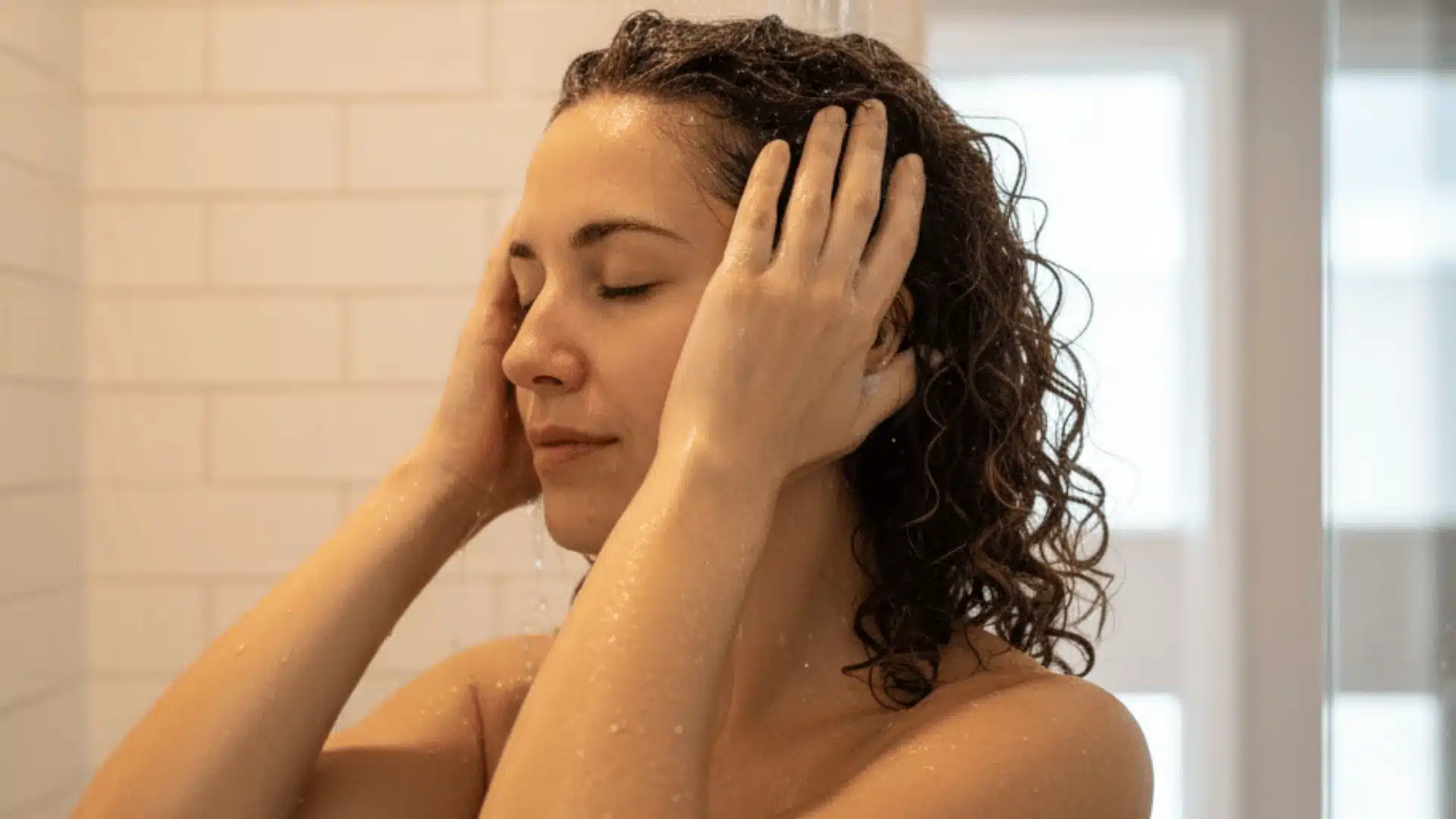
Wet your hair thoroughly with mild water before applying shampoo.
Do not forget to avoid massaging gently with your fingertips. Massaging with your nails can cause scalp irritation and other things, which you seriously don’t need.
Rinse completely with cool water to close the cuticles and add shine.
How Often to Wash Curly Hair?
Wash your curly hair 1-2 times per week, as heavy products accumulate on curls over time, making hair look dull and feel sticky.
Curly hair is naturally dry, so washing too often removes natural oils.
If you work out regularly or have an oily scalp, you can wash your hair up to 3 times a week.
Also, don’t worry if your curls appear much shorter when dry than when wet; curls shrink.
What is Co-Washing and Who Needs it?
Co-washing means washing your hair with conditioner instead of shampoo.
This might sound weird, but this method cleanses your scalp gently without removing natural oils.
You need co-washing if you have very dry, coarse, or Type 4 curls, and it’s also helpful if regular shampoo leaves your hair feeling rough.
Clarify with a real shampoo at least once or twice a month, even if you co-wash regularly, or else it can lead to product build-up.
How to Deep Condition at Home?
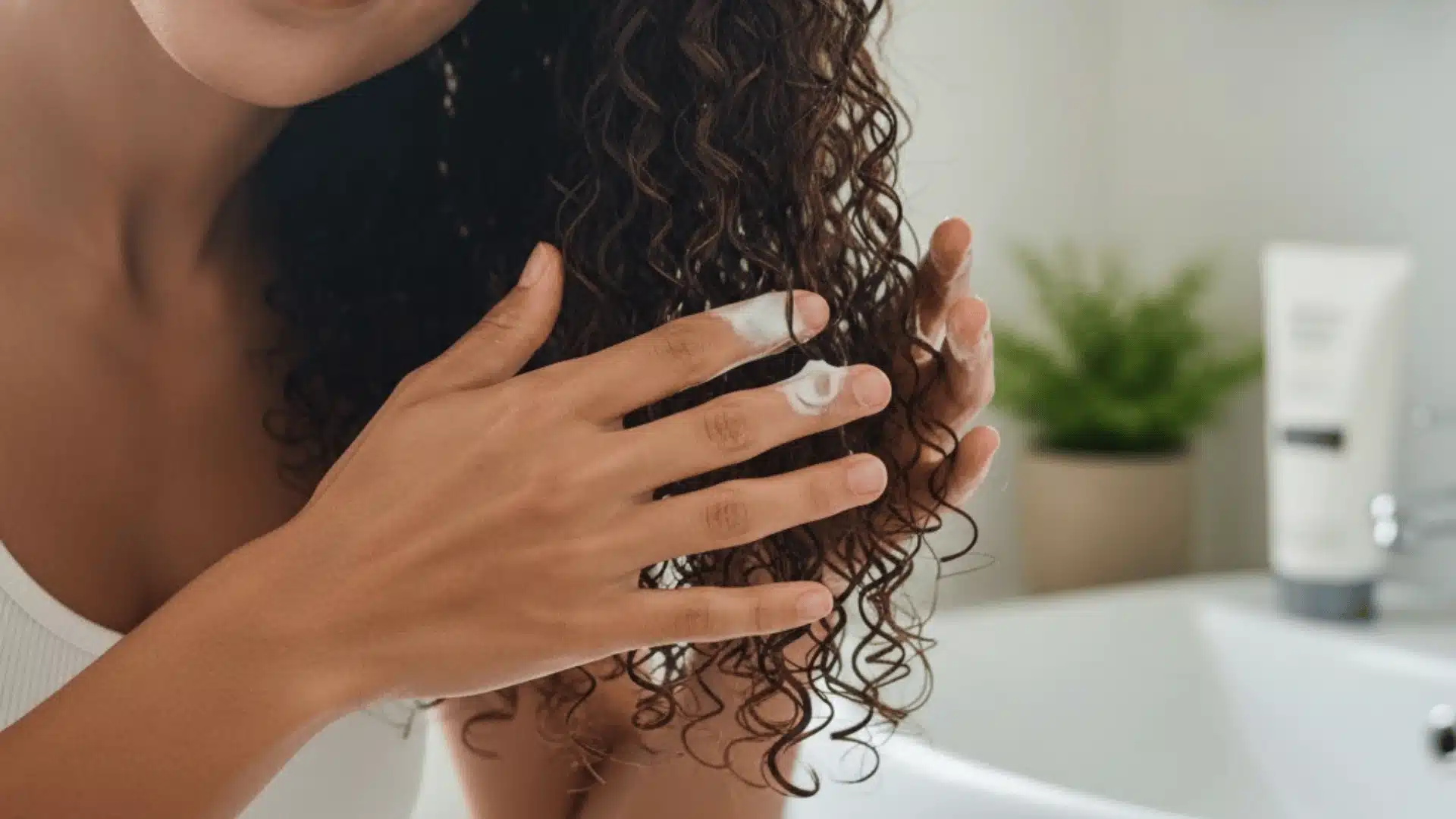
Deep conditioning is important because it repairs damage and restores moisture. It strengthens your curls from the inside out.
Step 1: Wash your hair with shampoo or co-wash. Gently squeeze out excess water.
Step 2: Apply the deep conditioning mask. Work it through your hair in sections. Focus on mid-lengths and ends.
Step 3: Use a wide-tooth comb or your fingers to distribute the product evenly. This also helps remove any knots.
Step 4: Cover your hair with a shower cap. Wrap a warm towel around it. Heat helps the conditioner penetrate deeper into your hair shaft.
Step 5: Rinse with cool water until the water runs clear. Cool water seals the cuticle and locks in moisture.
Moisturize Routine
Apply products to damp hair. Use the leave-in conditioner first, then curl cream, and finish with oil to seal everything in.
This layering method, called LOC (Liquid, Oil, Cream) or LCO (Liquid, Cream, Oil), locks moisture into your curls.
Fine-haired curlies often do better with LCO, the cream on top of the oil can feel too heavy for thinner strands.
Leave-In Conditioners
Leave-in conditioners provide a base layer of hydration.
Apply them to damp hair right after washing. They detangle your curls and prepare them for styling.
Use a lightweight formula for fine hair and a richer one for thick, coarse curls.
Try mixing water with a little leave-in conditioner in a spray bottle. Spritz your curls lightly, then scrunch them.
Curl Creams
Curl creams define your curl pattern and add moisture.
They’re thicker than leave-ins and provide hold without crunchiness.
Apply them section by section, scrunching upward to encourage curl formation.
These work best on Type 3 and Type 4 hair.
Moisturizing Oils
Oils seal in moisture and add shine to your curls.
Use lightweight oils, such as argan or jojoba, for fine hair. Apply oils as the last step to lock in all the moisture.
Thicker oils, such as coconut or castor oil, work well for coarse, dense curls.
Styling Routine
Style your curls while they’re soaking wet, not just damp. Apply your styling products section by section, then scrunch upward to encourage curl formation.
Use a t-shirt or microfiber towel to dry your hair, as it won’t disturb your curls.
How to Reduce Frizz?
Apply products to soaking wet hair, not damp hair.
Use the “praying hands” method by smoothing products down each section. Gently scrunch your curls upward to encourage their natural pattern.
Don’t touch your hair while it dries, as this causes frizz.
Once your hair is completely dry, scrunch out any crunchiness.
Air Drying vs Diffusing
| Method | Best For | Benefits | Drawbacks |
|---|---|---|---|
| Air Drying | Type 2-3A and fine hair | No heat damage, natural curl pattern | Takes 3-6 hours, can cause frizz if touched |
| Diffusing | Thick curls, Type 3B-4C | Faster drying, adds volume, reduces frizz | Can cause heat damage, requires a diffuser attachment |
Is Curly Hair Care Different?
Yes, absolutely. Curl Girl Method (CGM)
The special structure of curls creates many challenges. Standard hair-care routines often make these problems worse rather than better.
Still wondering why managing curly hair is different? Know why.
| Issue | Why It Happens | How are Curls Affected |
|---|---|---|
| Dryness | The curved shape blocks scalp oils from reaching the ends. | Your hair lacks natural moisture. |
| Frizz | Dry cuticles lift and absorb humidity from the air. | Hair swells unevenly and looks messy. |
| Breakage | Each curl bend creates a weak point in the strand. | Curls snap easily without proper care. |
Ingredients to Avoid
Pro curly hair tips on ingredients you need to avoid to keep your hair healthy.
1. Sulfates
Sulfates are harsh cleansing agents found in most shampoos. They strip away natural oils that your curls desperately need.
Look for sodium lauryl sulfate (SLS) and sodium laureth sulfate (SLES) on labels.
2. Silicones
Silicones coat your hair, temporarily giving it a smooth appearance. But they build up and block moisture.
Common silicones, including dimethicone, cyclomethicone, and amodimethicone, require sulfates to remove, creating a damaging cycle.
Not all silicones are equally bad. Water-soluble silicones, like PEG-modified ones, rinse out easily and are less likely to cause buildup
3. Drying Alcohols
Short-chain alcohols like isopropyl alcohol, ethanol, and SD alcohol evaporate quickly and dry out your curls.
They cause frizz and make your hair feel rough.
Fatty alcohols like cetyl and stearyl alcohol actually moisturize curls.
4. Parabens
Parabens are preservatives that extend product shelf life.
They often irritate sensitive scalps and cause inflammation. Common types include methylparaben, propylparaben, and butylparaben.
Many curl-friendly brands now offer paraben-free alternatives.
5. Mineral Oil and Petrolatum
These petroleum-based ingredients sit on your hair, forming a barrier that prevents moisture from penetrating.
Your curls end up coated but still dry underneath.
6. Waxes
Heavy waxes, such as beeswax, weigh down curls and cause buildup.
They’re hard to wash out and attract dirt. Fine and wavy hair types suffer the most from waxy products.
Curly Hair Tips
- Find a stylist who knows how to cut curly hair while it’s dry. Dry cuts show the true shape of your curls.
- Fill a bowl with water and dip your wet, product-coated hair into it. Smooth and scrunch it in to tighten curl clumps and reduce frizz.
- Avoid touching your hair throughout the day, since it disrupts the curl pattern.
- Change where you part your hair every few washes. This prevents your roots from getting flat in one spot.
Final Thoughts
Curly hair care isn’t limited to just buying expensive products or spending hours on complicated routines.
It’s about understanding what your curls actually need and giving them consistent care. Moisture, gentle handling, and the right products.
Your curls won’t change overnight.
Give your new routine at least four weeks before you judge the results. If you missed anything, do let us know in the comments.
Frequently Asked Questions (FAQs)
1. What Hair Type is Rarest?
Type 1A hair is the rarest. Mostly Asian have it. It’s completely straight, fine, and soft with no texture or wave.
2. How to Take Care of Curly Hair at Night?
Gather your curls loosely on top of your head like a pineapple. Sleep on a satin or silk pillowcase to reduce friction.
3. What is Plopping for Curly Hair?
Plopping is a drying technique where you wrap wet, product-coated hair in a t-shirt or microfiber towel for 15-20 minutes.