
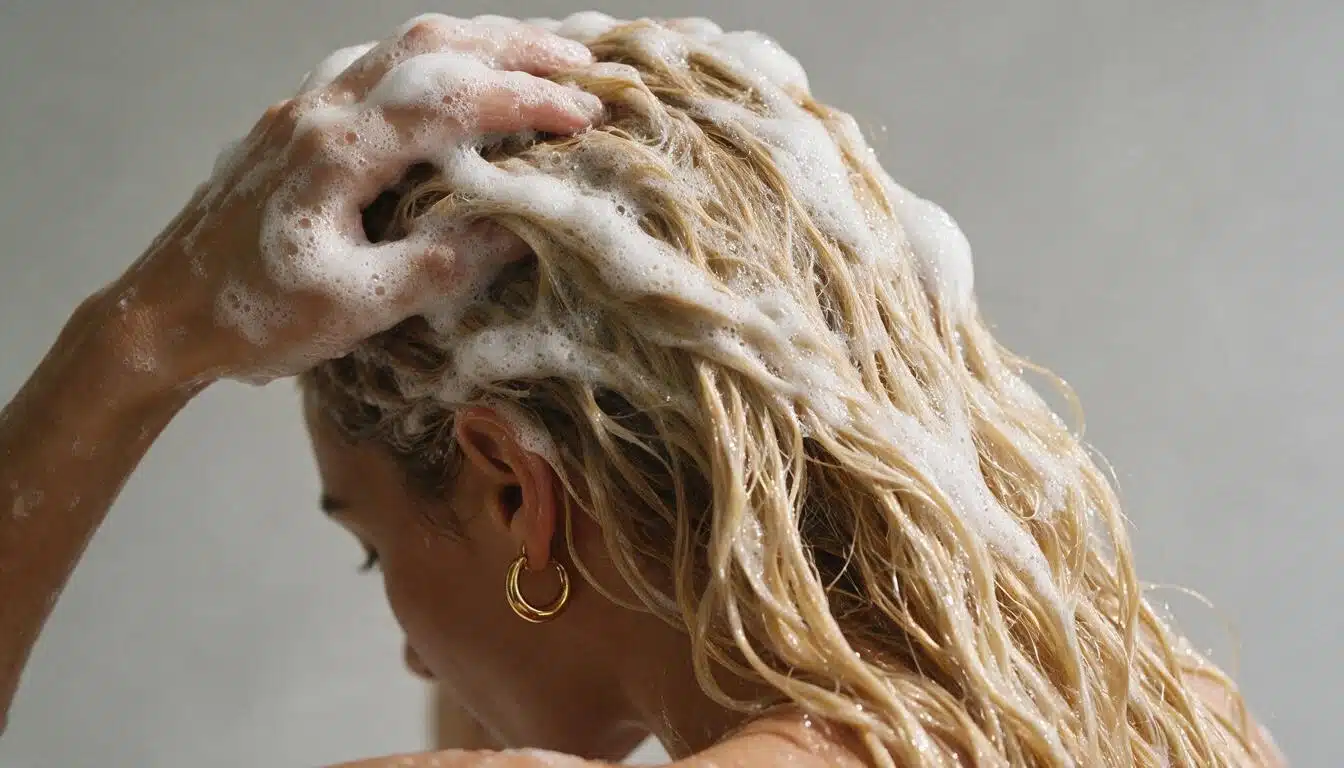
Clarifying shampoo is a deep-cleaning formula built with stronger surfactants that remove product buildup, hard water minerals, and chlorine residue that everyday shampoo cannot.
If your strands feel weighed down, or your curls have lost their bounce, buildup is usually the one behind it.
Clarifying shampoo is the fix stylists reach for first.
What is Clarifying Shampoo?
It is a deep clean your hair needs once in a while.
It’s a stronger formula, built to strip out what your everyday shampoo skims over. Stronger cleansing agents do the work here.
They cut through oils, residue, and mineral deposits that hard water leaves behind.
Regular shampoo cleans gently, day after day, without stripping too many natural oils. Clarifying shampoo works harder and faster.
But clarifying shampoo is best used occasionally, not daily. Once or twice a week is usually plenty.
Clarifying Shampoo vs Regular Shampoo vs Cleansing Shampoo vs Sulfate Shampoo
| Type | Strength | Best For | How Often |
|---|---|---|---|
| Regular Shampoo | Gentle | Daily oils, light dirt, no stripping | Daily |
| Cleansing Shampoo | Medium | Refreshing hair, light residue, everyday grime | 2-3x a week |
| Sulfate Shampoo | Mild-Medium | Daily grease, light residue | Daily |
| Clarifying Shampoo | Strong | Deep buildup, hard water minerals, chlorine, product residue | 1-2x a week |
Regular Shampoo
Regular shampoo cleans gently, and it suits daily use without stripping your natural oils. So use it as often as you like.
Clarifying shampoo cleans far deeper.
It uses much stronger cleansing agents to dig out deep buildup, hard water minerals, and chlorine residue that regular shampoo leaves behind.
Cleansing Shampoo
Cleansing shampoo is in the middle, lighter than clarifying shampoo, and a bit stronger than a regular one.
It suits hair that needs refreshing more often, minus the harsher stripping.
It’s built for hair that needs refreshing more often, lifting light residue and everyday grime. Clarifying shampoo goes much deeper.
Sulfate Shampoo
Regular shampoos already have mild sulfates, and that’s normal.
And it removes daily grease and light residue. And when it comes to the three weeks of hairspray and a summer of pool water, those mild sulfates can’t touch it.
Clarifying shampoo uses a much higher concentration of cleansing agents, built for deeper cleaning.
How to Use Clarifying Shampoo Without Drying Out Your Hair?

Clarifying shampoo works amazingly, but you definitely need to use it well. As we have read it, you should use it occasionally, not regularly.
Step 1: Wet Your Hair Thoroughly First
Start with hair that’s completely soaked through. With well-soaked hair, water lathers more evenly and keeps the formula from concentrating too heavily in one spot.
Step 2: Focus the Shampoo on Your Scalp, Not Your Ends
Buildup collects mostly at the roots, so massage the shampoo directly into your scalp and let the lather run down through the lengths as you rinse.
Do not scrub it into your ends.
Step 3: Keep it on for Thirty Seconds, Not Longer
30 seconds is usually enough time for the cleansing agents to remove the buildup, and leaving it on longer only pulls out more natural oil than your hair needs.
Step 4: Rinse with Lukewarm Water
Hot water opens the hair cuticle wider and lets even more moisture escape, so lukewarm water helps rinse out residue while keeping your strands protected.
Step 5: Always Follow with a Deep Conditioner
This step is non-negotiable, since clarifying shampoo strips moisture along with buildup, and a rich conditioner or mask replaces what was lost so hair doesn’t dry out afterward.
Is Clarifying Shampoo Safe?
Overuse is the real risk. Wash too often, and your hair will become dry, rough, or prone to breakage. Used occasionally, it rarely causes lasting damage.
Color-treated hair needs a gentler touch. Strong cleansing agents can fade color faster by stripping pigment along with buildup.
Color-safe formulas, made with milder ingredients, help protect color while still clearing residue.
Sensitive or flaky scalps deserve the same care. Harsh surfactants can make dryness or irritation worse, not better. A milder, sulfate-free formula is often the safer pick.
Dry or damaged hair should stick to fewer washes. Overuse pulls out too much natural oil and leaves strands brittle.
Naturally clean or rarely styled hair won’t always show much difference. A gentler wash does the job just fine in that case.
Key Takeaways
So, clarifying, cleansing, sulfate-free, detox- pick based on what your hair’s actually dealing with, not what’s trending.
Once you know your hair type and how often it gets dirty, this stops being confusing.
What is clarifying shampoo, in simple terms? A stronger, occasional reset for buildup that everyday washing leaves behind. With that settled, picking the right shampoo gets a lot easier.
Frequently Asked Questions
1. Can I Make a Clarifying Shampoo at Home?
A mix of baking soda or apple cider vinegar with water works as a gentle DIY version.
2. Does Clarifying Shampoo Help with Dandruff?
It can remove flakes tied to buildup, but it does not treat dandruff caused by fungus or skin conditions.
3. Can Men Use Clarifying Shampoo Too?
Hair type matters more than gender, so the same rules apply to everyone.
4. Does Clarifying Shampoo Expire?
Most formulas last one to two years unopened, and less once opened.
5. Can I Use Clarifying Shampoo on Hair Extensions or Wigs?
Yes, but only occasionally, and always check the manufacturer’s care instructions first.