
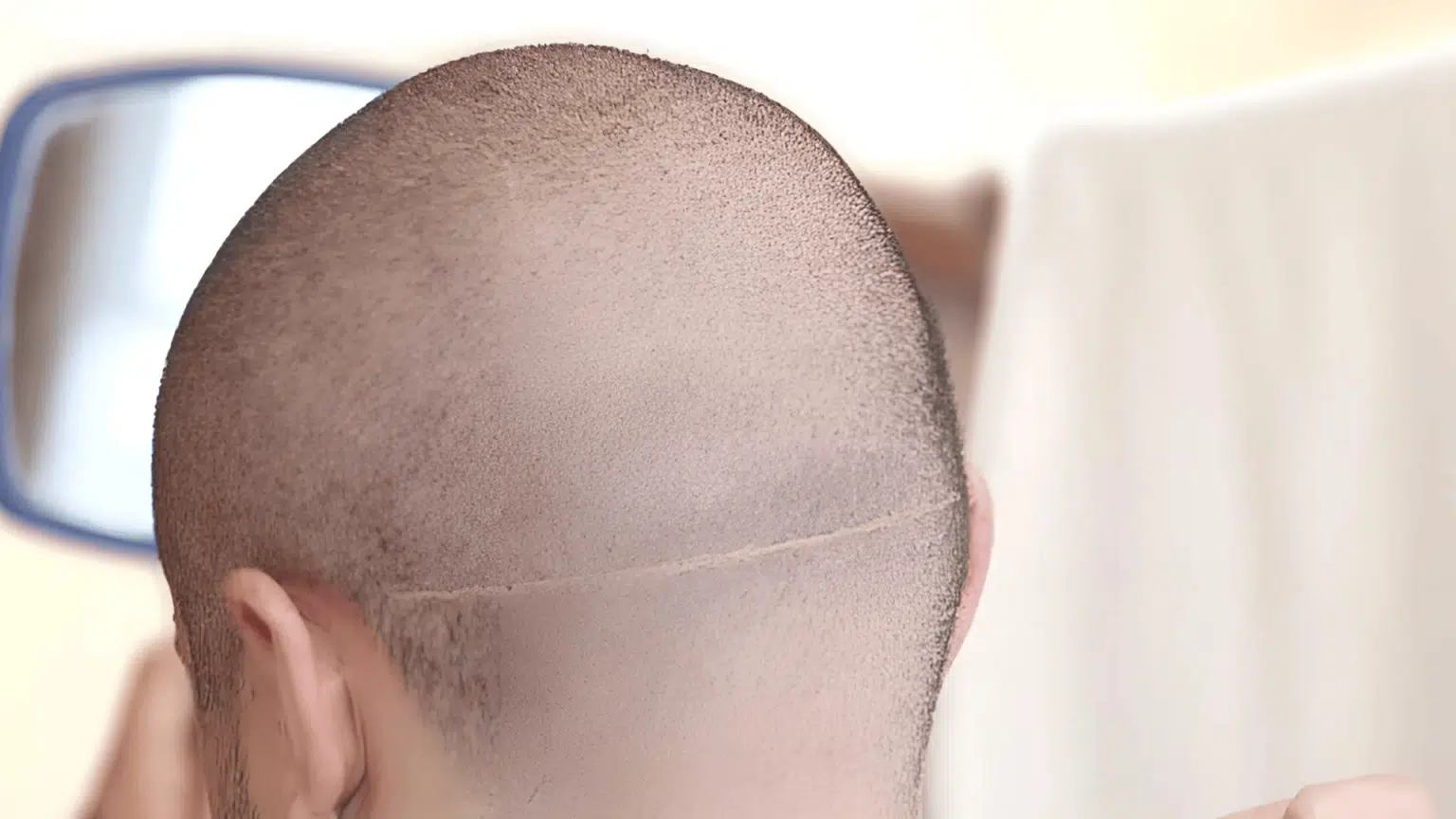
Thinking about a hair transplant but worried about scars? Most people considering this procedure have the same concern about visible marks left behind.
I’ll show you exactly what to expect with hair transplant scars and how to minimize their appearance. From understanding different scar types to learning treatment options, you’ll get practical information to make informed decisions.
This guide covers everything from pre-surgery preparation to long-term scar care. You’ll learn which factors affect scarring, when scars become noticeable, and what treatments work best if you’re unhappy with the results.
What is a Hair Transplant Scar?
A hair transplant scar is a mark left on your scalp after the surgery. When doctors remove hair from one part of your head to move it somewhere else, they create small wounds. Your body heals these wounds naturally, but this healing process creates scars.
The way your doctor performs the surgery matters a lot. There are two main methods. The first method takes a strip of skin from your head.
This leaves a long, thin scar. The second method removes individual hair follicles one by one. This creates many tiny dot-like scars.
Your skin type affects how visible these scars become. Some people heal with barely noticeable marks. Others develop more obvious scars. The surgeon’s skill and experience also play a big role in how your scars will look after healing.
Types of Hair Transplant Scar
Not all hair transplant scars look the same. The type of scar you get depends on which surgical method your doctor uses. Each technique leaves its own specific mark on your scalp.
Some methods create one long line. Others make many small dots. A few older techniques left bigger, more obvious marks. Understanding these different scar types helps you know what to expect after your surgery.
FUT (Follicular Unit Transplantation) Scars
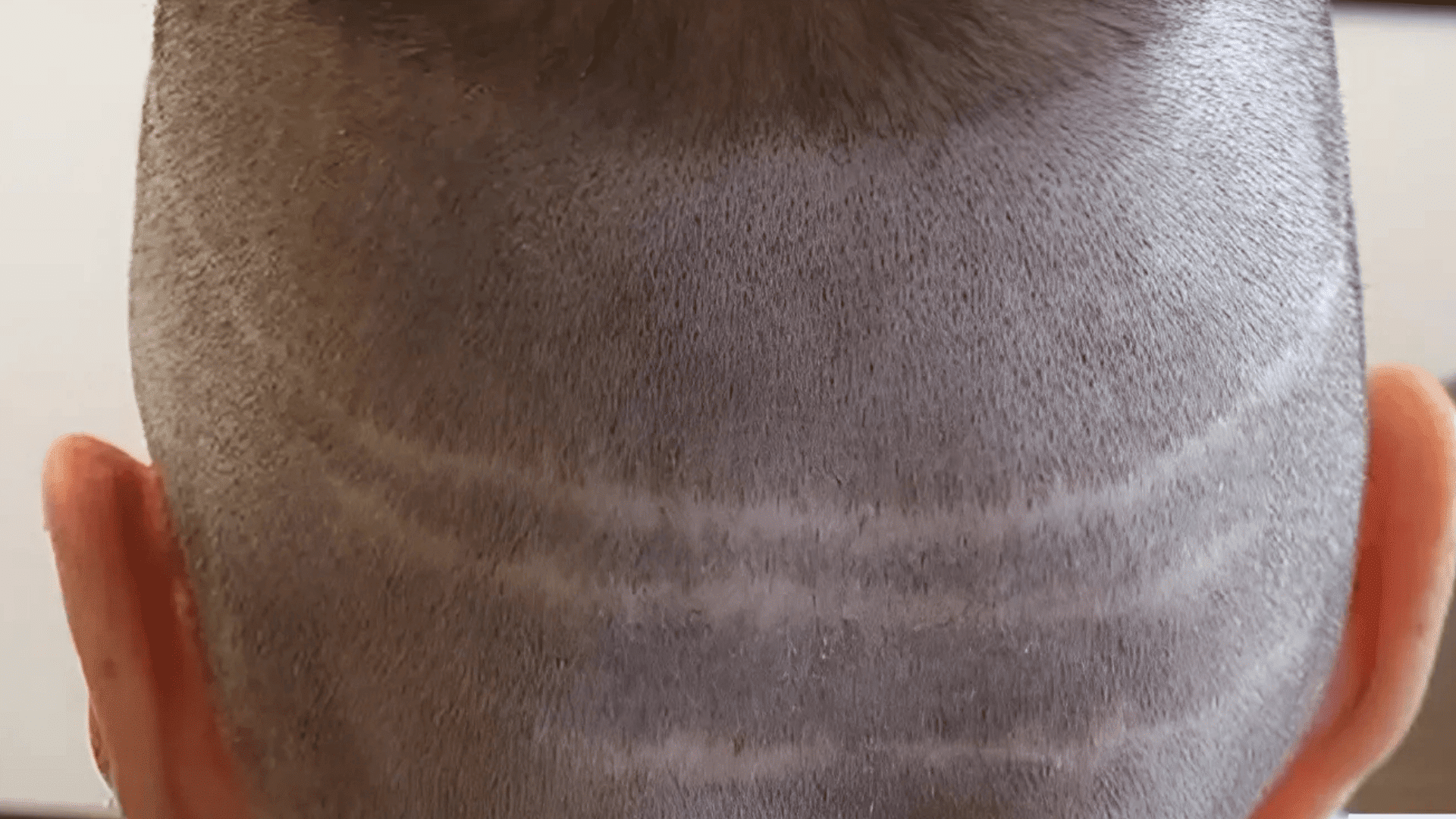
FUT creates a single straight line across the back of your head. This happens because doctors remove a strip of skin containing hair follicles.
The line can be 6 to 12 inches long, but usually stays thin. Hair above and below often hides this scar well. Most people can cover it with longer hairstyles.
FUE (Follicular Unit Extraction) Scars
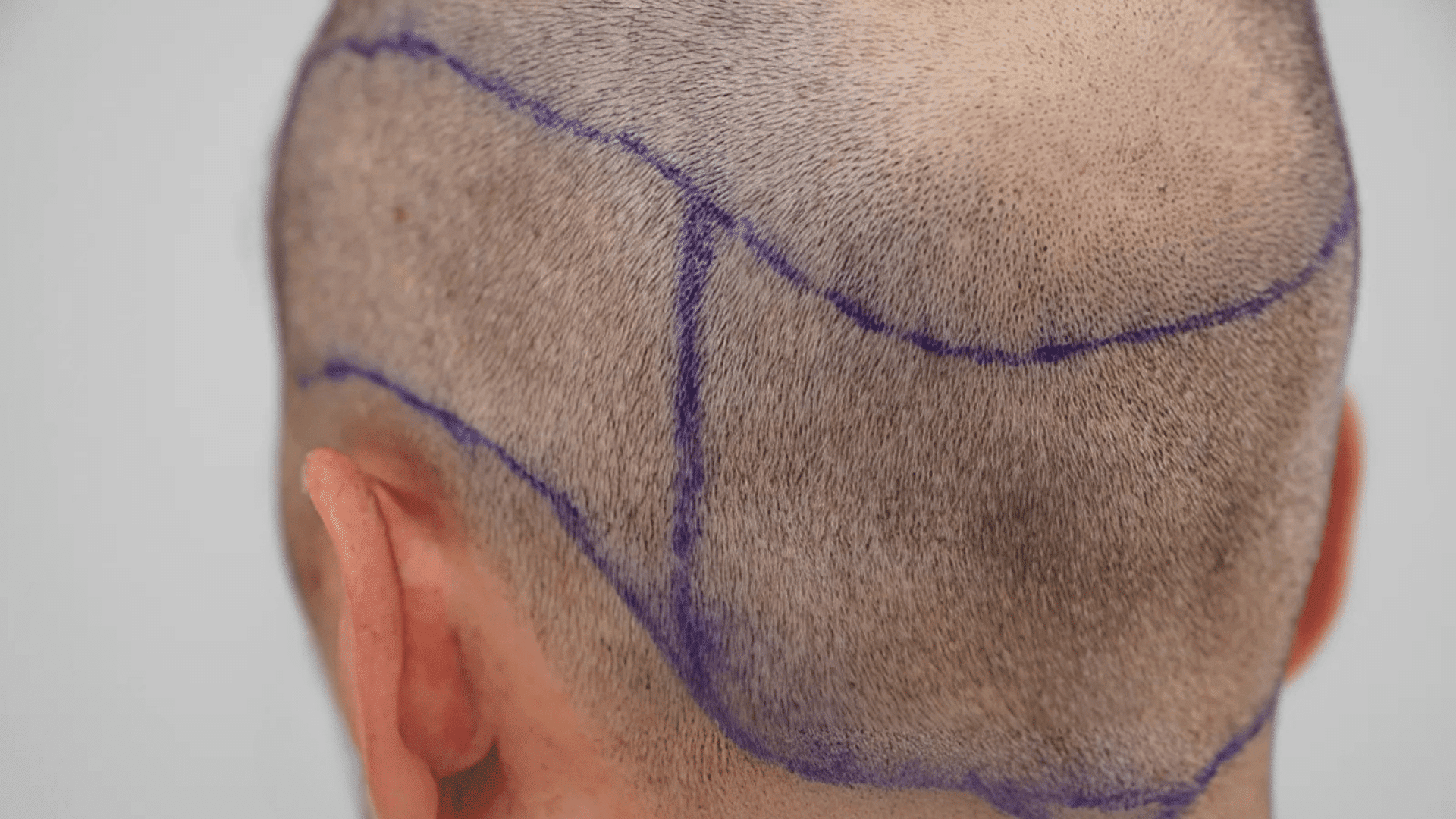
FUE leaves tiny white dots scattered across your scalp. Each dot is about 1mm wide. Doctors create these when they remove individual hair follicles one at a time.
You might have hundreds or thousands of these small scars. They look like small white spots when viewed up close.
Punch Graft Scars
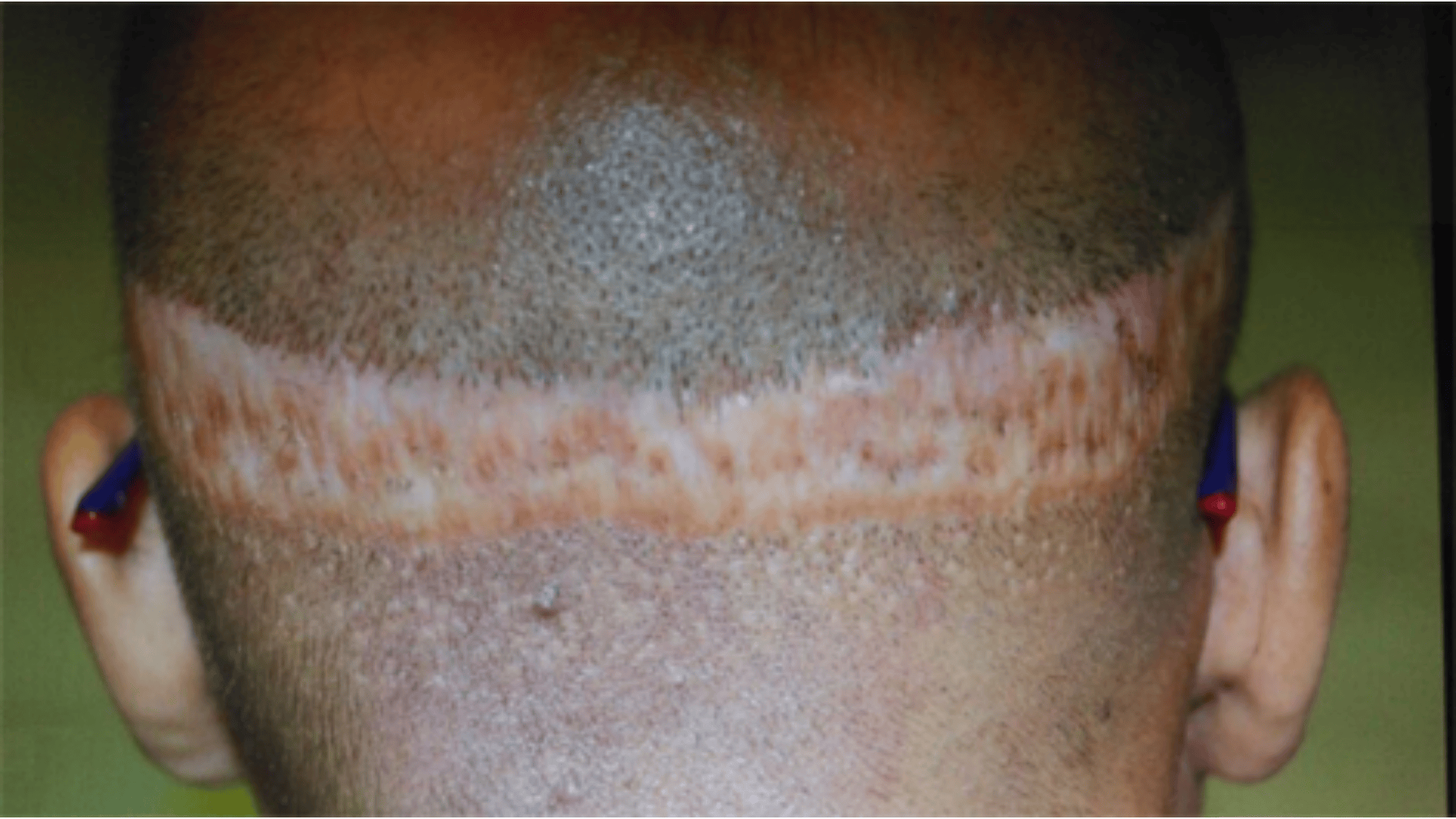
Punch graft methods from years past left larger, more noticeable marks. These created bigger circular scars on your scalp. Each scar was about 4mm wide, making them much more visible than modern techniques.
Doctors used round punches to remove hair sections. This older method often left a “doll’s hair” appearance. Modern techniques focus on making scars much less visible.
Are Hair Transplant Scars Permanent?
Yes, a hair transplant scar is permanent. Once your body creates scar tissue, it stays there for life. However, scars can fade and become less noticeable over time.
Several factors affect how your scars look as years pass. Your age, skin type, and healing ability all play a role. People with darker skin often see more visible scars. Younger patients usually heal better than older ones.
- FUT scars tend to be more permanent and visible. The linear scar remains as a thin line that may stretch over time.
- FUE scars are also permanent but often fade better. The tiny dots can become very hard to see, especially if you have thick hair.
Several factors influence the appearance of your scars after a hair transplant. Some factors you can control, while others depend on your natural healing process.
Key factors that influence scarring:
- Surgeon’s skill and experience – More experienced doctors create smaller, cleaner cuts that heal better. They know the right techniques to minimize scar formation.
- Patient’s skin type and healing ability – Some people naturally form more scar tissue than others. Your genetics play a big role in how well wounds heal.
- Aftercare and recovery process – Following post-surgery instructions carefully helps wounds heal properly. This includes keeping the area clean and avoiding activities that stress healing tissue.
Taking care of these factors gives you the best chance of minimal, less noticeable scarring after your procedure.
When and Why Scars Become Noticeable
Hair transplant scars don’t look the same right after surgery as they do months later. Understanding this timeline helps you know what to expect during your recovery.
Right after surgery, your scars will be red and swollen. This is normal healing. Over 6 to 12 months, the redness fades and scars turn white or skin-colored. The final look can take up to a year to develop.
Donor area scars (where hair was taken from) are usually more visible than recipient area scars (where hair was placed). The back of your head often has thicker skin that scars more.
Hair regrowth around scars helps hide them. As your transplanted hair grows, it covers many scarred areas. Your hair styling choices also matter. Longer hairstyles can cover linear scars better than very short cuts.
Ways to Reduce Scar Visibility
You can take steps to minimize how visible your hair transplant scars become. The key is starting before surgery and continuing through your recovery. Smart choices at each stage help your scars heal better and stay less noticeable.
Before surgery:
Choose an experienced surgeon who specializes in hair transplants and has good reviews from past patients. Follow all pre-surgery instructions, like avoiding blood thinners and staying healthy before your procedure
Right after surgery:
Clean the area gently with mild soap as your doctor recommends, without scrubbing hard. Stay out of direct sunlight and wear a hat when going outside during the first few weeks. Never scratch or pick at scabs even if they feel itchy or uncomfortable
Long-term:
Give your body time to heal as scars naturally fade over 6 to 12 months. Use specialized shampoos that promote healing if your doctor suggests them. Try natural aids like vitamin E oil to help skin recover better
Following these steps consistently gives you the best chance of minimal, barely visible scarring.
Treatments for Scars That Bother You
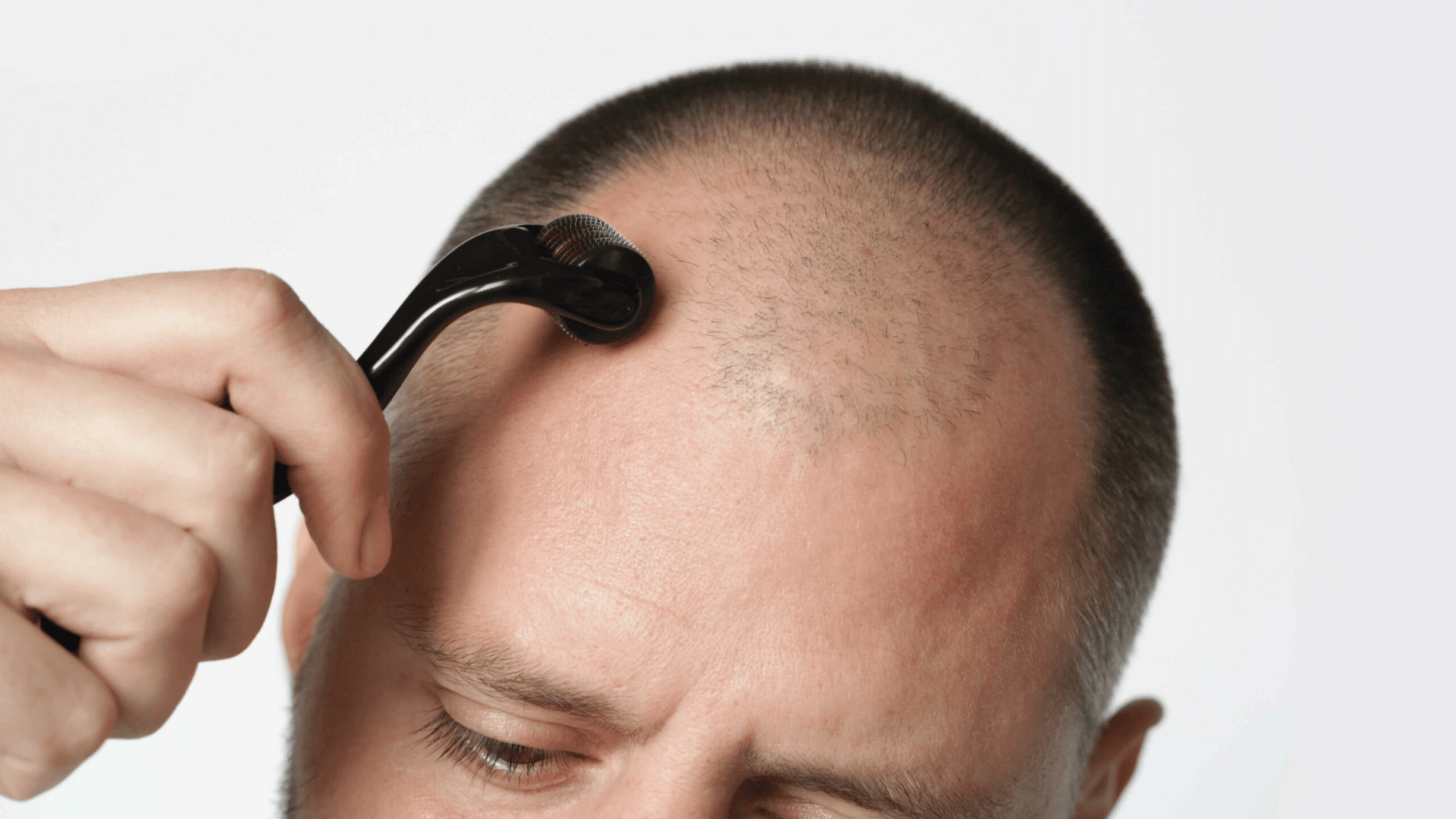
If your hair transplant scars are more visible than you’d like, several treatment options can help. Each method has benefits and drawbacks to consider before making a decision.
| TREATMENT | WHAT IT DOES | PROS | CONS |
|---|---|---|---|
| Microneedling | Creates tiny holes to boost healing | Less expensive, minimal downtime | Takes multiple sessions, slow results |
| Laser Therapy | Smooths out bumpy texture | Good for texture problems, precise | Can be costly, may need many visits |
| Hair Fibers | Covers scars with fake hair powder | Quick fix, easy to use | Washes off, temporary solution |
| Scalp Makeup | Hides scars with special makeup | Cheap, works right away | Daily application needed, can rub off |
| Scar Revision | Surgery to make line thinner | Permanent improvement possible | Another surgery, new scar risk |
| Additional Grafting | Places hair over scar areas | Natural hair coverage | Expensive, uses more donor hair |
1. Microneedling
Microneedling uses tiny needles to create small holes in your scar tissue. This triggers your body’s natural healing process. New collagen grows to fill in and smooth the scar area.
You’ll need several sessions spaced weeks apart. The treatment is less expensive than surgery but takes time to show results. Most people see improvement after 3-6 sessions.
2. Laser Therapy
Laser treatment uses focused light beams to smooth rough scar texture. The laser removes damaged skin layers and encourages new, healthier skin to grow.
This works well for raised or bumpy scars. Sessions typically last 30-60 minutes. You might need 4-8 treatments for best results. Some redness and swelling occur after each session but fade quickly.
3. Hair Fibers
Hair fibers are tiny synthetic particles that stick to existing hair and scalp. They instantly make thin areas look thicker and can hide scar lines.
You shake the fibers onto dry hair and they bond until your next shampoo. This is the quickest way to cover scars. However, rain, sweat, or touching can make fibers fall off during the day.
4. Scalp Makeup
Special makeup designed for the scalp can hide scars and create the appearance of hair stubble. These products come in different colors to match your skin tone.
You apply them like regular makeup each morning. They work well for covering small scars or thin areas. The makeup stays on all day but washes off with shampoo.
5. Scar Revision Surgery
Scar revision surgery removes the old scar and creates a new, thinner line. The surgeon cuts out the existing scar tissue and carefully closes the wound with small stitches.
This can make wide or raised scars much less visible. However, you’ll have a new scar that needs time to heal. There’s always a risk that the new scar could be worse.
6. Additional Hair Grafting
This involves transplanting more hair follicles directly into or around the scar area. The new hair grows through and around the scar tissue, making it much harder to see.
This gives the most natural-looking results since it’s your own hair. However, it uses up more of your limited donor hair and costs as much as another full procedure.
Caring for Your Scar After Treatment
Good aftercare doesn’t stop once your initial hair transplant heals. Even after scar treatments, proper care helps maintain results and prevents new problems. Your treated scars need ongoing attention to look their best.
Essential aftercare steps:
- Use sunblock daily – Apply SPF 30 or higher on your scalp every day, even on cloudy days to protect sensitive treated areas
- Wash gently – Use mild, gentle shampoo that won’t irritate your sensitive skin or disrupt healing processes
- Massage lightly – Give yourself soft scalp massages to improve blood flow and keep treated skin flexible
- Avoid harsh products – Don’t use strong chemicals or styling products that could irritate your healing scars
- Never scratch or pick – Keep your hands away from treated areas even if they feel itchy during recovery
- Watch for problems – Contact your doctor if you see unusual redness, swelling, or pain that gets worse
Following these simple steps helps your treatment results last longer and keeps your scalp healthy.
Wrapping It Up
Hair transplant scars are a reality you’ll face after surgery, but they don’t have to define your results.
The key is choosing an experienced surgeon and following good aftercare. Your scars will fade over time, especially with proper care. Most people find that their scars become barely visible once hair grows back.
Remember, every hair transplant leaves some kind of mark. But with the right approach, these scars can be so small that only you know they’re there.
Ready to move forward with confidence? Your hair restoration doesn’t have to be limited by scar concerns.