
The majority of men never learn the fundamentals of male hair care, which is why so many of them have trouble.
Every hair type, be it wavy hair, straight, thick, thin, greasy, or dry, wants something different. No matter how hard you work, if you use the wrong products, you’ll keep facing the same battle every morning.
However, things become much easier if you understand what your hair really requires.
Continue reading to find out what your hair wants and how to fulfill it.
Know Your Hair Type Before Building a Routine
Most men don’t know their hair type, and that’s the first mistake in hair care for men. Knowing your hair type makes everything else easier.
| Hair Type | Characteristics |
|---|---|
| Straight Hair | Gets oily fast. Shiny, but can turn greasy by afternoon. |
| Wavy Hair | Bends without tight curls, can go frizzy or flat. |
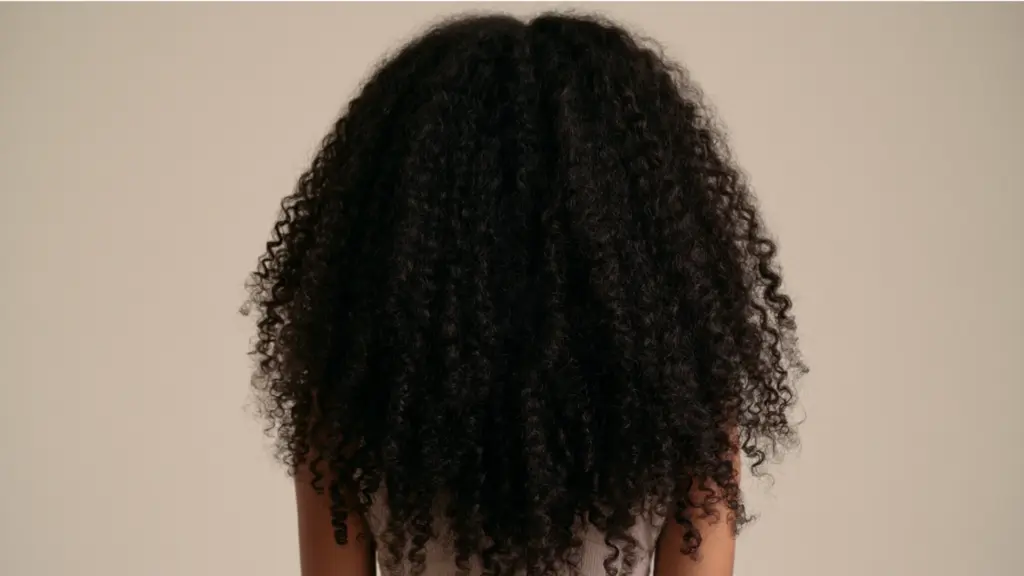
| Curly Hair | Dry and prone to frizz. |
| Thick Hair | Handles heavy products and dries slowly. |
| Oily Hair | Produces excess sebum, which worsens with over-washing. |
| Dry Hair | Rough, brittle, prone to split ends. |
| Combination Hair | Oily scalp and dry ends. |
A Simple Daily Hair Care Routine for Men
You don’t need ten products and an hour every morning. A good hair care routine for men can actually be simple if you follow the right steps in the right order.
Step 1: Cleanse Your Hair Properly
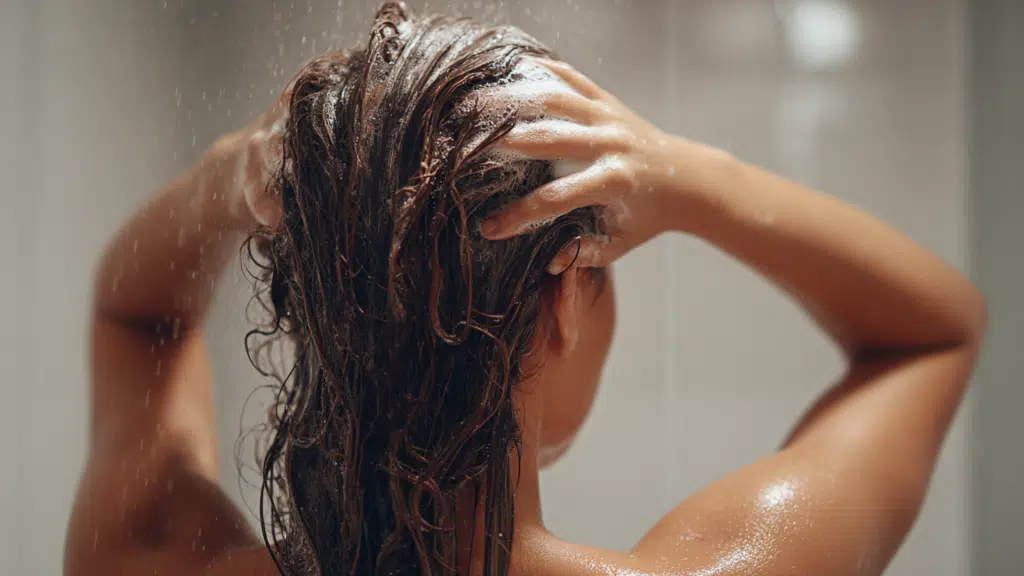
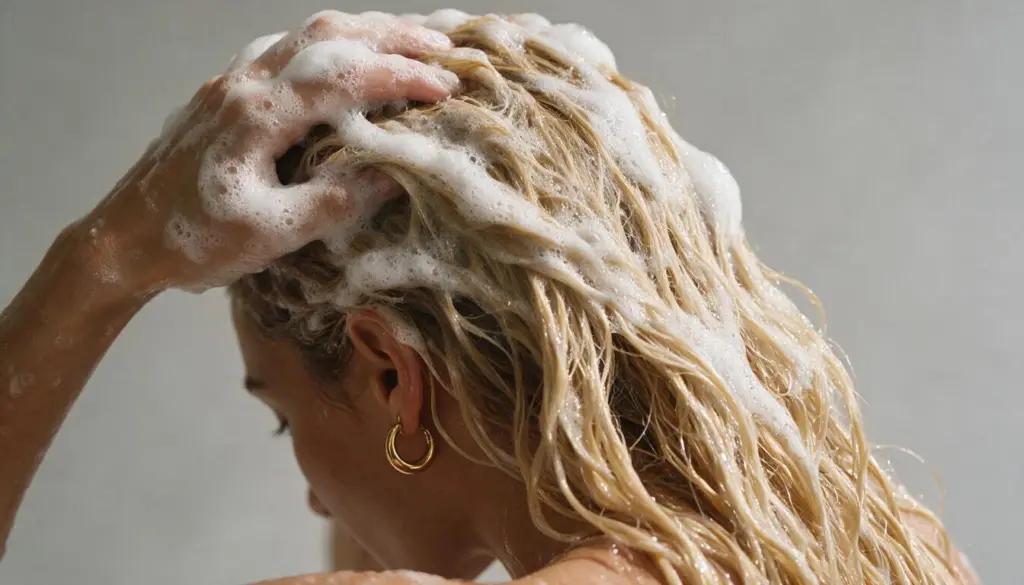
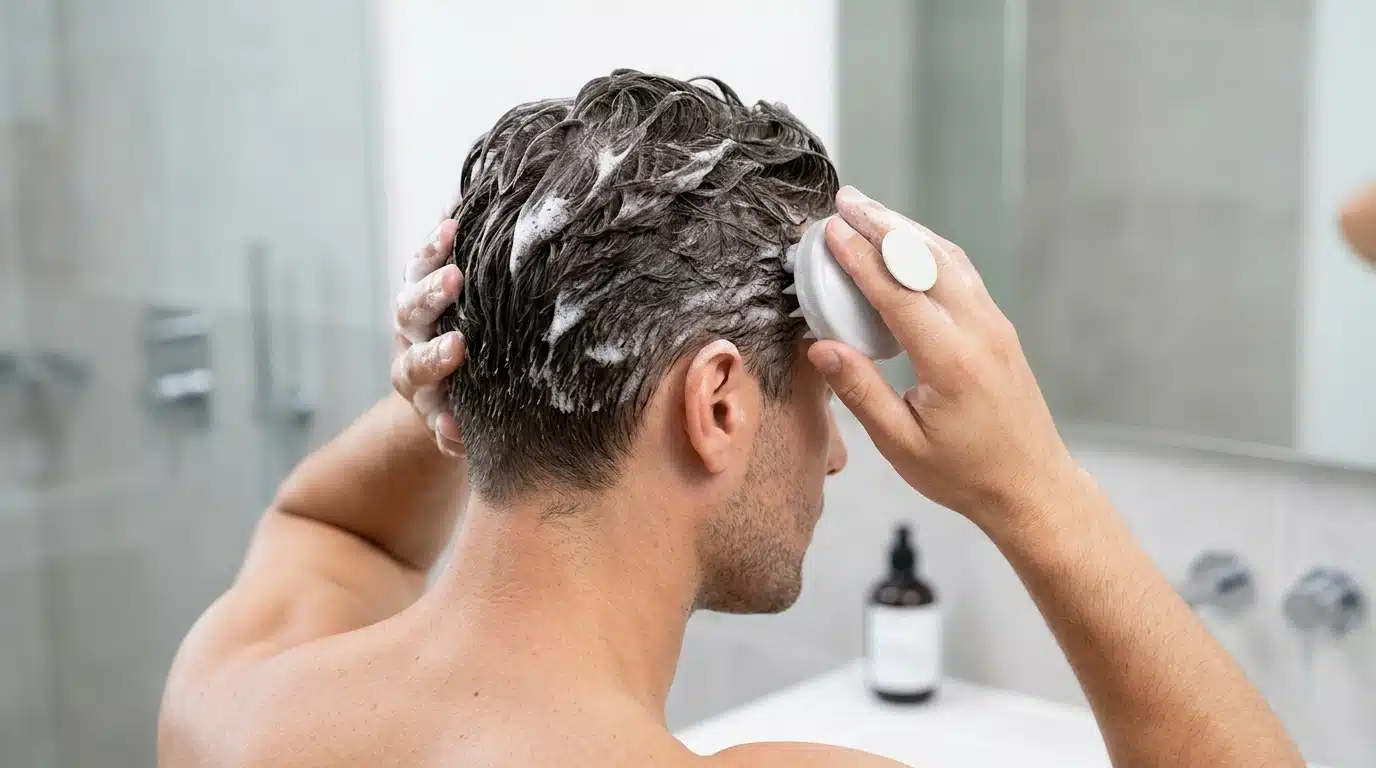
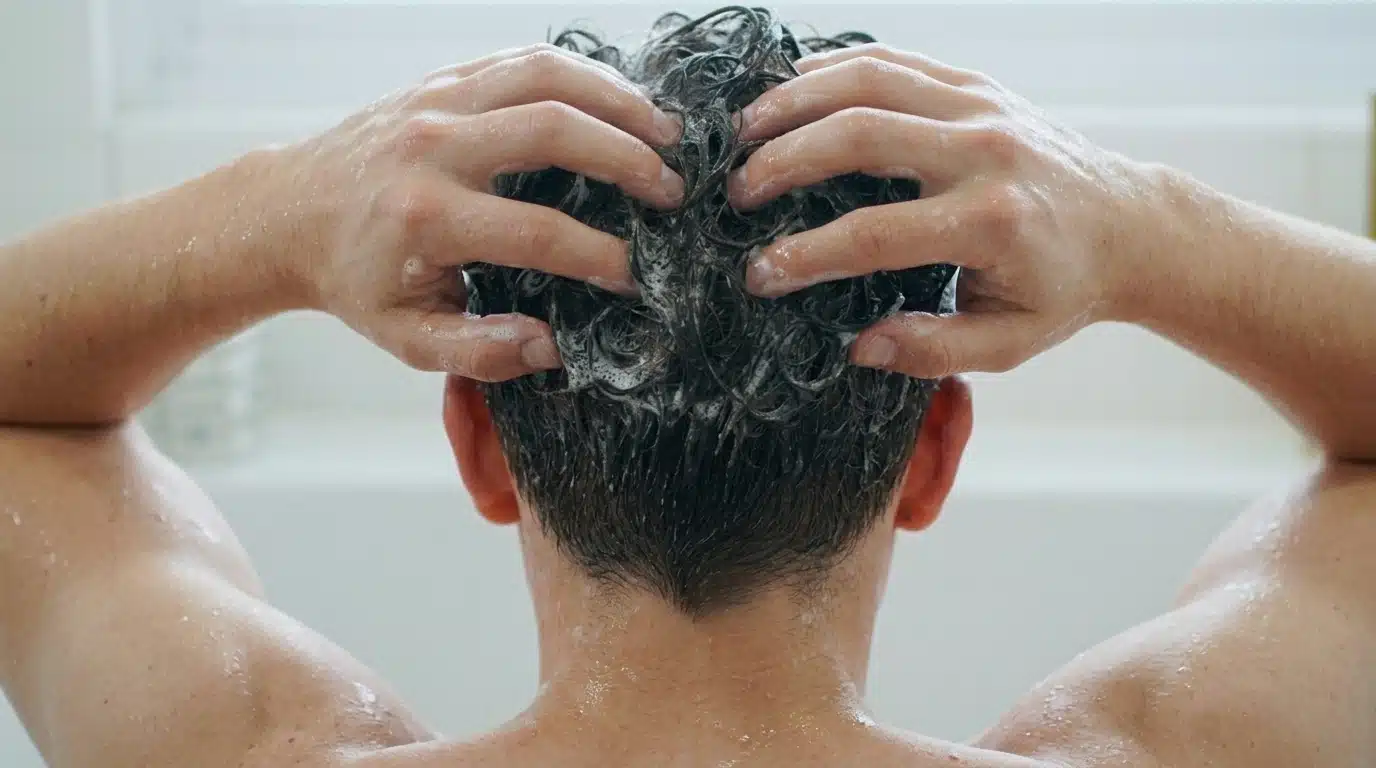
Start with a shampoo that matches your hair type. Wet your hair fully, then work the shampoo into your scalp using your fingertips, not your nails.
Focus on the scalp, since that’s where oil and buildup collect the most. Rinse well, as leftover shampoo can leave hair looking dull and feeling weighed down.
Use clarifying shampoo once every one to two weeks, especially if you use styling products often or swim regularly.
A scalp scrub, used once a week, sloughs away that buildup. Gently massage it in, then rinse well. Your scalp will feel noticeably fresher afterward.
Step 2: Conditioner Based on Your Hair Type
Conditioner isn’t optional, even though a lot of men skip it. It restores moisture that shampoo strips away. If you’ve got fine hair, go light and apply mostly to the ends.
Thick or curly hair, though, can handle a richer formula from mid-length down. Just avoid the scalp unless the product says otherwise.
Regular conditioner works on the surface, but deep conditioning goes further. Once a week is usually enough for most hair types, though dry or curly hair might need it twice.
Step 3: Dry Your Hair Without Causing Damage
Rubbing your hair with a towel sounds harmless, but it roughs up the hair cuticle and leads to frizz. Instead, gently squeeze out excess water or pat it dry.
If you’re using a blow dryer, make sure to keep it on a low or medium heat setting, and hold it a few inches away from your scalp.
Step 4: Apply Leave-In or Hair Serum (If Needed)
Not everyone needs this step, but dry or curly hair usually benefits from it. A leave-in conditioner or lightweight serum locks in moisture and cuts down on frizz.
Apply it while your hair is still damp, and focus on the mid-lengths and ends rather than the roots.
Step 5: Style Without Overloading Your Hair
Whatever product you use, whether it’s clay, gel, or pomade, do not use it in excess. Overloading your hair makes it look greasy and feel stiff.
Apply a small amount and work it through with your fingers. Add more only if needed.
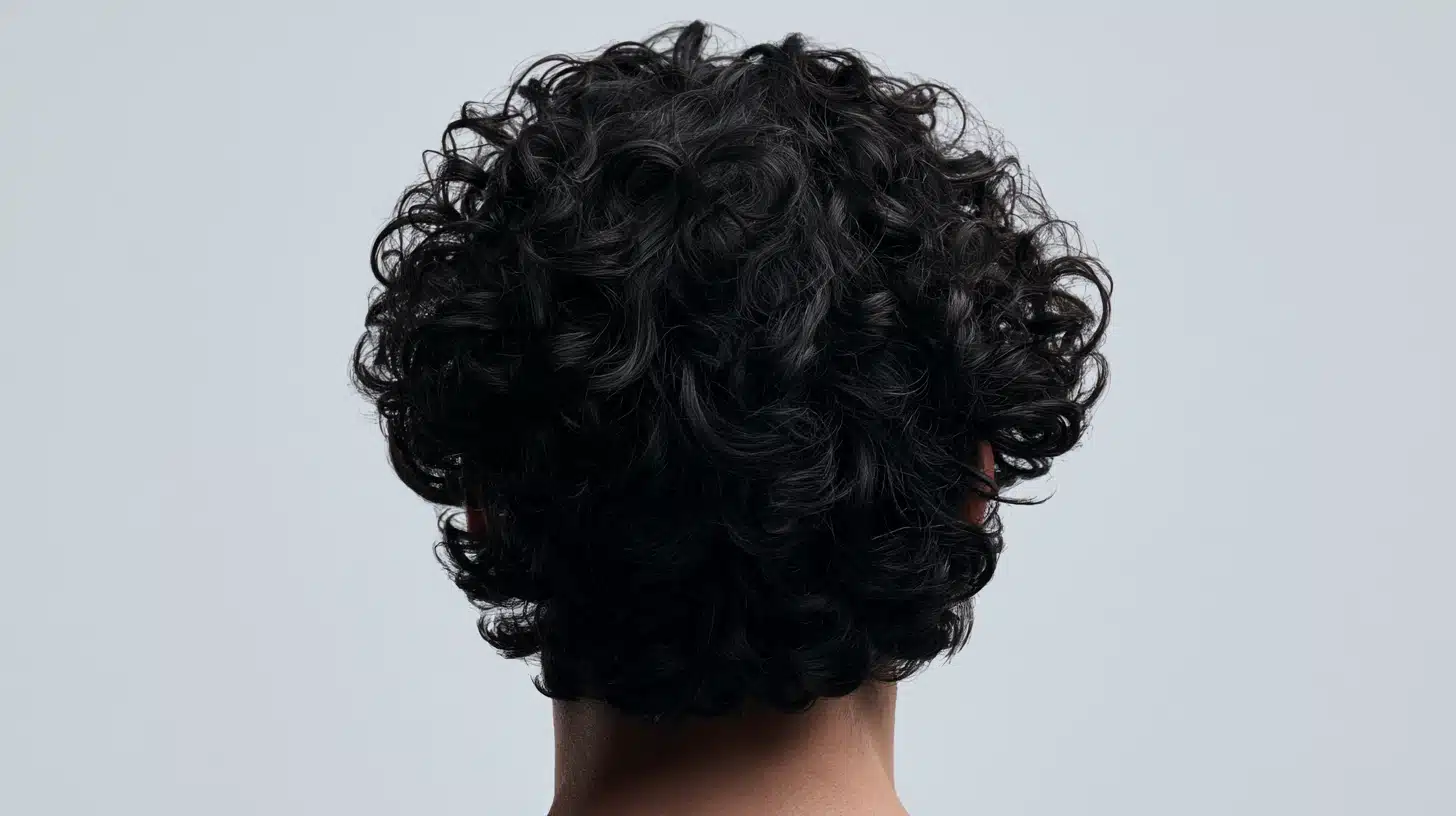
The curly hair routine is a little different; it requires less shampoo, more conditioner, and a strong hold gel/mousse/curl cream for long-lasting curls.
Hair Care Tips for Different Hair Concerns
Whether it’s dryness, dullness, or shedding, everyone has experienced a hair problem at some point. Most concerns have simple fixes once you know the right approach to hair care for men.
Hair Fall and Breakage
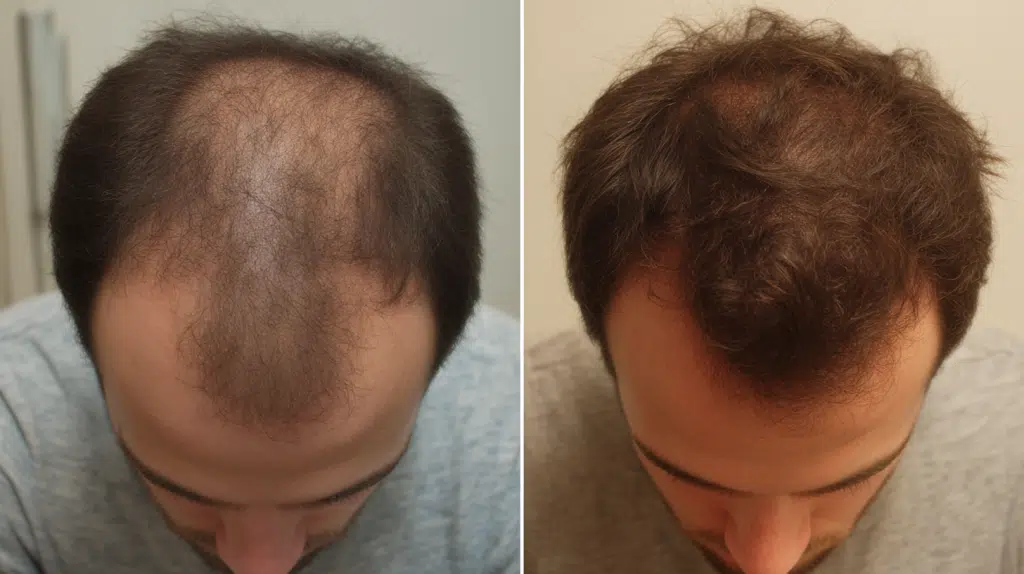
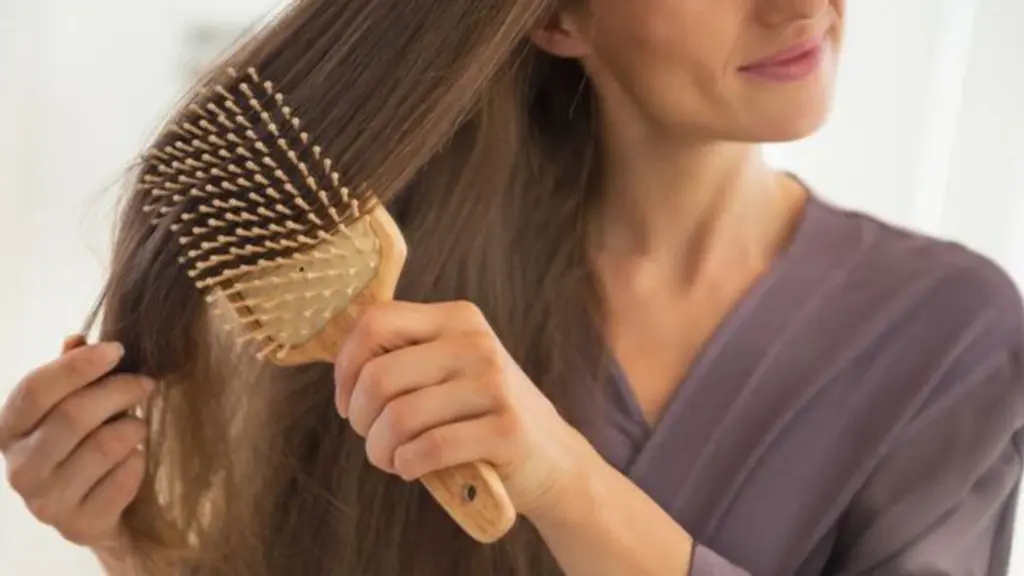
Tight hairstyles, harsh products, stress, and a poor diet can all cause hair loss. Avoid tugging hair back too much, use a mild shampoo, and be gentle when brushing damp hair.
The weather, excessive washing, and heat styling all contribute to dry and frizzy hair by causing moisture loss. Avoid using hot water, add a weekly hair mask, and use a moisturizing shampoo instead.
Oily Scalp
Excess oil is caused by genetics or overactive oil glands, and cleaning your scalp every day might exacerbate it. Use a mild clarifying shampoo two or three times a week to treat this.
Dandruff and Itchy Scalp
Flakes and itching are caused by a dry scalp, fungal growth, or product sensitivity. Over a few weeks, an anti-dandruff shampoo containing salicylic acid or zinc pyrithione works.
Thin or Flat Hair
Use a volumizing shampoo instead of rich conditioners on the roots, try blow-drying upside down, and avoid using heavy products that further flatten thin hair.
Heat-Damaged Hair
Hair that has been blow-dried or straightened frequently becomes brittle, dull, and prone to split ends. Reduce the amount of heat styling or use a protectant prior to heat styling to prevent this.
Color-Treated Hair
The structure of hair is weakened by coloring. Use a UV-protectant spray in the sun, wash your hair two or three times a week, and use a sulfate-free shampoo designed for color-treated hair for better maintenance.
Style Your Hair Without Damage
Styling your hair shouldn’t come at the cost of its health. A little care and the right approach can keep your look sharp without wrecking your strands.
1. Choose Products That Match Your Hairstyle
Not every product suits every style. A slick side part calls for pomade, while a textured, messy look works better with clay or sea salt spray.
Using the wrong product often means fighting your hair all day instead of working with it. So match the product to the finish you actually want.
2. Minimize Heat Styling
Heat tools give quick results, but overusing them dries out hair and weakens it over time. Try to limit blow-drying, straightening, or curling to a few times a week rather than daily.
When you do reach for heat, keep the temperature moderate and always apply a heat protectant first.
Ceramic or tourmaline straighteners are a great pick, since they distribute heat evenly and cause less damage overall.
3. Prevent Product Build-Up
Layering on pomade, gel, or wax day after day without proper washing leads to buildup. And that buildup makes hair look dull, feel greasy, and even clog your scalp.
Use a clarifying shampoo once a week to clear things out, and avoid piling on more product than you actually need.
To Wrap Up
Great hair isn’t about luck or expensive products; it’s about knowing your hair type and giving it what it needs. That is the real foundation of hair care for men that actually works.
Copying someone else’s routine will rarely help, since what suits straight hair might do nothing for curly or coily strands.
So, once you understand your own hair, the rest becomes much simpler.
Start by building a routine that fits: cleanse properly, condition based on your hair’s needs, and don’t ignore your scalp.
Frequently Asked Questions (FAQs)
1. Does Hair Type Change Over Time?
Yes, age, hormones, and weather can shift your hair type. Many men notice thinner or drier hair with time, so routines may need updates too.
2. Can Diet Alone Fix Bad Hair without a Proper Routine?
No, diet helps, but it can’t replace a proper routine. Skipping shampoo, conditioner, or scalp care still leaves hair looking dull and poorly managed.
3. Can Wearing a Hat Cause Hair Damage?
Yes, tight hats trap sweat and restrict airflow, leading to a greasy scalp. Choose looser hats and wash hair regularly if worn daily.