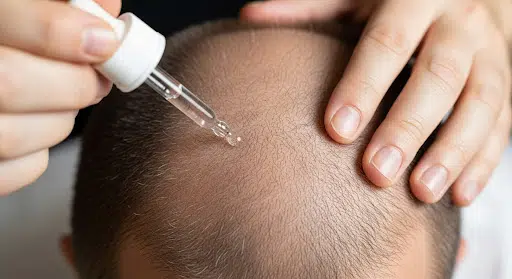

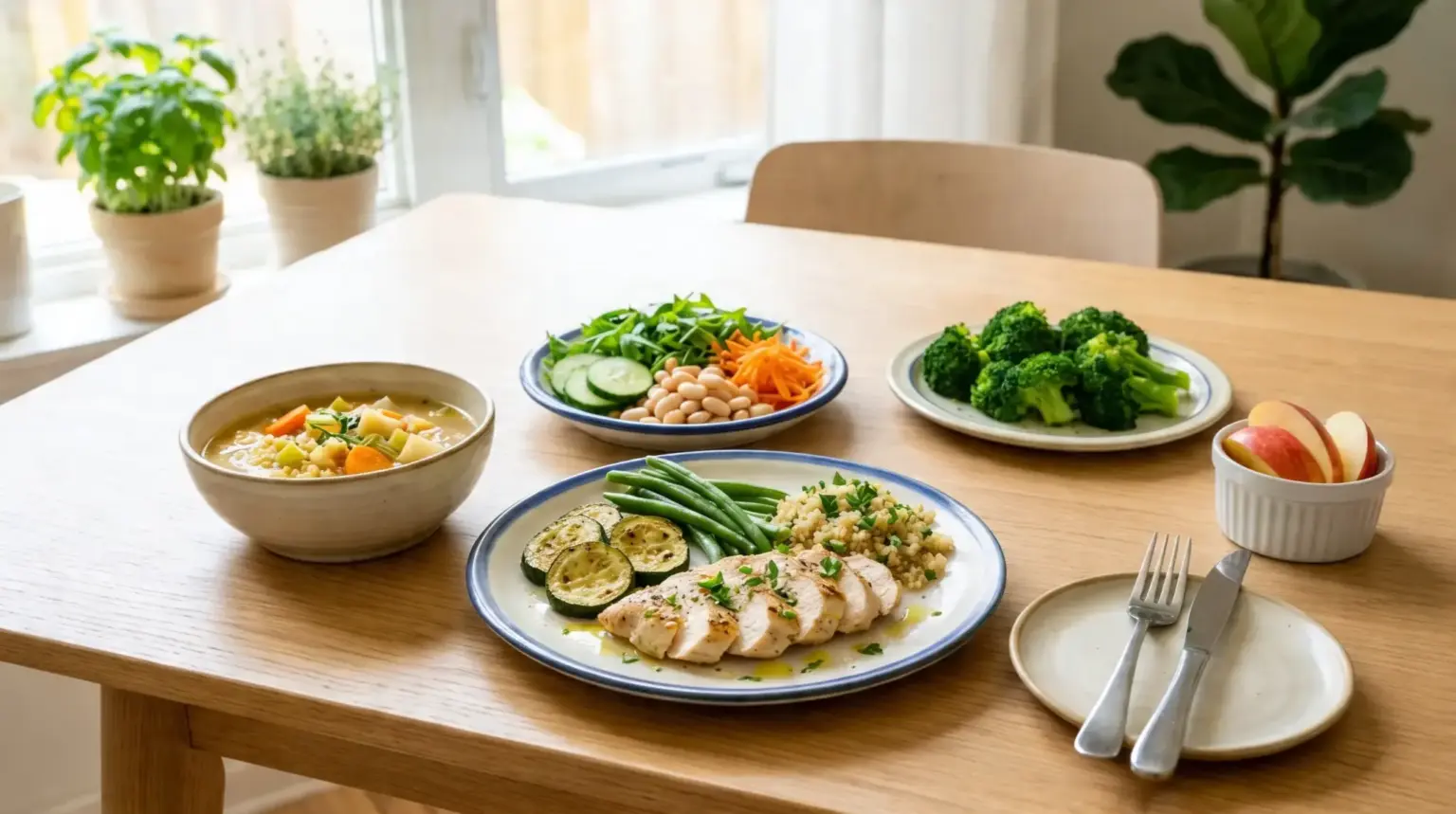
Headaches, skin flushes, and a runny nose after meals sound familiar?
People put up with these symptoms for years without knowing food could be the cause.
Histamine intolerance is more common than most people think, and the food you eat every day may be triggering it. A low histamine diet can help provide real relief.
It’s not complicated or restrictive.
It’s just about knowing which foods work for your body and which ones don’t.
So if you’ve been searching for answers, you’re in the right place.
This Diet is More Than Just a Trend
Histamine is a natural chemical your body makes.
It plays a role in digestion, immune response, and even brain function.
Normally, an enzyme called diamine oxidase (DAO) breaks down histamine from food before it causes problems.
When DAO levels are low, histamine builds up in the bloodstream. That’s when symptoms show up think itching, bloating, headaches, or a racing heart. This is called histamine intolerance.
It’s not an allergy, so standard allergy tests won’t catch it.
The issue isn’t the histamine itself.
It’s your body’s ability to process it that matters a lot when figuring out the right approach.
What is a Low Histamine Diet?
A low-histamine diet is a way of eating that limits foods known to trigger or contain high levels of histamine.
The goal is simple: reduce the load on your body, so symptoms ease.
It’s not a permanent fix, but it gives your system a break while you figure out your triggers. Fresh foods are generally safe. Aged, fermented, or processed foods are usually the ones to watch.
It is a reset for your gut and your immune response.
Who Actually Needs a Low Histamine Diet
Not everyone needs to follow this diet. It’s mainly for people whose bodies struggle to break down histamine properly.
You might want to consider it if you experience:
- Frequent headaches or migraines after eating.
- Skin reactions like flushing, itching, or hives.
- Digestive issues such as bloating or stomach cramps.
- Nasal congestion or sneezing with no clear cause.
People with irritable bowel syndrome, leaky gut, or low DAO enzyme levels often find this diet helpful too.
It’s also worth checking if your symptoms flare up after wine, aged cheese, or fermented foods.
The Science Behind Histamine
Histamine is stored in cells called mast cells.
When your body senses a threat, such as an allergen or an infection, these cells release histamine.
It then binds to receptors across your body, triggering inflammation and other responses.
Under normal conditions, the DAO enzyme clears excess histamine quickly. But certain factors slow DAO down.
Alcohol, some medications, and gut damage can all reduce DAO activity. When that happens, histamine stays in the bloodstream longer, leading to the symptoms many people struggle to explain.
Foods that Commonly Trigger Histamine Issues
Some foods are naturally high in histamine. Others trigger your body to release it on its own.
Here’s a quick look at the most common ones and what they can cause:
| Food | Why it’s a Problem | Common Symptoms it May Trigger |
|---|---|---|
| Aged cheese | High histamine content | Headaches, skin flushing |
| Red wine | High histamine + blocks DAO | Migraines, nasal congestion |
| Fermented foods | Histamine is formed during fermentation | Bloating, stomach cramps |
| Processed meats | Histamine builds up over time | Itching, digestive upset |
| Vinegar-based foods | Natural histamine liberator | Skin reactions, flushing |
| Tomatoes | Triggers histamine release | Hives, runny nose |
| Spinach | High natural histamine levels | Headaches, irritability |
| Alcohol | Blocks the DAO enzyme directly | Full-body flushing, rapid heartbeat |
Keep in mind, Reactions differ; what bothers one may not affect another.
What You Can Eat on a Low Histamine Diet
Fresh, whole foods are your best friends on this diet. Here’s what generally works well:
Fresh Proteins
- Fresh chicken, turkey, and beef
- Freshly caught fish (not canned or smoked)
- Eggs, though some people are sensitive to whites
Vegetables
- Broccoli, zucchini, sweet potatoes, and carrots
- Garlic and onions in moderate amounts
- Lettuce, cucumber, and bell peppers
Fruits
- Mango, apple, watermelon, and blueberries
- Most fresh fruits except citrus and strawberries
Grains & Staples
- Rice, oats, corn, and quinoa
- Coconut milk and fresh dairy alternatives
- Olive oil and most fresh herbs
Drinks
- Water, herbal teas (except black and green tea)
- Fresh fruit juices from low-histamine fruits
The key is freshness. The longer food sits, even in your fridge, the more histamine it builds up. Cook fresh and eat fresh whenever you can.
A One-Week Low Histamine Diet Plan
Starting out can feel crushing. This simple one-week plan takes the guesswork out and gives you a clear, practical place to begin.
Day 1: Keep it Simple
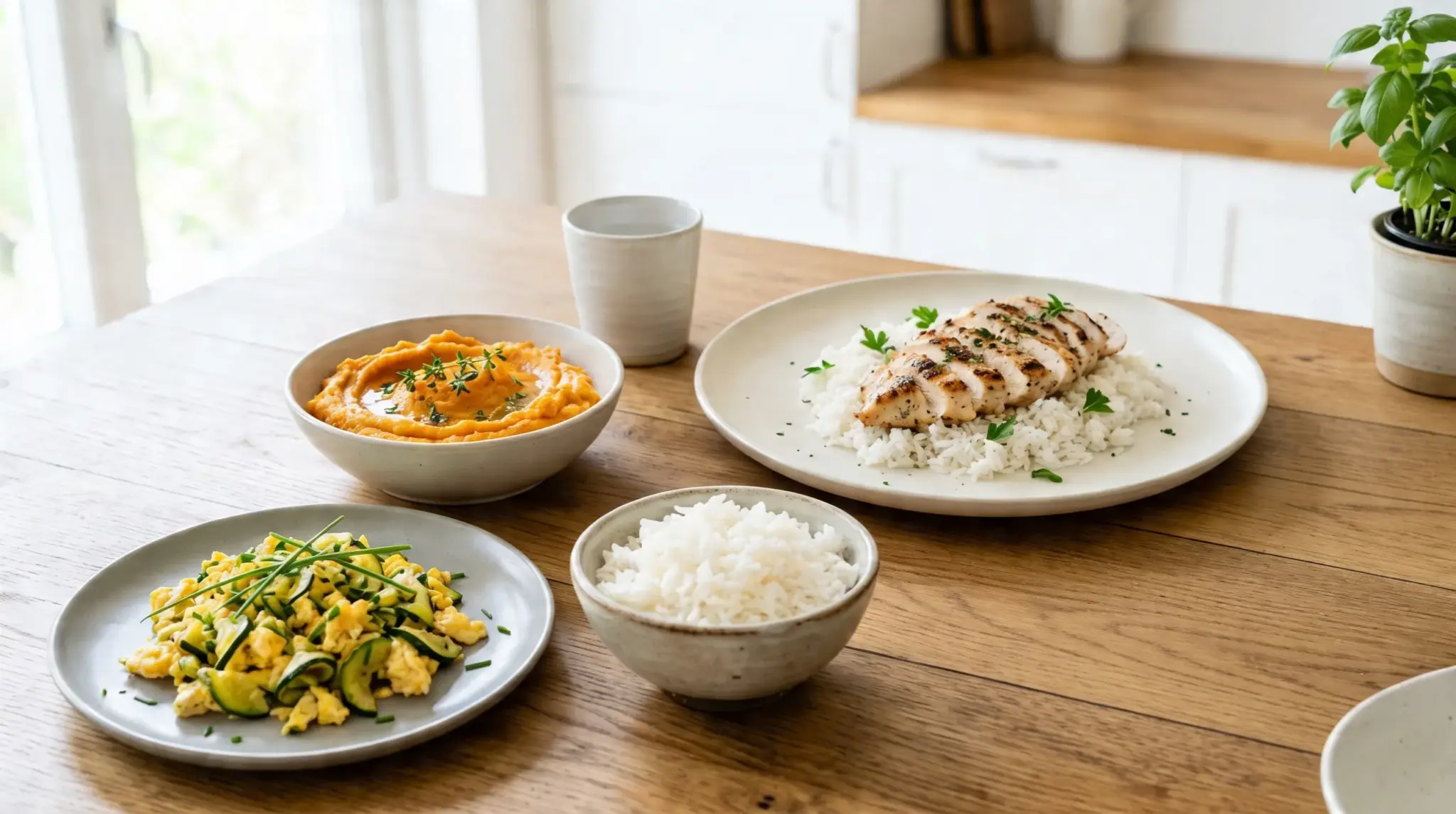
Your first day is all about simplicity.
A bowl of plain rice with grilled chicken keeps lunch light and easy. Sweet potato mash with baked turkey rounds off the day.
- Breakfast: Scrambled eggs with sautéed zucchini and herbal tea
- Mid-Morning Snack: Apple slices with plain rice cakes
- Lunch: Grilled fresh chicken with steamed broccoli and white rice
- Evening Snack: Watermelon cubes
- Dinner: Baked turkey with sweet potato mash and steamed carrots
Day 2: Build on Freshness
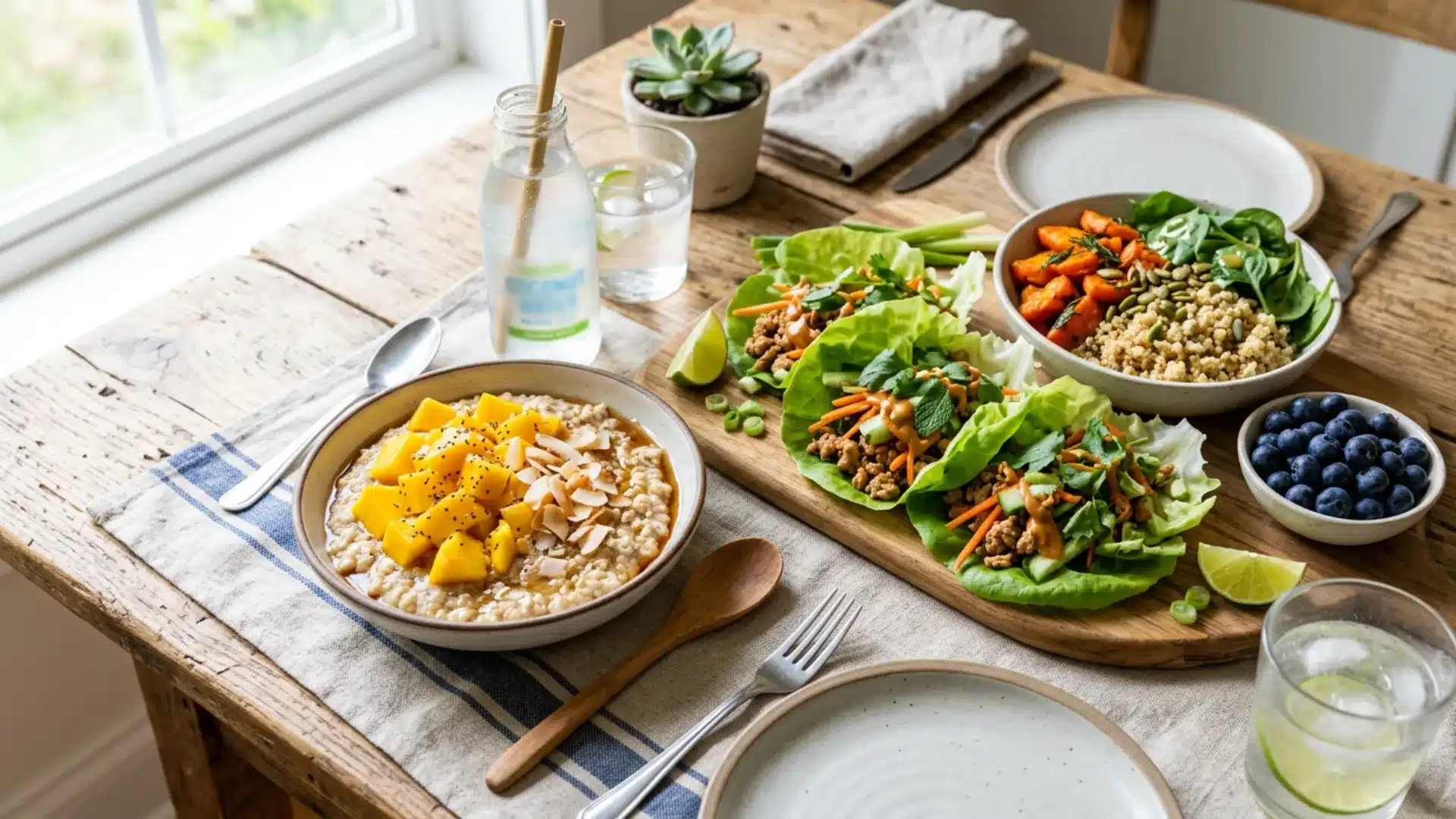
Day two is when things start to feel natural. Your meals get a little more interesting.
- Breakfast: Warm oatmeal topped with fresh mango chunks
- Mid-Morning Snack: Blueberries and coconut water
- Lunch: Fresh turkey and crisp lettuce wrap with olive oil dressing
- Evening Snack: Plain corn cakes with sliced cucumber
- Dinner: Pan-cooked fresh beef with roasted carrots and quinoa
Day 3: Introduce More Variety
By day three, your body starts adjusting well. Bring in more color and variety. Herbal tea closes the day perfectly.
- Breakfast: Blueberry and coconut milk smoothie with a slice of plain toast
- Mid-Morning Snack: Fresh pear slices
- Lunch: Turkey and cucumber bowl lightly drizzled with olive oil
- Evening Snack: Rice cakes with mashed avocado
- Dinner: Baked chicken thighs with steamed green beans and herbal tea
Day 4: Midweek Reset
Midweek is the perfect time to try something grounding and filling.
- Breakfast: Bell pepper and onion omelet with a glass of fresh apple juice
- Mid-Morning Snack: Fresh melon cubes
- Lunch: Garlic-sautéed rice with fresh beef strips and steamed broccoli
- Evening Snack: Plain oat biscuits with herbal tea
- Dinner: Pan-cooked fresh fish with roasted parsnips and mashed sweet potato
Day 5: Comfort Foods Day
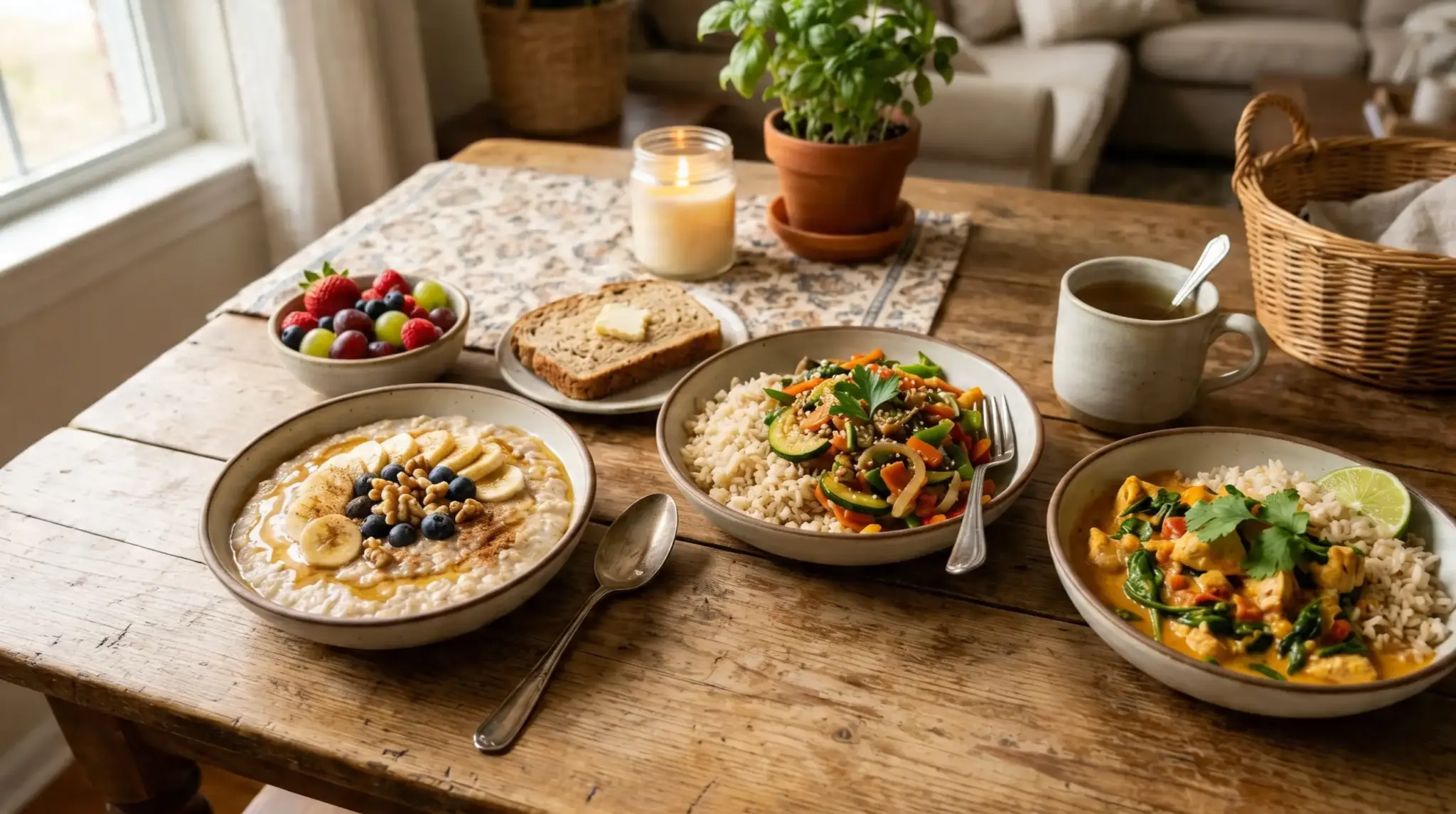
Some days, you just want food that feels like a warm hug. This day delivers exactly that.
- Breakfast: Honey-drizzled oatmeal with sliced pear and chamomile tea
- Mid-Morning Snack: Fresh watermelon and blueberry mix
- Lunch: Turkey mince and zucchini stir-fry with plain white rice
- Evening Snack: Coconut water with plain rice cakes
- Dinner: Slow-cooked chicken simmered in coconut milk with cauliflower florets
Day 6: Weekend Ease
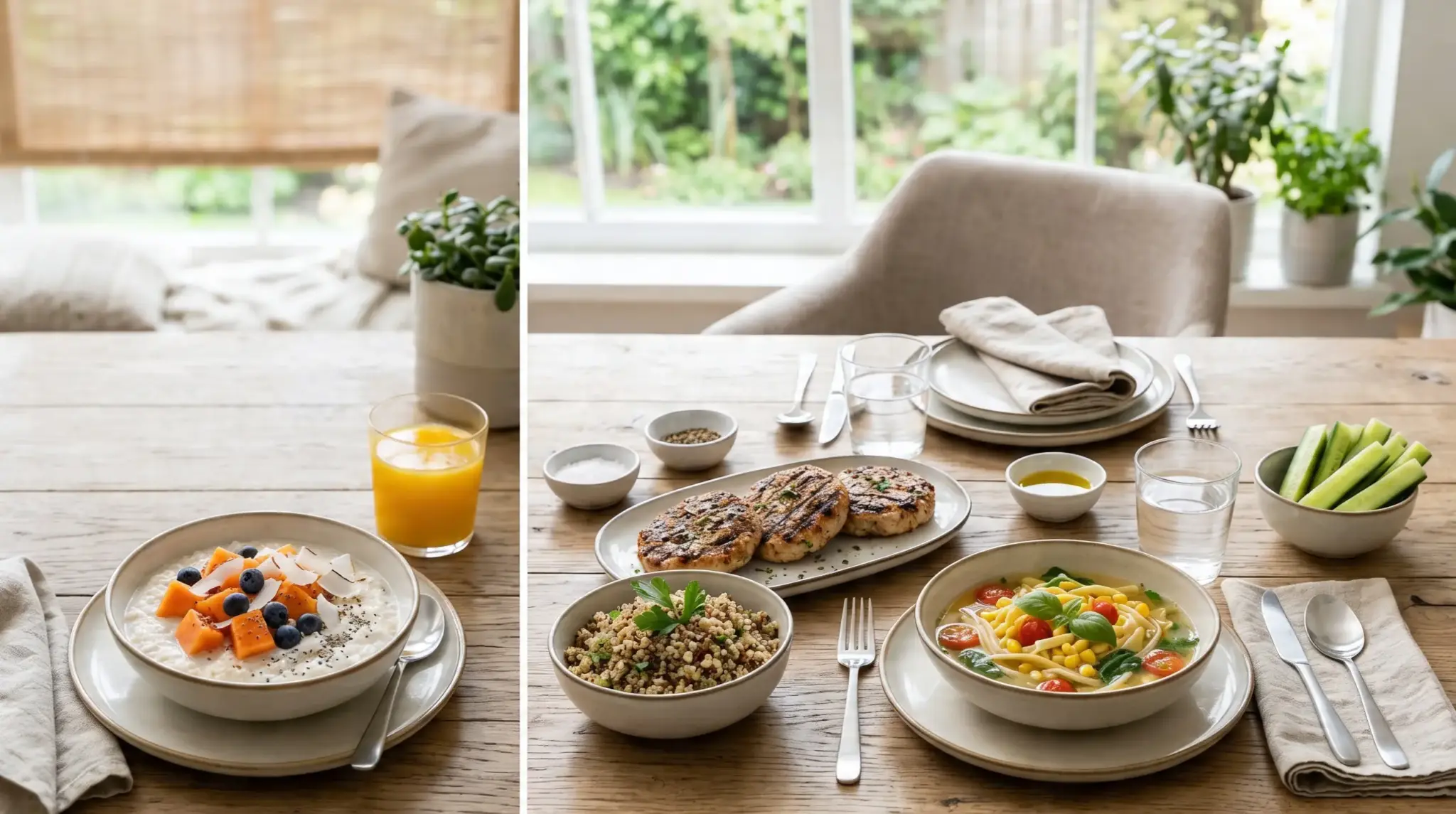
The weekend deserves something that feels a little more special without stepping off track.
- Breakfast: Coconut milk porridge topped with fresh papaya and mango
- Mid-Morning Snack: Apple slices with a drizzle of honey
- Lunch: Grilled turkey patties with steamed asparagus and quinoa
- Evening Snack: Fresh cucumber sticks with olive oil dip
- Dinner: Corn pasta in a light homemade beef broth with fresh herbs
Day 7: Wrap the Week Right
End the week on a high note. You’ve done well; let your last day reflect that.
- Breakfast: Fresh fruit bowl with watermelon, apple, and papaya
- Mid-Morning Snack: Plain oat biscuits with herbal tea
- Lunch: Chicken and sweet corn soup with a gentle herb base
- Evening Snack: Blueberries and fresh mango cubes
- Dinner: Oven-roasted lamb with steamed broccoli and a light olive oil drizzle
Download the Complete Low Histamine Diet Plan
The Most Important Rule People Miss: Food Freshness
People focus on what to eat and completely forget about when to eat it.
Histamine doesn’t just come from certain foods; it builds up over time. The longer food sits, the higher its histamine levels climb. That leftover chicken from two days ago? It may cause more trouble than you’d expect.
Cook in small batches.
Eat food as fresh as possible. Even refrigerated leftovers can be a problem.
Freshness isn’t a bonus tip it’s the foundation of this entire diet.
Supplements and Support
Diet alone doesn’t always do the full job. Sometimes your body needs a little extra help to manage histamine properly.
Here’s what can genuinely support your system:
DAO Enzyme Supplements:
These directly replace the enzyme your body lacks. Taking them before meals can noticeably reduce symptoms.
Vitamin C
A natural antihistamine that helps your body break down excess histamine more efficiently.
Vitamin B6
Supports DAO enzyme production in the body.
Copper
Works alongside B6 to maintain DAO levels.
Always speak to a doctor before starting any supplement.
How Long Should to Follow this Diet?
This diet is not meant to be permanent. Most health practitioners recommend following it strictly for 2 to 4 weeks.
That gives your body enough time to clear excess histamine and settle down.
After that, foods are slowly reintroduced one at a time. This helps you spot exactly which foods trigger your symptoms. Some people need a little longer, six to eight weeks.
The goal is always to find your personal tolerance level, not to restrict forever.
Myths that Mislead People About Low Histamine Diets
There’s a lot of confusing information out there. Let’s clear a few things up:
“It’s just an allergy.” No, histamine intolerance and allergies are two completely different conditions.
“Avoid all fermented foods forever.” Not true. Tolerance levels vary from person to person.
“Healthy foods are always safe.” Spinach, avocado, and tomatoes are nutritious but high in histamine.
“This diet cures histamine intolerance.” It manages symptoms but doesn’t permanently fix the root cause.
When to See a Doctor or Specialist
Managing symptoms through diet works for many people. But some situations genuinely need professional attention. See a doctor if:
- Symptoms are severe or getting worse despite dietary changes.
- You experience breathing difficulties or chest tightness after eating.
- Skin reactions are spreading or becoming more frequent.
- You’ve followed the diet strictly for four weeks with no improvement.
A specialist can test your DAO enzyme levels properly and rule out other underlying conditions.
Don’t self-diagnose for too long.
Final Thoughts
A low histamine diet isn’t about eating less; it’s about eating smarter.
Small changes in what you pick up at the store and how fresh your meals are can make a real difference to how you feel day to day. Start with the one-week plan, pay attention to how your body responds, and adjust from there.
Everyone’s tolerance is different, so take it at your own pace.
If symptoms persist, get professional advice. Your body deserves proper care, not just guesswork.
You now have everything you need to take that first step with confidence.
Frequently Asked Questions (FAQ’s)
1. How to Bring Down Histamine Levels Quickly?
Drink plenty of water, take Vitamin C, and avoid high-histamine foods immediately.
2. What Foods are Low in Histamines for MCAS?
Fresh chicken, rice, apples, carrots, and coconut milk are generally safe choices.
3. What Vitamin Gets Rid of Histamine?
Vitamin C is known to break down excess histamine in the body.
4. What Naturally Blocks Histamine?
Vitamin C, quercetin, and DAO enzyme supplements help naturally block histamine.