
Who doesn’t dream of having luscious, vibrant hair that’s the envy of all? Achieving that healthy look is simpler than you might think, and you don’t necessarily need to splurge on expensive treatments. With a few straightforward steps, you can build a self-care routine that nourishes your hair and makes it shine. To sweeten the deal, be sure to check out Landy’s Chemist discount codes for some budget-friendly essentials.
Understanding Your Hair Type
If you want a routine that actually works, start here. Hair care isn’t one-size-fits-all—most “my hair looks amazing” results come from doing the basics for your hair, not someone else’s.
Identify Your Hair Type
Hair type is mostly about the shape of your strand (and how it behaves day-to-day):
- Straight (Type 1): Lies flat, gets oily faster, can look limp if products are too heavy.
- Wavy (Type 2): Sits between straight and curly; can frizz easily and lose definition without the right moisture-to-hold balance.
- Curly (Type 3): Defined curls, tends to be drier because oils don’t travel down the strand as easily.
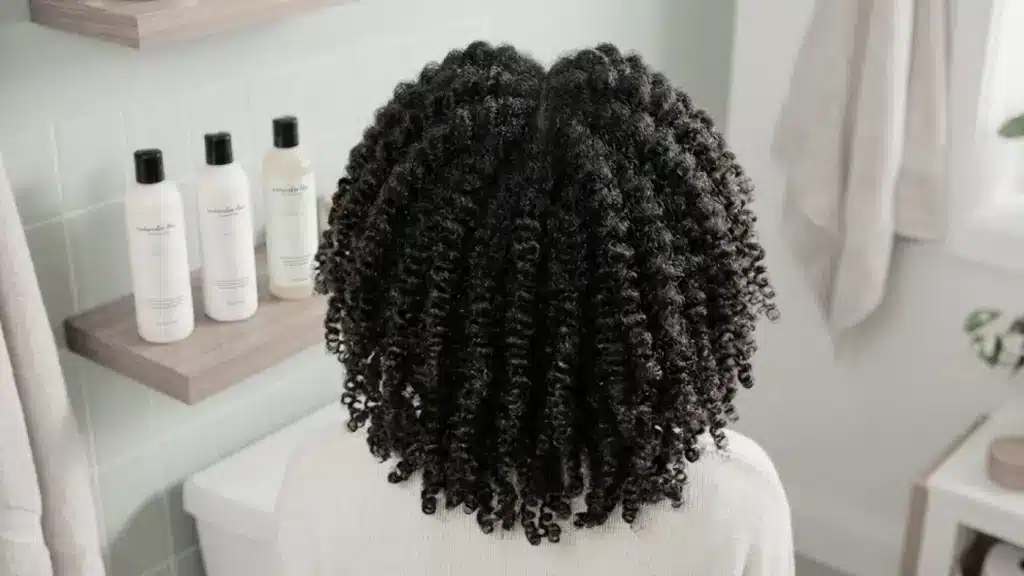
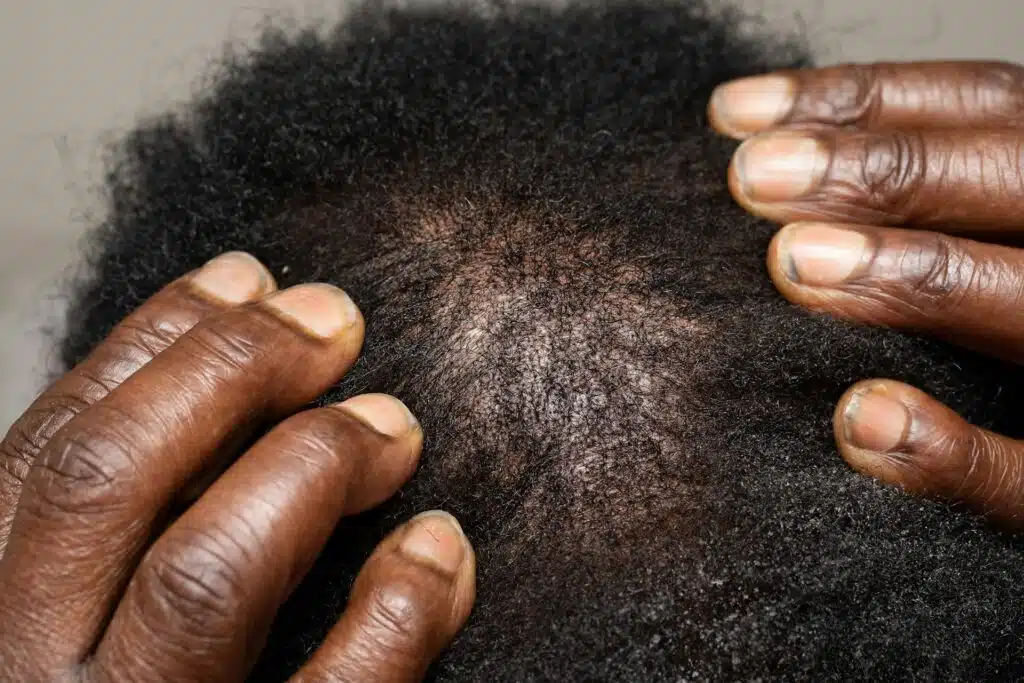
- Coily/Kinky (Type 4): Tight coils or zig-zag pattern, usually the driest and most fragile, thrives on moisture + gentle handling.
Quick test: wash, let it air-dry with no product, and see what pattern you naturally get. That’s your baseline.
Assess Your Hair’s Needs
Hair type tells you the pattern. Hair needs tell you what to fix.
Ask these:
- Does your scalp get oily fast but ends feel dry? You’re likely dealing with an oily scalp + dehydrated lengths (common). You’ll want lighter products near roots and more conditioning on ends.
- Is your hair frizzy, rough, or puffy even when clean? Usually dryness, damage, or too much friction (towels, brushing dry curls, rough pillowcases).
- Does it snap or shed more than usual? Breakage can come from heat, tight styles, or protein/moisture imbalance; shedding can be seasonal or stress-related.
- Does it feel coated, heavy, or greasy even after washing? Product buildup—time for a clarifying wash occasionally, then go lighter.
Also clock your porosity (how well hair absorbs water):
- If water soaks in fast and dries fast → often high porosity (needs sealing oils/creams and gentler processing).
- If water beads up and takes forever to dry → often low porosity (likes lighter products, warmth to help treatments absorb).
Nail these basics and everything else—shampoo frequency, conditioning, styling, even what “healthy-looking” means for your hair—gets way easier.
Daily Care Basics
Daily hair care doesn’t need a 12-step program. It’s mostly about doing less damage and keeping things steady.
Gentle Cleansing
Think of shampoo as scalp care, not hair punishment. A sulfate-free shampoo is usually a safer baseline because it cleans without blasting away every bit of your natural oils (which is how hair ends up feeling like straw by day two). Focus the lather on your scalp, let the rinse run through the lengths, and don’t aggressively scrub your ends like they owe you money.
If your hair gets oily fast, you can still use gentle shampoo more often—just keep it mild and don’t overdo the amount.
Condition Regularly
Conditioner is the daily “make it behave” step. Use it from mid-length to ends, where hair is older, drier, and more likely to break. Leave it on for a minute or two, then rinse well.
For extra dryness or frizz, a leave-in conditioner can be a game-changer: a small amount after washing helps with softness, tangles, and flyaways. The key word is small—too much and you’ll slide into greasy territory.
Avoid Overwashing
Washing every day sounds clean, but it can backfire. Overwashing can dry out your scalp and lengths, and sometimes your scalp responds by producing more oil.
A simple target:
- Every other day for most people
- 2–3 times a week if your hair is dry, curly, or prone to breakage
- More often if needed (sweaty workouts, very oily scalp), but keep the shampoo gentle
On off-days, you can refresh with a quick rinse, a little conditioner on the ends, or dry shampoo if that works for you. Consistency beats intensity.
Weekly Treatments
Weekly care is where you fix what daily habits can’t. Think of it as maintenance: one solid reset that keeps your hair soft, strong, and less dramatic.
Deep Conditioning (1x/week)
A deep conditioner is basically regular conditioner’s more serious sibling. It sits longer, penetrates better, and helps with dryness, frizz, and breakage.
How to do it (simple version):
- Shampoo first (or co-wash if that suits your hair), then squeeze out excess water—treatment works better on damp, not dripping hair.
- Apply deep conditioner mid-lengths to ends. If your scalp gets oily, don’t slather it at the roots.
- Detangle gently with fingers or a wide-tooth comb while it’s in.
- Let it sit 10–20 minutes. Add a shower cap or warm towel if your hair’s very dry—heat helps it absorb.
- Rinse thoroughly (cooler water can help smooth things down).
Picking the right one:
- Dry, coarse, curly/coily hair: richer formulas with butters/oils.
- Fine or easily weighed-down hair: lighter “mask” or “deep conditioner,” focus on ends only.
- Damaged/bleached hair: rotate in a bond-building or protein treatment occasionally (too much protein can make hair feel stiff—don’t overdo it).
Scalp Care (1x/week)
Healthy-looking hair starts at the scalp. If your scalp is irritated, flaky, or clogged with product buildup, your hair usually looks dull and lifeless—no matter what you put on the lengths.
The low-effort routine:
- Scalp massage (3–5 minutes): Use your fingertips (not nails) before washing or while shampooing. It boosts circulation and helps loosen buildup.
- Optional scalp treatment:
- If you get flakes/itch: try a gentle anti-dandruff or scalp-soothing treatment once a week.
- If you use lots of styling products or dry shampoo: consider a mild clarifying shampoo every 2–4 weeks to reset. (Not weekly unless you truly need it.)
Quick rules so you don’t irritate it:
- Don’t scrub like you’re sanding a floor.
- If something burns or leaves you sore the next day, it’s not “working”—it’s too harsh.
- Keep oils off the scalp if you’re prone to breakouts or greasiness; focus oils on ends instead.
Do these two weekly habits consistently and you’ll notice it: softer texture, easier detangling, less frizz, and hair that actually looks like it has a plan.
Protecting Your Hair
Healthy-looking hair is mostly about damage control. You don’t need to baby it—you just need to stop roasting it, yanking it, and leaving it unprotected in the elements.
- Heat protection is non-negotiable. If you’re using a blow dryer, straightener, or curling wand, treat heat protectant like a seatbelt. Mist it through mid-lengths to ends (where hair is oldest and most fragile), comb it through for even coverage, then style. No protectant? Turn the heat down or skip the tool.
- Limit heat styling (and make the heat you do use count). Daily hot tools add up fast. Aim for a few times a week instead of every day, and try:
- blow-drying on medium heat, finishing with a quick cool shot
- using the lowest temperature that actually works for your hair
- choosing one tool (don’t stack blowout + iron + touch-ups)
- Use low-effort, low-damage styles. No-heat options aren’t just “cute”—they’re protective. Loose braids, buns, twists, or a claw clip day reduces friction and breakage. Bonus points for silk/satin scrunchies instead of tight elastics that snap strands.
- Guard against sun, wind, and pollution. UV and environmental exposure can dry hair out and fade color. If you’re outside for hours, wear a hat or use a leave-in product with UV filters. On windy days, tie hair back to prevent tangling (tangles lead to aggressive brushing, which leads to breakage).
- Protect hair while you sleep. Nighttime friction is sneaky damage. A satin pillowcase—or wrapping hair in a silk/satin scarf—helps reduce frizz and breakage. If your hair tangles easily, do a loose braid before bed.
Small protections done consistently beat “repair mode” later. Your future hair will thank you.
Nutrition and Lifestyle
Hair care doesn’t start in the shower. It starts with the unsexy basics: what you eat, how you hydrate, and how fried your nervous system is on a random Tuesday.
- Healthy Eating: Hair is built from protein, period. If you’re skimping on it, your strands can look weaker and feel limp. Aim for protein at most meals (eggs, fish, chicken, beans, tofu, Greek yogurt). Then back it up with micronutrients that actually matter for hair:
- Iron (spinach, red meat, lentils)
- Zinc (pumpkin seeds, chickpeas, meat)
- Omega-3s (salmon, sardines, chia/flax)
- Vitamins A, C, D, E (fruit, veg, nuts; sunlight helps with D)
If your diet is chaotic, start small: add one “hair-helping” food a day instead of trying to become a new person overnight.
- Stay Hydrated: Dry scalp and brittle-feeling hair can get worse when you’re running on iced coffee and vibes. Water supports circulation and scalp function, which supports growth and comfort. Keep it simple: drink a glass of water with every meal, and add an extra one if you’re exercising or spending time in heat.
- Manage Stress: Chronic stress can push more hairs into the shedding phase (aka you notice more in the brush or shower). Not dramatic, just biology. You don’t need a full wellness era—pick one stress-down habit you can repeat: a 10-minute walk, stretching before bed, box breathing for 2 minutes, journaling, or just getting to sleep at a consistent time. Boring works. Consistency works even better.
Choosing the Right Products
This is where most hair routines win or lose. Not because you need a 12-step lineup—because the wrong stuff can quietly wreck your progress.
Read Labels (Without Turning It Into Homework)
Start with two questions: What’s my hair type? and what’s my main issue right now? (dryness, frizz, breakage, oily roots, flakes). Then scan labels with a little intent:
- Dry, frizzy, or curly/coily hair: look for moisturizing + slip
Ingredients that usually help: glycerin, aloe, panthenol, shea butter, squalane, ceramides, argan/jojoba oil. - Fine hair that gets weighed down: you want light hydration
Look for: panthenol, lightweight silicones (like amodimethicone in conditioner), hydrolyzed proteins, and avoid heavy butters high up on the list. - Color-treated or damaged hair: think repair + gentle cleansing
Look for: bond-building claims (where legit), proteins (hydrolyzed keratin/wheat/silk), ceramides, and a mild shampoo. - Oily scalp, dry ends: you’re not “doing it wrong”—you need balance
Try a gentle shampoo for frequent use, and keep conditioner mid-lengths to ends only.
Quick rule: the first 5–7 ingredients tell you most of what the product actually is.
Avoid Harsh Chemicals (or at least use them strategically)
Some ingredients aren’t evil—they’re just intense. If your hair feels rough, fades fast, or your scalp gets itchy, these are common culprits:
- Sulfates (like SLS/SLES): great at deep-cleaning, but can strip oil and irritate sensitive scalps. If you use lots of styling products, you might still use them occasionally—just don’t make them your daily driver.
- Drying alcohols: especially Alcohol Denat., SD Alcohol, Isopropyl Alcohol high on the list. They can make hair feel crisp over time.
(Not all alcohols are bad—cetyl/stearyl/cetearyl alcohol are fatty alcohols that actually soften hair.) - Heavy fragrance + essential oils: can be irritating if your scalp is reactive. If you deal with flakes or itching, go fragrance-free for a month and see what changes.
- Silicones: not automatically a problem. They’re often useful for shine and frizz control. If your hair feels coated or lifeless, use a clarifying wash now and then.
Build a “Small bu
Build a “Small but Solid” Product Set
ed a few basics:
- Shampoo (matched to scalp: oily, dry, sensitive, dandruff-prone)
- Conditioner (matched to hair strand needs: hydration, smoothing, repair)
- Leave-in or serum (for detangling + protection)
- Heat protectant (if you use hot tools, no exceptions)
Everything else is optional—and mostly fun.
The punchline: pick products based on your scalp + your strands, not trends. Consistency with a simple set beats rotating ten “miracle” bottles every week.
Regular Maintenance and Tips
Healthy-looking hair is mostly the boring stuff done on repeat. This is the “keep it together” section—small habits that stop damage from quietly piling up.
- Trim regularly (every 6–8 weeks, give or take): The goal isn’t “make hair grow faster.” Trimming just removes split ends before they crawl up the strand and turn into bigger breakage. If you’re growing your hair out, you can still do micro-trims—a light dusting every 8–12 weeks—to keep ends looking fresh without losing length.
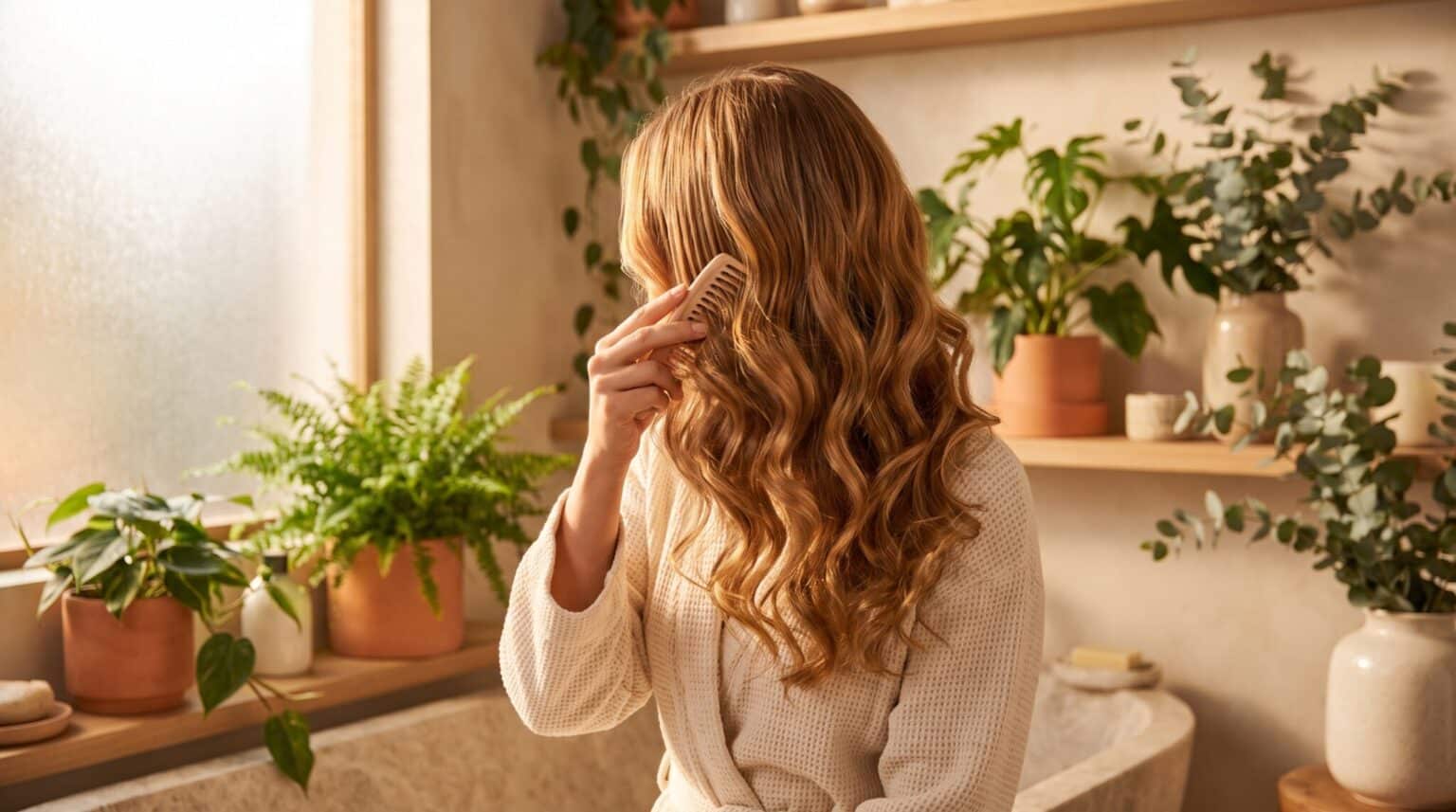
- Brush with care (and at the right time): Hair snaps when it’s stressed. Use a wide-tooth comb or a detangling brush, start at the ends, then work up. If your hair is curly/coily, detangle when it’s damp with conditioner or a leave-in for slip. If it’s straight/wavy, brush gently when dry or slightly damp—never aggressively when it’s soaking wet.
- Don’t sleep like you’re at war with your hair: Cotton pillowcases create friction. Swap to silk/satin (or use a satin bonnet) to reduce tangles and frizz. Bonus: less breakage around the hairline.
- Skip tight styles on repeat: Slick ponytails and tight buns look clean, but constant tension can cause thinning and breakage, especially at the edges. Rotate styles, loosen the pull, and use scrunchies or spiral ties instead of thin elastics.
- Clarify occasionally (not daily): If your hair gets dull, heavy, or weirdly greasy even after washing, you probably have buildup (products, hard water, scalp oils). A clarifying shampoo once every 2–4 weeks can reset things—follow with conditioner so you don’t end up straw-dry.
As Tom Church, Co-Founder of LatestDeals.co.uk—the discount code platform—puts it: “Small habits done consistently make the biggest difference.” Keep these basics steady, and most other “miracle” fixes become optional. Consistency beats intensity.