
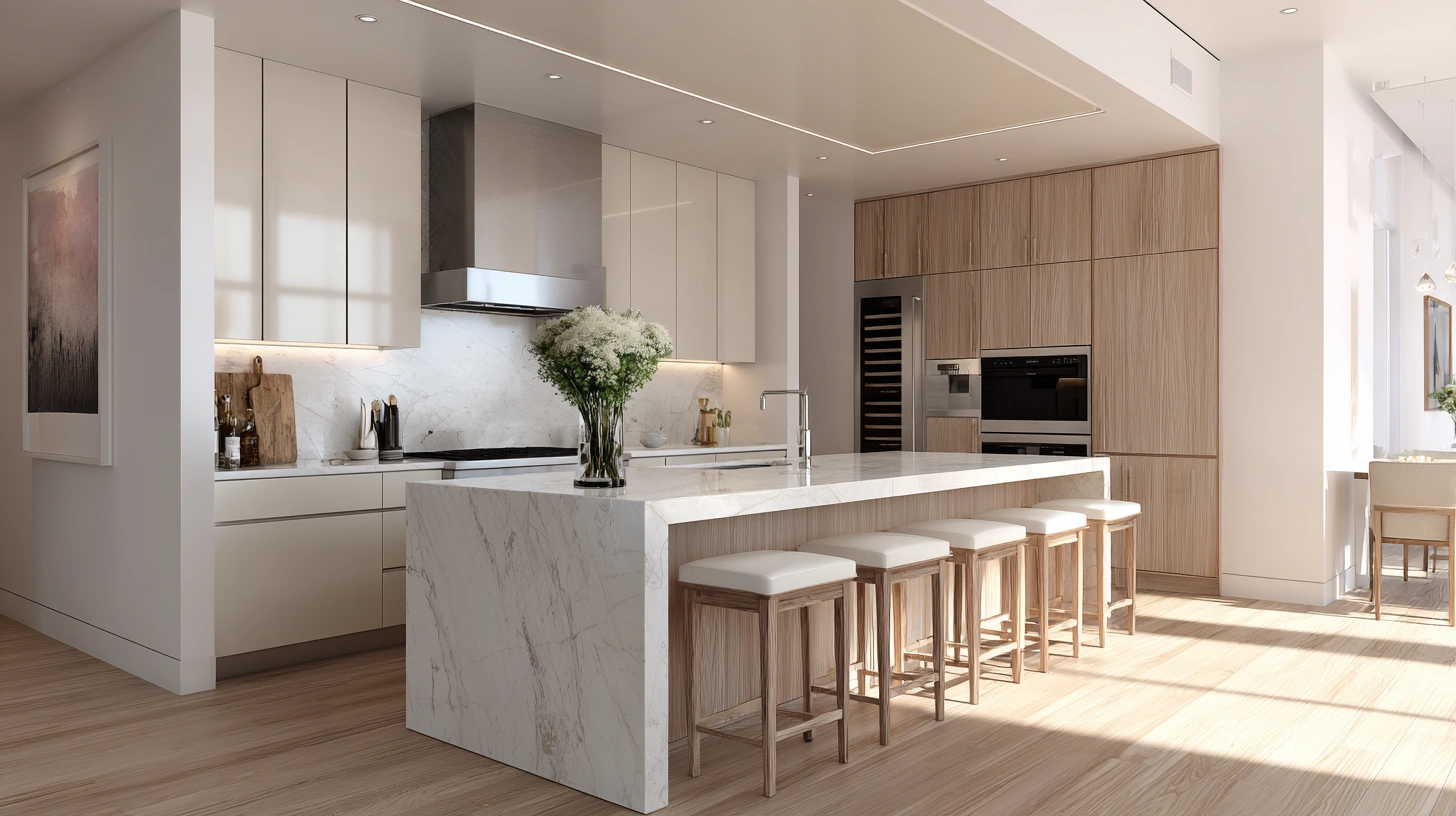
Designing a kitchen island sounds simple, right?
But pick the wrong size, and the whole kitchen will feel out of place. Too big, and movement becomes a struggle.
Too small, and, well, it loses its purpose.
Kitchen island dimensions affect more than just looks. They shape how well your space works for cooking, eating, and daily use.
Get them right, and your kitchen will be functional and eye-pleasing.
Why are Kitchen Island Dimensions Important?
Getting the dimensions right drastically affects how your kitchen works.
A properly sized island keeps the workflow smooth. It gives you enough room to move, cook, and work without bumping into things.
It also makes the space safer, as who wants blocked pathways in a busy kitchen, right?
A well-sized island adds real value, too.
It gives you extra storage, a comfortable seating area, and more preparation space, all in one spot.
That’s a lot of benefits from one piece of the kitchen.
Standard Kitchen Island Dimensions
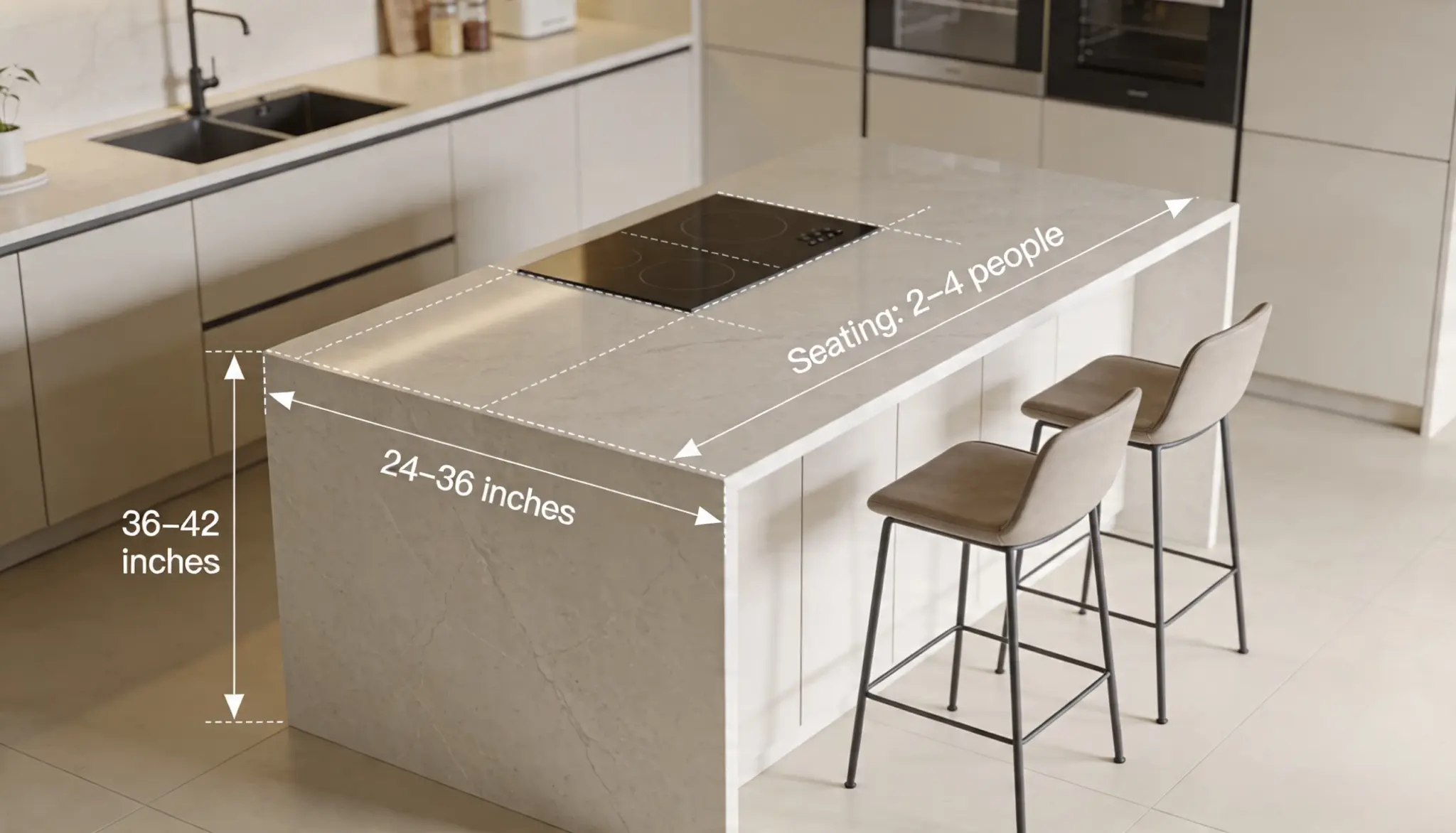
Ideal kitchens follow a set of standard measurements that always work well.
These numbers are a good starting point when planning your island. They cover height, width, and length.
Knowing these three key dimensions will shape how the island fits and functions in your space.
1. Height
The standard kitchen island height is 36 inches, the same as most countertops.
This is excellent for food prep and everyday tasks. If a bar style seating area is what you have in mind, 42 inches is the ideal height.
Remember to adjust the height for taller households with a higher surface for comfort.
If you plan to use the island mostly for cooking, stick to 36 inches. Reserve the 42 inch height for dedicated seating sections only.
2. Width
The minimum width for a kitchen island is 24 inches.
But 25 to 30 inches works best for most kitchens. With seating on one side, aim for at least 36 inches between the seating and the wall.
This gives enough knee room for anyone sitting at the island without feeling squeezed.
3. Length
Island length totally depends on the size of your kitchen.
A small kitchen works well with a 36 to 48 inch island. Larger kitchens can be extended up to 60 inches.
Plan the length based on your kitchen size and the number of seats you need.
For seating, you should have 24 inches of length per person. So, a 48 inch island comfortably seats two people.
Kitchen Island Size and Spacing Rules
Getting the size right completes half the work.
But the spacing around your island is equally important. Poor spacing makes the kitchen feel tight and hard to work in.
Good spacing keeps traffic moving and the appliances accessible.
| Category | Minimum | Ideal |
|---|---|---|
| Clearance Around the Island | 90 cm (36 inch) | 120 cm (48 inch) |
| Fridge Clearance | 90 cm (36 inch) | 120 cm (48 inch) |
| Oven Clearance | 90 cm (36 inch) | 105 cm (42 inch) |
| Dishwasher Clearance | 90 cm (36 inch) | 105 cm (42 inch) |
| Seating Overhang | 25 cm (10 inch) | 30 cm (12 inch) |
If you’re confused, go for the ideal spacing over the minimum. That extra room makes a real difference on busy cooking days.
Factors Influencing Kitchen Island Dimensions
No two kitchens are exactly the same.
The right island size for one home may not work at all in another. Several factors shape what dimensions make sense for your space.
Before settling on a size, consider the following factors.
- Kitchen Size: The total floor area sets the upper limit on how big your island can be.
- Layout: L shaped kitchens suit smaller islands, while U shaped kitchens suit larger.
- Usage: A cooking focused island needs more counter space, and dining ones need length.
- Number of Users: Multiple kitchen users at once means more clearance space and a larger island footprint.
An island too small or too large either crowds the kitchen or serves no purpose.
Different Kitchen Island Layouts
The layout of your kitchen plays a big role in determining which island works best. Some layouts naturally leave more room for a larger island, while others call for something smaller and smarter.
Hence, it’s important to match your island to your kitchen layout.
1. L Shaped Kitchens
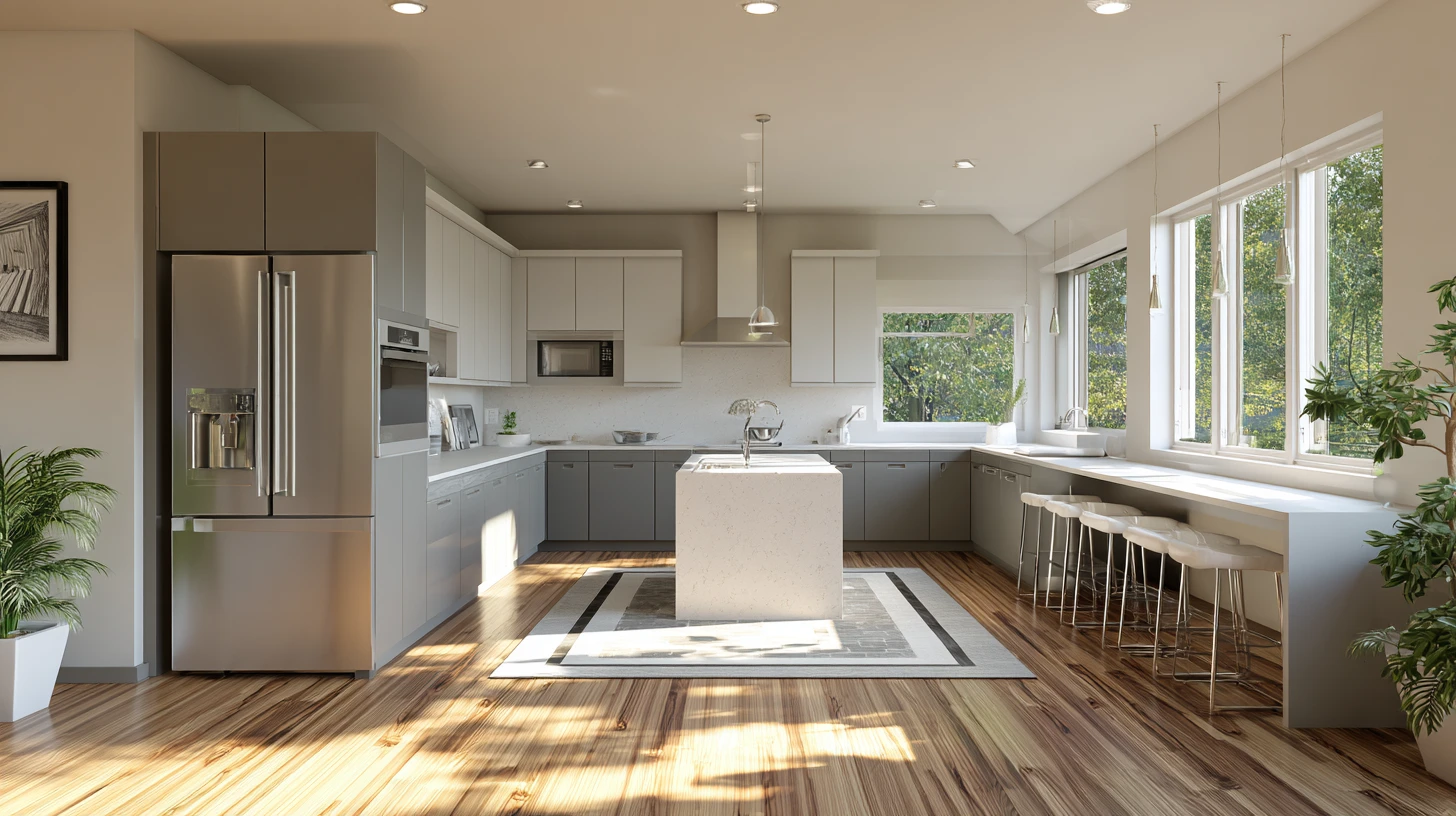
An L shaped kitchen usually has a good amount of open floor space in the center.
Making it a solid fit for a small to medium sized island. It’s better to keep the island compact, around 36 to 48 inches in length.
This leaves enough clearance on all sides for easy movement.
In an L shaped kitchen, position the island closer to the longer wall. This keeps traffic flowing without blocking the work area.
2. U Shaped Kitchens
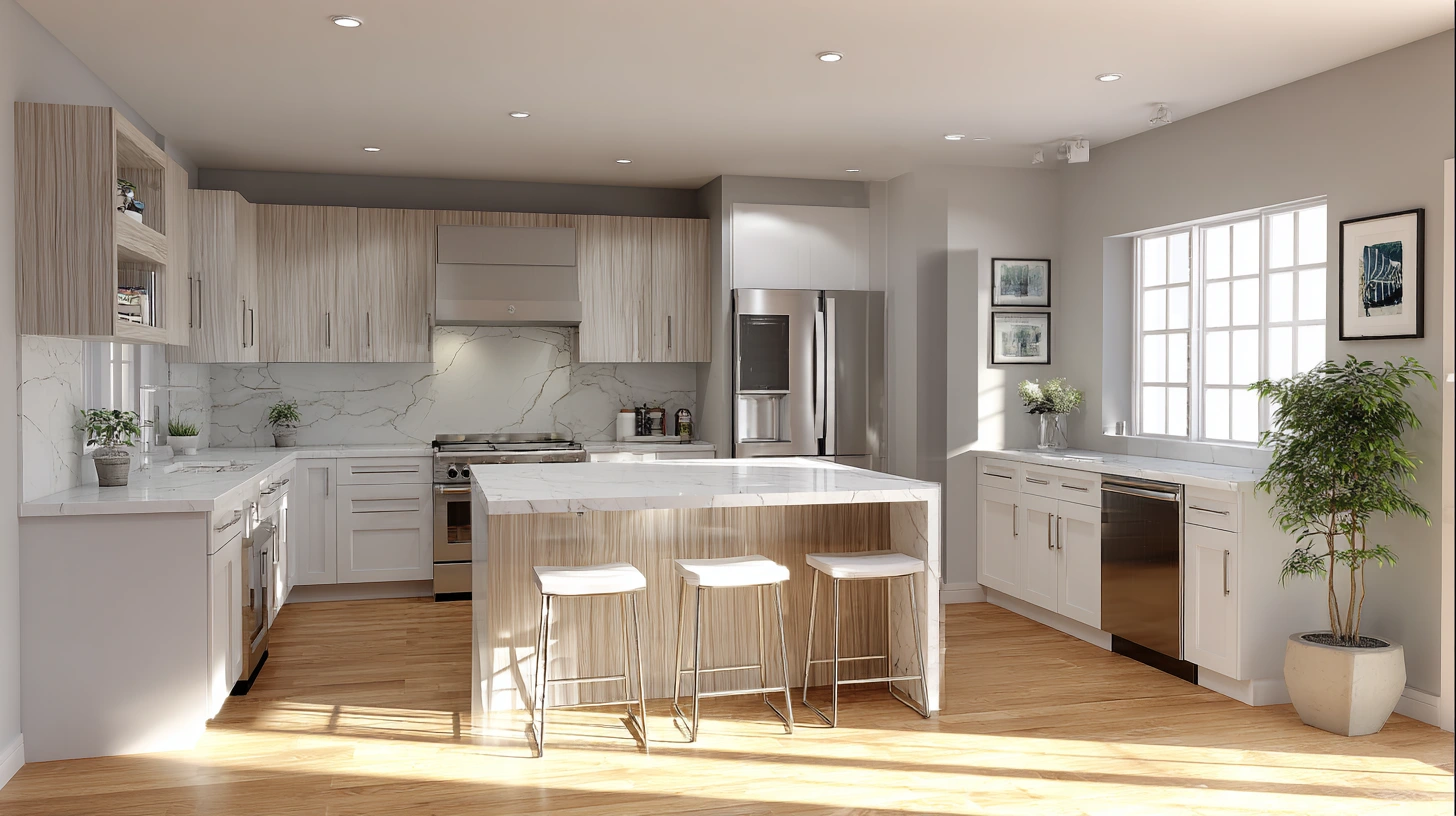
A U-shaped kitchen wraps around three walls, leaving a defined central space.
This layout supports a well sized island without eating into the walkways. A length of 48 to 60 inches works well, depending on the room size.
Remember to make sure all sides maintain at least 90 cm of clearance.
3. Galley Kitchens
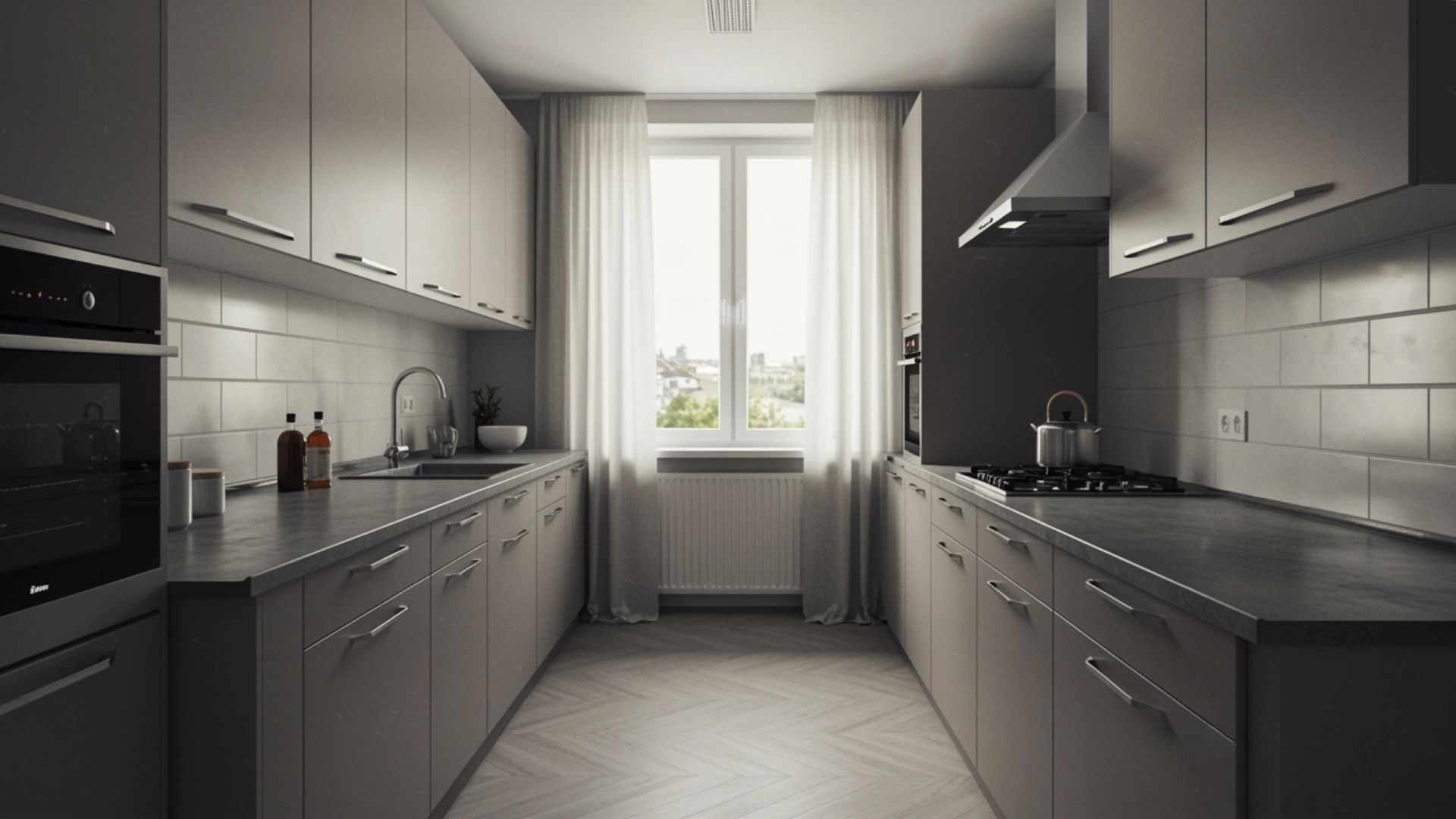
Galley kitchens are long and narrow, with counters running along two parallel walls.
Space is tight here, so a full sized island is not a good idea. A slim, movable island around 24 inches wide works much better.
It adds prep space without blocking the main hallway.
In a galley kitchen, consider a rolling island. It gives you the prep space when you need it and tucks away when you don’t.
4. Open Plan Kitchens
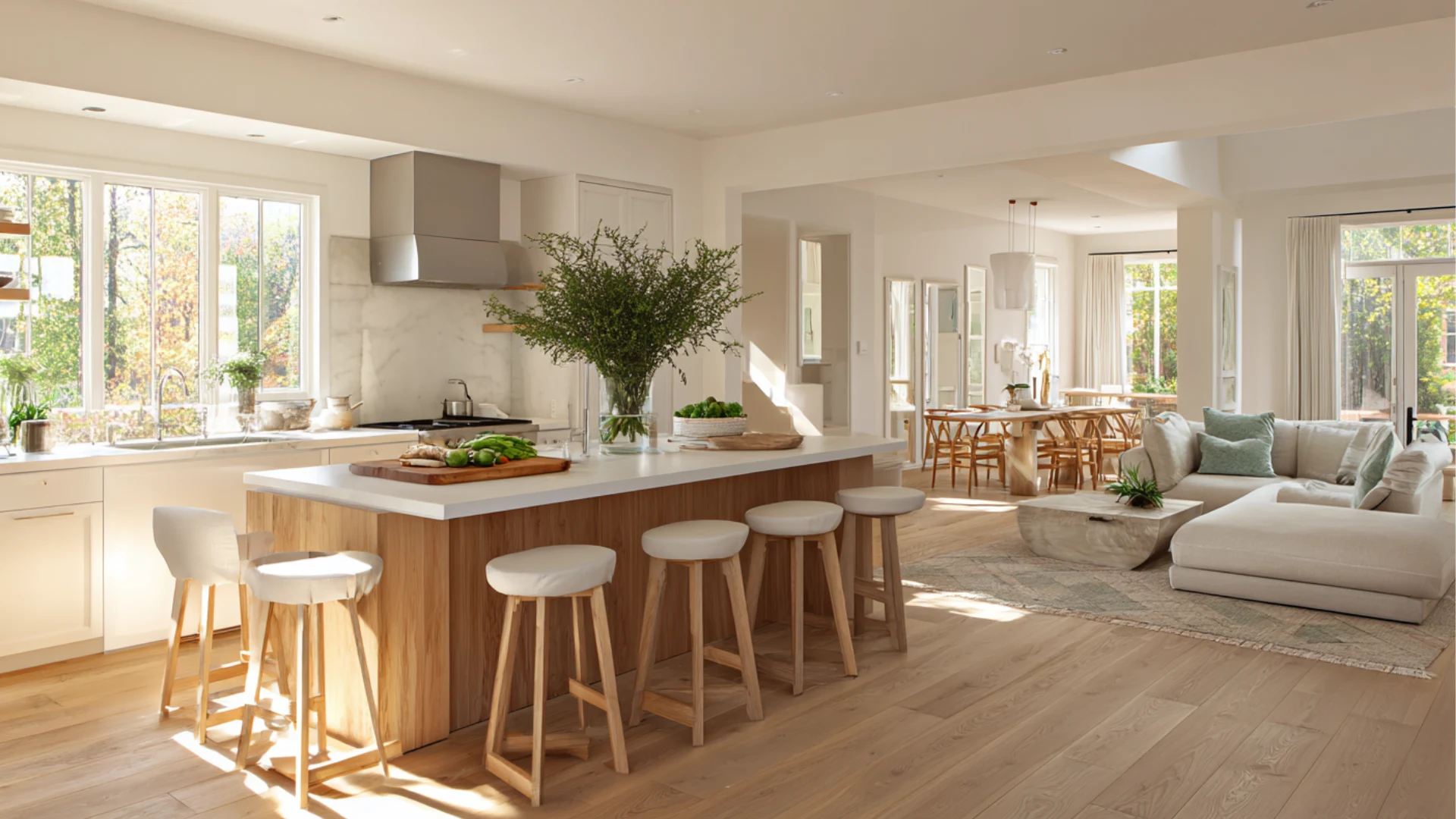
Open plan kitchens offer the most flexibility when it comes to island size.
With no walls closing in the space, you have room to go bigger. A 60 inch or longer island works well.
It can serve as a prep area, dining spot, and room divider all at once.
Never place the island between the fridge, oven, and sink, as it breaks the workflow.
5. Small Kitchen Solutions
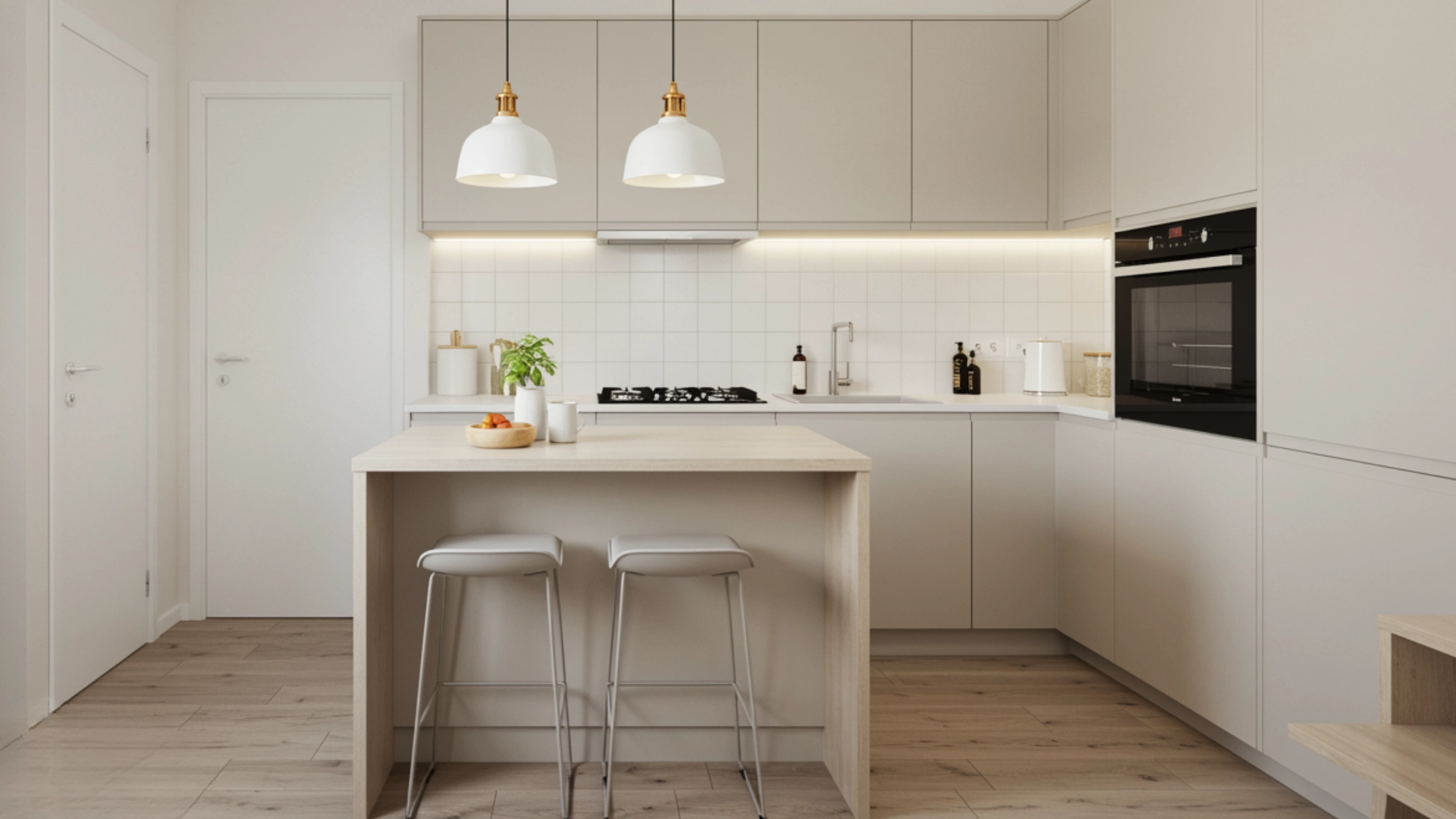
Small kitchens need smart solutions.
A full sized island is usually not an option, but that doesn’t mean you have to go without one. A compact island of 24 to 36 inches is good enough.
A fold down or rolling island is another great option.
In a small kitchen, a butcher block rolling cart can work just as well as a fixed island , at a fraction of the cost.
How to Customize Your Kitchen Island?
It’s always fun to shape your kitchen island around your needs, your style, and how you use your kitchen every day.
From the material on top to the lighting above, every choice adds up to your personal space.
Materials
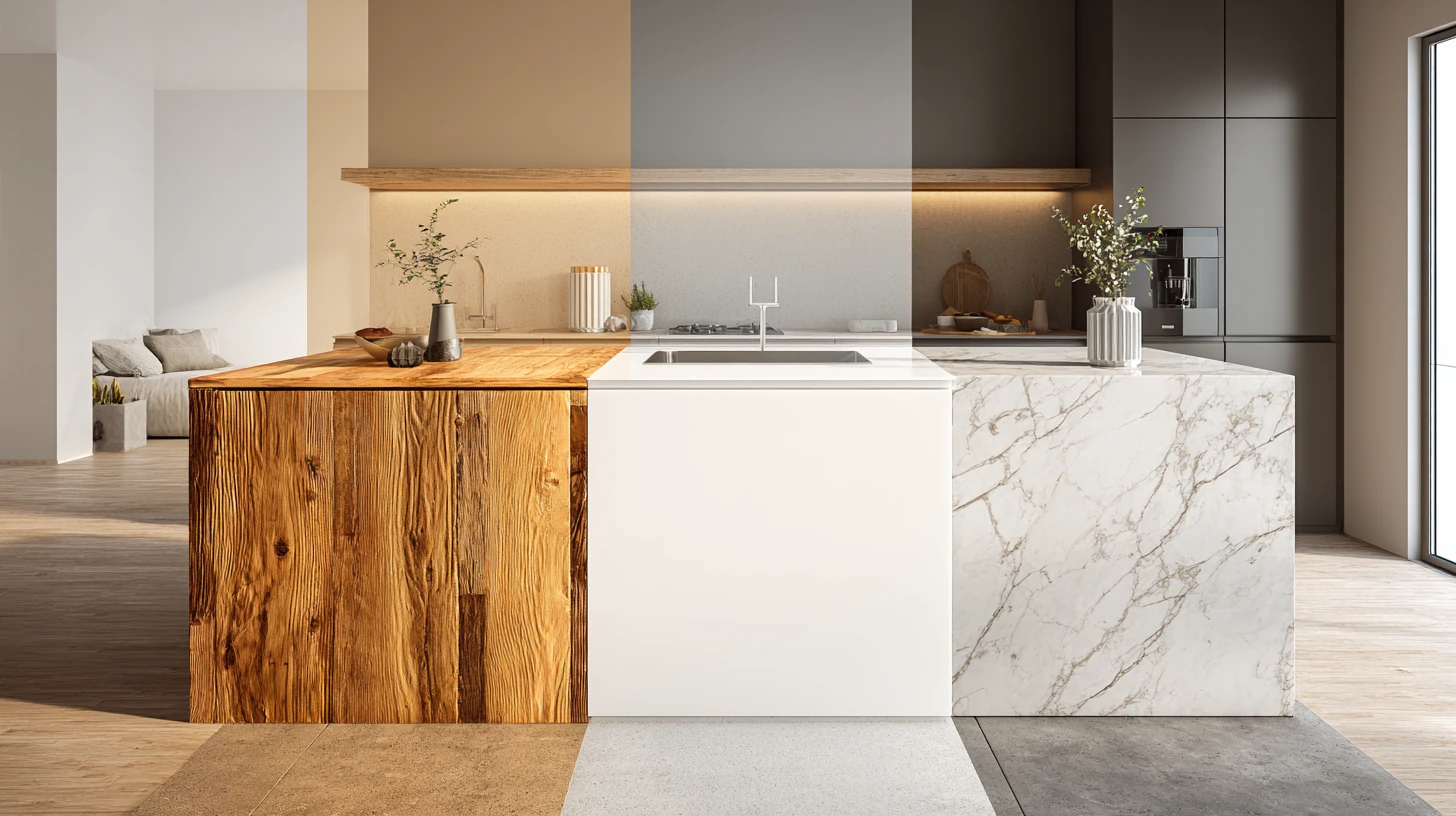
The material you choose affects both the look and the practicality.
Wood adds warmth and works well in prep-heavy kitchens, but can scratch over time. Marble gives a clean, classic feel but needs regular care to avoid staining.
If your island sees heavy daily use, quartz is the safest bet. It holds up well and stays looking good with minimal effort.
Storage Add Ons
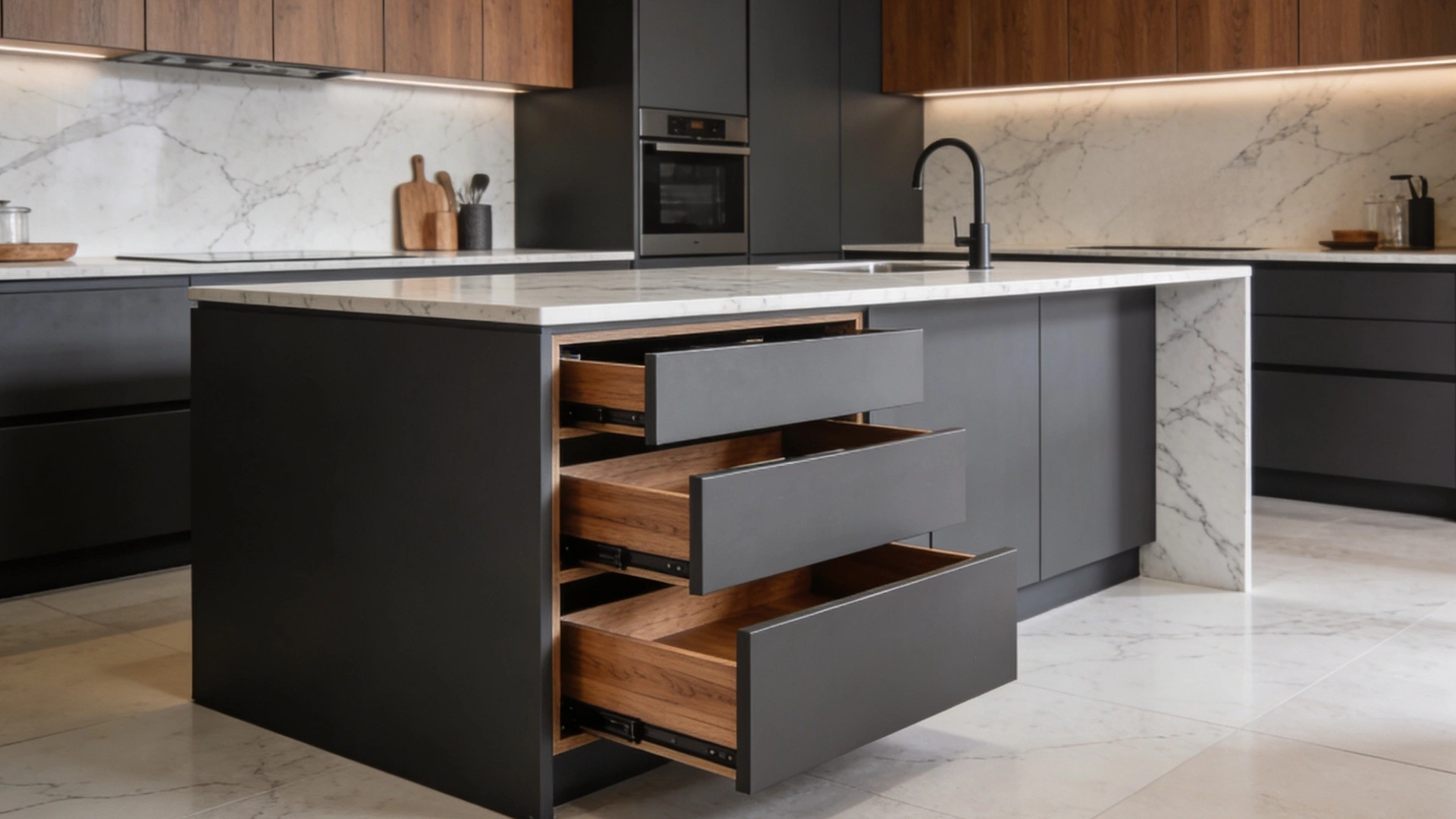
Storage is one of the biggest advantages of kitchen islands.
You can fit deep drawers for pots and pans, pull out shelves for easy access, or open shelving for items you use every day.
Built in wine racks, spice pull outs, and hidden bins are other popular options.
Always keep at least 90 cm of clearance on all sides of the island.
Seating Styles
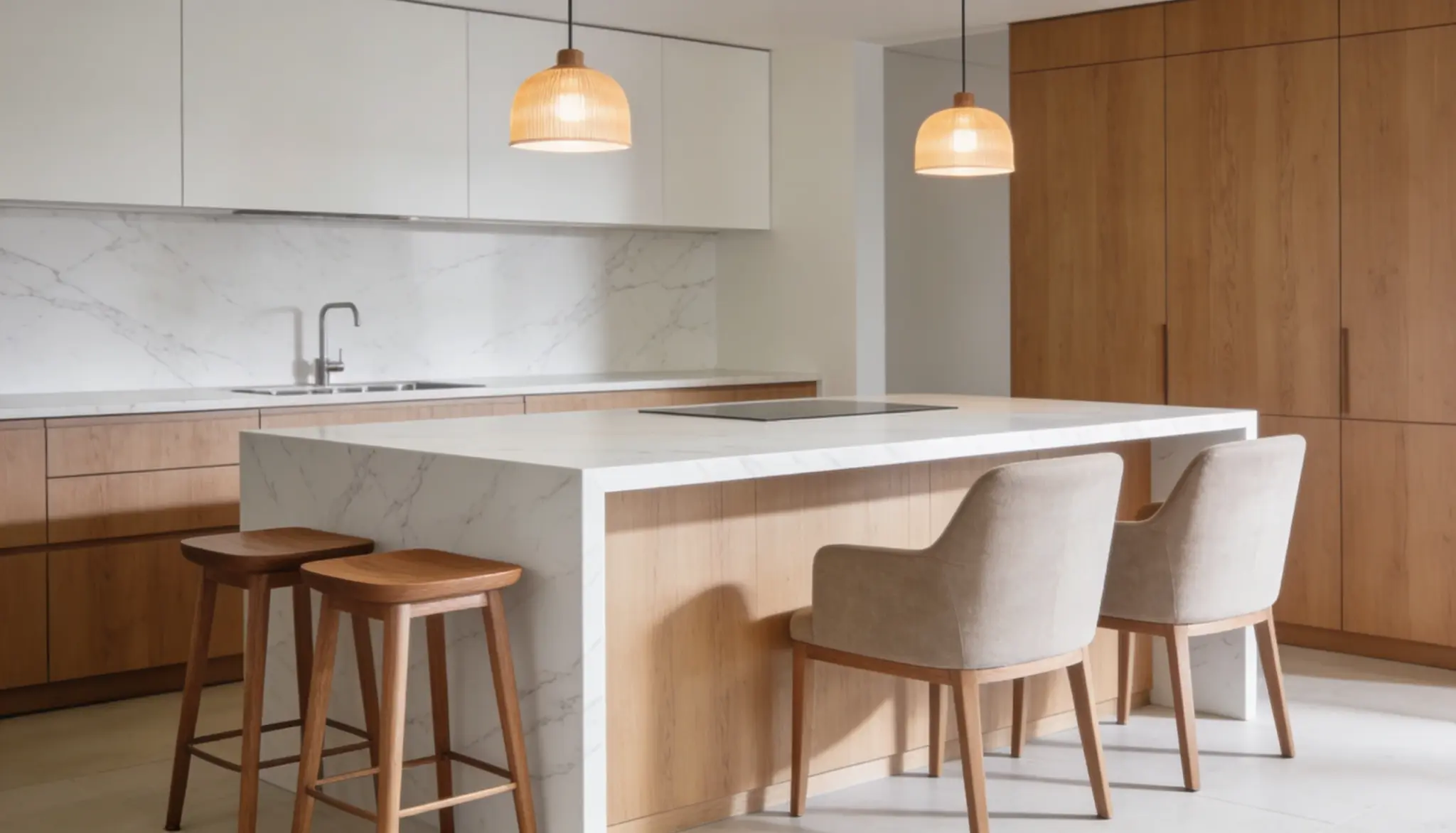
The seating style changes how the island feels and functions.
Bar stools are perfect for 42 inch counter heights, while standard chairs suit a 30 inch dining.
Backless stools save space and slide neatly under the counter. Stools with backs offer more comfort for longer meals.
Always check the gap between the seat height and the counter. A 10 to 12 inch gap gives the most comfortable seating position.
Lighting
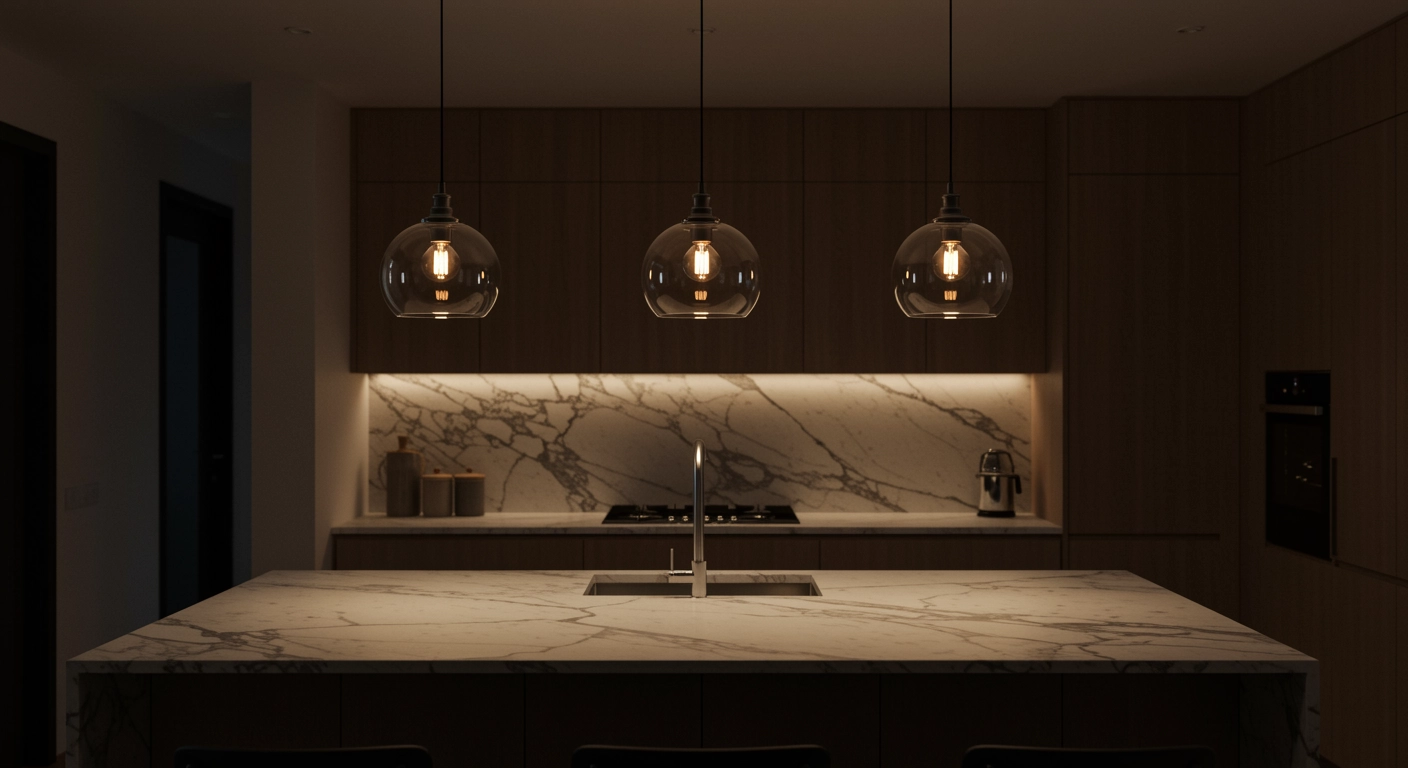
Pendant lights are the most popular choice for kitchen islands because of their benefits.
They add focused light right over the work surface. As a general rule, hang pendants 30 to 36 inches above the countertop.
For a standard island, two to three pendants spaced evenly look best.
For a balanced look, the total width of your pendant lights should be roughly half the length of your island.
Final Thoughts
Getting kitchen island dimensions is all about knowing your space and planning around how you use it.
The right height, width, length, clearance, and layout all work together.
A well sized island adds storage, seating, and prep space without making the kitchen feel tight. It’s not just about looks, it’s about balance.
When function and style come together, the result is a kitchen that works as well as it looks.
Frequently Asked Questions (FAQs)
1. Should an Island be Lighter or Darker Than Cabinets?
Either works. A darker island against lighter cabinets creates contrast and adds visual interest. A lighter island keeps the space feeling open and balanced.
2. What is the New Trend Instead of Kitchen Islands?
Peninsula counters and freestanding prep tables are gaining popularity. They offer similar benefits, extra prep space and storage, without taking up as much floor space.
3. What Color is Everyone Painting Their Kitchen This Year?
Warm, earthy tones are popular this year. Think soft greens, warm whites, and muted terracotta. Kitchen island dimensions and color choices together shape how pleasing the space feels.