
You applied sunscreen this morning.
You even rubbed it in properly. But by noon, your cheeks were pink, and your nose was burning. That’s not bad luck; that’s not enough product.
Studies show most people apply only 25% of the sunscreen they actually need. A quarter.
That gap between “I put some on” and “I put enough on” is exactly where sunburn sneaks in.
So, how much sunscreen to use on face, and what does the right amount of sunscreen actually look like?
This blog gathers everything you need to know about the proper use of sunscreen.
Why the Amount of Sunscreen Matters More than the SPF
SPF numbers are tested in labs using 2mg of sunscreen per square centimeter of skin.
That’s a very specific amount.
When you apply less, which most people do, the protection drops fast. An SPF 50 sunscreen can end up acting like SPF 15 on your face. Not because the product failed, but because the layer was too thin.
The SPF number on the bottle only holds up when you use the full recommended amount.
So chasing a higher SPF number while skimping on the amount is a trade-off your skin always loses.
Dermatology Standards: How Much Sunscreen to Use on Face
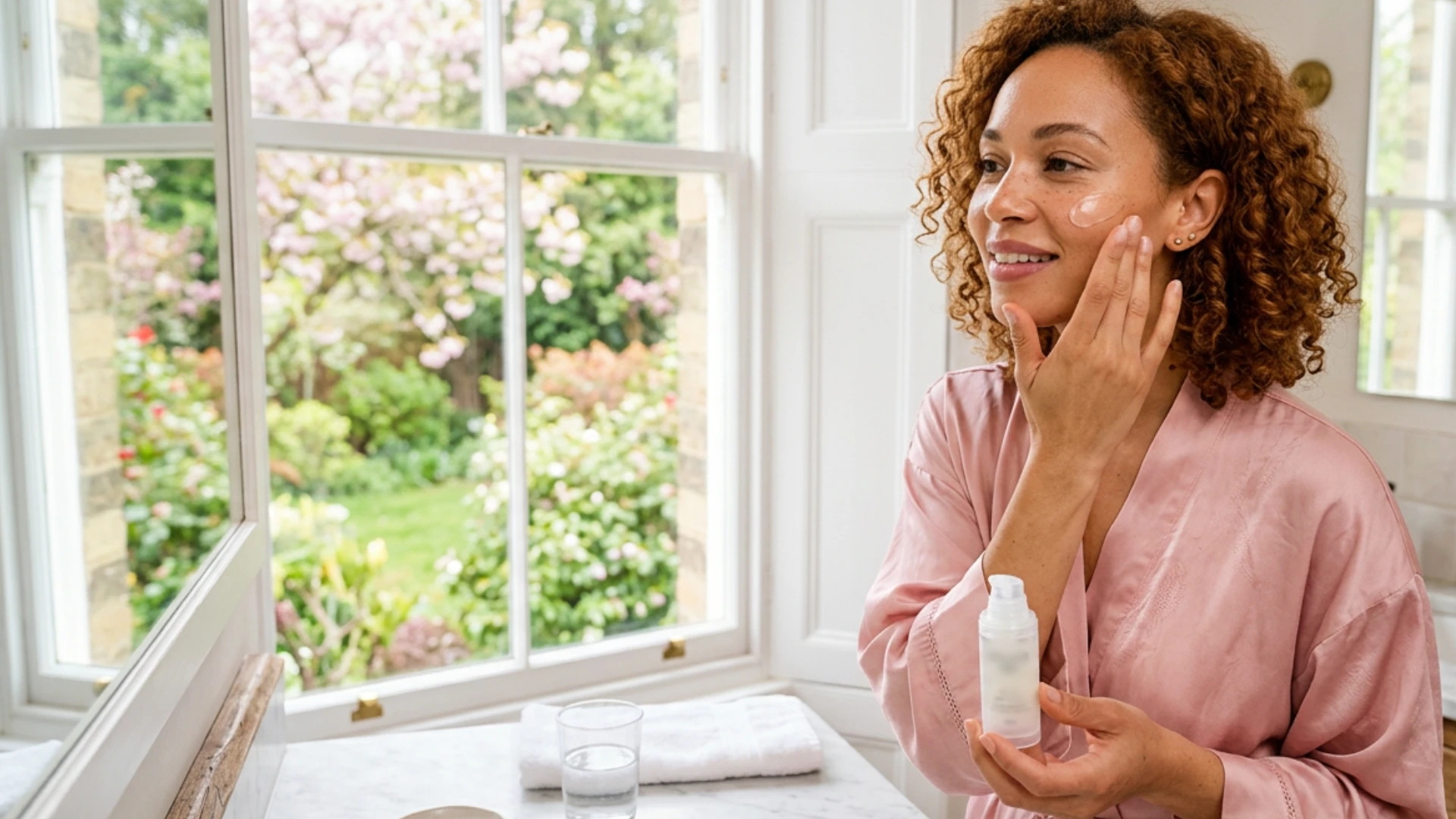
Getting the amount right doesn’t need a measuring cup. Dermatologists suggest simple methods that make it easy.
1. The Two-Finger Rule Squeeze sunscreen along the length of your index and middle finger from base to tip.
That’s roughly the right amount for your face and neck combined. It’s a quick, no-fuss way to measure without having to pull out a spoon every morning.
2. The Teaspoon Method, for the face alone, dermatologists recommend about ¼ teaspoon.
That’s 1.25ml of product. Small in volume, but most people still fall short of it daily.
3. What That Actually Looks Like ¼ teaspoon is roughly the size of a pea doubled.
Not a thin swipe. Not a quick dot on each cheek.
A full, even layer that covers every part of your face, forehead, nose, chin, and around the eyes.
4. Application Technique: how you spread it matters. Patting vs rubbing can affect coverage and protection levels.
5. Sunscreen Type Affects Amount: Mineral and chemical sunscreens sit on skin differently.
The amount needed can vary slightly between the two.
Face Coverage Zones Most People Miss
Most people cover the cheeks, forehead, and nose, then stop. But your face doesn’t end there.
- Ears catch direct sunlight all day, especially when your hair is tied up.
- Eyelids have the thinnest skin on your face. They burn faster and age more quickly than anywhere else.
- Hairline gets skipped since nobody wants product there, but that skin strip gets a lot of sun.
- Under the chin, faces reflect light from water, sand, and even phone screens.
These spots are small. But skipping them adds up over years of unprotected exposure.
Does Skin Type Change How Much Sunscreen You Should Use?
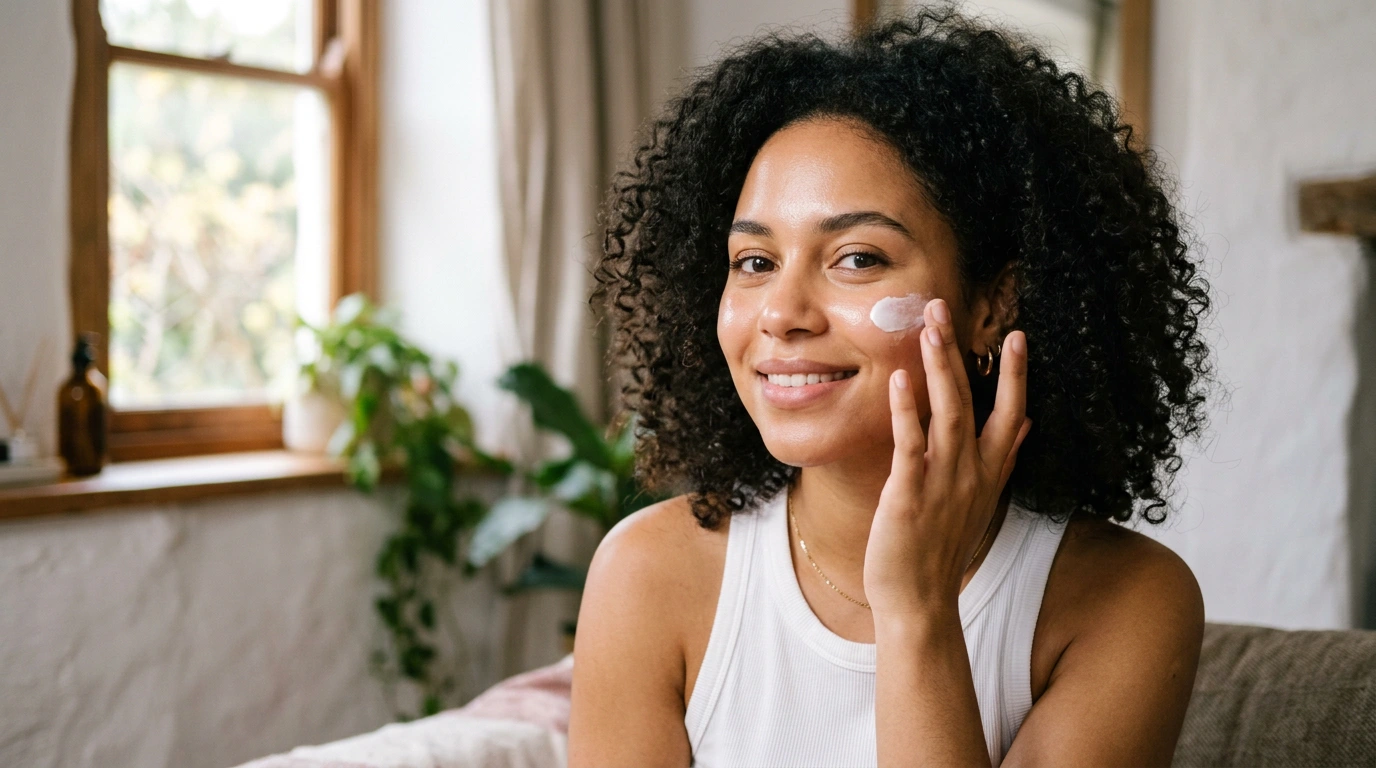
The right amount stays the same across skin types. How you apply it and what you apply it with change quite a bit.
Oily Skin
Oily skin doesn’t mean you use less sunscreen on your face.
Stick to the ¼ teaspoon rule. Gel-based or mattifying formulas sit lighter on skin without the greasy finish. Apply in thin layers, letting each layer settle before adding the next.
This keeps coverage full without clogging pores or feeling heavy by midday.
Dry Skin
Apply your moisturizer first, and let it fully absorb before applying sunscreen.
Layering them wet dilutes the SPF.
Once your moisturizer has settled, apply the full ¼ teaspoon of sunscreen on top. Cream-based formulas work best here; they add a slight barrier without stripping moisture from already-dry skin.
Sensitive Skin
Sensitive skin needs the same amount, no less.
Cutting back on quantity to avoid irritation leaves your skin exposed.
Instead, switch to mineral-based sunscreens with zinc oxide or titanium dioxide. Apply gently using your fingertips in soft, pressing motions rather than rubbing.
Full coverage is still the goal, just with a formula that won’t cause a reaction.
Normal Skin
Normal skin gives you the most flexibility. Still, the ¼ teaspoon rule applies.
Most formulas, gel, cream, or lotion work well. Apply evenly across all face zones and let it absorb for a minute before heading out.
Dark Skin
Darker skin tones still need the same amount of sunscreen.
Melanin offers some natural protection, but not enough to skip full coverage. Mineral sunscreens used to leave a white cast; newer formulas are much better.
Look for tinted or invisible-finish options, and stick to the two-finger rule for full-face coverage.
How Often Should You Reapply for Real Protection
Applying once in the morning isn’t enough. Sunscreen breaks down with sun exposure, sweat, and time.
- Every two hours that’s the standard reapplication window during outdoor activity.
- After swimming or sweating, even water-resistant formulas need a fresh layer after 40 to 80 minutes in water.
- After touching or wiping your face, dabbing sweat or blowing your nose removes more product.
- Indoors, near windows, UVA rays pass through glass. A midday top-up still makes sense on bright days.
Reapplication means the same amount each time. A light touch-up won’t cut it.
How Much Sunscreen to Use on Face when Wearing Makeup
Makeup goes on after sunscreen always.
Apply your full ¼ teaspoon of sunscreen first, then let it settle for 2 minutes before foundation. SPF in makeup doesn’t replace a proper sunscreen layer.
The amount of foundation you’d need for real SPF protection is far more than anyone actually wears.
So keep sunscreen as its own separate step.
It takes thirty extra seconds and makes everything that follows actually worth wearing
How Much Sunscreen for the Whole Body
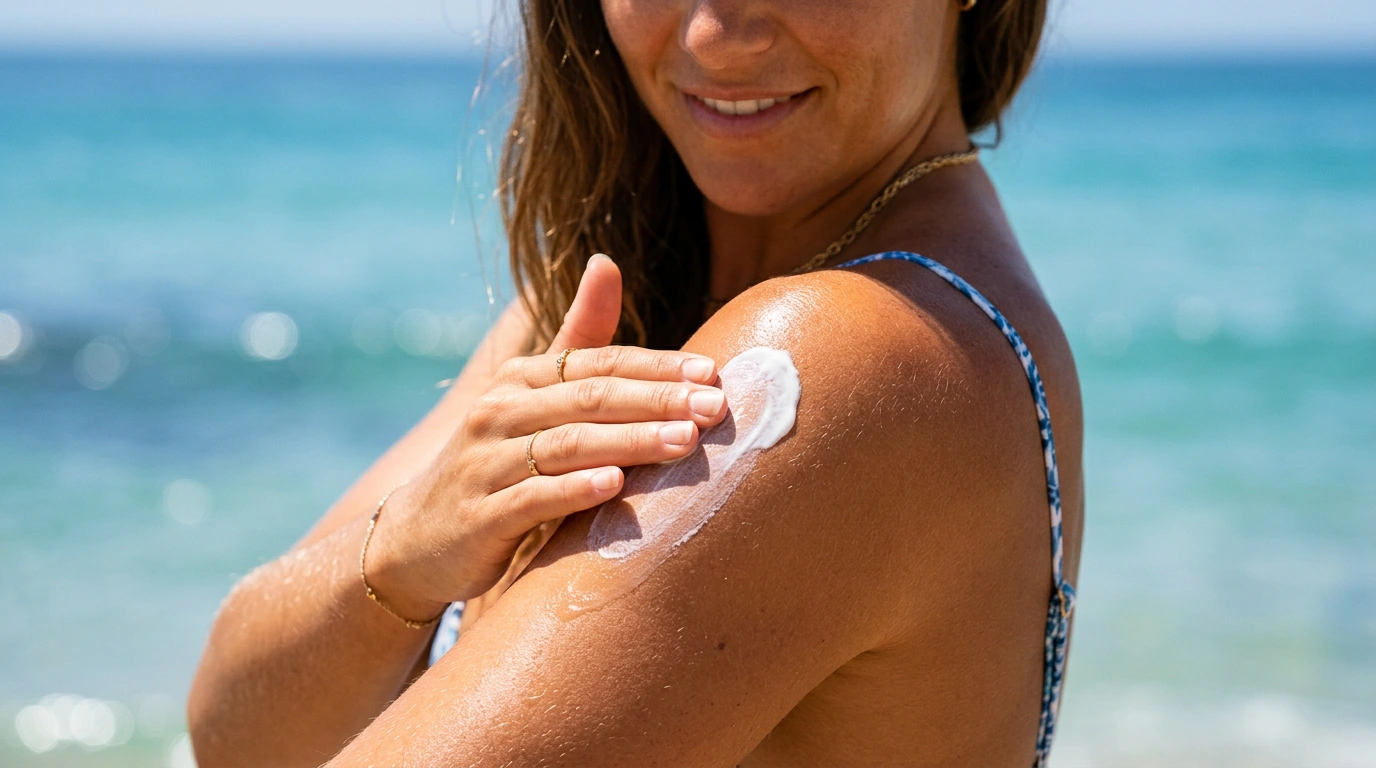
The face gets ¼ teaspoon, but the body needs much more. Here’s how it breaks down:
- Full body: One full ounce, roughly a shot glass of product
- Each arm: One teaspoon per limb
- Each leg: One teaspoon per limb
- Chest: One teaspoon
- Back: One teaspoon
- Face: ¼ teaspoon
Most people use about half the recommended amount. Don’t ration it. Every area needs its full share to actually work.
Signs You’re Not Using Enough Sunscreen
Your skin often gives clear signals when it’s not getting enough protection. Here’s what to watch for:
Tanning despite wearing sunscreen indicates the layer applied was too thin. Redness or burning after brief sun exposure means your coverage wasn’t enough to protect you.
Uneven tan lines on the face, missed spots, or patchy application show up fast.
Skin feels tight after outdoor exposure, an early sign of UV damage, even without visible burn. Sun exposure causes frequent breakouts due to inflamed, under-protected skin.
Premature fine lines appear early around the eyes and mouth, often neglected in application.
Pigmentation patches that appear over time due to long-term under-application result in uneven skin tone.
Quick Visual Manual: Easy Ways to Measure without Guessing
No measuring tools needed. These simple references make it easy to get the amount right every time.
1. Two-finger rule
Squeeze sunscreen along your index and middle fingers from base to tip for face and neck.
2. Shot glass rule
One full shot glass covers the entire body.
3. Pea doubled
Two peas’ worth of product is your minimum for the face alone.
4. Coin size
A circle roughly the size of a small coin pressed flat is close to ¼ teaspoon.
5. Palm check
After spreading, your face should feel visibly coated, not just lightly touched.
6. Finger smear test
Run a clean finger across your cheek after application. A slight residue means good coverage.
7. White cast check
Mineral sunscreen, a faint white tone across the face, confirms full coverage.
Common Mistakes that Reduce Sunscreen Effectiveness
Using sunscreen is a good habit. But a few common mistakes can quietly undo all that effort.
- Applying too little: the most common mistake, and the one that costs you the most protection.
- Skipping reapplication: one morning layer doesn’t last all day.
- Rubbing it in too fast: rushing the application leaves uneven patches across the face.
- Applying over wet skin: water dilutes the formula before it even settles.
- Storing sunscreen in heat: a hot car or a beach bag can break down the formula over time.
- Forgetting to shake the bottle: some formulas separate and need a quick shake before use.
Special Situations that Change How Much You Need
Some situations call for extra attention. Here’s a quick breakdown:
| Situation | What Changes | What to Do |
|---|---|---|
| Beach or pool day | UV exposure increases near water | Reapply every 40-80 minutes |
| High altitude | UV radiation is stronger | Apply more, reapply often |
| Snow or ice | Reflects up to 80% of UV rays | Same rules as a beach day |
| Cloudy day | 80% of UV still gets through | Full amount still needed |
| Driving or near windows | UVA rays pass through glass | Apply before sitting near the glass |
| Post-swimming | Water strips product fast | Fresh application after every swim |
| Exercising outdoors | Sweat breaks down coverage | Reapply every hour |
| Photosensitive medication | Skin burns much faster | Apply generously, consult a doctor |
Building a Habit: Making Sunscreen Use Consistent and Easy
Consistency is where most people struggle. A simple daily schedule makes it hard to skip.
Morning Before You Leave
Apply ¼ teaspoon of sunscreen as the last step in your skincare routine.
Let it settle for two minutes before makeup or going outdoors.
Midday, around 12 pm
Reapply if you’ve been near windows or outside. Use a powder SPF or blotting sunscreen for easy top-ups over makeup.
Afternoon Every Two Hours Outdoors
Set a phone reminder. Reapply the full amount, not just a quick swipe.
Post-Swim or Post-Workout
Apply a fresh layer immediately after. Don’t wait for skin to feel tight or red.
Evening
Wash sunscreen off thoroughly.
Leftover product clogs pores overnight. Clean skin is ready for the next morning’s application.
Wrap Up!
Sunscreen works when you use it enough.
The right amount, applied to every zone, reapplied on time, that’s what actually protects your skin.
SPF numbers mean nothing short of a proper layer. Small habits make the biggest difference here. Measure it, cover every spot, and stick to your schedule.
Your skin retains sun damage, but improves with proper protection.
Start with the right amount today.
That one small change adds up to healthier skin over time.
Frequently Asked Questions (FAQ’s)
1. What is the 3-Finger Rule for Sunscreen?
Squeeze sunscreen across three fingers for fuller face and neck coverage.
2. Is SPF 50 Too Much for Everyday Use?
No, SPF 50 provides reliable daily protection without being excessive for most skin types.
3. Should I Put Sunscreen on My Eyelids?
Yes, eyelid skin is thin and burns faster than anywhere else.
4. Is 70 SPF Sunscreen Too Much for The Face?
No, but the extra protection above SPF 50 is minimal in real use.
5. Are You Supposed to Rub Sunscreen All the Way in?
Gently pat and spread it; rubbing too hard removes product and reduces coverage.