
\
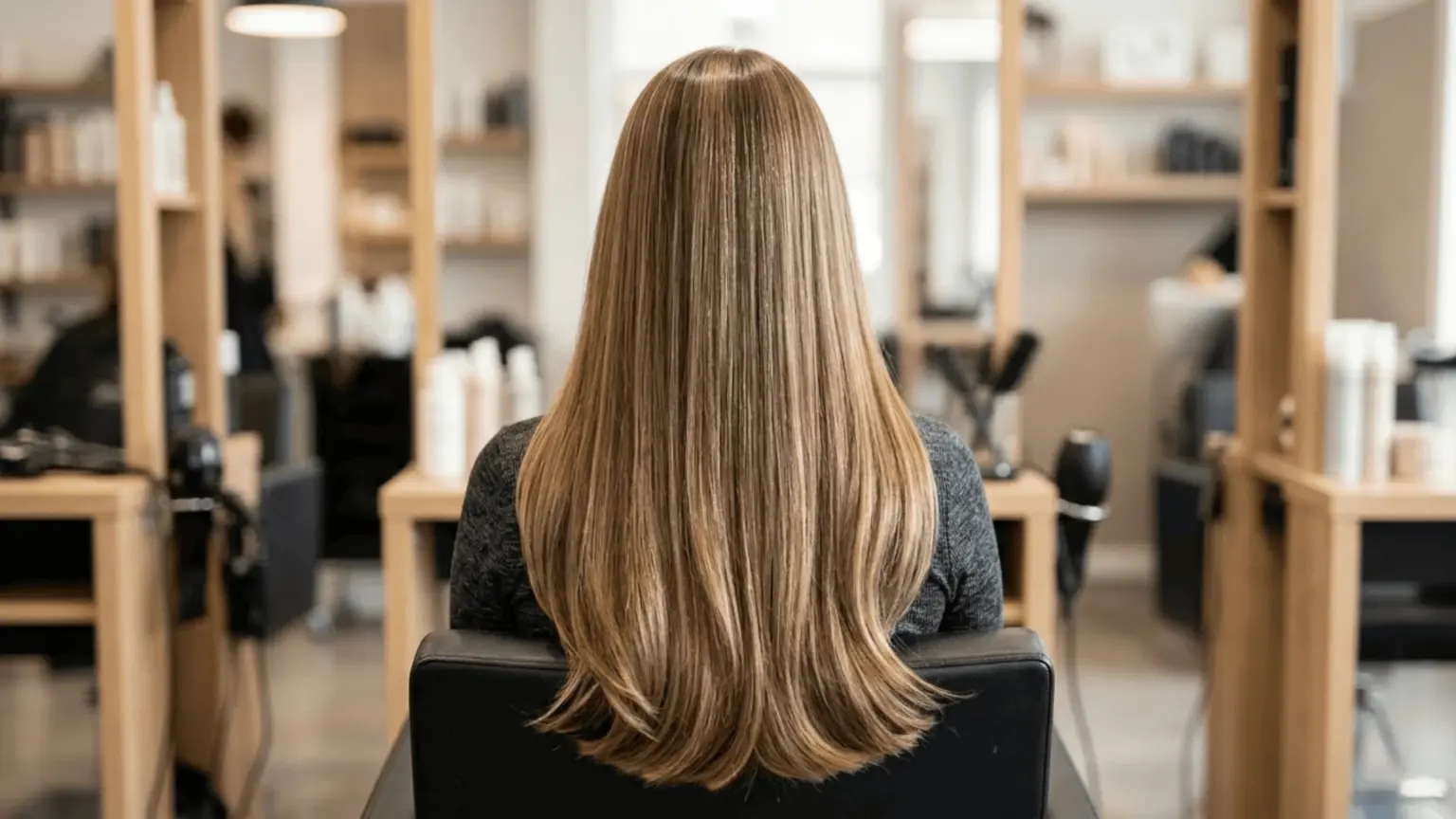
Hair color can completely change your look, but not all coloring methods treat your strands the same way.
The difference between healthy shine and noticeable breakage often comes down to technique.
Many people focus on the shade they want, yet overlook how the process affects hair structure.
In my experience the least damaging hair color techniques and methods rely on controlled application, smarter product choices, and proper timing to protect long-term hair strength.
How Hair Color Causes Structural Stress
To understand safer coloring, you first need to understand what creates damage.
Permanent color and bleach open the cuticle layer so pigment can be altered inside the strand. During lightening, natural melanin is broken down.
This process weakens internal protein bonds and reduces elasticity.
The higher the developer strength and the more frequently the hair is processed, the greater the stress on the strand. That is why selecting the right technique is essential.
Damage Comparison Table
The safest choice usually depends on how big of a color change you want. Subtle color-depositing methods are generally much gentler than processes that require strong lightening.
| Technique | Lift Level | Cuticle Disruption | Maintenance Cycle | Overall Damage Risk |
|---|---|---|---|---|
| High Lift Permanent Color | High | High | 6 to 8 weeks | Highest |
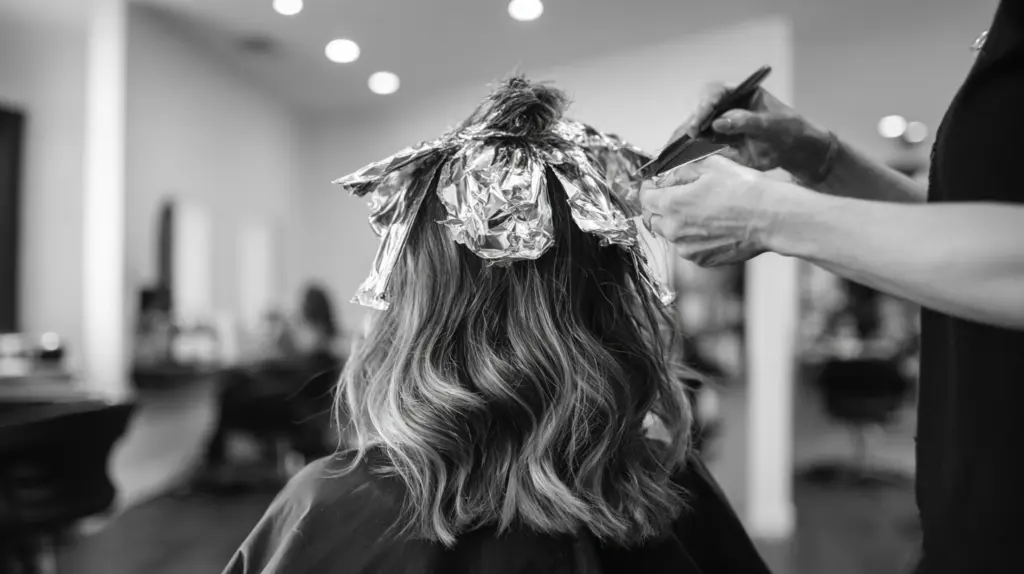
| Traditional Foil Highlights | High | Moderate to High | 6 to 8 weeks | High |
| Balayage | Moderate | Moderate | 10 to 14 weeks | Moderate |
| Demi Permanent Color | Low | Low | 6 to 8 weeks | Low |
| Gloss or Toner Only | Very Low | Minimal | 4 to 6 weeks | Lowest |
Least Damaging Hair Color Techniques: Explained
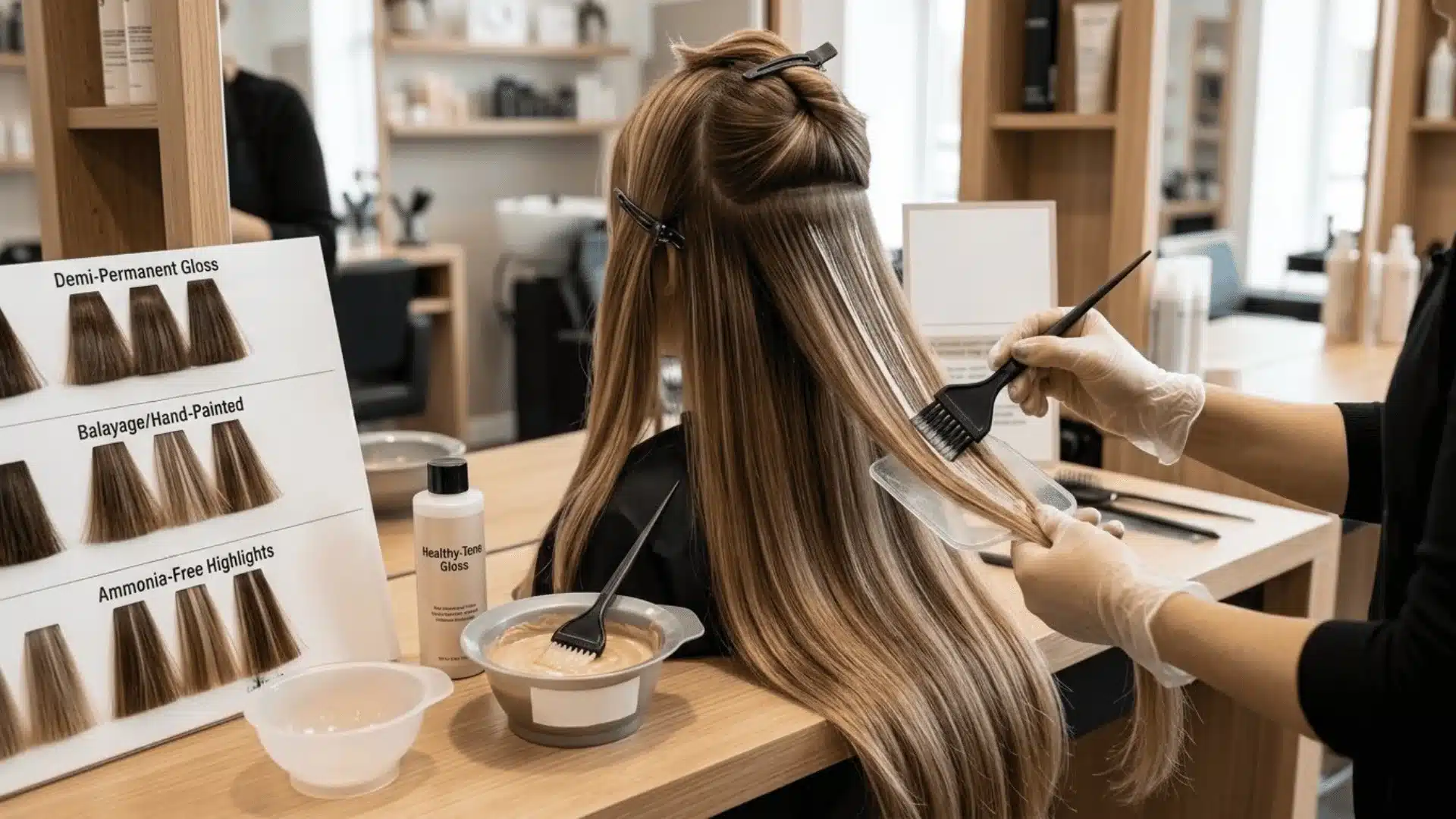
Not every coloring service affects hair in the same way. Here is how common techniques compare.
Semi-Permanent and Demi-Permanent Color
These options deposit color without aggressive lift. They use lower developer strength and cause minimal cuticle disruption. They are ideal for enhancing tone, deepening color, or soft-gray blending.
Because they do not heavily alter natural pigment, they maintain better hair integrity over time.
Gloss and Toner Treatments
Gloss treatments refine tone and add shine without significant lift.
They smooth the cuticle and improve surface reflection. Since they do not drastically change internal pigment, they carry very low structural impact.
For subtle adjustments, glossing remains one of the safest professional services.
Balayage
Balayage involves painting lightener onto selected sections rather than fully saturating strands in foils.
Strategic placement reduces full strand exposure and often allows longer maintenance intervals.
When properly executed, balayage reduces repeated overlap and lowers cumulative stress compared to traditional highlighting.
Low Volume Lightening
If lift is required, using lower developer strength and allowing gradual processing significantly reduces strain on the hair.
Slower lift minimizes cuticle shock and helps preserve elasticity. It may take more time, but it protects the long term condition of the strand.
The Importance of Bond Support
Modern color services often include bond-building treatments. Hair contains internal disulfide bonds that provide strength and flexibility. Lightning weakens these connections.
Bond support treatments help reinforce internal structure during processing.
While they do not eliminate all chemical impact, they significantly reduce breakage and improve post-service resilience.
When lift is involved, bond protection is strongly recommended.
Consultation Questions That Protect Your Hair
A proper consultation prevents most severe damage.
Consider the Following:
- Have you previously bleached your hair
- Are there any box dye layers present
- How often do you use heat styling tools
- Is your hair currently dry or highly porous
Overlapping lightener on previously processed hair is one of the leading causes of breakage. Full transparency allows your stylist to plan safely.
Smart Maintenance After Coloring
Even the least damaging hair color techniques require proper aftercare.
Before Your Appointment: Focus on hydration with regular conditioning treatments. Avoid excessive heat styling leading up to your service.
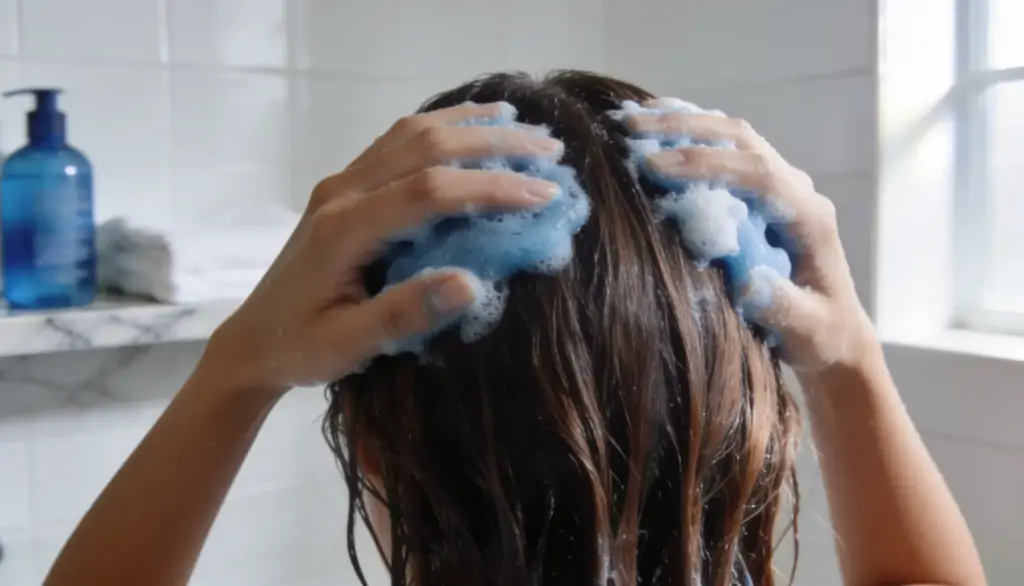
After Coloring: Use gentle cleansers, minimize high-temperature tools, and trim regularly to prevent split ends from worsening. Healthy maintenance extends both color vibrancy and structural strength.
Conclusion
I have seen that damage is rarely unavoidable.
It usually results from rushed decisions or repeated overlap.
When color is approached with planning, controlled developer strength, and consistent care, the results are far healthier.
The least damaging hair color techniques and methods focus on preserving strength while achieving change.
With the right strategy, you can enjoy beautiful color and maintain long term hair health.
Frequently Asked Questions
Is Balayage Less Damaging than Traditional Highlights
Balayage can be less damaging when applied correctly because it reduces full strand saturation and often requires fewer touch-ups.
Does Using Bond Builders Prevent All Damage
Bond builders reduce breakage and improve elasticity, but they do not completely eliminate the chemical impact of lightening services.
How Often Should I Color My Hair to Avoid Damage
Spacing appointments at least eight to twelve weeks apart reduces overlap and lowers cumulative stress on previously processed strands.
Can I Color Already Damaged Hair Safely
It is best to restore moisture and strength first. Coloring severely compromised hair increases breakage risk.