

Ask a hundred people why they’re losing hair and most will shrug. Genetics, stress, age — the usual suspects. Few would point to their endocrine system. But that’s exactly where the real answer lives, and for health sciences students, it’s one of the more rewarding places to go looking.
This topic doesn’t fit neatly into one discipline. Dermatology, endocrinology, and patient psychology all come together here. This mix is what makes it fascinating. Pull on the hormonal thread long enough and you stop studying hair loss. You start studying how the body communicates with itself.
The Scalp Is Listening
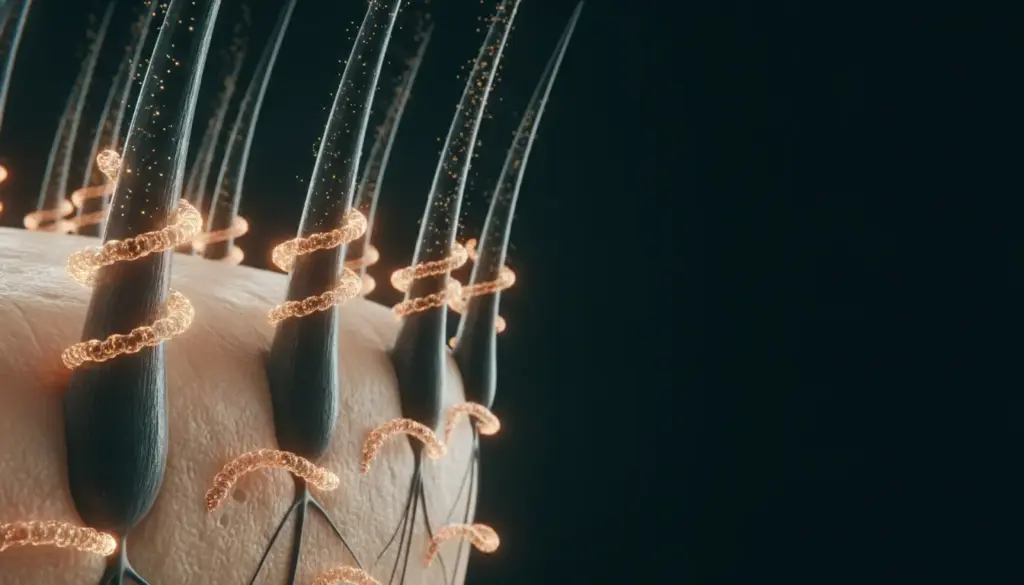
Hair is often described as “just keratin,” which undersells it considerably. Each follicle is packed with receptors. It constantly reacts to hormones like androgens, thyroid hormones, and cortisol. Whatever the endocrine system is doing, the scalp is picking it up.
That’s why hair loss so often shows up before anything else does. Before a thyroid diagnosis. Before a patient connects their shedding to months of chronic stress. The follicles are early responders, and once you understand why, you start seeing hair loss differently — not as a cosmetic nuisance but as a biological signal worth reading.
For students, this reframe matters. It turns a seemingly surface-level topic into a genuinely useful lens on systemic biology.
Communicating the Science
To research this topic, I need to look at endocrinology journals, dermatology case studies, and clinical trials. The material isn’t hard to find. Translating it takes more effort. It means turning complex ideas like receptor binding and hormonal feedback loops into something clear for the audience.
Many students find that visual formats work especially well for communicating biological processes. Hormonal pathways and feedback loops translate naturally into slides and diagrams. One common question that comes up is: “how do I do my powerpoint presentation in a way that actually communicates complex science clearly?” Good visuals and brief text make hormonal mechanisms easier for the audience to understand.
A strong presentation does not just display information — it guides the viewer through it. On-time delivery of well-organised material reflects not just knowledge, but genuine understanding of the topic.
It’s a skill that compounds. Build it early to benefit more. This helps in seminars, clinical rotations, and research where being understood is as important as being right.
Three Hormones, Three Different Stories

Most research in this area keeps returning to the same three pathways. They’re worth understanding individually because each one works differently.
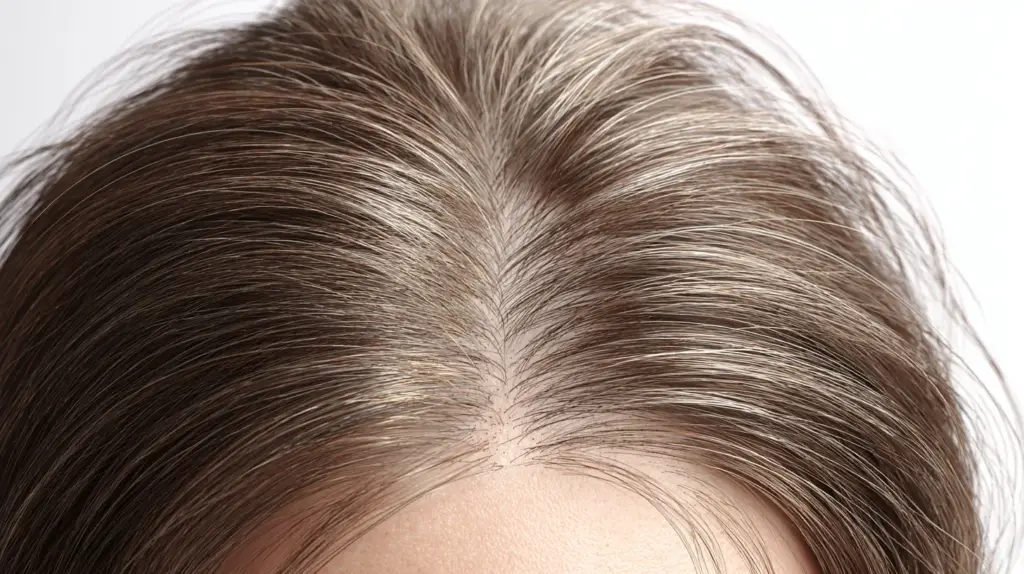
Androgens get the most attention, and for good reason. DHT — which the body makes by converting testosterone — gradually miniaturises hair follicles. Terminal hairs, the thick pigmented ones, shrink over time into thin, colourless strands. The condition this produces, androgenetic alopecia, is the most common form of hair loss in the world. It affects men and women in different ways. Men usually see a receding hairline. Women often notice thinning all over the crown, especially when high androgens are due to PCOS.
Thyroid hormones control how cells renew in the body. Follicles notice when these levels fall. Hypothyroidism slows hair growth. Patients often notice this before diagnosis. That shows how sensitive this system is. Thinning hair showing up ahead of fatigue or weight gain isn’t unusual. It’s actually a fairly consistent pattern.
Cortisol is the one that surprises people. It doesn’t act directly on follicles the way androgens do. Chronic stress raises cortisol levels and disrupts the hair growth cycle. Follicles go into a resting phase too soon and shed later, sometimes months after the initial stress. The delay makes the cause hard to identify. And once the shedding starts, the stress it causes tends to keep cortisol elevated. Dermatologists now study this loop — hair loss driving stress driving more hair loss — as a recognised clinical pattern.
What the Research Has Established
A few things have become fairly solid in the literature:
- DHT sensitivity is inherited. That’s why hair loss tends to track through families with such consistency, regardless of which parent’s side you look at.
- Oestrogen protects follicles — which is why postmenopausal women often experience a marked increase in thinning. The protective effect drops away and the hair responds.
- Ferritin levels matter more than many clinicians initially assumed. Low iron stores amplify androgen-related shedding, which means nutritional workups belong in the picture.
- The scalp microbiome affects local androgen metabolism. This is recent and still being characterised, but it’s already pushing researchers to think differently about why some people are more susceptible than others.
- The stress-shedding loop is now documented well enough to have spawned its own research area — psychodermatology — which examines the interplay between psychological state and skin and hair conditions.
Things About Hair Biology That Tend to Catch People Off Guard
The average scalp has somewhere between 80,000 and 120,000 follicles, and each one runs independently. That’s why you rarely see perfectly uniform loss — different follicles are at different points in their cycle at any given time.
Hair grows fast — roughly 15 centimetres a year, making it one of the quickest-growing tissues in the body after bone marrow. But hormonal shifts can slow or halt that growth in a matter of weeks. People are often surprised by how quickly the disruption happens. They think the system would take longer to react.
The discovery that really changed this field came out of the Dominican Republic in the 1970s. A researcher came across a community where a genetic enzyme deficiency prevented conversion of testosterone into DHT.
These individuals never developed male-pattern baldness. The finding changed beliefs about androgenetic alopecia. It also led to finasteride, which remains a popular hair loss treatment today. It’s one of those cases where a small, unusual population ended up redirecting an entire research field.
What’s Active Right Now
JAK inhibitors have become a genuine focus of dermatology research. They block certain immune signals that affect follicle behaviour, and early results suggest they might reverse miniaturisation — not just slow it. That’s an important difference from most current treatments. If you want to keep up with where the field is going, check clinical trial registries and PubMed.
Women’s hair loss is another area moving quickly. The presentations of PCOS, postpartum hormonal changes, and perimenopause are distinct. They differ from each other and from the classic male pattern. However, clinical guidelines have not kept up with current research. That gap makes this a particularly productive area for literature reviews or student proposals.
A Shift in How Clinicians Think About It
There’s been a quiet but real change in how unexplained hair loss gets handled clinically. Diffuse shedding used to be dismissed fairly readily as stress or a cosmetic concern. Increasingly, it prompts investigation — thyroid panels, ferritin checks, hormonal workups. The scalp is being read as a diagnostic surface, not just an aesthetic one.
Students who understand that shift will find it useful. It changes how you interpret patient histories, and it opens up a more interesting set of clinical questions.
Why It’s Worth Going Deep On
Few health science topics combine this well: clear mechanisms, a patient group impacting nearly everyone, and a lively research area full of open questions.
You can view it from three angles: pathophysiology, treatment development, or the psychology of visible hair loss. Each perspective offers valuable insights. It’s the kind of topic that gives back the more time you put into it.