
Your skin feels tight after cleansing. It looks dull, maybe flaky in patches. You layer on moisturizer, get an hour of relief, and then that same uncomfortable feeling creeps back.
Most people assume they just need heavier products. But there’s a real chance they’re treating the wrong problem. Dry skin and dehydrated skin are not the same – different causes, different mechanisms, different fixes. Mixing them up is exactly why so many routines stall.
What Dry Skin Is
Dry skin is a type, not a condition. Genetics determine it. It means the skin produces less sebum than average – and sebum is the natural oil that forms part of the lipid barrier sealing moisture in and keeping irritants out. Less sebum means a structurally incomplete barrier.
What that looks like: rough texture, persistent tightness, easy reactivity to cold air or harsh cleansers, occasional flaking. The key word is persistent. Dry skin doesn’t fluctuate much between seasons or change based on what you drank yesterday. It just is.
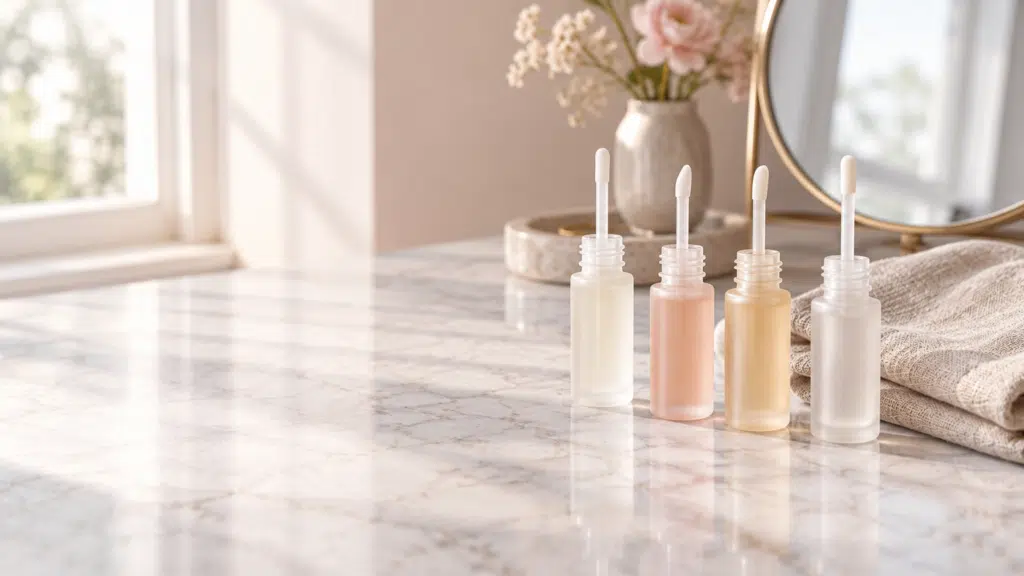
What it needs are lipids – ingredients that physically stand in for what the sebaceous glands aren’t producing. This is where oils do work that lotions often can’t. An ultra hydrating oil for soft skin delivers fatty acids directly to the surface, filling the lipid gaps that cause that chronic tight, rough sensation. Apply it to slightly damp skin – water acts as a carrier, pulling oil deeper rather than leaving it sitting on top.
What Dehydrated Skin Is
Dehydration is a condition. That one word changes everything, because it means any skin type can get it – including oily skin – and it can appear and disappear based on lifestyle.
What’s actually missing is water, not oil. Diet plays a role – caffeine and alcohol both increase fluid loss. So do stripping cleansers that disrupt the surface faster than skin can recover. Heated indoor air pulls moisture out gradually, the kind of slow drain that’s easy to miss until skin looks noticeably flat. Air conditioning does the same thing in reverse – cold, dry air with zero humidity running for hours will leave skin dull regardless of what you put on it.
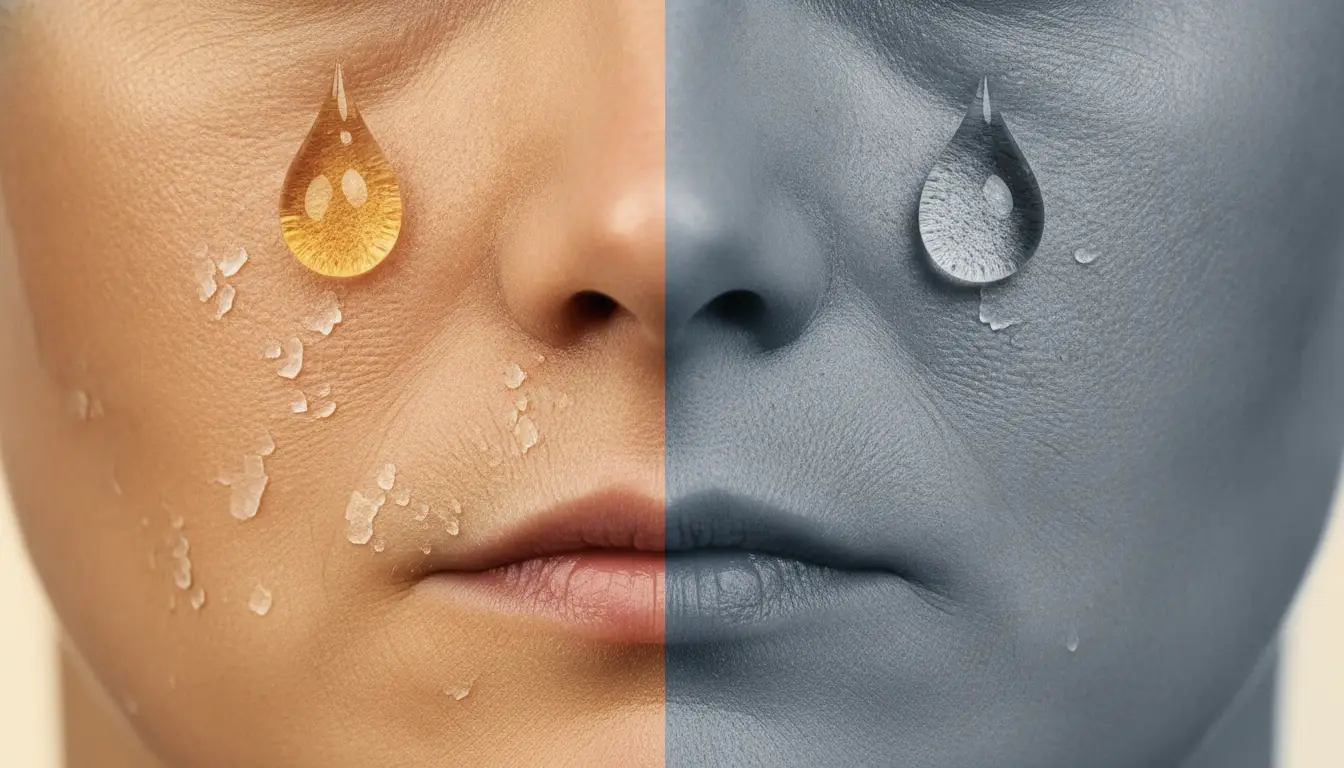
The visual signs are distinct from dry skin once you know what to look for. There’s a greyish cast to the complexion, a flatness that doesn’t respond to moisturizer the way you’d expect. Fine lines appear sharper than usual – the skin hasn’t changed structurally, it’s just lost the water content that normally keeps it plump and smooth. Press a finger gently against your cheek, release, and watch – skin that snaps back right away is reasonably hydrated; skin that takes a beat to recover is telling you something.
Why Treating One With the Other Fails
This is where months of effort get wasted.
Someone with dehydrated skin piles on rich creams trying to fix the tightness. Oils do seal moisture in – but if there’s barely any water in the skin to begin with, there’s nothing to seal. Products stack up on the surface while the skin underneath stays dull and uncomfortable.
Flip it around – someone with genuinely dry skin moves to lighter water-based products and focuses on drinking more. Water reaches the skin but passes straight back out through a barrier that’s missing its lipid layer. The cycle repeats. Neither approach fails because the products are bad. They fail because the underlying problem wasn’t identified first.
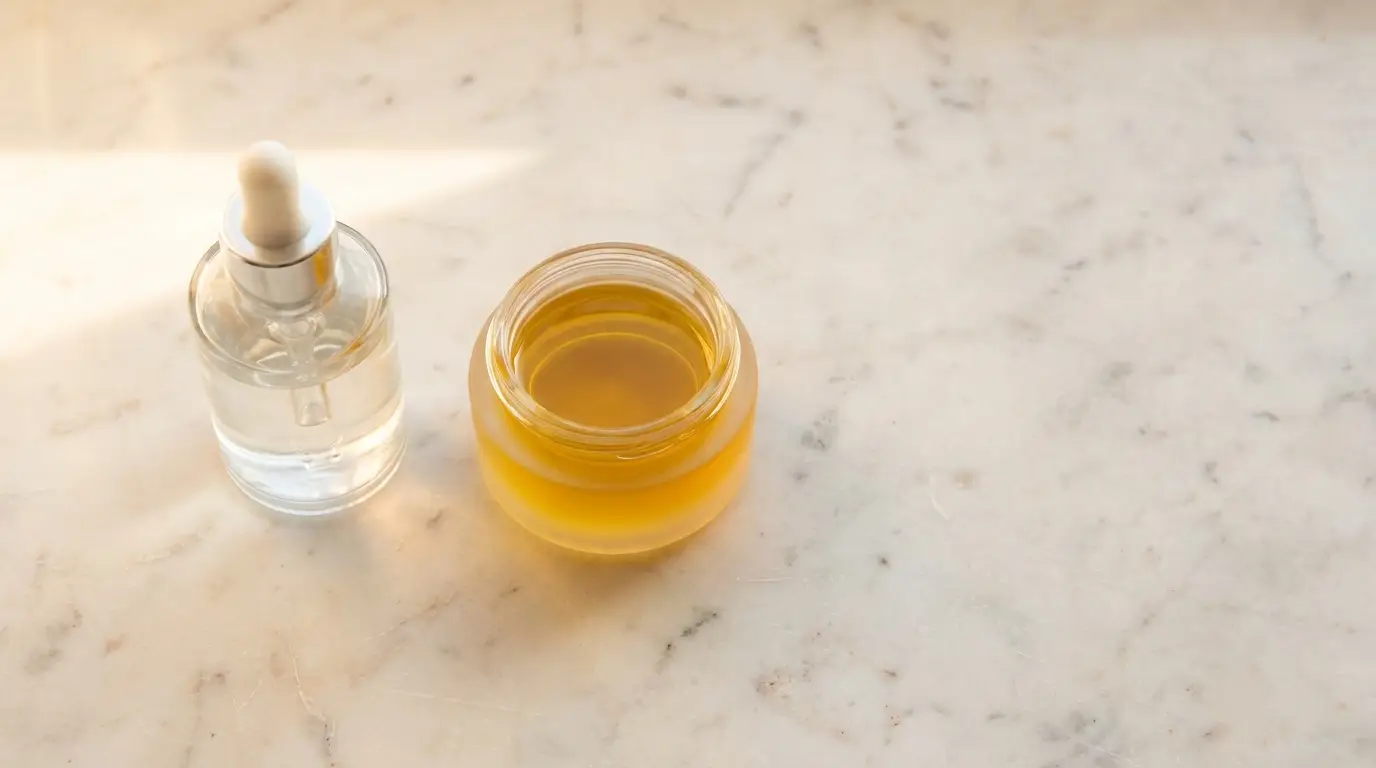
Dehydrated skin needs humectants – ingredients that actively pull water into the skin. Hyaluronic acid, glycerin, aloe vera. They work best pressed into damp skin while there’s still surface water to attract, then locked in with something occlusive on top.
For dry skin, the starting point is different. What’s missing isn’t water – it’s the structural components that stop water leaving in the first place. Ceramides, fatty acids, and plant-derived oils rebuild that layer. Skip this step and humectants have nothing to anchor to. Water comes in and moves right back out through a surface that was never properly sealed.
Useful shortcut: Water-based product, absorbs instantly, leaves nothing behind – it’s targeting dehydration. Rich formula, slow absorption, slight sheen after – it’s targeting dryness. Many people need both, applied in that exact order: humectant first, lipid-rich product second.
What to Do Differently
When dehydration is the issue, the cleanser matters more than most people expect. Foaming formulas and anything with high alcohol content strip what little surface integrity exists. Switch to something gentle and cream-based, apply a humectant while skin is still slightly damp, then seal. A small bedroom humidifier running overnight makes a consistent difference – heated winter air and air conditioning are both silent contributors that products alone can’t fully compensate for.
For dry skin, foaming cleansers come out of the routine entirely. Oil or cream cleansing only. A lipid-rich oil becomes the non-negotiable final step – not optional, not occasional. And the logic extends to the body too. Dry skin type affects every surface, and the common habit of carefully tending the face while ignoring everything else shows – rough elbows, tight shins, flaking across the back.
When both are happening at once – which is common, especially in winter – order determines results more than product selection. Humectant layer in first to bring water to the skin. Lipid layer second to hold it there. Two jobs, two product types, right sequence.