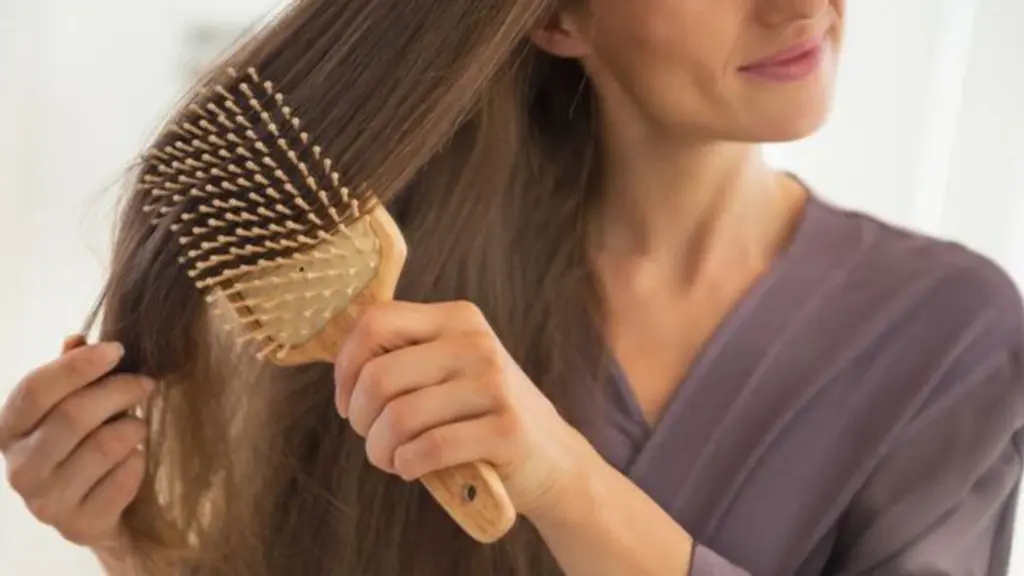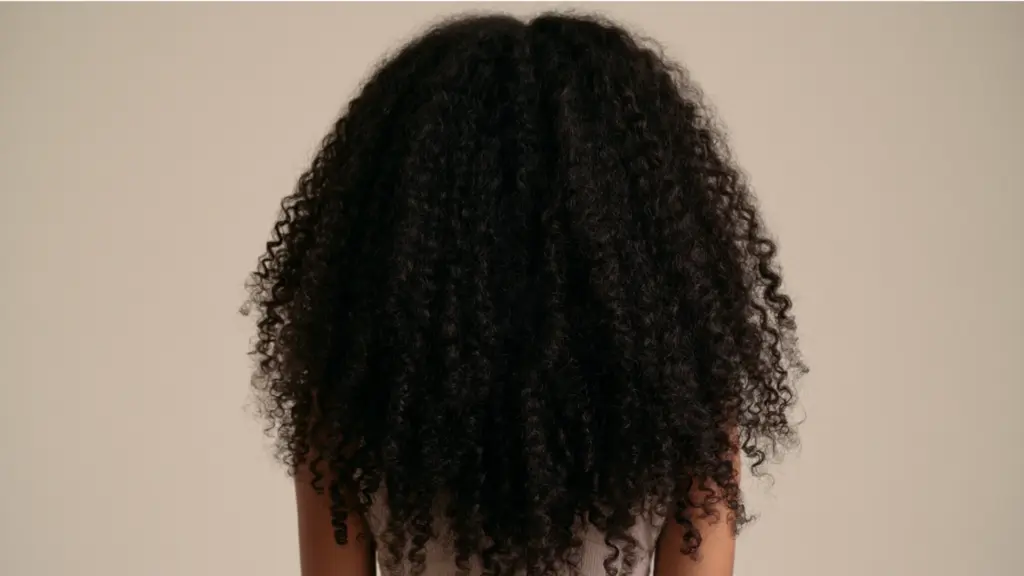

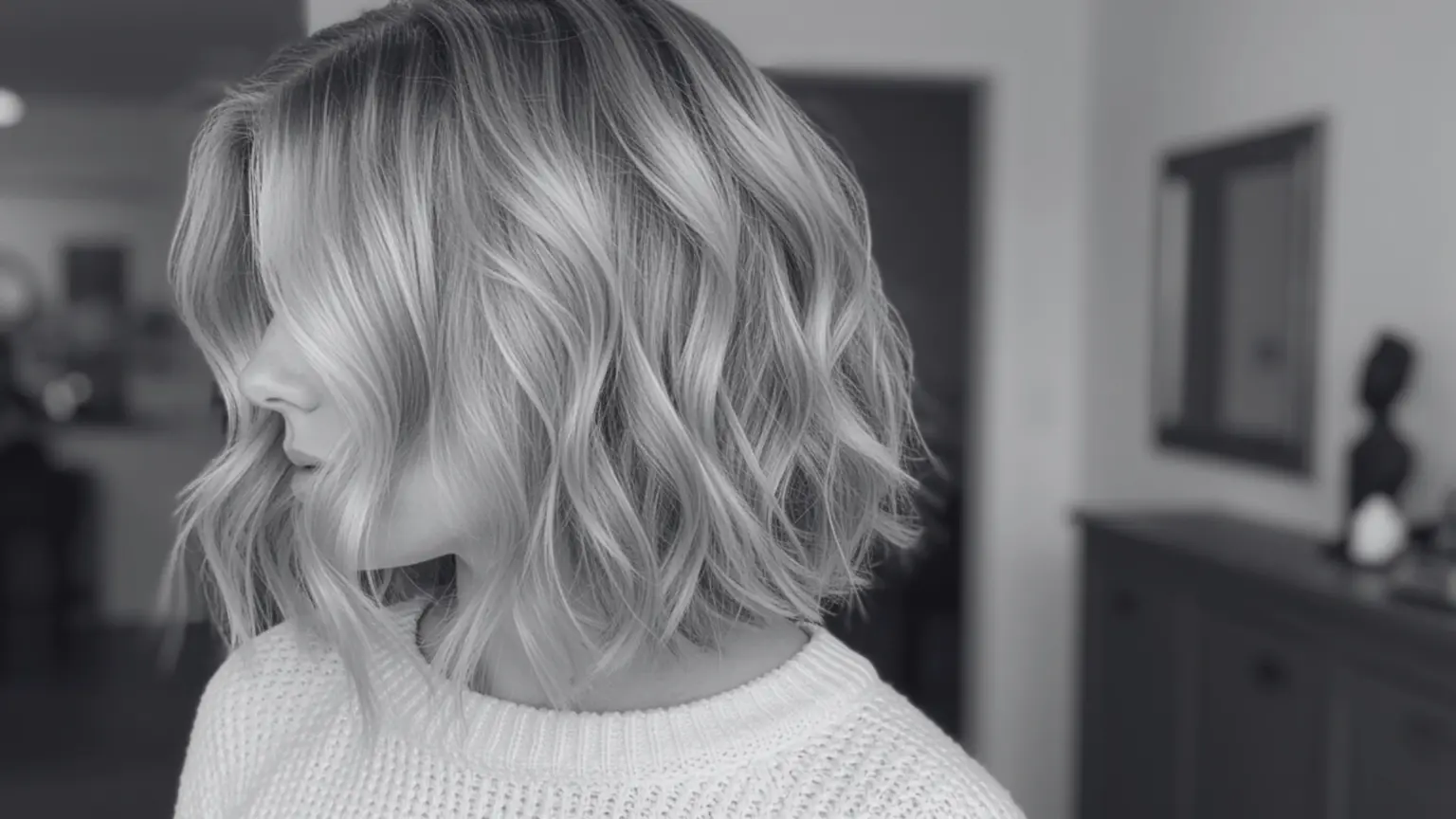
Thin hair is frustrating. You try every tip you find online, and nothing works.
Most volume tips out there aren’t built for thin hair. They’re built for fine hair. And yes, there’s a difference.
This blog covers how to add volume to thin hair. These aren’t random suggestions. They’re tried-and-tested methods that people with thin hair swear by.
Thin Hair vs. Fine Hair: Why the Difference Matters for Volume
Thin hair and fine hair sound like the same thing. But they’re not, and mixing them up leads to the wrong solutions
| Feature | Thin Hair | Fine Hair |
|---|---|---|
| What it means | A few hair strands on the scalp | Each strand has a small diameter |
| The real problem | Low density makes hair look flat | Lacks thickness but can still be dense |
| How it feels | Limp, flat, and hard to style | Soft and silky to the touch |
| Volume challenge | Gaps between strands show easily | Loses volume but holds style better |
| What works | Density-boosting techniques | Lightweight volumizing products |
The Root Cause of The NO Volume

Thin hair has fewer strands on the scalp. And when there are fewer strands, there’s less contact between them.
Hair needs that fiber-to-fiber interaction to grip itself into a lifted position. Without it, volume simply doesn’t hold.
This is also why techniques built for fine hair, like using mousse alone, don’t deliver the same results on thin hair. The strands just can’t hold each other up.
So, before trying any volume technique, understanding this is important. It helps pick what actually works, not just what sounds good on a blog.
Shower Routine for Thin Hair Volume
The shower routine is where volume is won or lost. Most people don’t realize that.
Getting these steps right sets the foundation for everything else that comes after.
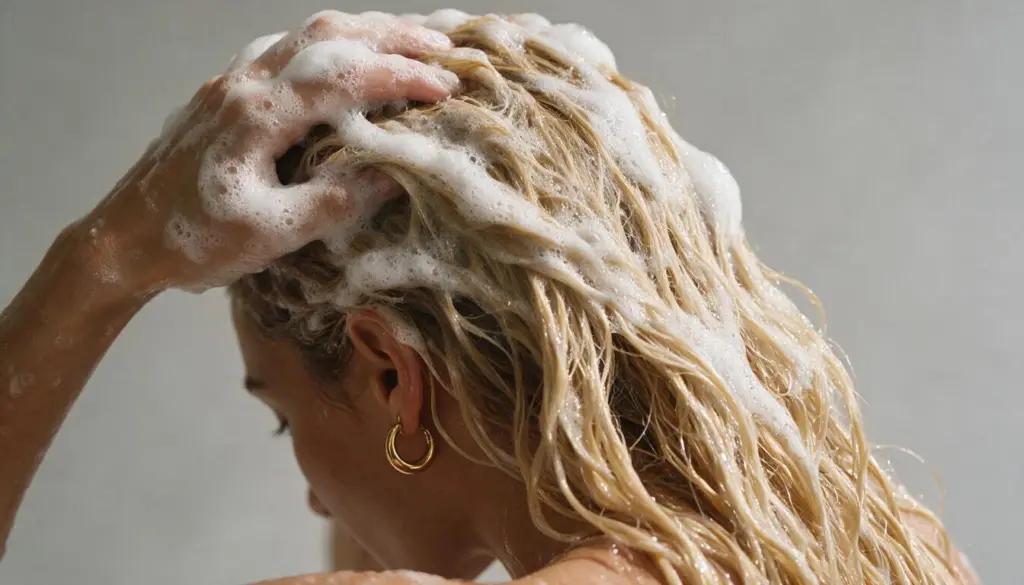
Step 1: Start With a Volumizing Shampoo
Scalp buildup and overwashing your hair are the single biggest volume killers for thin hair.
Product residue, oil, and dead skin weigh strands down before styling even begins. A volumizing shampoo cleans the scalp properly and removes that buildup.
For best results, massage it directly into the scalp, not just the lengths.
Use a clarifying shampoo once a week to give the scalp a deeper clean.
Step 2: Apply Conditioner to Mid-Lengths and Ends Only
This is where most people go wrong.
Applying conditioner to the roots instantly weighs thin hair down. Instead, work it through the mid-lengths to ends only.
Leave it on for a minute or two, then rinse thoroughly.
Step 3: Finish With a Cool Water Rinse
After rinsing out the conditioner, switch to cool water for the final rinse. Cool water closes the hair cuticle.
This adds natural bounce, making strands look smoother and fuller. It takes just 30 seconds but makes a real difference.
Skipping this step and rinsing with hot water the whole time leaves the cuticle open and hair looking limp.
Step 4: Skip Scalp Conditioner on Volume Days
On days when maximum volume is the goal, skip the scalp conditioner entirely. Any moisture near the roots softens the hair shaft and reduces lift.
Keeping the roots completely product-free at this stage gives thin hair the best chance to hold volume later.
Step 5: Use a Microfiber Towel to Dry
Regular towels are too rough for thin hair. The coarse fabric roughens the cuticle, leading to breakage.
A microfiber towel absorbs water gently without creating friction. Pat or squeeze the hair dry, never rub. This keeps the cuticle smooth and ready for styling.
Wrapping hair in a microfiber towel for 10 minutes speeds up drying without any damage.
How to Make Thin Hair Look Thicker
The shower routine builds the foundation. But what happens after the shower is just where volume really comes to life.
These thin hair volume tips lock in lift and keep it going all day.
Velcro Rollers
Velcro rollers are old-school but highly effective for thin hair. Roll them into the roots on dry or slightly damp hair.
Leave them in for 15 to 20 minutes. The result is natural-looking, heatless volume that holds through the day.
Medium-sized rollers work best for thin hair, large ones don’t grip enough to create real lift at the root.
Round Brush at the Roots
A round brush at the roots creates lift that lasts. Roll the brush under each section and aim the dryer downward.
This technique adds shape and volume right where thin hair needs it most.
Dry Shampoo Pre-Styling
Most people use dry shampoo after styling. Applying it before is the smarter move. It adds texture and grip to the roots before heat is applied.
This gives thin hair something to hold onto during styling.
Blow-Dry Upside Down
Flipping hair upside down while blow-drying naturally lifts the roots away from the scalp. Gravity does most of the work here.
This simple switch adds serious body and lift without any extra products or tools needed.
Opposite Side Part
Switching the part to the opposite side is the easiest volume trick. Hair that has settled flat on one side gets an instant lift when flipped.
It takes five seconds and adds surprising fullness to the crown area.
Best Products for Thin Hair Volume
The right products make a real difference for thin hair. But with so many options out there, it’s easy to pick the wrong ones.
1. Shampoo
OGX Thick & Full + Biotin & Collagen adds volume from the first wash. Biotin and collagen work together to plump each strand.
It cleanses the scalp well without stripping natural moisture. Great for everyday use.
Paul Mitchell Tea Tree Scalp Care focuses on scalp health first. A clean, balanced scalp means stronger, fuller-looking hair over time.
The tea tree formula removes buildup without over-drying. Works well for oily scalps.
2. Conditioner
OGX Thick & Full + Biotin & Collagen conditioner pairs perfectly with its matching shampoo. It adds thickness to each strand without weighing hair down.
Apply only to mid-lengths and ends for best results. Leaves hair feeling fuller.
Paul Mitchell Tea Tree Scalp Care Anti-Thinning is specially built for thinning hair. This conditioner strengthens strands from root to tip.
It conditions without leaving heavy residue. Regular use helps hair look noticeably denser over time.
3. Mousse
Suave Professionals Natural Volumeis a lightweight mousse that adds lift without crunch. It works well on damp hair before blow-drying.
Thin hair gets body and hold without feeling stiff or sticky. Budget-friendly too.
Paul Mitchell Extra-Body Sculpting Foam can be your go-to for serious volume. It coats each strand to add fullness and grip.
Apply to roots before diffusing or blow-drying. Hair holds its shape much longer.
4. Root Spray / Lift Spray
Living Proof Full Volume & Root-Lifting Spray targets the roots directly. It creates lift that lasts all day without stiffness.
Spray at the roots on damp hair before styling. One of the best options for thin hair.
Color Wow Raise the Root Thicken + Lift Spray thickens and lifts roots at the same time. It adds structure without any sticky feeling.
Works on both damp and dry hair. A great option for quick volume between washes.
5. Dry Shampoo
Living Proof Perfect Hair Daydoes more than absorb oil. It adds texture and lift to flat, second-day hair.
Spray at the roots, wait a moment, then work it in. Volume comes back fast.
6. Texturizing Spray
STMNT Definition Spray texturizing spray adds grip and body to thin hair. It separates strands and creates the look of more volume.
Light enough to layer with other products without weighing hair down.
Best Haircuts That Add Volume to Thin Hair
The right haircut can do half the volume work before any product is even applied. Most people overlook this.
Blunt Bob
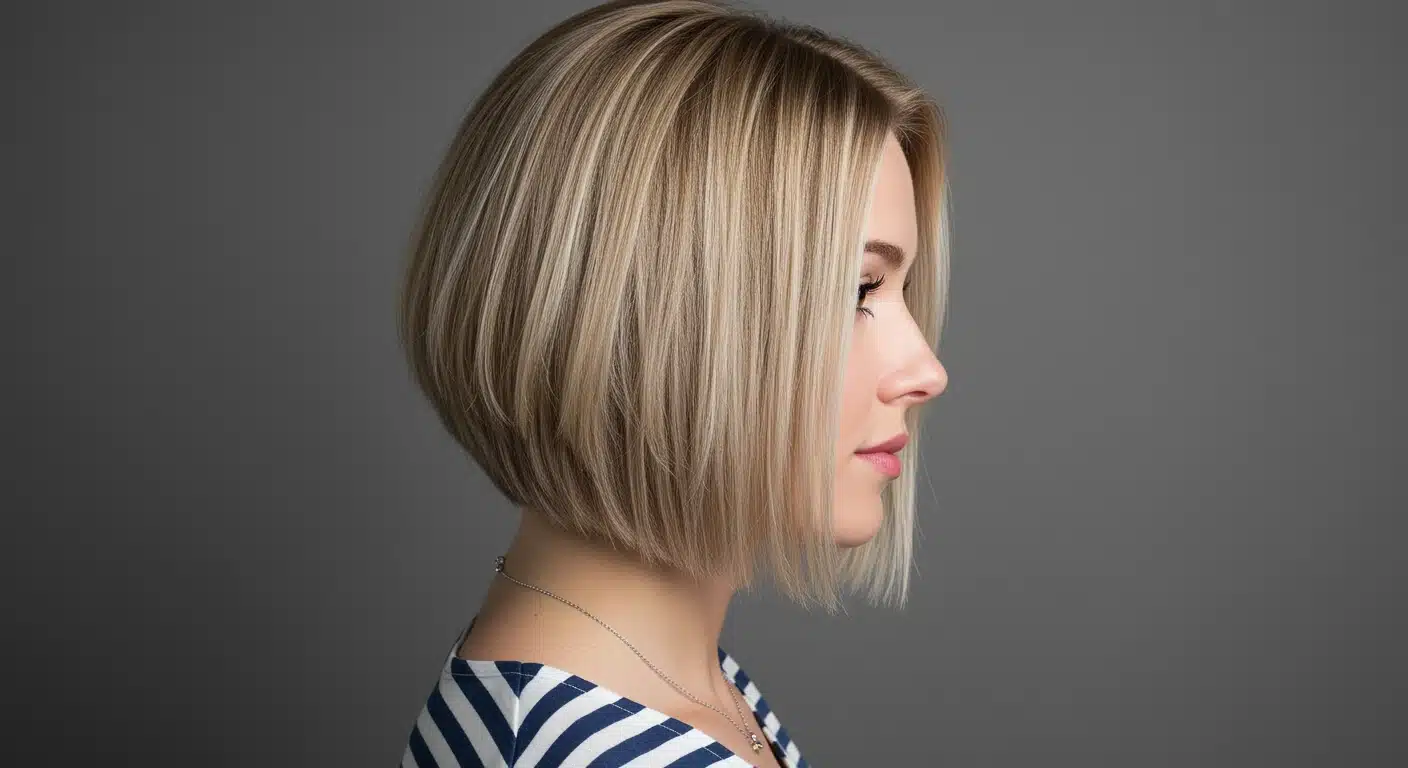
A blunt bob is one of the best cuts for thin hair. The straight, even ends instantly make hair look thicker and denser.
The shorter length also reduces the weight pulling strands down, giving hair a naturally fuller appearance.
Long Layers
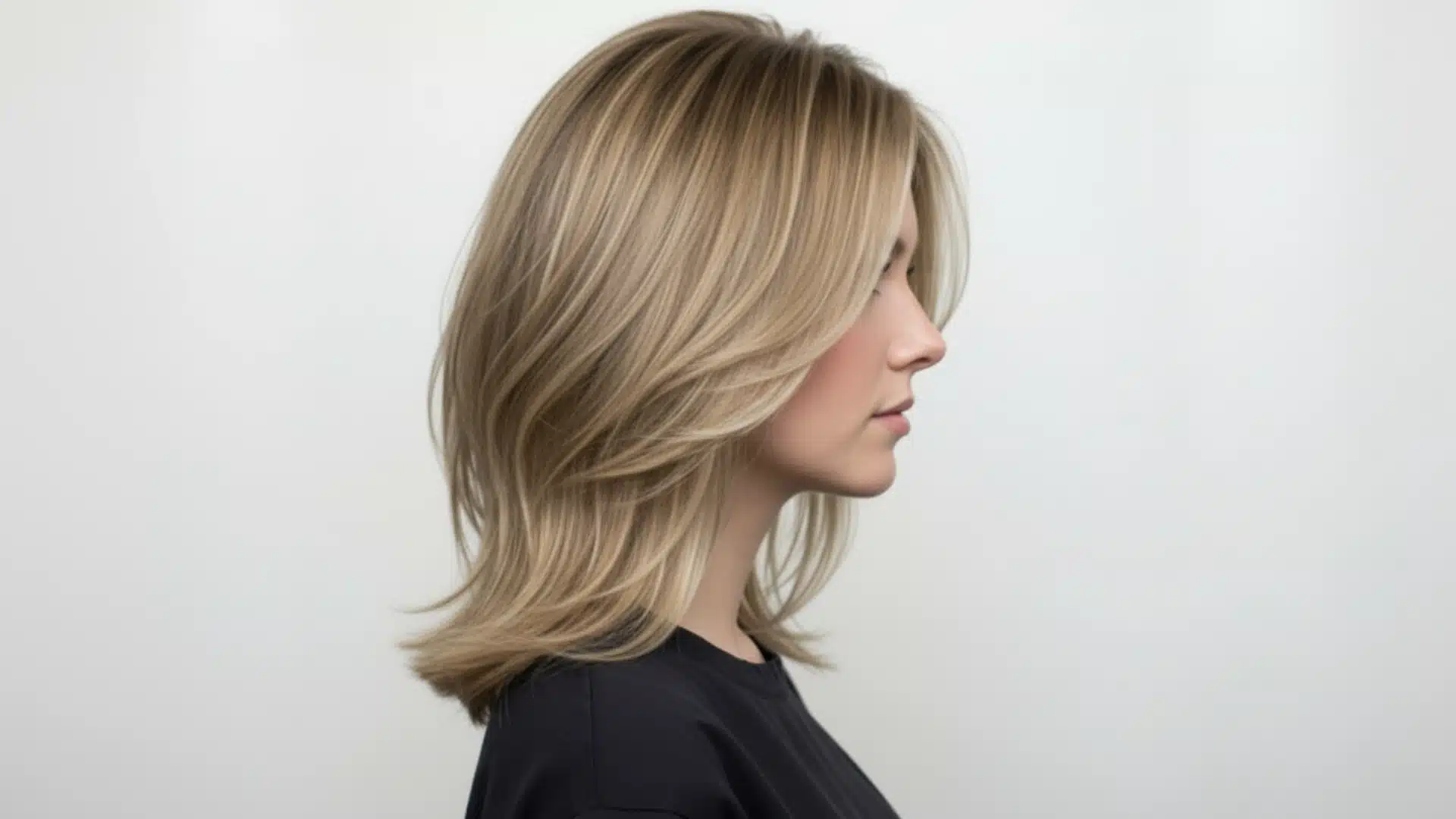
Alt text: Woman in profile with shoulder-length, layered blonde hair, wearing a black shirt against a neutral background.
Long layers add movement and body without removing too much density. This is important, short layers take away too much hair, making thin hair look even thinner.
Long layers keep the weight while creating the illusion of volume throughout.
Curtain Bangs
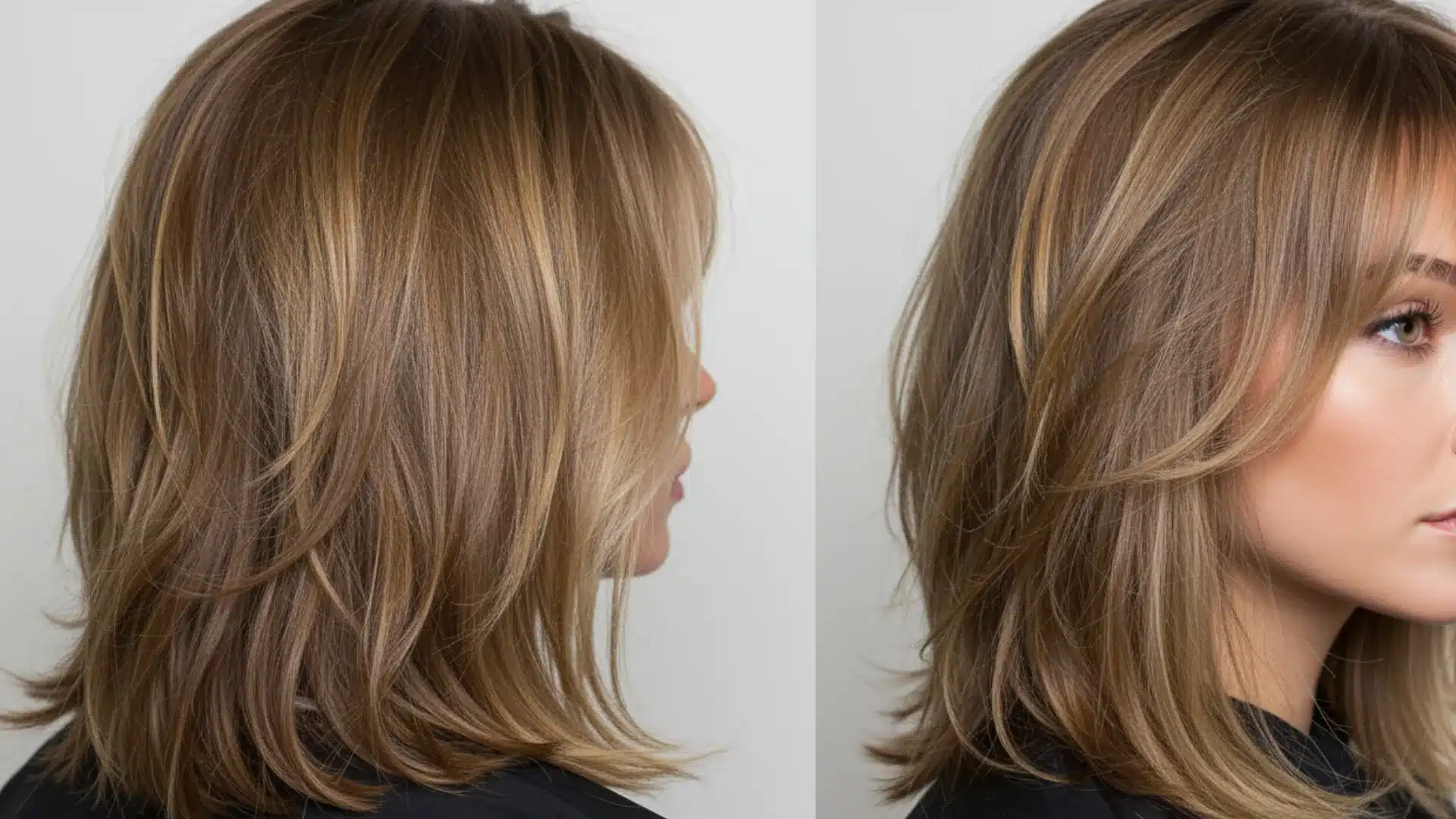
Curtain bangs frame the face and draw attention away from flat roots. They add shape and structure to the overall look.
For thin hair, they create the appearance of fuller, more voluminous hair without needing extra length or density.
Avoid: One-Length Long Hair
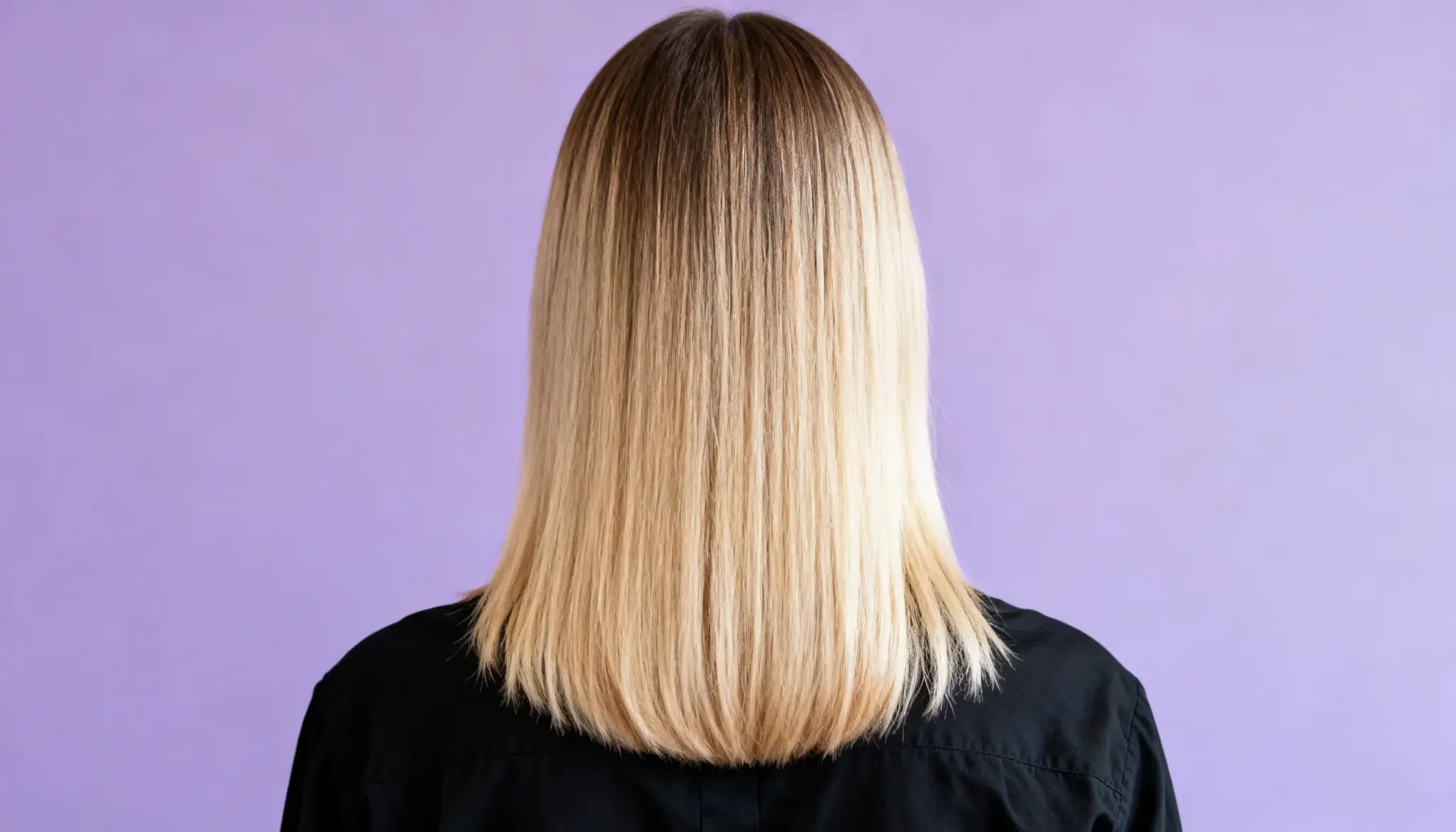
One-length long hair is the worst choice for thin hair. All that length creates weight, and weight pulls everything flat.
There’s no movement, no body, and no lift. Skipping this style is one of the easiest ways to instantly look like there’s more hair.
When Should You Consult a Hair Specialist?
Sometimes, no product or technique seems to make a real difference.
If you notice your part getting wider, patches of thinning, or more hair in the shower drain than usual, that’s a sign something deeper may be going on.
Volume tips work well for styling. But they can’t fix a medical cause.
Hair thinning linked to hormones, nutrition, or scalp conditions needs a different approach entirely. A doctor or dermatologist is the right next step in that case.
Concluding
Thin hair needs a specific plan, not generic advice borrowed from every hair type out there.
Start with the shower routine. Pick the right products. Get a cut that works in your favor. Then layer in the styling techniques that actually hold volume for thin hair, specifically.
Small changes add up fast. And the results show.
But if the thinning feels like more than a styling problem, if the part is widening or patches are appearing, don’t ignore it.
For now, pick one or two techniques and try them this week. Progress with thin hair is real; it just needs the right starting point
Frequently Asked Questions (FAQs)
1. What Not to do with Fine, Thin Hair?
Avoid heavy conditioners on the roots, skipping heat protection, rough towel-drying, and using too many styling products at once.
2. What Shampoo to Avoid with Thin Hair?
Avoid moisturizing or hydrating shampoos. They coat strands with heavy ingredients that weigh thin hair down and kill volume fast.
3. What is the 2.25 Rule for Hair?
The 2.25 rule helps find the right hair length. Measure from ear to chin, under 2.25 inches suits shorter cuts best.