
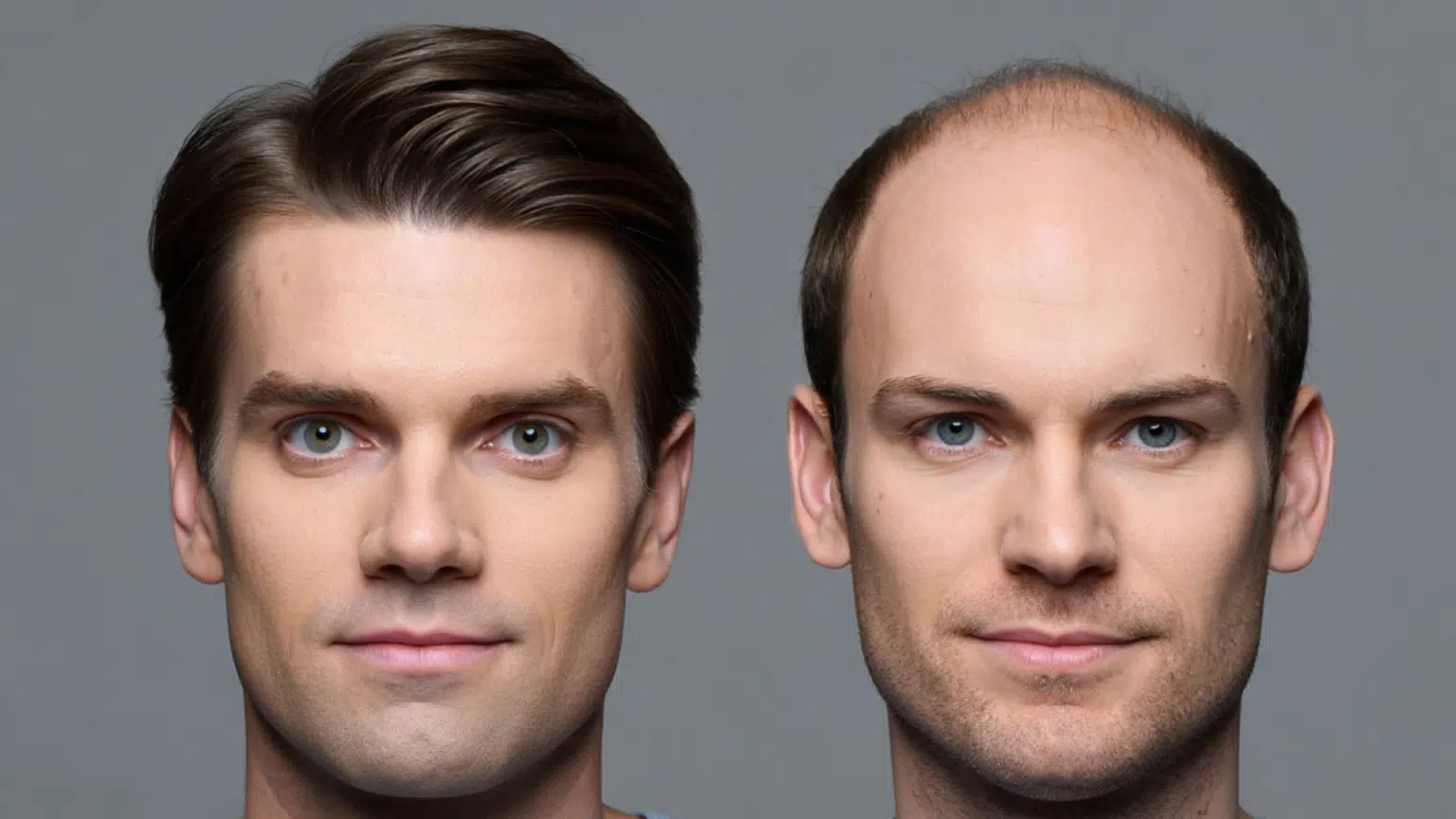
Many men worry about their changing hairline. Is it just natural aging or the start of male pattern baldness?
This concern affects millions of guys who notice their hairline looks different from what it did in their twenties.
Understanding the difference between a mature hairline vs receding hairline can save unnecessary stress and help make informed decisions about hair care. A mature hairline is completely normal, while a receding hairline might need attention.
This blog will show readers exactly how to tell these two apart. They’ll learn the key visual differences, understand normal aging patterns, and know when to be concerned.
By the end, anyone can confidently assess their own hairline situation and take appropriate action if needed.
Disclaimer: The information in this blog is for general knowledge only. It is not a substitute for medical advice, diagnosis, or treatment.
Understanding Mature Hairline vs Receding Hairline
Understanding what each type of hairline looks like can save you from unnecessary worry.
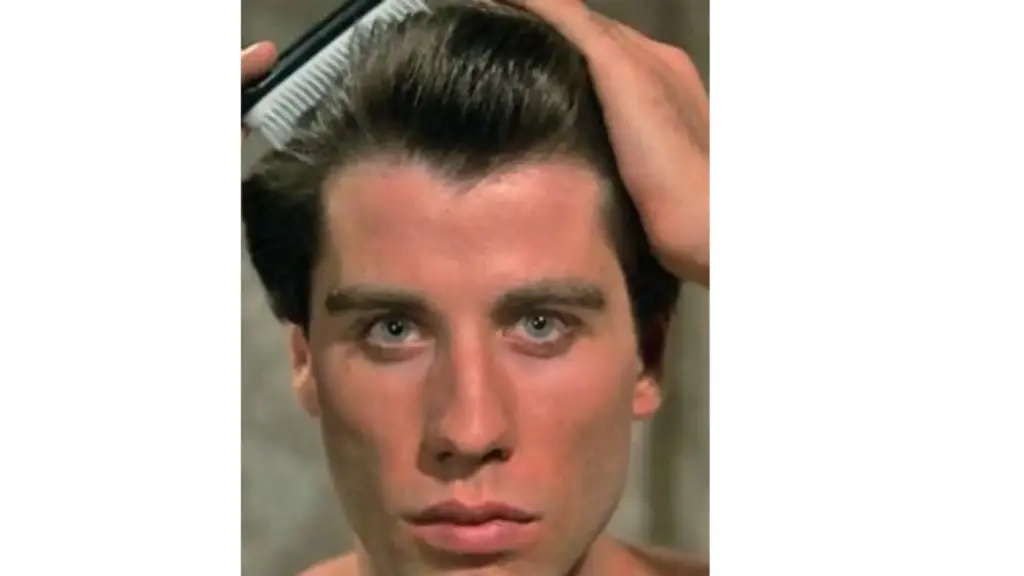
A mature hairline is a normal stage of adult hair development that stops progressing. It is a slow, balanced shift of the hairline slightly higher than in adolescence, often forming a soft widow’s peak.
It usually develops between the late teens and late 20s. It stabilizes after this initial change; it is not indicative of ongoing hair loss.
A receding hairline is part of ongoing hair loss (most often androgenetic alopecia) and continues to. It is a progressive, uneven retreat of the hairline, most often creating an “M” or “U” shape.
It can start at various ages, often worsening steadily over the years. It is typically accompanied by thinning at the temples, vertex, or other areas, and may lead to partial or significant baldness if untreated.
Causes and Underlying Factors
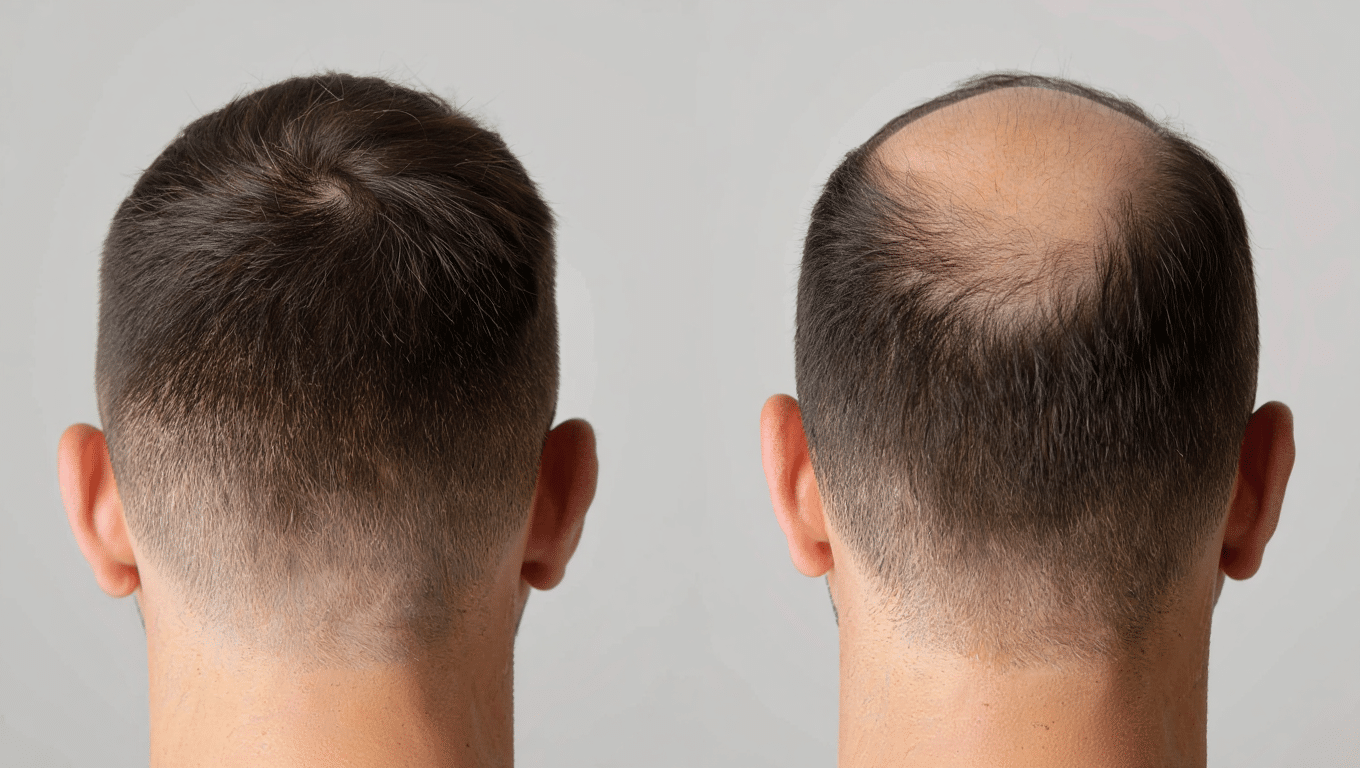
The causes and underlying factors for mature and receding hairlines differ primarily in their nature and implications
Mature Hairline
- Primarily driven by natural hormonal changes associated with normal aging.
- The hormone dihydrotestosterone (DHT), a male sex hormone that increases during puberty, plays a key role in forming a mature hairline.
- DHT causes hair follicles to slightly shrink, leading to a mild and even retreat of the hairline usually established in late teens to late 20s.
- Genetics and natural structural changes, such as skull growth and scalp tension remodeling, also contribute.
- It is stable after formation and not accompanied by thinning or balding.
Receding Hairline
- Mainly caused by androgenic alopecia, a genetic condition involving sensitivity to DHT that leads to progressive hair follicle miniaturization and hair loss.
- This hairline recession is uneven and ongoing, often forming an “M” or “U” shape.
- Other contributing lifestyle factors include stress, tight hairstyles, poor nutrition, and hair product damage.
- It may also be linked to illness, medications, or other external factors.
- Accompanied by thinning hair, active shedding, and progressing over the years if untreated.
Differences Between a Mature Hairline and a Receding Hairline
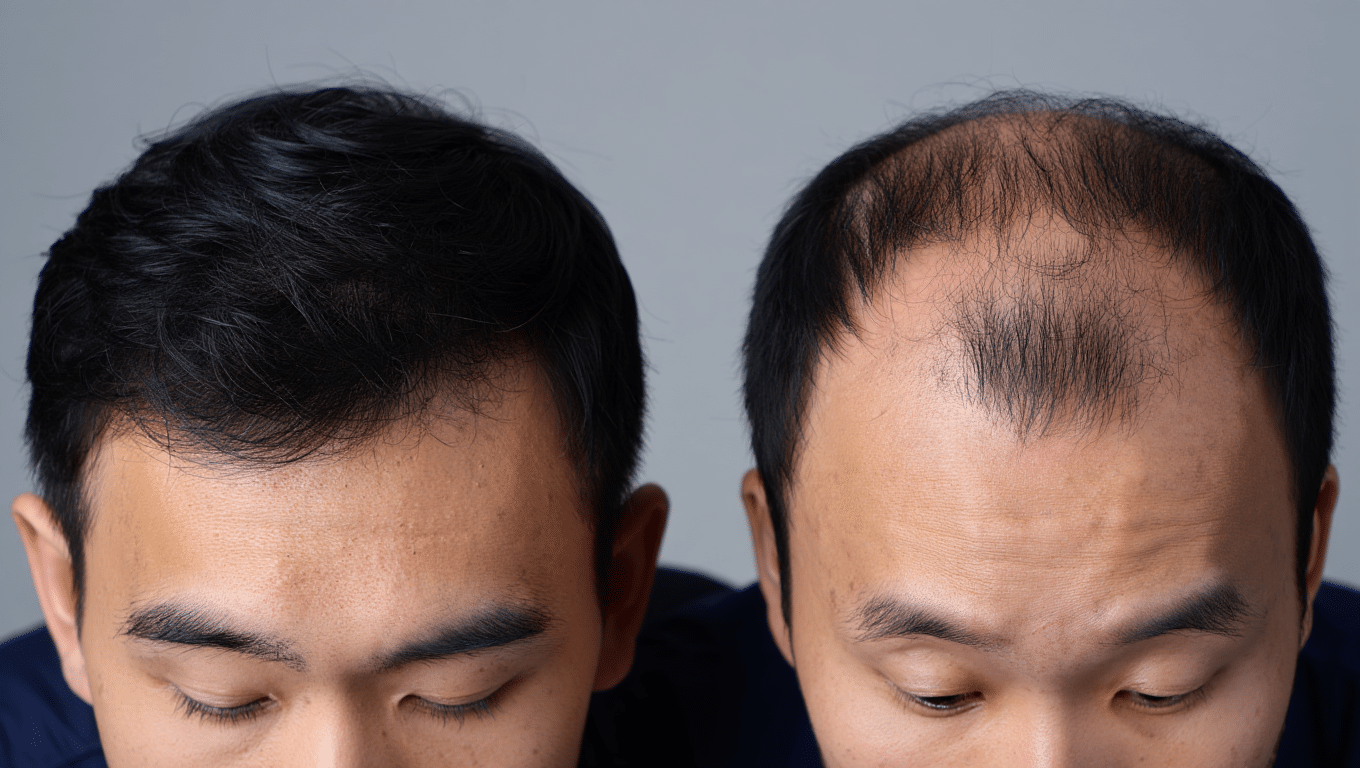
1. Symmetry & Shape
The pattern of hairline recession can reveal whether changes are part of natural maturation or ongoing hair loss.
Mature Hairline: Retreats evenly across the forehead, often forming a soft “V” shape or gentle widow’s peak. Corners are only slightly higher than the center.
Receding Hairline: Retreat is uneven, with deeper temple recession that creates sharper “M” or “U” shapes.
2. Rate & Stability
The speed and consistency of hairline changes over time, indicating whether the shift is gradual and stabilizing or progressive and ongoing.
Mature Hairline: Changes occur gradually during late teens to late 20s, then stabilize.
Receding Hairline: Progresses continuously without treatment, often worsening over the years.
3. Hair Density
The thickness and concentration of hair strands across the scalp and hairline reflect how full or sparse the hair appears. It helps indicate whether the hair remains uniform or is thinning, with increased scalp visibility.
Mature Hairline: Hair remains thick with minimal to no thinning; scalp is not visible under light.
Receding Hairline: Hair progressively thins, especially at temples and crown; scalp visibility increases.
4. Typical Timeline
The general period or age range over which hairline changes or progression occur, indicating when they typically start, develop, and stabilize or continue.
Mature Hairline: Shifts between 17–30 years old, then remains stable.
Receding Hairline: Can start anytime after puberty; often accelerates in the 30s+, depending on genetics, hormones, and other factors.
Mature Hairline Vs Receding: How to Identify?
To effectively self-assess your bad hairline and determine whether you have a mature or receding hairline, you can use several tools and methods that help track changes and the severity of hair loss.
| Assessment Method | Mature Hairline | Receding Hairline |
|---|---|---|
| Old Photos | Stable, subtle change | Continuous regression over time |
| Norwood Scale | Stage 2 (slight temple recession) | Stage 3+ (pronounced recession) |
| Forehead Wrinkle Distance | ~2–3 cm | >3 cm |
| Hair Density and Shedding | Thick, uniform, minimal shedding | Thinning, fine hairs, visible scalp |
Preventive Measures to Stop Mature and Receding Hairline
Hairline changes can be a natural part of aging or a sign of progressive hair loss. These measures are to be taken for both mature hairline as well as receding hairline.
While a mature hairline usually needs no medical attention, some people may choose cosmetic improvements, and early intervention can help slow or reverse recession if it is ongoing.
- Treatment Necessity: No treatment is required for natural hairline maturation, but cosmetic options can improve self‑esteem.
- Hairstyling & Colour: Use flattering hairstyles (textured cuts, fringes, side parts) and colour techniques (highlights/lowlights) to soften the hairline’s appearance.
- Lifestyle & Haircare: Maintain scalp and hair health through stress management, a balanced nutrient‑rich diet, and gentle haircare routines.
- Non-Surgical Treatments: Consider options like minoxidil, finasteride (if suitable), PRP therapy, low-level laser/red-light therapy, or scalp microneedling to slow loss and encourage regrowth.
- Surgical Solutions: For advanced hairline loss, FUE hair transplant can offer lasting, natural‑looking restoration.
- Facial Hair Styling: Beards, goatees, or other facial hair can balance facial proportions and draw attention away from a high or thinning hairline.
Conclusion
Your hairline tells a story, but you get to write the ending. A mature hairline means your hair has simply grown up with you; no action needed unless you want it. A receding hairline gives you choices to make and steps to take.
The key is knowing the difference between a mature hairline vs receding hairline, which one you’re dealing with. Use the tools we’ve covered to figure it out.
Trust your observations, but don’t hesitate to get professional help when things seem unclear.
Both types are normal parts of being a man. What matters most is how confident you feel in your own skin.