
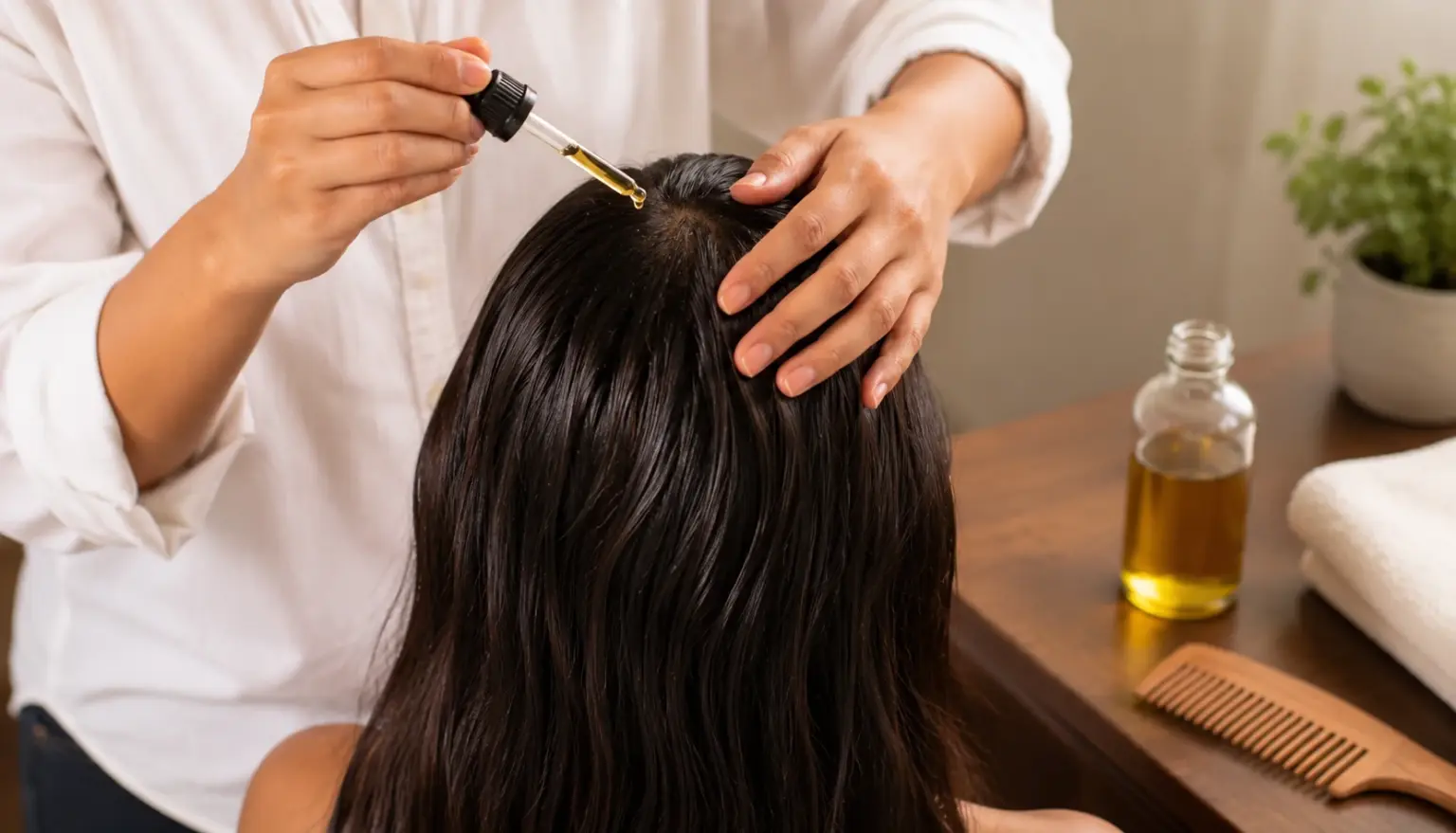
Castor oil shows up in almost every natural hair thread online. People swear it thickens strands, speeds growth, and rescues thinning edges.
But the claims and the actual research do not always line up. That gap is worth a closer look.
This cuts through the hype and looks at what studies really show about castor oil for hair growth and thickness. It covers the science, what hair experts actually say, and how to use castor oil on hair the right way.
There are also side effects and a few real risks. So before the next bottle goes in the cart, here is what actually matters.
Benefits of Using Castor Oil on Your Hair
Beyond the growth hype, castor oil brings a few real perks to your hair and scalp.
1. Locks in Moisture
Its thick consistency helps lock in moisture, making it a solid remedy for dry scalp and hair.
The coating slows moisture loss and eases dryness. Brittle hair tends to feel softer after steady use.
On an oily scalp, that same thick coating can trap sebum and clog follicles. Keep it to the mid-lengths and ends there.
2. Cuts Down on Breakage
The nutrients and fatty acids in castor oil strengthen hair, making it less prone to breakage and split ends.
Stronger strands snap less often. Over time, that can leave hair looking fuller and glossier.
3. Supports a Healthier Scalp
Ricinoleic acid has anti-inflammatory and antimicrobial properties that can contribute to a healthier scalp.
It may help calm mild itching caused by dryness rather than infection. A calmer scalp is a better base for hair.
With dandruff from fungal overgrowth, heavy oil can feed the yeast, making it worse.
4. Adds Shine And Smoothness
The fatty acid content coats the cuticle, reducing frizz and improving how the hair reflects light.
Hair often looks smoother and shinier afterward. That polished look is real conditioning, not new growth.
5. May Boost Scalp Circulation
Massaging with oil improves blood flow to the scalp. Better circulation can bring nutrients and oxygen to the follicles, supporting their function.
This helps the growth environment, though it does not force new hair on its own.
Best Carrier Oils for Castor Oil
Castor oil is thick on its own, so a lighter carrier oil makes it easier to spread and rinse.
The right hair oil match depends on your hair type. Below are the most common options available.
1. Jojoba Oil
Jojoba oil closely resembles the scalp’s own sebum, so it blends in naturally rather than sitting on top of hair like a heavy coating.
Use a 1:1 ratio for a lighter feel that won’t weigh strands down. This makes it a smart pick for oily or congested scalps that still need some moisture without extra grease.
2. Coconut Oil
Coconut oil penetrates the hair shaft and helps prevent protein loss, providing real conditioning from the inside out.
Mix 2 parts coconut oil with 1 part castor oil for a rich, deeply nourishing blend.
This combination works especially well for dry, frizzy, or split-prone hair that needs extra moisture and strength to bounce back to health.
3. Argan Oil
Argan oil is rich in antioxidants, which help protect hair against everyday damage and breakage from heat, sun, and styling products.
Mix at a 1:1 ratio, with slightly more argan added for extra smoothness and shine.
This blend suits flat, weak, or color-treated hair that needs a boost of strength without feeling greasy.
4. Sweet Almond Oil
Sweet almond oil is lightweight and packed with vitamin E, a nutrient known for taming frizz and softening rough, unruly strands.
Mix 2 parts almond oil with 1 part castor oil for balanced results. This ratio works best for fine hair or dry, itchy scalps that need gentle care.
5. Olive Oil
Olive oil is highly conditioning and helps hair retain moisture longer than many lighter oils, making it a reliable choice for strands that dry out quickly.
Mix 2 parts olive oil with 1 part castor oil for a deeply moisturizing treatment. This combination works especially well for curly, coarse, or very dry hair that needs extra richness.
How to Use Castor Oil For Hair Growth And Thickness
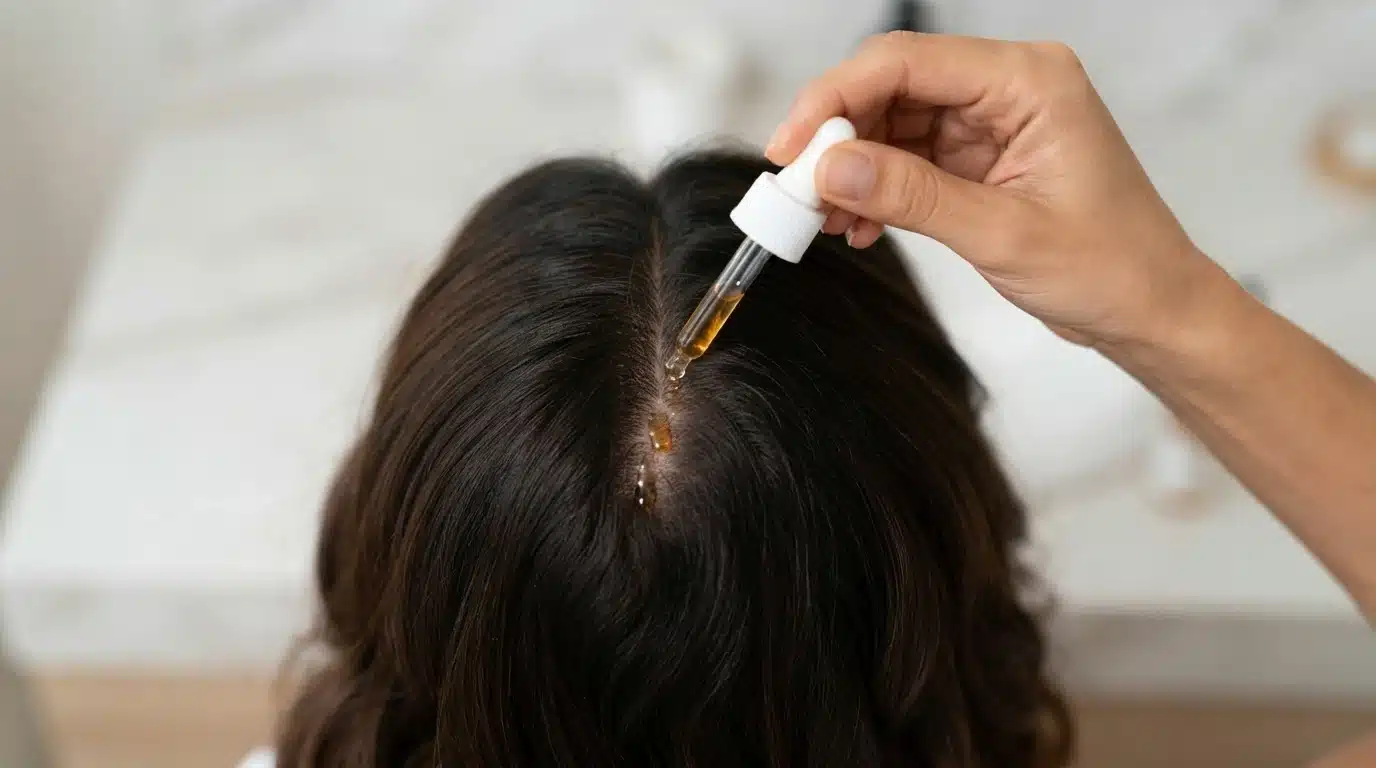
Getting the method right matters as much as the oil itself. These are simple, step-by-step ways to use castor oil for hair growth and thickness.
Step 1: Patch Test First
Start with a small dab on the inner arm. Castor oil can trigger irritation in some people.
Waiting a day helps rule out any reaction. Skipping this step is a common mistake.
Step 2: Thin it Out and Gear Up
Pure castor oil is thick and hard to spread. Many people mix it with a lighter oil, like coconut or jojoba.
This can help avoid buildup or matting. An old shirt and gloves help too, since the darker forms can stain light fabrics.
Warm the oil blend in your hands for a few seconds. It spreads far more easily that way.
Step 3: Section the Hair
Dry or slightly damp hair gives the most even coverage. Parting it into a few sections makes the job simpler.
Clips can hold each part out of the way. This keeps the oil from clumping in one spot.
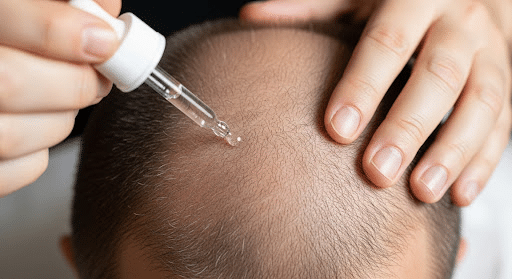
Step 4: Massage Into the Scalp
The scalp is where most of the benefit shows up. A small amount worked in with the fingertips is enough.
Gentle circles for a minute or two feel good and spread well. There is no need to drench the roots.
Step 5: Coat the Lengths Lightly
Next comes the hair itself, from roots down to the ends. The strands should feel moist, but not soaked through.
A wide comb spreads the oil evenly. Too much only makes rinsing harder later.
Step 6: Leave in, Then Rinse With Care
Thirty minutes to a couple of hours is plenty. Warm water and friction during washing can cause matting, so a gentle wash matters.
A clarifying shampoo, used twice if needed, clears the residue. Once or twice a week is a sensible limit.
Apply the shampoo to dry, oiled hair before adding water. It breaks down the oil and cuts rinsing time.
How to Use Castor Oil on Hair Based on Hair Type
One routine does not fit every head of hair. Castor oil works best when the method matches the hair type.
Oily Scalp
Pure castor oil on an oily scalp can clog follicles and trap sebum. Using it as a pre-wash treatment on the mid-lengths and ends works better.
Skip the roots to avoid extra grease. Once every two to three weeks keeps buildup in check.
Fine or Thin Hair
Thick oil weighs fine hair down fast. Diluting it with a lighter oil like jojoba helps a lot.
Keep the blend mostly on the scalp, and use only a light touch on the ends. A short 20- to 30-minute treatment, once every couple of weeks, is plenty.
Thick, Coarse, or Dry Hair
This type handles castor oil best. It can take a richer blend, closer to equal parts, with a carrier oil.
Applying from root to tip helps seal in moisture and reduce frizz. Longer sessions of one to two hours, or even an overnight treatment, suit it well.
Curly Hair
Curls lose moisture quickly, so castor oil can help retain it. Mixing it with a lighter oil keeps the curls soft rather than heavy or greasy.
Focus most of the oil on the ends, since that is where dryness and breakage hit hardest. Once or twice a week is a good rhythm.
How to Use Castor Oil on Eyebrows And Lashes?
The eye area is sensitive, so castor oil needs a careful, light hand here.
- Remove all eye makeup first, since clean lashes and brows let the oil do its job.
- Do a patch test on the underside of the arm, and wait at least a day to check for redness, swelling, or itchiness.
- Pick pure castor oil because blends with other oils or additives can cause irritation.
- Dip a clean spoolie or cotton swab, and use only the smallest amount of oil.
- Brush it through the eyebrows in the direction of hair growth.
- For lashes, apply the oil only to the very tips so it does not get into the eyes.
- Let it absorb overnight, then rinse gently in the morning with warm water and a mild cleanser.
Consistency is important. Some people notice a difference in about three weeks, though results vary from person to person.
If oil gets in the eyes, rinse right away with clean water. Take extra care around sensitive eyes or contact lenses, and stop use if irritation occurs.
Comparing Castor Oil Types For Your Haircare Routine
Not all castor oil is the same, so here is how the main types compare for hair.
| Type | How it’s made | Best suited for |
| Cold-pressed (regular/clear) | Seeds are cold-pressed without heat, keeping the oil pale and rich in ricinoleic acid. | Everyday use, fine or lighter hair, and skin. |
| Jamaican Black Castor Oil (JBCO) | Seeds are roasted, ground to a paste, then boiled; the ash raises its alkalinity. | Thicker, coarse, or dry hair. |
| Blended or diluted | Castor oil mixed with a lighter carrier oil | Beginners, easier washout, all-over use |
Is Castor Oil Backed Up by Science?
Most of the castor oil’s fame comes from tradition and word of mouth, not from strong research. People have used it on hair for generations, and those stories carry weight.
The studies that do exist are limited. Some research suggests castor oil can make hair look shinier and healthier.
What science does agree on is simpler. The oil is a good moisturizer, and its main fatty acid may calm the scalp. Those effects can make hair look thicker and feel softer over time.
So castor oil is not a myth, yet it is not a proven cure either. It sits somewhere in between; it is useful for condition but oversold for growth.
Bottom Line
Castor oil will not sprout new strands overnight, and the science says as much.
What it does well is condition, lock in moisture, and keep the scalp happy. Healthier hair simply looks fuller.
So, pick up a pure, cold-pressed bottle and slip it into your wash day once a week.
Do a quick patch test first, go easy on the amount, and give it a few weeks to show what it can do.
Frequently Asked Questions (FAQs)
1. How Often Should You Use Castor Oil for Hair Growth and Thickness?
Most hair types do well with castor oil once or twice a week, while oily scalps should use it every two to three weeks.
2. Who Should Avoid Castor Oil on Hair?
People with an oily scalp, fungal dandruff, or very fine hair prone to buildup should be cautious or skip it.
3. How Long Does Castor Oil Take to Show Results?
Better shine and moisture can show in two to three weeks, but real density changes take months.
4. What Can I Mix with Castor Oil to Make My Hair Grow?
Lighter carrier oils like coconut, jojoba, or argan blend well, and some people also add rosemary oil.
5. Can We Apply Castor Oil on Hair Directly?
Yes, but its thickness makes it hard to spread and wash out, so diluting it with a lighter oil usually works better.