
You brush your hair and see more strands than usual on the floor.
It happens quickly, and most people never stop to ask why. The real issue is that hair breakage doesn’t just appear out of nowhere. Heat, tension, dryness, and even your diet can all play a role.
Once you know what’s causing it, you can actually do something about it.
Keep reading to find out the most common hair breakage causes and what you can do to stop them.
Let me tell you – Hair Fall and Hair Breakage are not the same thing
Hair fall happens when the strand releases from the root.
Breakage is different; the hair snaps somewhere along the shaft. Two separate problems, two different causes.
People buy the wrong products, follow the wrong advice, and wonder why nothing works. They’re solving a problem they haven’t correctly identified.
Instead of handing you a list of quick fixes, it focuses on what hair breakage causes in the first place.
Get that right, and the rest becomes much easier.
What Hair Breakage Actually Looks Like
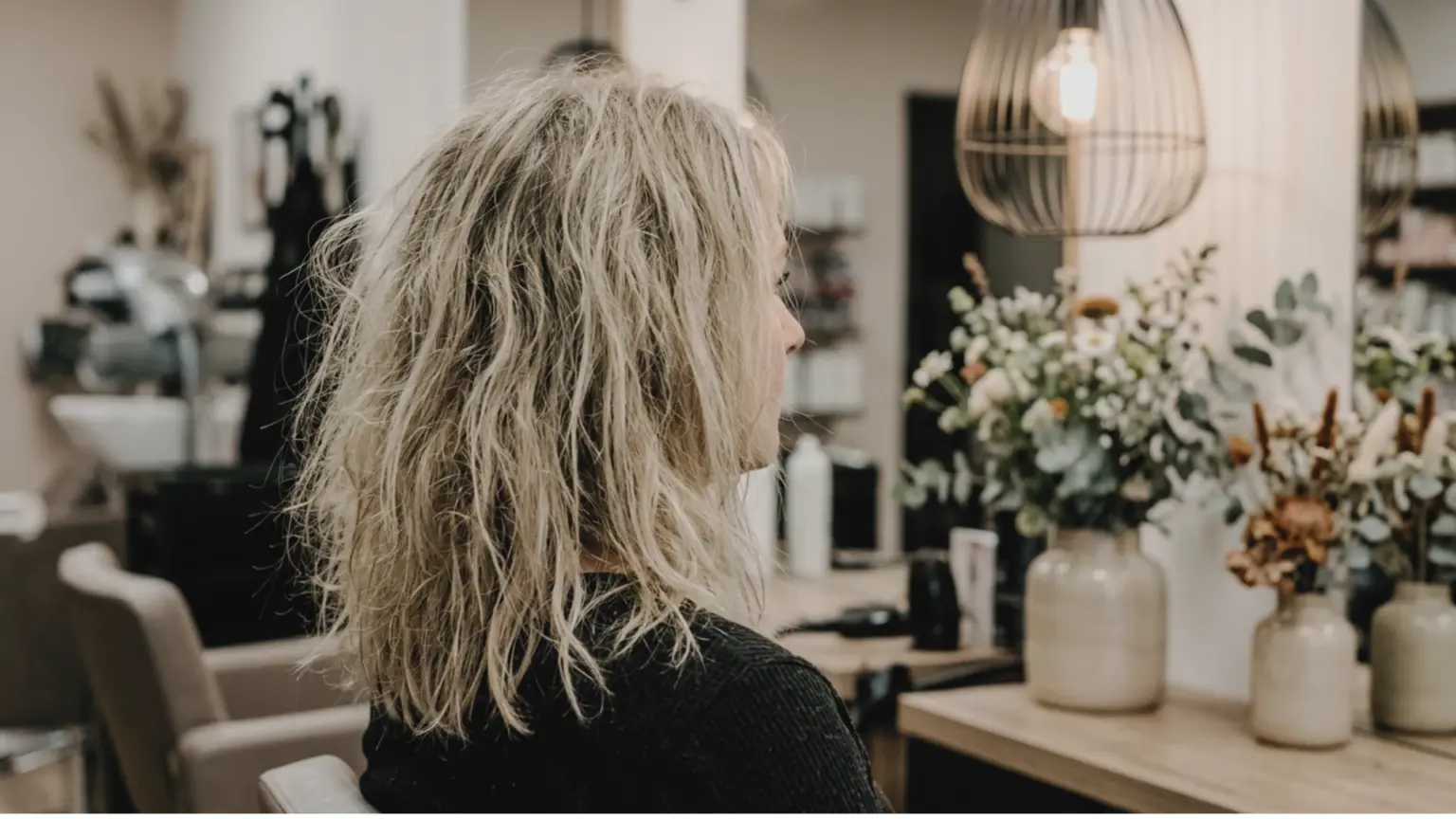
Broken hair has tells. Uneven lengths, split ends, frizz that won’t settle, and strands that snap when you stretch them these are all signs something’s off.
A simple way to check at home:
Pull a single strand between two fingers and stretch it gently. Healthy hair typically stretches around 20 to 30% before snapping. Anything less usually points to protein loss or moisture depletion.
Learning to spot these patterns matters.
It tells you if you’re dealing with breakage or something else entirely. That distinction shapes everything that comes.
The Biology of Hair Strength
Your hair has layers. The outer layer, called the cuticle, acts as a protective shield.
Underneath it sits the cortex, which gives hair its strength and stretch. The cortex makes up nearly 80% of the hair strand’s total weight, which is why damage there is rarely superficial.
When the cuticle lifts or gets damaged, the cortex becomes exposed. That’s when breakage happens.
If your cuticle stays tightly closed, you may have low porosity hair, which can affect how well moisture penetrates.
Several things weaken the shaft:
- Heat strips moisture from the cortex.
- Chemical treatments break down the internal structure.
- Physical stress, like tight hairstyles, puts pressure on the strands.
Some hair types are naturally more prone to this.
Curly and coily hair has more bends along the shaft, which creates weak points where snapping is more likely.
The Most Common Hair Breakage Causes
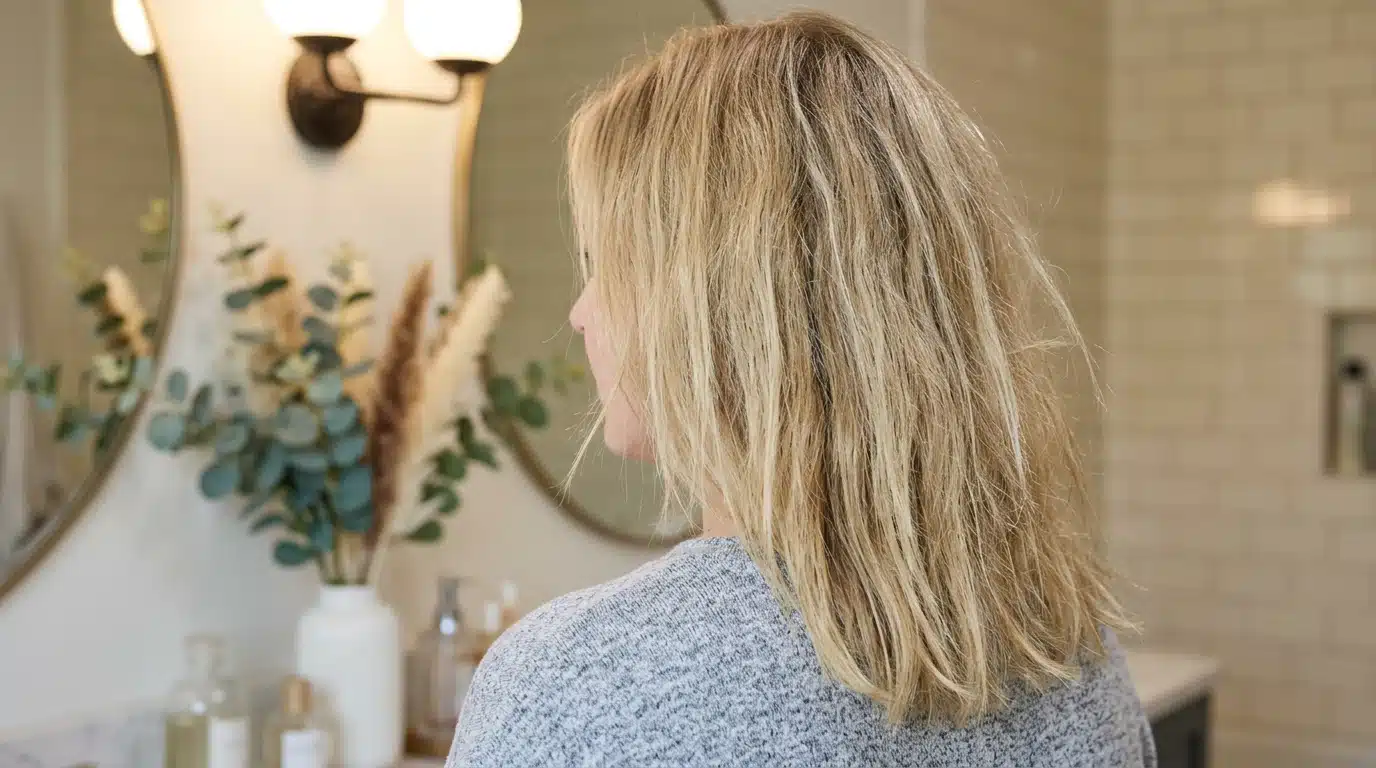
People know the usual suspects, but knowing a cause and understanding it are two different things.
Here’s what’s actually happening when each one damages your hair.
Mechanical Damage (Everyday Habits That Add Up)
Tight ponytails and rough brushing put direct stress on the shaft.
Towel friction roughs up the cuticle with every dry. Even sleeping on cotton or going to bed with wet hair quietly adds wear that your hair never fully recovers from.
A wet strand can stretch up to 30% before breaking, so brushing wet hair causes it to snap faster than dry hair.
Heat and Styling Stress
Using heat once won’t ruin your hair. Doing it repeatedly, without recovery time, will. Even at low heat, the cortex gradually loses moisture.
The damage is slow, quiet, and easy to miss until the breakage becomes hard to ignore.
Chemical Overload
Coloring, bleaching, and relaxers all work by breaking into the hair’s internal structure. A single treatment may feel fine. The real problem is what builds up over time.
Each session leaves the cortex a little weaker, making the next round of damage easier and faster.
Bleach raises the hair’s pH, breaking down melanin. That same process weakens the disulfide bonds that hold the cortex together.
Nutritional Deficiencies
Hair is built from the inside out.
Low levels of iron, protein, zinc, or biotin directly affect how strong each strand grows.
When the body lacks these, it shows up in the first strands of your hair, which feel thin and dry and snap easily even with gentle handling.
Moisture and Protein Imbalance
Hair needs both moisture and protein to stay strong and flexible. Too little moisture makes it brittle.
Too much protein without enough hydration makes it stiff and prone to snapping. People focus on one or the other, but your hair actually needs the right balance of both to hold up.
Environmental Factors that Quietly Damage Hair
The environment affects your hair more than most people realize, and it rarely gets the blame it deserves.
Over time, sun exposure breaks down the proteins in the hair shaft. Wind causes constant friction between strands, leading to tangling and snapping. Dry air, especially in winter, pulls moisture straight out of the cuticle.
A few other factors worth knowing:
- Chlorine from swimming pools strips the hair’s natural oils.
- Salt water leaves deposits that make strands rough and brittle.
- Pollution particles sit on the scalp and shaft, slowly weakening both.
Small exposures add up fast.
The Overlooked Hair Breakage Causes that People Ignore
Most breakage conversations stop at heat and chemicals. These causes quietly do just as much damage, and almost nobody talks about them.
Hard Water Exposure
Hard water contains minerals like calcium and magnesium.
Over time, these build up on the hair shaft, making it rough and resistant to moisture. Many people blame their products when the water itself is the actual problem.
Water with a hardness level above 200 mg/L can leave visible mineral buildup on the shaft after repeated washing.
Hormonal Changes
Pregnancy, postpartum shifts, thyroid issues, and menopause all change how hair grows and holds together.
These hormonal fluctuations directly affect the hair growth cycle, leaving strands weaker at certain stages of life.
Chronic Stress
Stress causes hair follicles to enter the resting phase early, resulting in thinner, weaker strands that break easily.
Scalp Health
A dry, flaky, or congested scalp affects the foundation from which each strand grows.
Poor scalp conditions weaken the hair right from the root, so breakage becomes almost inevitable before the strand even gets long.
How to Identify Your Personal Hair Breakage Triggers
No two people break hair for the same reasons. Your triggers depend on your hair type, daily habits, diet, and environment altogether. Start by paying attention to patterns.
When does the breakage get worse? After washing? After styling? During a certain season?
Keep it simple:
- Note where on the strand the breakage happens.
- Track which habits changed before breakage increased.
- Check if diet or stress levels shifted recently.
Patterns don’t lie. They point you straight to the cause
A Simple Self-Assessment Checklist
Go through these questions honestly.
The more you answer “yes” to, the closer you are to finding what’s driving your breakage.
Daily Habits
- Do you brush your hair when it’s wet?
- Do you sleep on a cotton pillowcase?
- Do you regularly tie your hair in tight styles?
- Do you rub your hair dry with a towel?
Heat and Styling
- Do you use heat tools more than twice a week?
- Do you skip heat protection before styling?
- Do you layer multiple styling products daily?
Chemical Treatments
- Have you colored, bleached, or relaxed your hair in the last six months?
- Do you overlap chemical treatments on previously treated hair?
Diet and Health
- Has your diet been low in protein or iron lately?
- Have you been under significant stress recently?
- Have you experienced any hormonal changes in the past year?
Environment
- Do you swim regularly in chlorinated or salt water?
- Is the water in your area hard?
- Do you spend long hours in direct sunlight without any hair protection?
The more “yes” answers you count, the more likely it is that multiple causes are working against your hair at the same time.
What Helps Reduce Hair Breakage

Fixing breakage begins by matching solutions to causes. These approaches truly make a difference.
Switch to Gentler Detangling Tools
Wide-tooth combs and soft-bristle brushes put far less stress on the shaft than fine-tooth options.
Always start detangling from the ends and work your way up. This small change alone can noticeably reduce the amount of hair that snaps during a regular brushing session.
Build a Consistent Moisture Routine
Hair that stays consistently moisturized is far less likely to snap. Deep conditioning once a week helps restore what washing and styling take out.
Look for products with humectants like glycerin or aloe; these draw moisture into the shaft and help it stay there.
Strengthen From the Inside
What you eat shows up in your hair.
Focus on getting enough protein, iron, zinc, and healthy fats through your daily meals. Eggs, leafy greens, nuts, and fish are all solid starting points.
Supplements can help too, but food sources work better long term.
Protect Hair at Night
Swap cotton pillowcases for silk or satin. These materials create far less friction as you move during sleep.
Loose braids or a satin bonnet also help keep the hair shaft protected through the night, reducing the wear that builds up over time.
Give Chemical Treatments More Space
Stretching the time between coloring, bleaching, or relaxing sessions gives the hair a real chance to recover.
Avoid overlapping treatments on already-processed hair.
The longer the gap between sessions, the stronger each new section of growth comes in.
Filter or Rinse With Soft Water
If hard water is a factor, a shower filter can make a real difference.
Alternatively, finishing your wash with filtered or bottled water helps clear mineral buildup from the shaft. It sounds minor, but many people notice a change within a few weeks.
Balanced Approach to Healthy Hair
Healthy hair doesn’t come from one product or one habit change. It comes from consistently getting several small things right.
- Moisturize regularly, but balance it with enough protein.
- Use heat when needed, but always allow recovery time between sessions.
- Protect hair physically at night, during styling, and in harsh weather.
- Eat well and manage stress, both of which show up directly in your hair.
- Check your water, your tools, and your technique before blaming your products.
- Give chemical treatments time to breathe between sessions.
- Pay attention to seasonal changes and adjust your routine accordingly.
- Stay consistent. Hair responds slowly, so give changes enough time to show results.
No single step fixes everything.
When these habits work together, your hair gets stronger, more flexible, and far less likely to break.
Key Takeaway
Hair breakage causes rarely come down to just one thing.
They build up through daily habits, diet, environment, and choices that seem harmless on their own.
Once you know what’s actually driving your hair breakage, the path forward becomes much clearer. Start with the checklist. Identify your triggers. Then make small, steady changes that your hair can respond to over time.
Got a tip that worked for you?
Drop it in the comments. Real experiences help more people than any product recommendation ever could.
Frequently Asked Questions (FAQ’s)
1. What Vitamin Deficiency Causes Hair to Break?
Low levels of biotin, iron, zinc, and vitamin D are the most common culprits.
2. What Vitamins Should I Take to Stop Hair Breakage?
Focus on biotin, vitamin D, iron, zinc, and vitamin E first.
3. What Organ Is Related to Hair Loss?
The thyroid gland, which can be underactive or overactive, directly affects hair growth.
4. What is the Best Oil for Hair Breakage?
Castor oil, argan oil, and coconut oil are widely used and well-regarded options.
5. What are the Big 3 for Hair Regrowth?
Minoxidil, finasteride, and ketoconazole shampoo are commonly referred to as the big three.