
I know how confusing curl types can be. You look at charts and wonder where your hair fits in. Some patterns are common, but others?
They’re incredibly rare. So what is the rarest curl pattern? I’m here to give you a clear answer.
This blog post breaks down curl hair types, shows you a simple chart, and explains why certain patterns are so uncommon.
You’ll learn to identify your own curls and understand what makes them special.
Let’s start then.
What is the Rarest Curl Pattern?
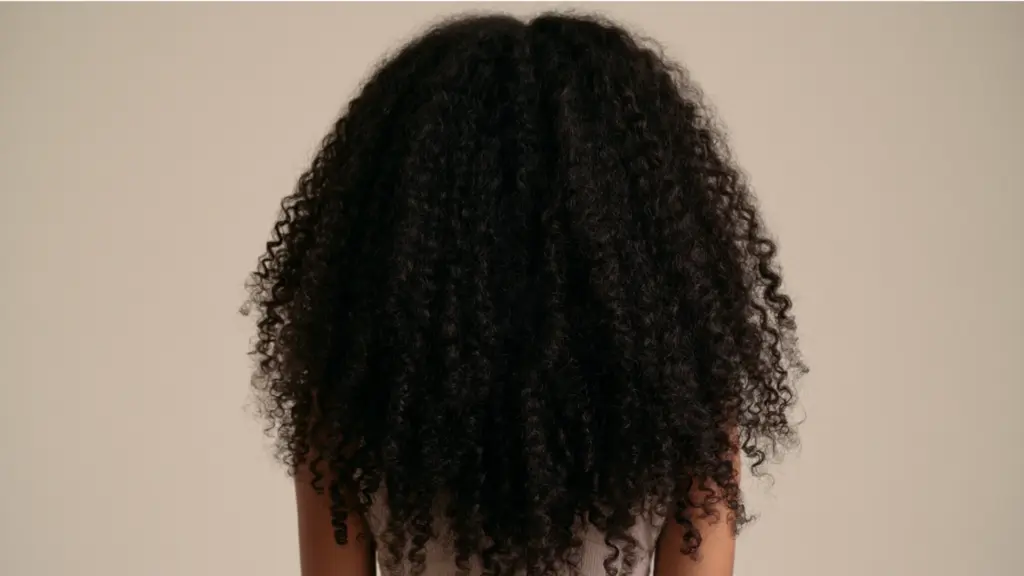
Type 4C coily hair is the rarest curl pattern you’ll find.
This curl type doesn’t have a defined curl shape. Instead, the strands form tight zigzags. The coils are so small they almost look like a cloud of hair.
Why is 4C so rare? It’s all about genetics. This pattern is most common in people of African descent. But even within that group, it’s not everywhere.
I’ve noticed that 4C hair often gets misunderstood. People think it’s damaged or needs fixing. That’s not true at all. This pattern is natural and beautiful. It just needs the right care.
The tight coils in 4C hair make it extremely fragile. Each bend in the strand is a weak point.
This means the hair can break easily if you’re not gentle. Moisture is your best friend with this type.
4C hair shrinks up to 75% of its actual length.
Where is this Curl Pattern Most Common?
Type 4C hair is most common among people of African descent.
You’ll find it frequently in countries across Sub-Saharan Africa. Nigeria, Kenya, Ghana, and Ethiopia have large populations with this curl pattern.
In the United States, many African Americans have 4C hair.
The Caribbean islands also have communities with this hair type. Jamaica, Haiti, and Trinidad show high percentages of 4C curls.
Brazil has a significant population with Type 4C hair, too. This comes from the region’s African heritage.
However, 4C isn’t exclusive to one race or location. Some people of mixed heritage have this curl type. Genetics plays the biggest role in determining your pattern.
Find Out What Your Curl Type is!
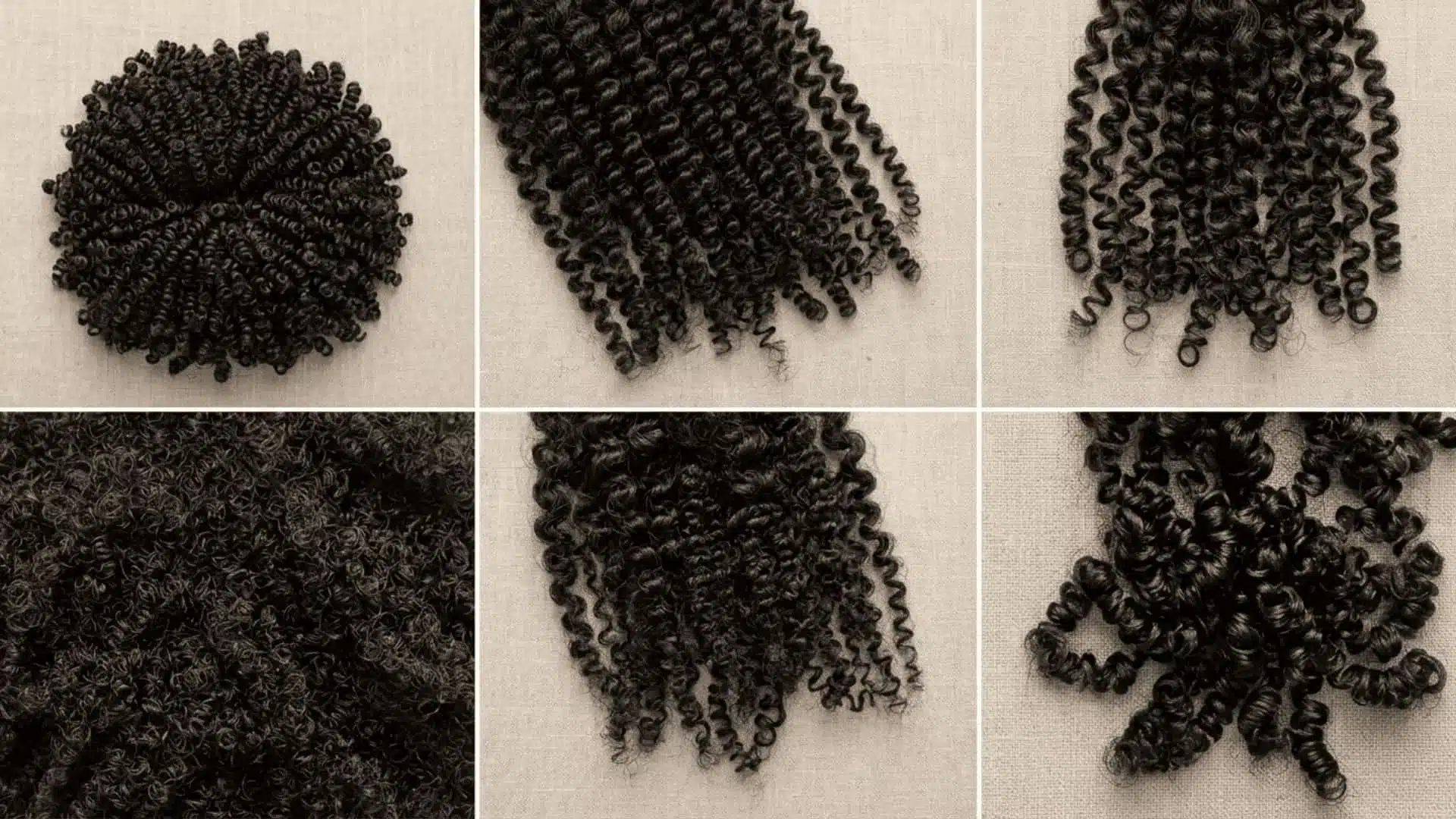
Different natural 4C hair textures shown from back view highlighting tight coily patterns.
Figuring out your curl type is easier than you think. Start with clean, wet hair. Don’t add any products yet. Let your hair air dry completely.
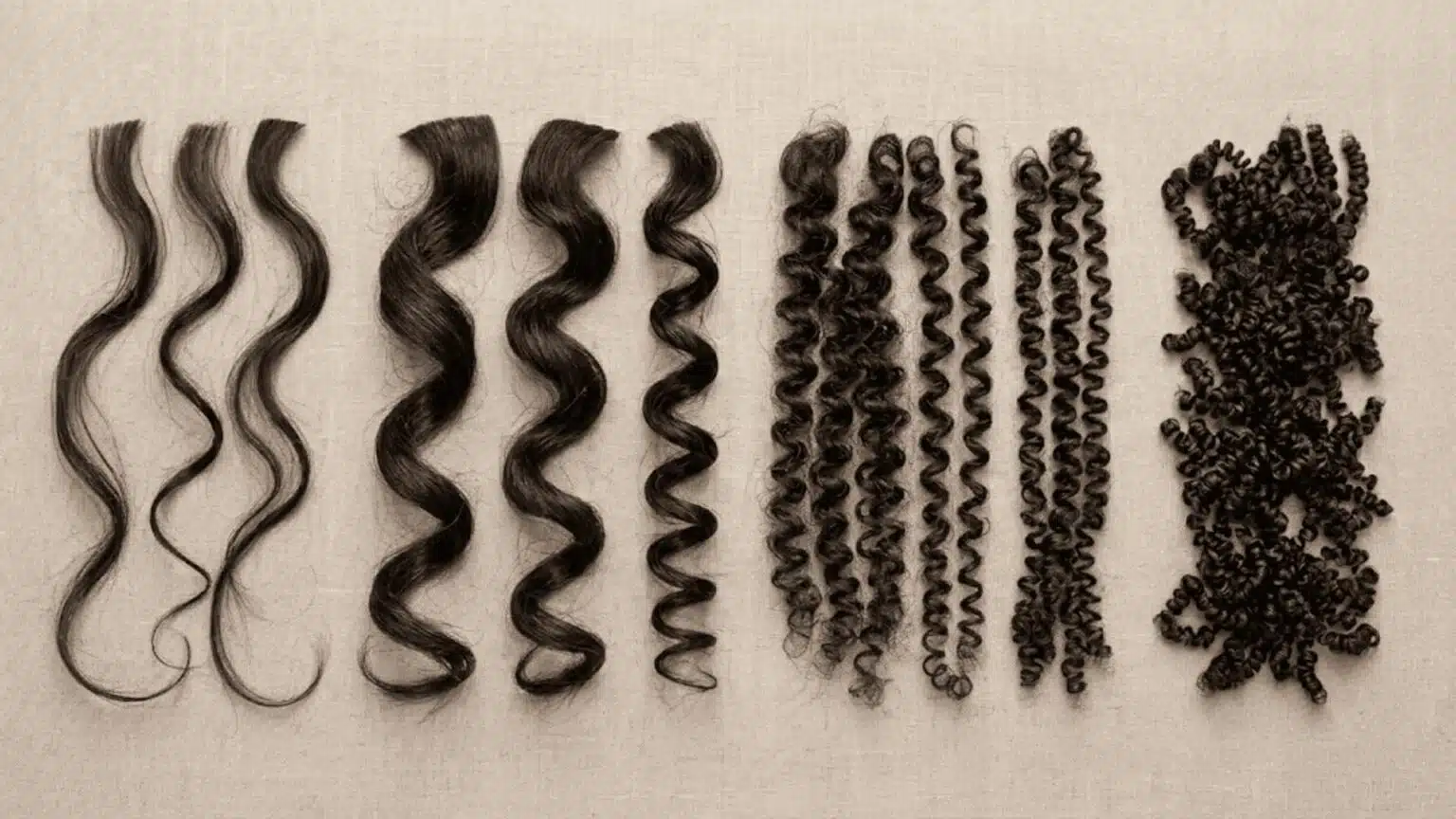
Now look at individual strands. Are they straight? wavy? curly? coily? This gives you your main category.
Here’s a simple way to identify your type:
- Type 2 forms an S-shape but lies mostly flat
- Type 3 creates springy spirals and ringlets
- Type 4 makes tight coils or zigzag patterns
Check your hair in different sections. Most people don’t have just one type. You might have 3B curls on top and 3C underneath. That’s perfectly normal.
Look at a More Comprehensive Chart With More Details
Let me break down the curl types for you.
This chart focuses on curly to coily hair only.
| Curl Type | Pattern Description | Curl Size | Key Characteristics |
|---|---|---|---|
| 2A | Slight S-bend | Loose waves | Fine texture, almost straight at roots, minimal volume |
| 2B | Defined S-waves | Medium waves | More texture than 2A, some body and bounce |
| 2C | Clear S-pattern | Thick waves | Prone to frizz, coarser texture, more volume |
| 3A | Loose spirals | Sidewalk chalk width | Shiny, bouncy curls with good definition |
| 3B | Springy ringlets | Marker width | More volume, tighter than 3A, bouncy texture |
| 3C | Tight corkscrews | Pencil or straw width | Densely packed, lots of volume, needs moisture |
| 4A | Soft S-coils | Crochet needle size | Springy, well-defined coils, retains moisture better |
| 4B | Z-shaped bends | Very small coils | Less definition, cotton-like feel, bends instead of curls |
| 4C | Tight zigzags | No visible curl | Rarest type, maximum shrinkage, minimal definition |
What Each Type Needs:
- Type 2: Light products, volumizing sprays, avoid heavy oils
- Type 3: Regular moisture, curl creams, gentle detangling
- Type 4: Deep conditioning, leave-in treatments, protective styling
Your curl diameter affects everything. Larger curls dry faster. Smaller coils need more time and patience. The tighter your pattern, the more moisture you need.
I recommend testing products on small sections first. What works for 3A won’t work for 4C. Know your type before you shop.
Conclusion
Now you know what is the rarest curl pattern is and how to identify your own type.
Type 4C stands out as the most uncommon, with its tight zigzag coils. But every curl pattern is special in its own way.
Understanding your hair type helps you choose the right products and care routine.
So take a closer look at your curls.
Treat them with love and patience. Your hair will thank you for it!
Frequently Asked Questions
1. What Curl Pattern is the Rarest?
Type 4C is the rarest curl pattern. It features extremely tight zigzag coils with no visible curl definition and maximum shrinkage.
2. What is the Tightest Curl Pattern?
Type 4C has the tightest curl pattern. The coils form sharp zigzag angles instead of round spirals, making them incredibly small.
3. What is the Rarest Hairstyle?
Uncombable Hair Syndrome is the rarest hairstyle. Only about 100 cases exist worldwide. The hair stands straight up and resists combing.