
After a long day, you want to unplug and recharge. But your home doesn’t always cooperate. Between buzzing phones, cluttered counters, and the mental weight of unfinished tasks, relaxing can feel like one more thing you’re failing at.
The good news? Science backs what many of us instinctively feel: our surroundings shape our mental state. A 2025 meta-analysis published in Current Psychology reviewed seven randomized controlled trials and found that art therapy significantly reduces burnout, especially emotional exhaustion. And a 2026 report from The Business Research Company projects the wall art market at $63.67 billion, suggesting people are investing more in how their spaces look and feel.
This article covers three ways to turn your home into an actual sanctuary: using creative hobbies as active relaxation, choosing wall decor that calms your mind, and building small rituals that stick. Whether you live in a studio apartment or a house with spare rooms, these ideas work.
How Creative Hobbies Help You Unplug
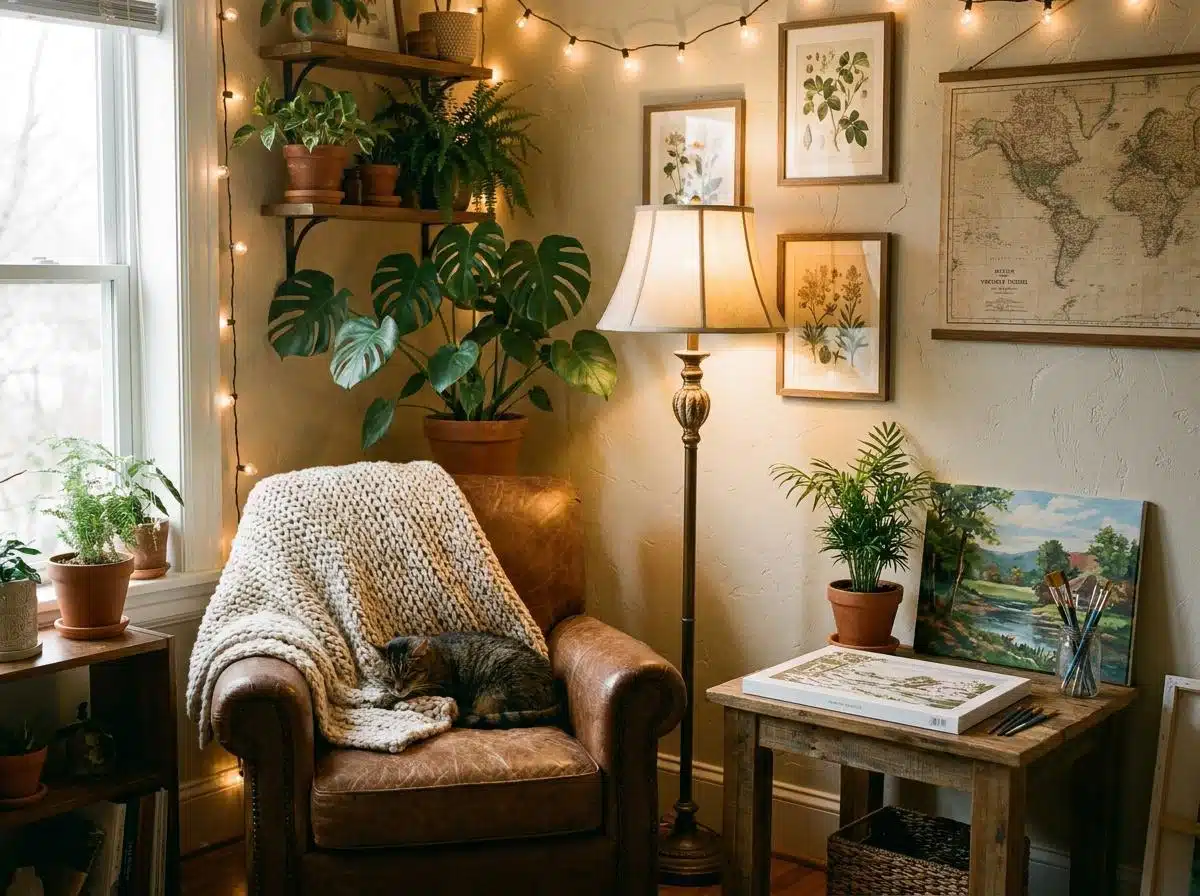
One of the most effective ways to make your home feel like a sanctuary is to dedicate part of it to an activity that helps you slow down. It doesn’t have to be an entire room or a perfectly designed hobby space. A small desk in the corner, a comfortable chair by a window, or even a section of the dining table can become a place where you leave daily pressures behind. Creative hobbies are particularly effective because they transform your home from a place where you simply live into a place where you actively recharge.
Creative hobbies give your brain something it desperately needs: a break from deciding. Every day you make thousands of small choices. What to eat. Which email to answer first. Whether to scroll or sleep. That decision fatigue builds up, and by evening, your brain is exhausted.
Structured creative activities solve this. Instead of staring at a blank canvas wondering where to start (which adds stress, not relief), you follow a clear path. Each numbered section guides your brush. Each completed shape gives a small hit of satisfaction. You’re not fighting indecision. You’re just painting.
This isn’t just a nice idea. The American Psychiatric Association’s Healthy Minds Monthly Poll from June 2023 found that 46% of Americans use creative activities to relieve stress or anxiety. Among those who report very good or excellent mental health, 71% engage in creative activities frequently. And the Hobbycraft “Power of Making” Report from August 2025 surveyed over 5,900 UK respondents and found that 53% say crafting improves their mood, while 48% report reduced stress from crafting.
Starting with a number paint kit removes the hardest part of any new hobby: the setup. Everything comes in the box. The canvas is printed with numbered sections. The paints are matched and ready. You just open, dip, and paint. The Mayo Clinic has written about how creative activities can promote well-being by reducing stress and improving mood. Structured creativity works because it offers clear goals and immediate feedback, two ingredients that help you enter flow state.
The paint-by-numbers market reflects this growing interest. It was valued at about $1.56 billion in 2024 and is growing at roughly 7.1% annually through 2033, with over 50 million kits sold globally each year. That’s millions of people finding calm through paint.
Why Your Home Environment Matters for Mental Wellness
Your brain reads your environment constantly. A cluttered room? It stays on alert. A comfortable chair with warm lighting and a piece of art you love? It starts to settle. This isn’t abstract theory. It’s measurable.
A 2026 study in Frontiers in Human Neuroscience examined the neurophysiological effects of art-making and found measurable changes in brain activity linked to relaxation. Creating art, or even just viewing it, moves your nervous system toward a calmer state. Your grandmother was right about wanting “a nice picture on the wall.” She was practicing environmental psychology without the jargon.
This trend is showing up in spending data, too. The wall art market is estimated at $63.67 billion in 2026 and is projected to reach $82.36 billion by 2030, according to The Business Research Company. People are investing in walls that support their mental health.
Your home environment and your self-care routine work together. A relaxing space makes it easier to follow through on habits that support everyday well-being. When your environment supports your habits instead of fighting them, you actually stick with them.
Choosing Art That Sets the Right Mood
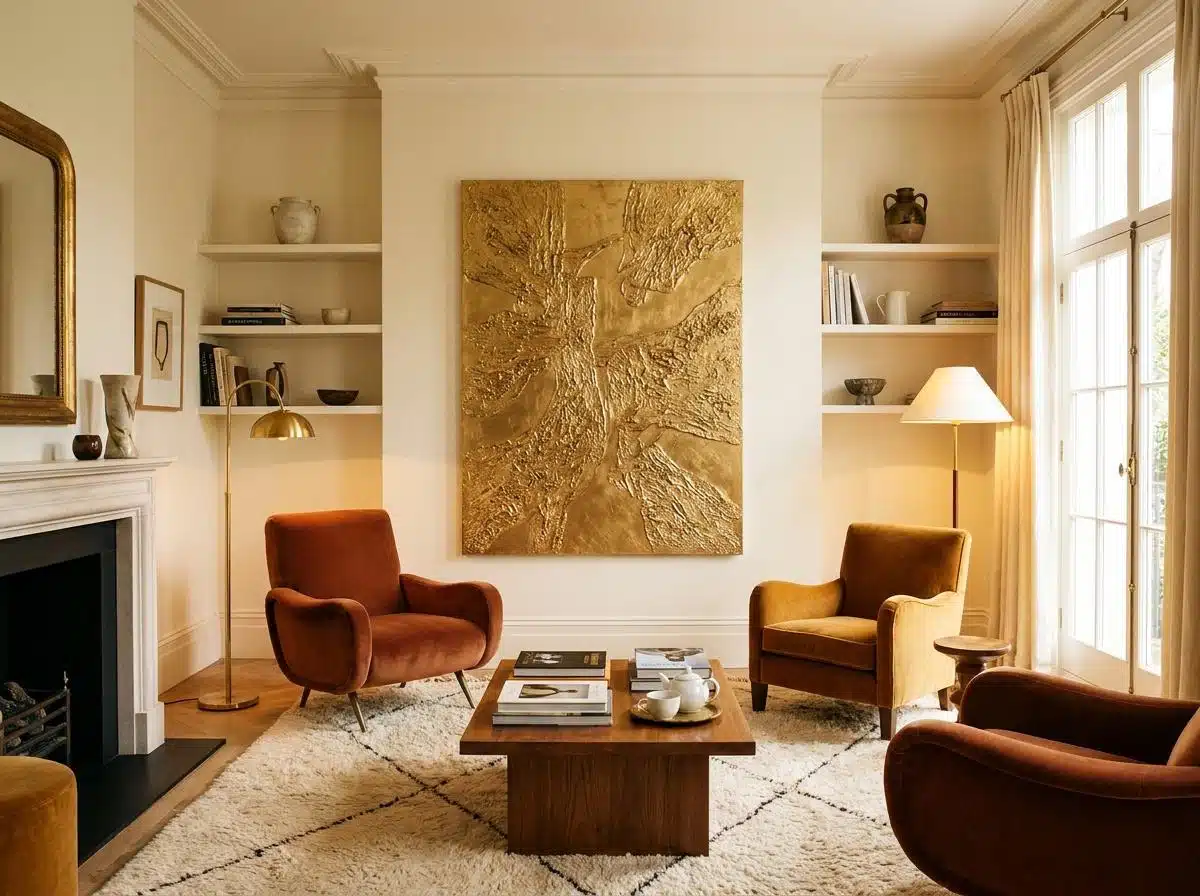
Not all wall art helps you relax the same way. Color, texture, and subject matter all influence how a piece makes you feel. Warm metallics like gold and brass tend to create feelings of comfort and warmth. A gold-framed piece or a gold-leaf abstract changes a room completely. It doesn’t demand attention. It glows.
Cool tones like blues and greens promote calm. Nature scenes lower stress. Abstract work invites contemplation without requiring a specific reaction. The best choice depends on your space, but one rule holds: pick art you actively want to look at, not art that just fills a wall.
Pieces of gold art on wall from artists who specialize in metallic finishes bring a warmth that flat prints can’t match. Gold leaf catches afternoon light and gives a room a living quality that changes through the day. It adds depth without adding clutter.
Harvard Health Publishing covered this in a 2017 article on the healing power of art, noting that art can reduce stress, promote self-awareness, and improve well-being. The same idea applies at home. The art you hang is part of your mental environment, not just decoration.
Pair your wall art with the right complementary habits. A calming visual space works even better when combined with a relaxation routine like detox bath ideas for home relaxation. The visual calm primes your brain, and a warm bath deepens the effect.
Simple Ways to Build Your Home Sanctuary
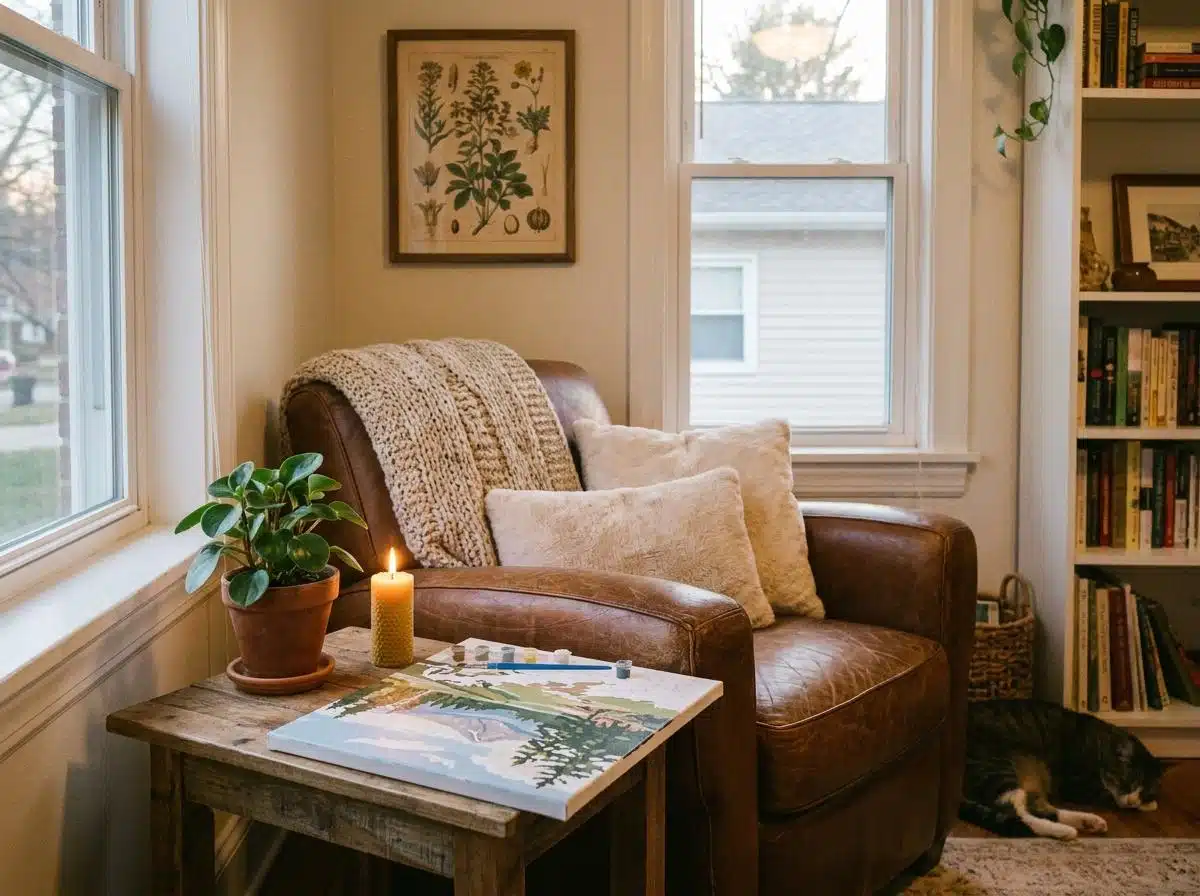
You don’t need a guest house or a dedicated art studio. You need a corner. A single chair. A small table. One wall hook for a piece of art. That’s enough to start.
Here are a few practical steps that cost almost nothing:
Designate a no-screens spot. Pick one corner of a room where your phone doesn’t come. Put a comfortable chair there. Hang a piece of wall art at eye level. Add a small lamp with warm light. This becomes your reset zone. Even 10 minutes here changes your evening.
Keep a creative hobby in plain sight. If you have a paint-by-numbers kit, leave it out on a table, not buried in a closet. The visual reminder matters. You’ll paint for 15 minutes if you don’t have to unpack anything first.
Layer your relaxation. Combine visual calm (the art on your wall) with physical calm (a warm drink, a candle, and comfortable clothes) and behavioral calm (painting, reading, and listening to music). This layering works. A 2025 EEG study published in Nature Humanities and Social Sciences Communications found that art therapy significantly improved relaxation and attention in participants.
Build the habit, not the Pinterest board. A sanctuary isn’t about the perfect aesthetic. It’s about using your space in a way that actually makes you feel better. Start with one change. Paint for 15 minutes tonight. Swap a blank wall for art you love. Focus on creating small resets throughout your day, brief moments that help you slow down, clear your mind, and reconnect with your surroundings. Over time, these moments can have a bigger impact than any redesign project. See how it feels and adjust from there.
Building a Sanctuary That Works for You
The research keeps pointing in the same direction: what you do with your hands and what you put on your walls both affect how you feel. Creative hobbies like paint-by-numbers lower stress. Intentional wall art creates a calming environment. Together, they turn a house into a home that actively supports your well-being.
You don’t have to overhaul everything at once. Pick one idea from this article and try it tonight. Paint one section of a canvas. Hang one piece of art. Light a candle and sit in your newly arranged corner for five minutes without your phone.
That’s not a small thing. That’s the whole point.