
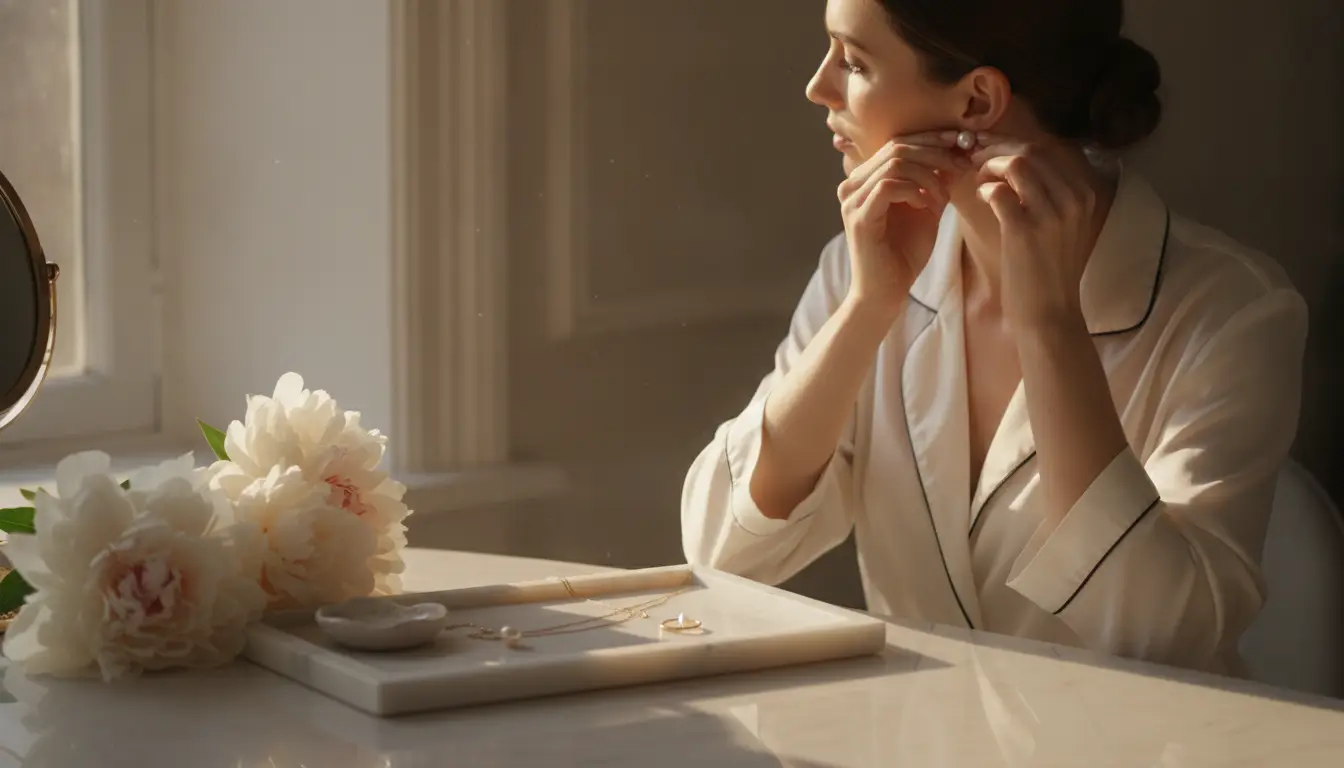
Beauty and styling routines tend to get evaluated in terms of products — skincare, makeup, the curated steps that make up a morning or evening regimen. Jewelry rarely gets folded into that conversation in the same systematic way, despite functioning as one of the more consistent elements of daily presentation. The earrings worn most days, the ring that doesn’t come off, the necklace that’s become a kind of signature — these pieces do quiet, continuous work in shaping how someone presents themselves, in much the same way a signature skincare routine or a reliable makeup approach does.
Treating jewelry with that same intentionality changes the calculus around what’s worth owning. Rather than accumulating pieces reactively, the more durable approach is building a small rotation of genuinely excellent pieces that integrate into daily life the way a well-chosen skincare product does — used consistently, valued for what it actually does, rather than acquired and forgotten.
Why Organic Materials Suit a Daily Routine
Materials produced by living processes carry a quality that manufactured alternatives don’t replicate easily — a kind of visual depth and variation that comes from biological formation rather than industrial production. That quality matters specifically in the context of daily wear, where a piece is seen repeatedly, at close range, under different lighting conditions, by the person wearing it and by everyone they interact with.
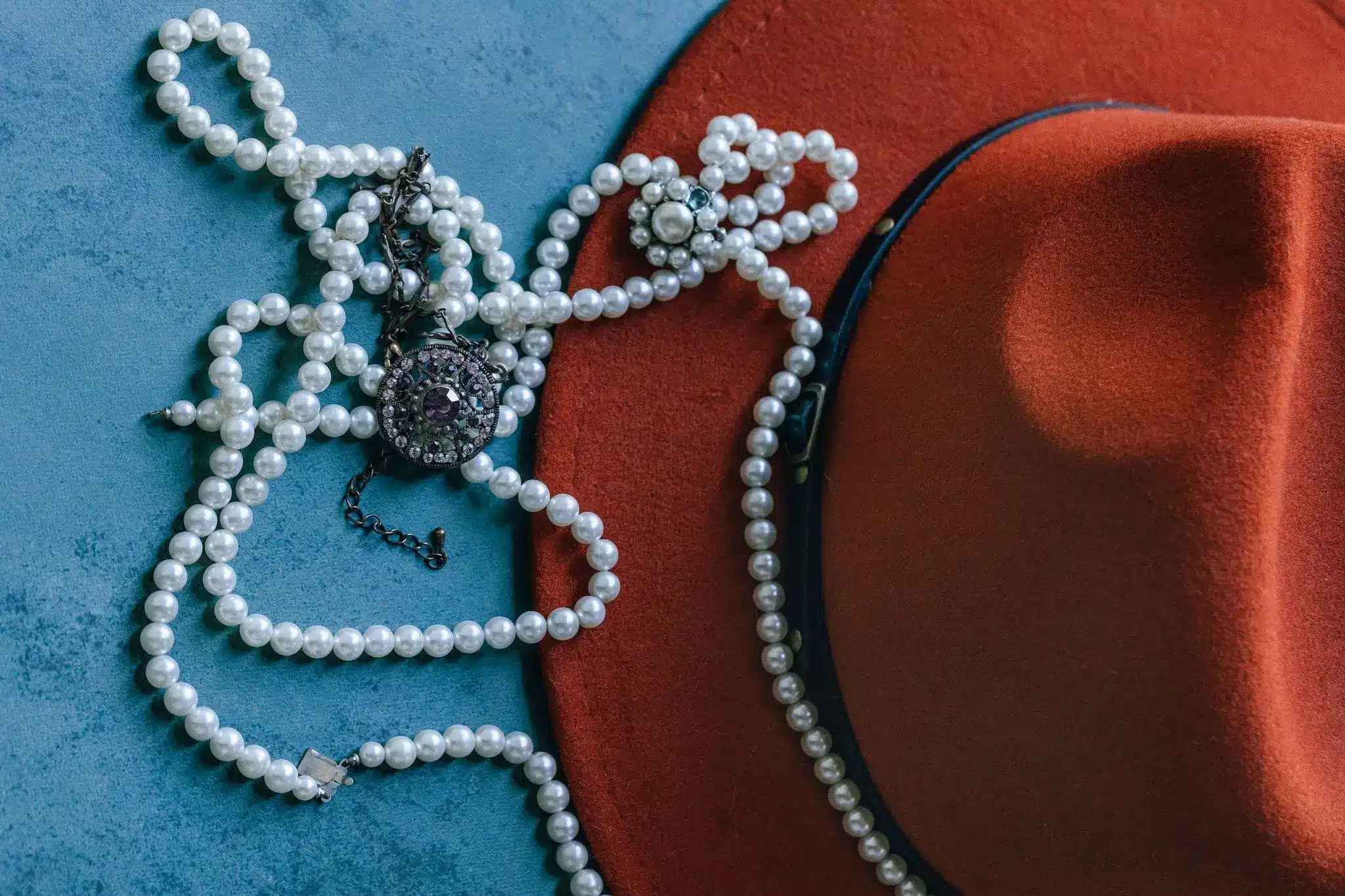
Pearls are the clearest example of this category. Their layered nacre structure produces a luster that shifts subtly depending on the angle and quality of light — a characteristic that becomes more apparent, not less, with familiarity. A piece that rewards that kind of repeated attention functions differently in a daily routine than one that’s visually static. It becomes something closer to a fixture of personal presentation than an accessory chosen for a specific occasion.
Finding Quality That Holds Up to Daily Wear
The durability question matters more for daily jewelry than for occasional pieces, simply because of the frequency of wear and the range of conditions a piece encounters — skin contact, exposure to skincare and haircare products, the general wear of being handled and worn for extended periods rather than a single evening.
This is where sourcing knowledge becomes genuinely useful rather than optional. Understanding which brands maintain consistent quality standards in nacre thickness, luster grading, and setting construction makes a meaningful difference in whether a piece holds up to years of regular wear or begins showing wear within months. Researching some of the best pearl jewelry brands before investing in daily pieces tends to surface real differences in sourcing transparency, quality consistency, and construction standards that aren’t always obvious from a product photo alone — differences that become very apparent once a piece has been worn daily for a year or more.
Integrating Pieces Into an Existing Routine
The practical question of how jewelry fits into a beauty and styling routine is worth thinking through concretely. Pieces meant for daily wear should survive the actual mechanics of a morning routine — applying skincare, doing hair, the general handling that comes with getting dressed — without requiring removal and replacement at each step. Stud earrings and simple chains tend to handle this better than pieces with more delicate mechanisms or components that catch easily.
The order of operations matters too. Jewelry that goes on after skincare and makeup avoids product transfer that can affect luster over time, particularly with pearls, which are more porous than harder gemstones and can absorb oils and chemicals from skincare products if contact is frequent and prolonged.
Building a Rotation Rather Than a Collection
A genuinely useful daily jewelry rotation tends to be smaller than people expect — a few pairs of earrings, one or two necklaces, perhaps a ring or bracelet that gets worn consistently. The goal isn’t variety for its own sake. It’s having pieces considered enough that reaching for them each morning doesn’t require deliberation, the same way a reliable skincare routine removes decision fatigue from a process that would otherwise require daily evaluation.
That rotation benefits from pieces that work across the range of contexts a typical week involves — professional settings, casual days, the occasional evening that extends beyond the workday. Versatility matters more in a daily rotation than in occasion-specific jewelry, since the same few pieces need to function across genuinely different circumstances without feeling mismatched to any of them.
The Long-Term View
Treating jewelry as part of a considered daily routine rather than an occasional indulgence changes the relationship with the pieces themselves. They become familiar in the way a favorite product becomes familiar — trusted, reliable, integrated into a sense of personal presentation that doesn’t require reinvention each day.
Organic materials suit that role particularly well, given how their visual qualities deepen with attention rather than becoming static or predictable. A well-chosen, well-sourced piece worn daily for years becomes something more personal than its original price tag suggests — which is, in the end, what a genuinely good daily routine is supposed to produce.