Women’s hair thinning is far more common than most people admit, and far more often hormonal than the shelves of thickening shampoos would suggest. By the age of 50, up to 40% of women have noticeable hair loss, and female pattern hair loss alone affects around 30 million women in the US. The frustrating part is that the cause usually sits in your bloodstream, not on your scalp, which is exactly why topical fixes so often disappoint.
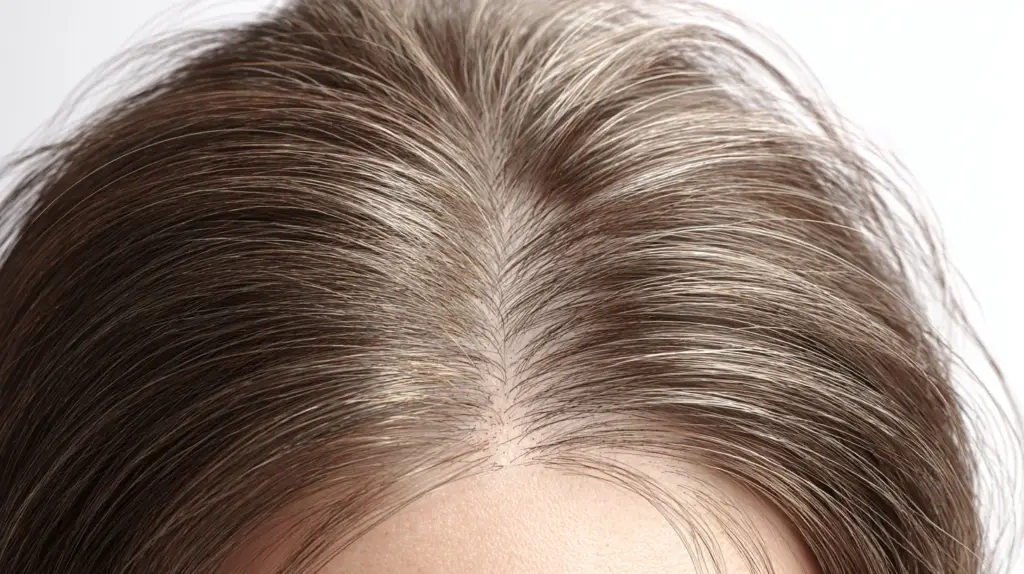
Hair loss in women also tends to be misunderstood. It rarely looks like the receding hairline or bald crown associated with men. Instead, women usually notice a widening parting, a ponytail that feels thinner in the hand, or more hair than usual collecting in the brush. Because the change is gradual and diffuse, it is easy to put down to ageing or styling and miss the hormonal signal underneath. Getting to the actual trigger matters, because the right treatment depends entirely on which hormone, or combination of hormones, is behind it. Here are the six hormonal triggers that genuinely drive thinning in women, what each one does at the level of the follicle, and how to tell which one might be yours.
1. DHT and a Genetic Sensitivity to It
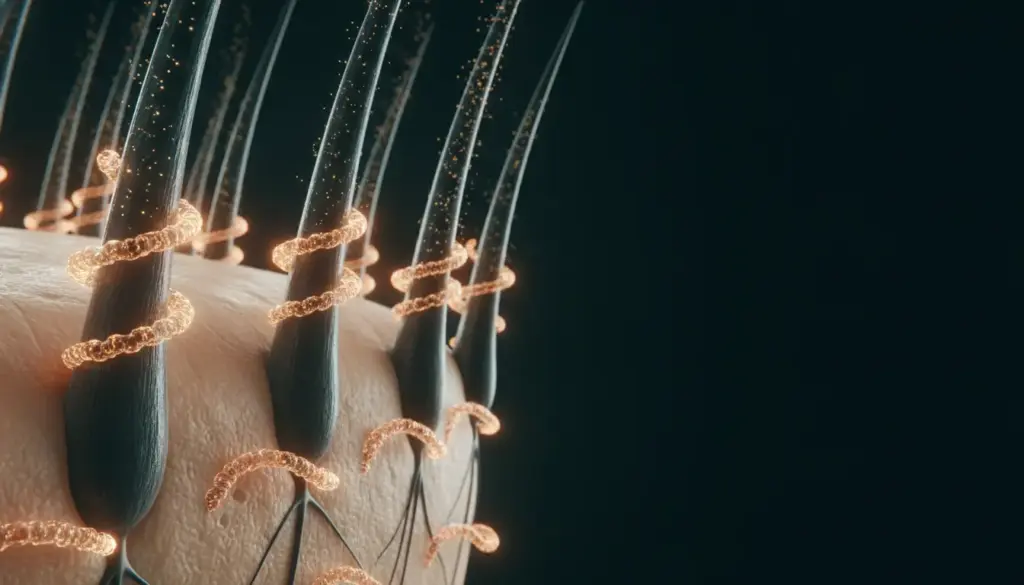
The single biggest hormonal driver of female hair thinning is dihydrotestosterone, or DHT. Women produce testosterone in small amounts, and an enzyme called 5-alpha-reductase converts some of it into DHT. In women who are genetically sensitive to it, DHT binds to receptors in the hair follicle and causes miniaturisation, the follicle shrinks, the growth phase shortens, and each new hair grows back finer until it barely grows at all. This is the mechanism behind female pattern hair loss, and it usually shows as a widening parting or a thinner ponytail rather than the receding hairline men get. It is not about how much DHT you have so much as how reactive your follicles are to it.
This is also why family history matters so much with pattern hair loss. The sensitivity to DHT is largely inherited, so if your mother or grandmother thinned in a similar way, your follicles may carry the same susceptibility. It also explains why two women with identical hormone levels can have completely different hair: one set of follicles barely reacts to DHT, the other miniaturises steadily over the years. Because the process is gradual, many women do not register it until a noticeable amount of density has already gone, which is why early assessment beats waiting to see if it settles.
2. Falling Oestrogen, and the Ratio Shift at Menopause
The biggest reason hair thins around menopause is not a rise in male hormones but a fall in oestrogen, which changes the balance between the two. Oestrogen helps keep hair in its active growth phase, so when it drops, follicles slip into the resting and shedding phase more readily. The subtler and more important point, the one most articles skip, is about ratio. As oestrogen and progesterone decline, the relative influence of testosterone and DHT rises, even if the amount of testosterone itself has barely changed. The androgens were always there; menopause simply removes the oestrogen that was keeping their effect in check.
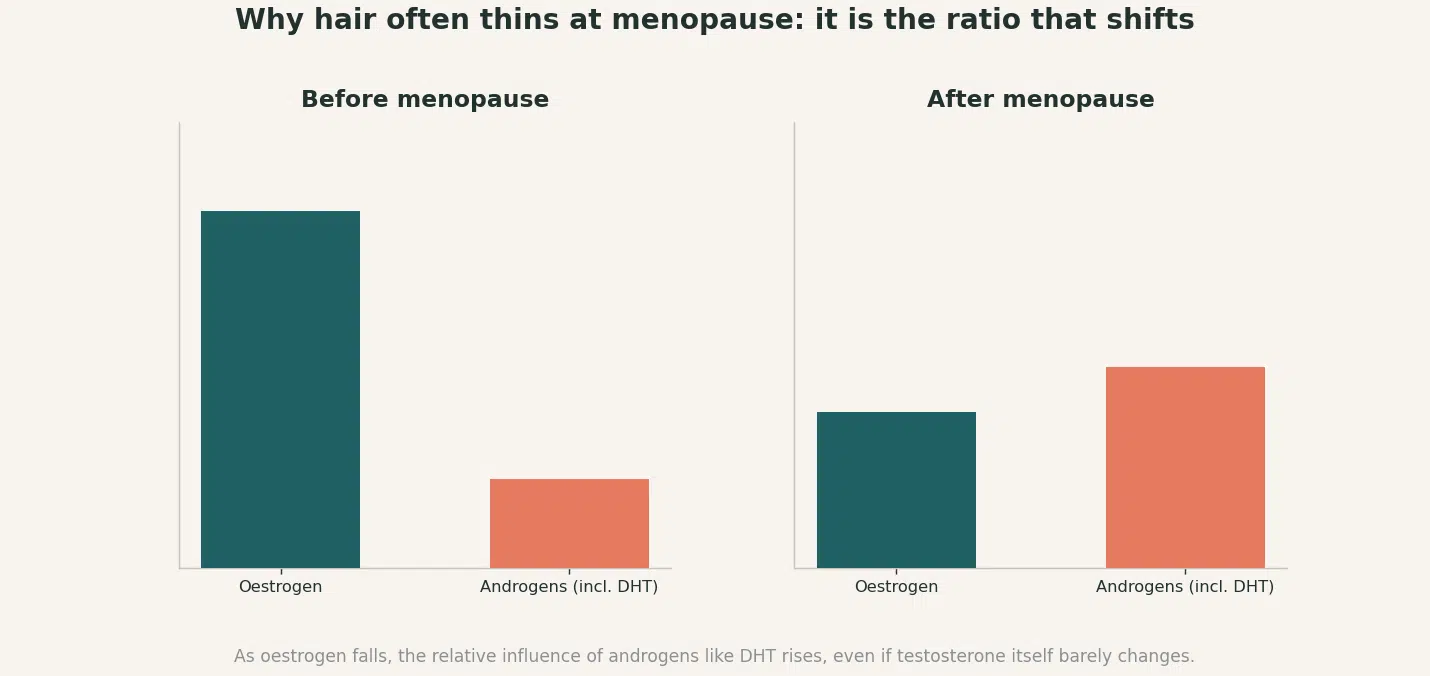
At menopause it is the shifting ratio that matters: less oestrogen means androgens like DHT exert more influence on the follicle.
This ratio shift is why so many women first notice thinning during the menopausal transition, often alongside other menopause symptoms, and why it can feel like it appeared from nowhere. Seeing it as a balance problem rather than a simple deficiency also explains why addressing oestrogen, not just the scalp, can help.
3. Thyroid Imbalance, in Either Direction
Both an underactive and an overactive thyroid can cause diffuse hair thinning across the whole scalp. The thyroid effectively sets the metabolic pace for hair follicle activity, so when thyroid hormone levels are off in either direction, follicle turnover slows and shedding rises. Thyroid-related hair loss tends to be general thinning rather than a patterned widening of the part, which is one clue that distinguishes it. Because thyroid disorders are common in women and easily missed, a simple thyroid blood test is one of the first things worth checking when hair loss appears without an obvious cause.
4. Cortisol and Chronic Stress
Sustained high cortisol from chronic stress can push large numbers of hairs into the shedding phase at once, a condition called telogen effluvium. Instead of the gradual miniaturisation seen with DHT, stress-related shedding tends to be sudden and dramatic, with noticeably more hair coming out in the brush or shower, sometimes up to 300 hairs a day. It often shows up a couple of months after a stressful event rather than during it, which can make the link hard to spot. The reassuring part is that telogen effluvium is usually temporary, and hair tends to recover once the underlying stress eases.

5. Postpartum Hormone Shifts
The sharp drop in oestrogen after giving birth triggers a temporary but often alarming wave of shedding. During pregnancy, high oestrogen keeps more hair than usual locked in the growth phase, so hair often looks thick and full. After birth, oestrogen falls steeply and all that retained hair enters the shedding phase together, usually around two to four months postpartum. It can look dramatic, but postpartum shedding is a normal correction rather than true hair loss, and most women see their hair return to its usual fullness within six to twelve months without any treatment.
6. PCOS and Androgen Excess
Polycystic ovary syndrome causes the body to overproduce androgens, which can drive female pattern thinning at a younger age. Women with PCOS produce higher levels of male hormones such as testosterone, and that excess can lead to thinning hair through the same DHT-driven follicle miniaturisation seen in pattern hair loss, but often appearing in the twenties or thirties rather than at menopause. PCOS-related thinning frequently comes alongside other signs of androgen excess, such as irregular periods or unwanted facial hair, which together point towards getting hormone levels checked.
The Factor That Quietly Makes All of Them Worse
Iron deficiency is not a hormone, but it is so common in women and so closely tied to hair shedding that it earns a place in any honest list. Low iron deprives follicles of the oxygen and nutrients they need for healthy growth, and it can compound any of the hormonal triggers above. Trace minerals and vitamins such as iron and vitamin D are critical for normal hair physiology, and deficiencies directly weaken the hair root. It is especially common in women with heavy periods, those recently postpartum, and those eating little red meat, and it often travels with low ferritin and low vitamin D. This is why a thorough hair-loss assessment checks iron alongside hormones: correcting a deficiency can make a real difference, and missing one means even the right hormonal treatment may underperform.
How to Work Out Which Trigger Is Yours
The pattern and timing of your hair loss are the best first clues to its cause, and a blood test usually confirms it. A widening parting with gradual thinning points toward DHT-driven pattern loss or PCOS; sudden heavy shedding a couple of months after a stressful event or childbirth points toward telogen effluvium; diffuse all-over thinning with other symptoms like fatigue or weight changes suggests checking the thyroid. Thinning that begins around the menopausal transition, alongside hot flushes or changes in your cycle, points toward the oestrogen ratio shift. And if thinning appears young, with irregular periods or unwanted facial hair, PCOS is worth investigating.
Because several of these can overlap, and because iron deficiency can sit underneath any of them, the sensible step is a proper assessment rather than guesswork or another product bought on hope. Voy’s female hair loss treatment is prescribed by UK-licensed doctors who can look at the pattern, check the relevant hormone and nutrient levels, and match the treatment, such as minoxidil, to the actual cause rather than the symptom. That targeting matters: a treatment aimed at DHT will do little for a thyroid problem, and a topical applied to a scalp starved of iron will struggle regardless.
The Bottom Line
Women’s hair thinning is usually hormonal, often treatable, and rarely something to blame yourself for. The six triggers, DHT sensitivity, falling oestrogen and the menopause ratio shift, thyroid imbalance, chronic stress, postpartum changes and PCOS, each leave their own signature in how and when hair thins. The most useful thing you can do is stop reaching for another thickening shampoo and instead get the pattern assessed and the relevant levels tested, so any treatment targets the real cause. Hair that is thinning for a hormonal reason often responds well once that reason is identified and addressed.
FAQs
What Is the Main Hormone Behind Women’s Hair Loss?
DHT, a byproduct of testosterone, is the main hormonal driver. In women with a genetic sensitivity, it shrinks hair follicles and shortens the growth phase, causing the gradual thinning seen in female pattern hair loss.
Why Does Hair Thin During Menopause?
Oestrogen falls at menopause, which both shortens the hair growth phase and shifts the balance so androgens like DHT exert more influence. It is the changing ratio, not necessarily more testosterone, that drives the thinning.
Will Postpartum Hair Loss Grow Back?
Usually yes. Postpartum shedding is a temporary correction after the steep oestrogen drop following birth. Most women see their hair return to its normal fullness within six to twelve months without treatment.
Can Hormonal Hair Loss Be Treated?
Often, yes, especially when the cause is identified. Treatments like minoxidil, and addressing underlying thyroid, iron or hormonal issues, can help. A clinical assessment matches the treatment to the specific trigger.
How Do I Know if My Hair Loss Is Hormonal or Stress-Related?
Hormonal pattern loss is gradual, showing as a widening parting over months or years. Stress-related shedding (telogen effluvium) is sudden and diffuse, usually appearing two to three months after the trigger, and typically recovers on its own.
Sources
- UCLA Health. What causes female hair loss? Prevalence, telogen effluvium and PCOS. https://www.uclahealth.org/news/article/what-causes-female-hair-loss
- The Riegel Center. Women and hair loss: the role of the oestrogen-to-androgen ratio and thyroid. 2025. https://theriegelcenter.com/blog/women-and-hair-loss-what-your-hormones-are-telling-you
- Ziering Medical. What hormone causes women’s hair loss? DHT, 5-alpha-reductase and follicle miniaturisation. 2026. https://zieringmedical.com/blog/what-hormone-causes-womens-hair-loss/
- Quantitative analysis of circulating biomarkers, minerals, vitamins and thyroid hormones in females affected by hair loss. PMC, 2025. https://www.ncbi.nlm.nih.gov/pmc/articles/PMC12651287/
- Voy. Female hair loss treatment, prescribed by UK-licensed doctors. https://www.joinvoy.com/female-hair-loss