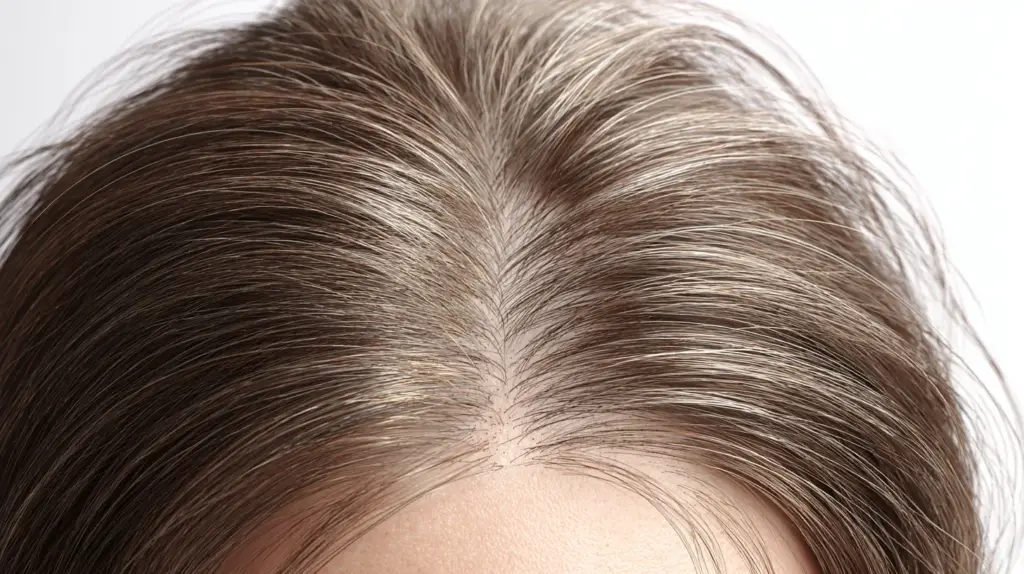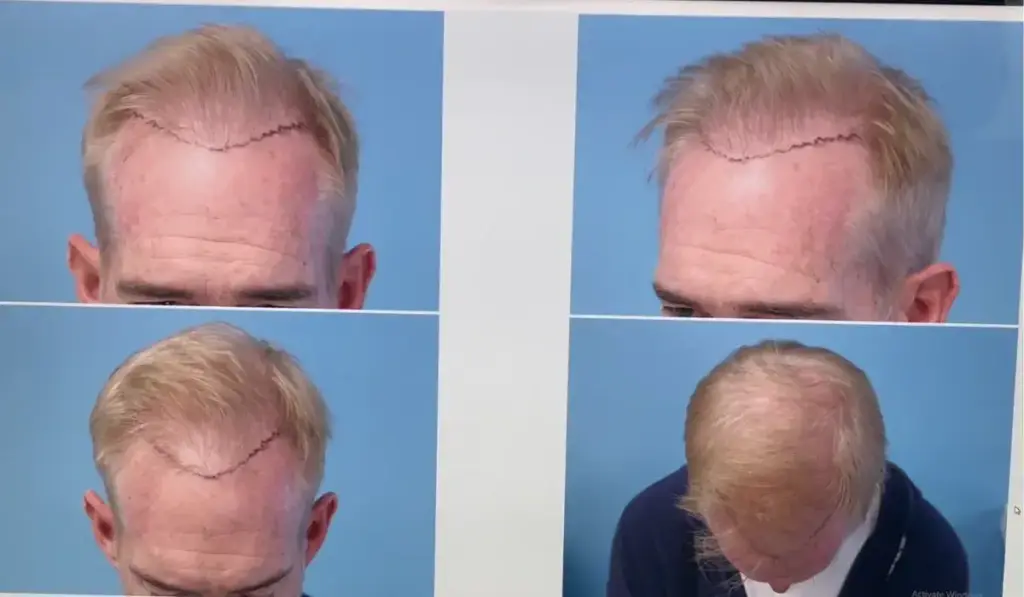

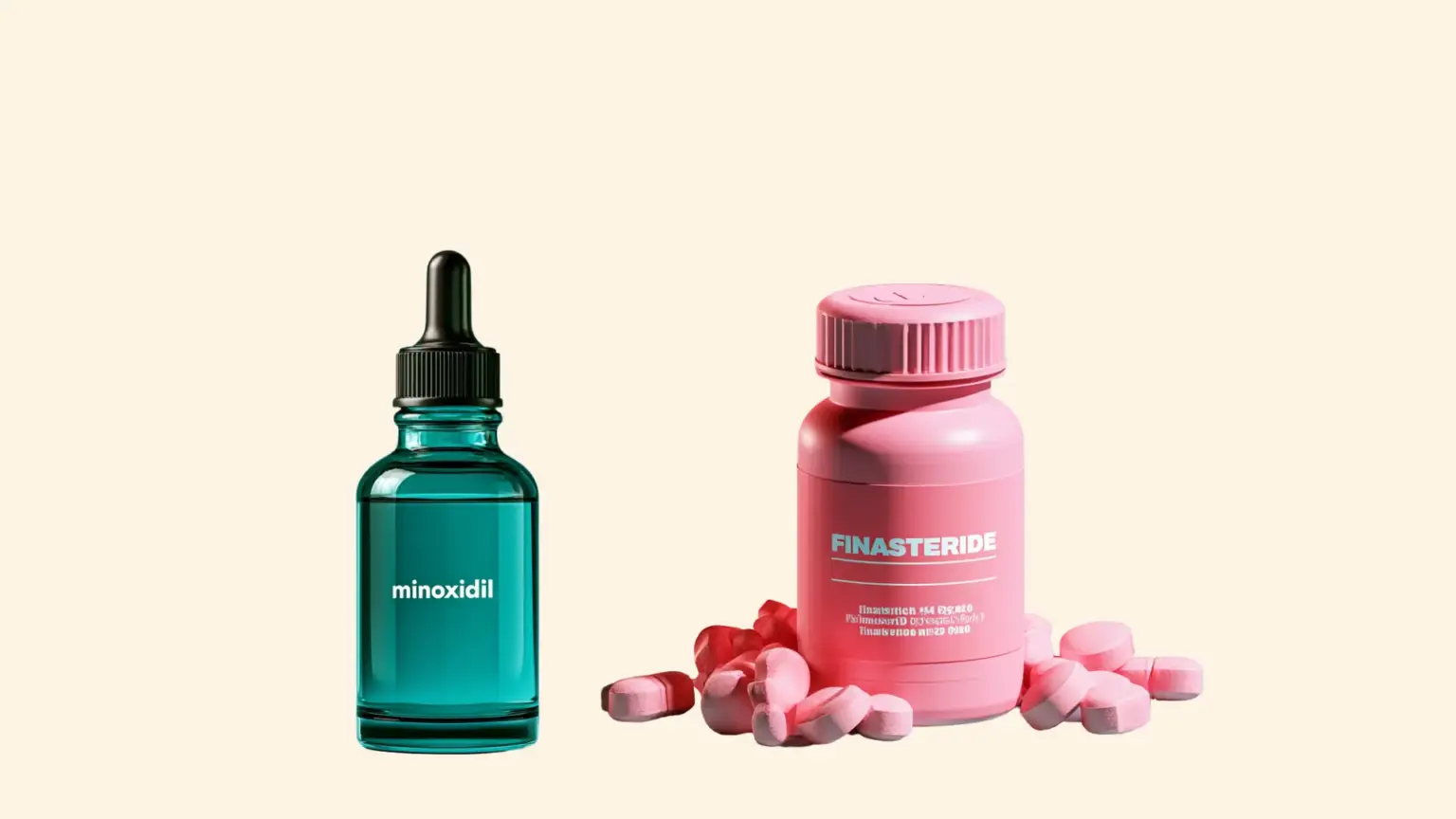
More hair in your shower drain or a thinning crown?
And you’ve already tried many remedies and medicines, and you keep coming across minoxidil vs finasteride again and again?
Minoxidil regrows hair by improving blood flow, and finasteride blocks DHT, the hormone responsible for male pattern baldness and hair loss.
These two are the most researched hair loss treatments available. Let’s get into details.
What is Minoxidil and How Does it Work?
It was first used for blood pressure before doctors noticed a side effect: hair growth. It is now sold topically and, in low doses, as an oral tablet for people with a receding hairline.
Does Minoxidil Stimulate Hair Growth?
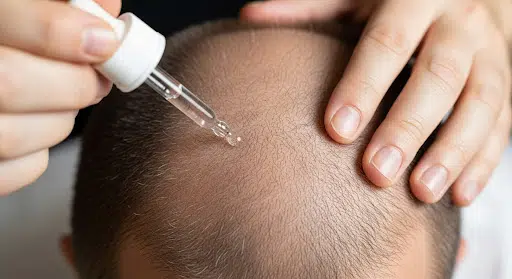
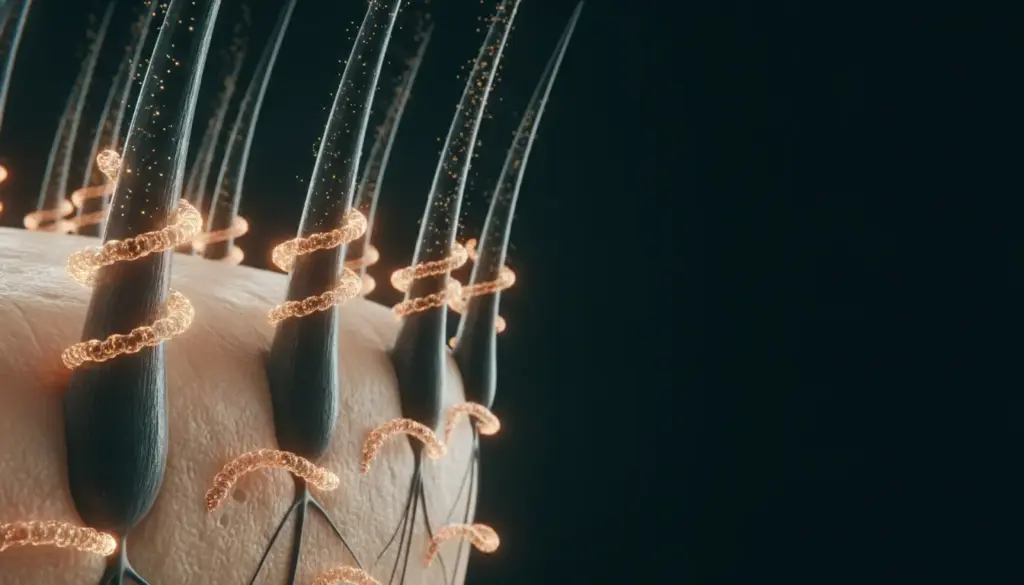
When minoxidil is applied, the blood flow to the scalp is improved. As a result, more oxygen and nutrients are delivered to the follicles.
It also appears to extend the anagen, or growth, phase of the hair cycle, keeping strands active longer before they shed.
The success rate ranges from40% to 60% for topical formulations and from 80% to 90%for oral formulations.
Available Formulations and Strengths
The formulation and strength of minoxidil vary based on the dosage needed and the severity of hair thinning or hair loss.
Both topical and oral minoxidil have different formulations to meet patients’ needs.
- 2% solution, milder and better tolerated.
- 5% solution or foam, stronger results.
- Oral minoxidil, a low-dose tablet prescribed off-label.
Who Benefits More from Minoxidil?
People with early to moderate thinning tend to see the best response.
It works for both men and women, making it more flexible than hormone-based options. And many celebrities also use minoxidil.
Anyone avoiding oral medication often starts here first; it gives a better indication of whether minoxidil suits them in the long run.
Now, What is Finasteride?
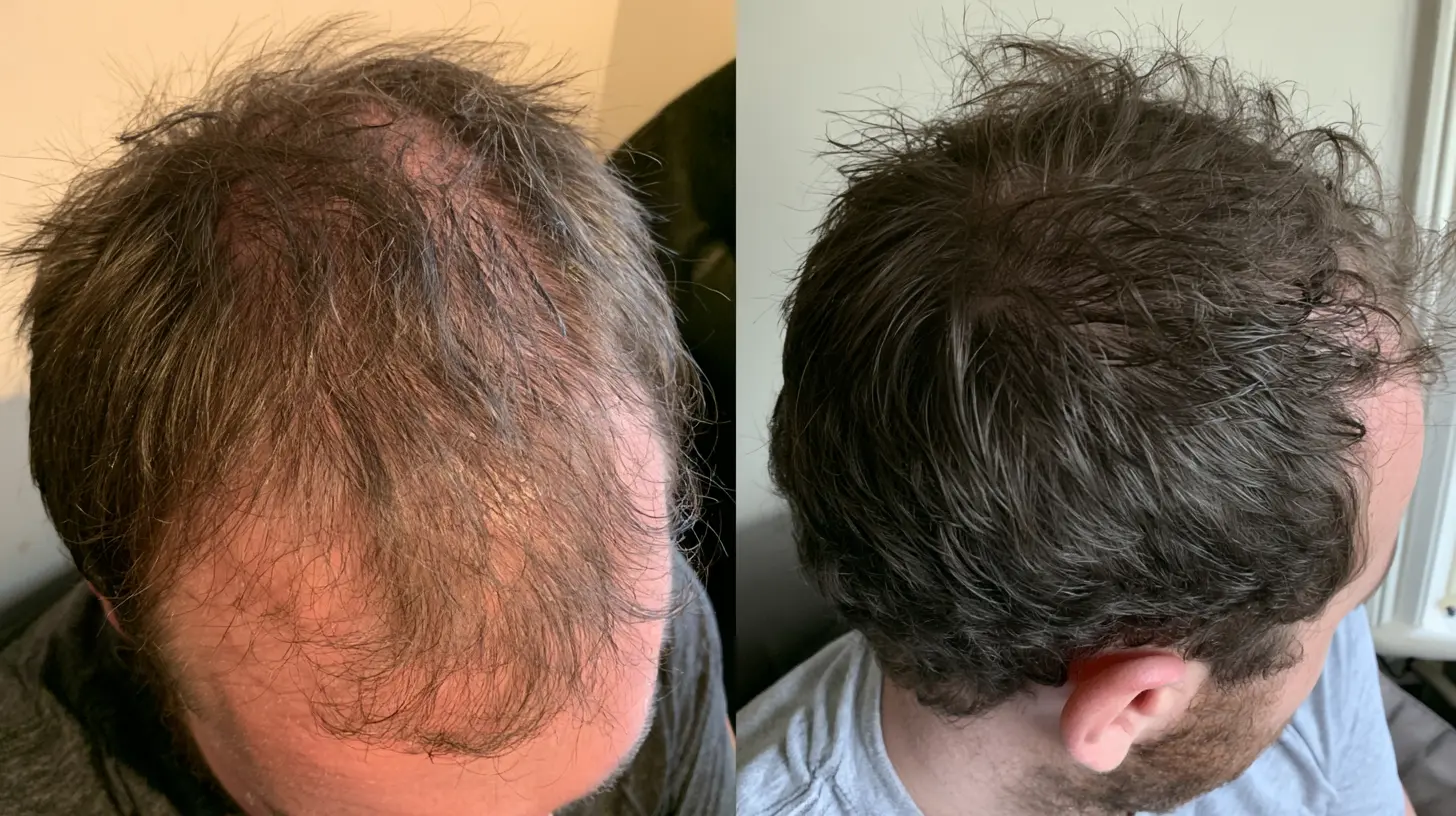
This drug is not suitable for pregnant or childbearing-age women, those trying to conceive, or those with severe depression.
Finasteride is a prescription medication designed to address the underlying hormonal causes of male pattern baldness also know as androgenetic alopecia.
Other solutions may only increase scalp circulation.
This targets the chemical processes responsible for follicular degradation.
How Finasteride Targets DHT?
Finasteride blocks an enzyme called5-alpha-reductase, which converts testosterone into DHT. With less DHT circulating, follicles are less likely to miniaturize.
This does not remove DHT entirely, but lowers scalp levels enough to slow the damage.
Dosage and Treatment Approach
Finasteride dosage is strict and requires a prescription to be bought.
It is important to follow the prescribed dosage and time period to avoid further health complications or long-term side effects.
- The standard dose is 1 milligram, taken orally once a day.
- Requires a prescription and ongoing medical supervision.
- Needs 6 to 12 months of consistent use before results show.
Who is an Ideal Candidate for Finasteride?
Finasteride is most effective for adult men with early-to-moderate genetic, crown, or mid-scalp hair thinning.
It works best for those willing to commit to daily, long-term use for at least 6–12 months and who accept the potential risks of side effects.
People must be willing to take a pill daily and understand that consistent, long-term use is necessary for results and that quitting will reverse any progress made.
However, it is sometimes used off-label for postmenopausal women and transgender individuals.
Minoxidil vs Finasteride: A Quick Overview
| Feature | Minoxidil | Finasteride |
|---|---|---|
| How it works | Boosts blood flow and extends the growth phase. | Blocks DHT production. |
| Form | Topical foam or liquid; oral in low doses. | Oral tablet; topical versions exist. |
| FDA approval | Approved for both men and women. | Approved only for men. |
| Time to see results | 3 to 6 months | 3 to 12 months |
| Best for | New growth | Slowing further loss |
| Common side effects | Scalp irritation, shedding phase | Lowered libido, rare mood shifts |
| Prescription needed | No for topical, yes for oral | Yes, finasteride needs a prescription. |
Can You Use Minoxidil and Finasteride Together?
Minoxidil tends to be a popular choice because of its fast regrowth properties, and Finasteride tends to win on slowing progression.
But some dermatologists recommend combination therapy.
Minoxidil and finasteride together tackle the problem from two angles: one slows the cause, and the other supports new growth.
This approach is highly recommended for its effectiveness and faster results.
Disclaimer: This information is for educational purposes only and is not a substitute for professional medical advice. Minoxidil and finasteride carry different risks and potential side effects (including sexual, hormonal, and dermatological effects for finasteride, and scalp irritation or shedding for minoxidil). Always consult a licensed physician or dermatologist before starting, combining, or stopping either treatment.
Final Words
Minoxidil vs Finasteride serve the same purpose in different ways.
But it is important to understand which one suits you and can help with your hair loss, and don’t just rely on people’s reviews.
Consult a professional first.
And take your time. Don’t rush, as both require time, patience, and healthy habits for better results.
Frequently Asked Questions (FAQs)
1. Will Hair Fall Out if Treatment is Stopped?
Yes, benefits from both treatments fade gradually within months once use is discontinued.
2. Can These Treatments Reverse Advanced Baldness?
Not fully. Both work best on follicles that are miniaturized but not yet dormant.
3. How Long Should Treatment Continue?
If there are no side effects, the treatment should be continued indefinitely, since both treatments maintain results only while they are actively used.