
Eyeshadow is one of those categories where the gap between what a product promises and what it actually delivers tends to be widest.
Palettes look compelling in packaging, shade stories read beautifully under retail lighting, and then three months later, the same two shades are getting used daily while the rest sit untouched.
That gap usually comes down to one of two things: the shades were not actually right for the occasion or skin tone, or the formula did not perform the way the application needed it to.
For women navigating changing skin, a third factor enters the picture. Eyelid skin thins, loses elasticity, and develops a texture that makes conventional powder formulas behave differently than they once did. Eyeshadow that used to glide and hold can start creasing, dragging, or emphasizing texture in ways that have nothing to do with application skill and everything to do with whether the formula was built for that skin.
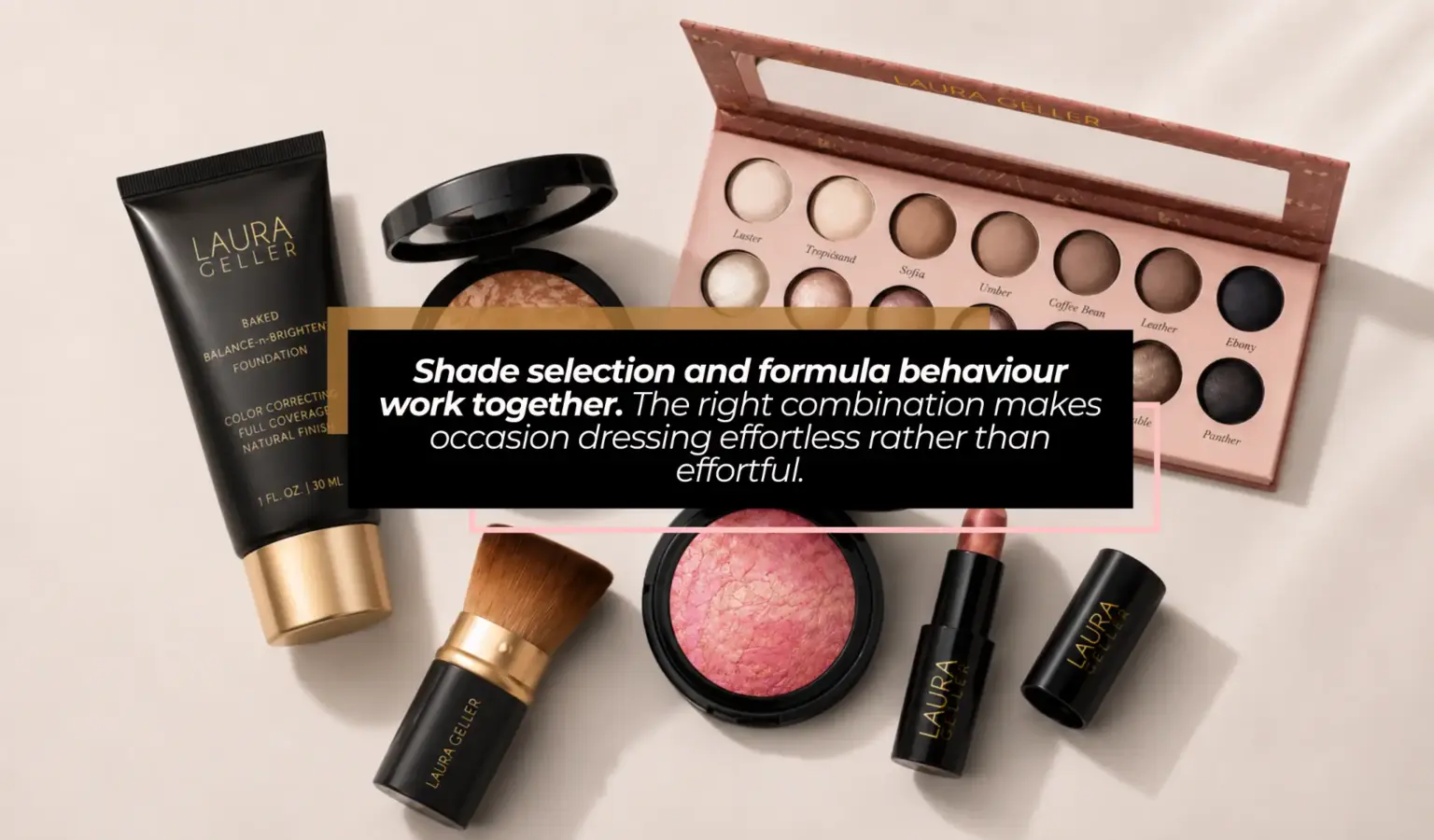
This guide covers how to choose shades from the Laura Geller eyeshadow palette collection for different occasions and why the brand’s baked formulation technology makes those choices more reliable in practice.
Why Baked Formulas Change the Shade Conversation
Before moving into specific shade choices by occasion, it is worth understanding what makes Laura Geller’s formulation approach distinct, because it directly affects how shade selection works.
Laura Geller founded her brand after years as a professional makeup artist working in Broadway, television, and celebrity work, and the collection was built around a specific question the wider industry was not asking: what does makeup need to do differently for women as their skin changes?
Her answer centred on a traditional Italian baking process, in which cream pigments are applied to terracotta tiles and slowly baked for up to 24 hours.
The result is a powder that carries some of the adhesion and softness of a cream product while setting to a lightweight, blendable finish.
The practical effect on shade selection is significant.
Because the pigment is finely milled and multi-tonal rather than flat and uniform, shades build differently from conventional pressed powders.
A light pass gives one result; a second pass deepens it without the shade turning muddy or heavy. That buildability means a daytime shade from the collection can become an evening shade with more intentional layering, without requiring a different product.
As Geller has put it: “As we get older, our skin has different needs and that means our makeup should evolve too. I always remind women: “Meet your skin where you are now.” That principle is embedded in how these formulas are designed to be used.
Everyday Shades: The Case for Warm Neutrals and Soft Satins
The everyday eye look asks a specific thing of an eyeshadow: to make the eye area appear refreshed, defined, and awake with minimal effort and in a way that holds through the full day without requiring touch-ups.
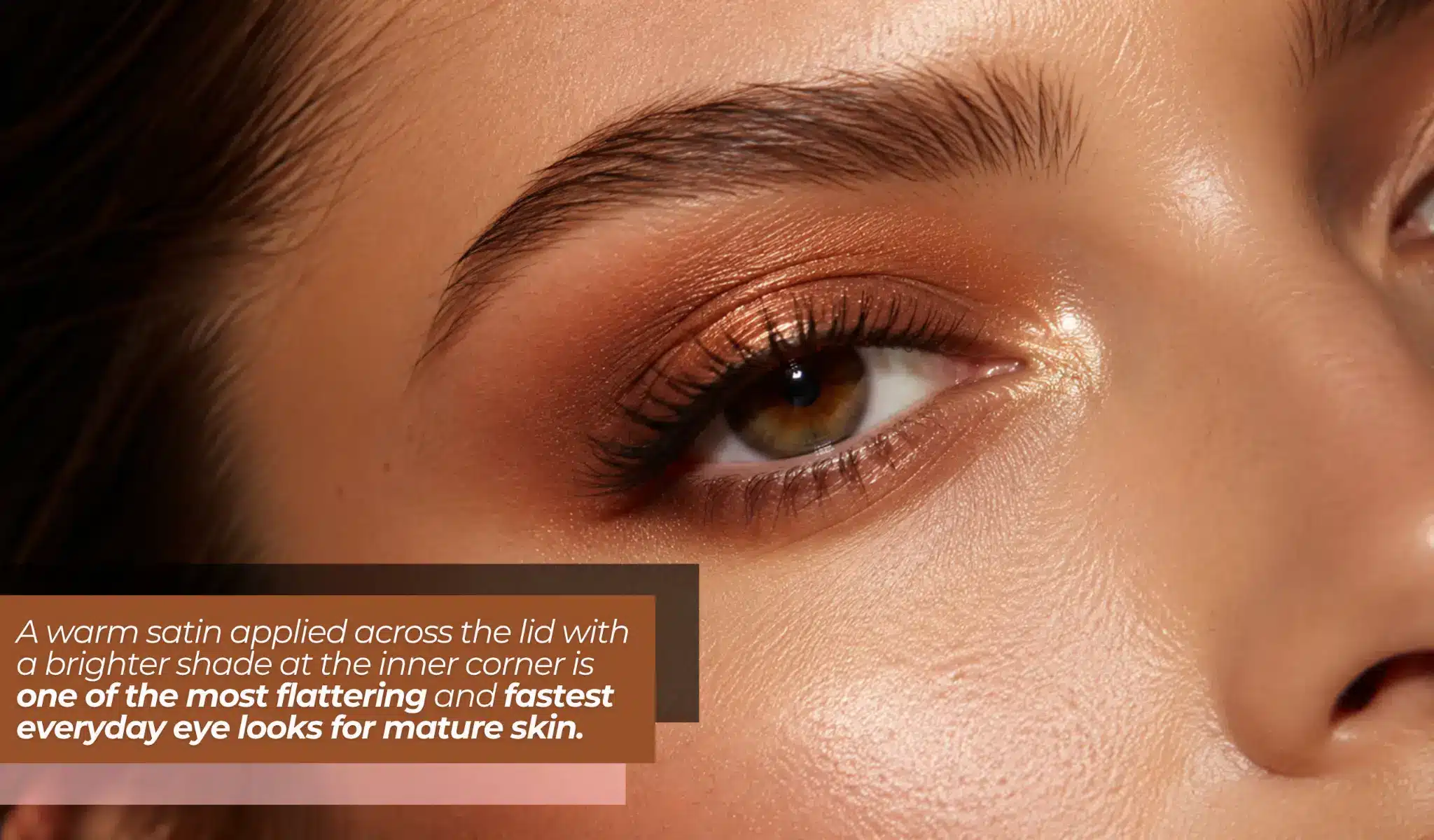
For mature skin, the shade categories that deliver this most reliably are soft satins and warm neutrals in the mid-tone range. Colours like taupe, warm sand, soft terracotta, and dusty pink sit in the range where they add visible warmth and definition without reading as a deliberate eye look under office or daylight conditions. A satin finish, rather than a flat matte or a high shimmer, is particularly suited to the eyelid skin of women over 40. It catches light in a way that reads as healthy and rested without the intensity that can come with shimmer, and it blends with fewer passes than a dry matte formula, which matters when the skin surface is drier and less forgiving of repeated strokes.
In the Delectables Baked Eyeshadow Palettes, the Earthy Essentials and Timeless Tones collections centre on exactly this range: warm taupes, soft roses, muted coppers, and sand tones that complement a wide range of skin tones and sit particularly well against silver or greying hair, where cooler neutrals can sometimes look flat.
Application for an everyday look: sweep a warm satin across the full lid, blend a slightly deeper tone along the outer corner with a fluffy brush, and apply a soft brightening shade at the inner corner to open the eye. The full process takes under two minutes when the formula works with the skin rather than against it.
Evening Shades: Depth, Definition, and the Right Kind of Shimmer
An evening eye look asks for more intensity and staying power across a longer wear window, without the application becoming complicated or the result looking overdone. The question is usually how to add drama without adding heaviness.
The answer lies in how the deeper shades in the collection are used rather than simply which shades are chosen.
The baked formulation means that the medium-to-deep tones, soft plums, warm bronzes, and rich tawny roses, can be built up for an evening look by applying a denser brush and layering with more deliberate passes. The same shade that reads as a transition colour in a daytime look becomes a defining shade in the crease for an evening one.
Shimmer placement matters considerably at this stage.
Rather than applying shimmer across the entire lid, which can emphasise texture and look heavy under indoor lighting, placing a finely milled shimmer shade on the centre of the lid and at the inner corner creates a lifted, luminous effect that photographs and reads beautifully at dinner or an event. The shimmer shades in baked formulas refract light in a way that is flattering rather than glittery, catching light without the chunky finish that can accentuate crepey texture.
“At the end of the day, confidence is the most stunning thing you can put on,” Geller has said. The best evening looks reflect that. They are not the most complicated or the most heavily pigmented. They are the ones that make the eye area look lifted, alive, and genuinely like you.
Occasion Shades: The Colour Story Approach
- Choose one color family: warm bronzes and peach tones, or cooler mauves and rose shades.
- Apply a thin layer of eye primer to improve wear and reduce creasing.
- Build deeper colour at the outer corner and use shimmer sparingly for dimension.
- Laura Geller’s Delectables palettes offer coordinated shades for creating a cohesive event-ready look with fewer products.
Working With Changing Hair Colour
One of the less-discussed aspects of eyeshadow selection for women in midlife is the effect of changing hair colour on which shades read most flatteringly.
As hair turns silver, white, or grey, familiar eyeshadow shades may become less flattering because the contrast around the face changes. Warm tones such as terracotta, warm taupe, dusty rose, and soft copper often add more radiance than cool greys or blue-based taupes.
This makes warm-neutral palettes, including much of the Delectables range, a reliable choice during hair-colour transitions. As with the adjustment period discussed in our skin purging vs breakout guide, the solution is often to update the products rather than change the technique.
Formula and Prep: What Makes the Shade Choice Land
Choosing the right shades is only one part of the equation. For the shades to deliver what they promise, the preparation and application have to support the formula.
A hydrating eye primer or a light application of your regular moisturiser patted onto the lid and allowed to settle for thirty seconds creates the kind of soft, slightly tacky surface that baked formulas adhere to most effectively. This step alone makes a significant difference to how long eyeshadow holds and how much creasing occurs, particularly on drier or more textured lids.
Application tools matter too. A fluffy brush for blending transition shades and a firmer, flat brush for depositing colour on the lid give more control over intensity and edge definition than using a single brush for both. Pressing rather than sweeping on the lid surface reduces drag on the delicate skin and keeps the pigment where it is placed rather than spreading it across a wider area.
This connects to the wider principle that governs good skincare and makeup prep: the surface you are working with shapes every product that goes on top of it.
The oil cleansing method covered elsewhere on this site is one example of how the right prep approach changes what is possible with the products that follow, and the same logic applies to eye primer and eyeshadow. And for those exploring how eye area skincare can change how makeup performs, the bakuchiol eye cream analysis is worth reading alongside thinking about which makeup formulas to pair with improved skin condition.
The Broader Context
Laura Geller has spent decades building a brand around a conviction that has only recently started to be taken seriously by the wider beauty industry: that women over 40 deserve makeup designed for the skin they actually have.
In a 2026 BeautyMatter Q&A, “Insights: Laura Geller, Founder,” Geller said: “We’re in a cultural moment where aging is being rewritten, not as something to ‘fight,’ but something to own.”
The result is a palette designed not for a single occasion or a single skin type, but for the full range of what a woman’s life asks her to look like, at any moment.