
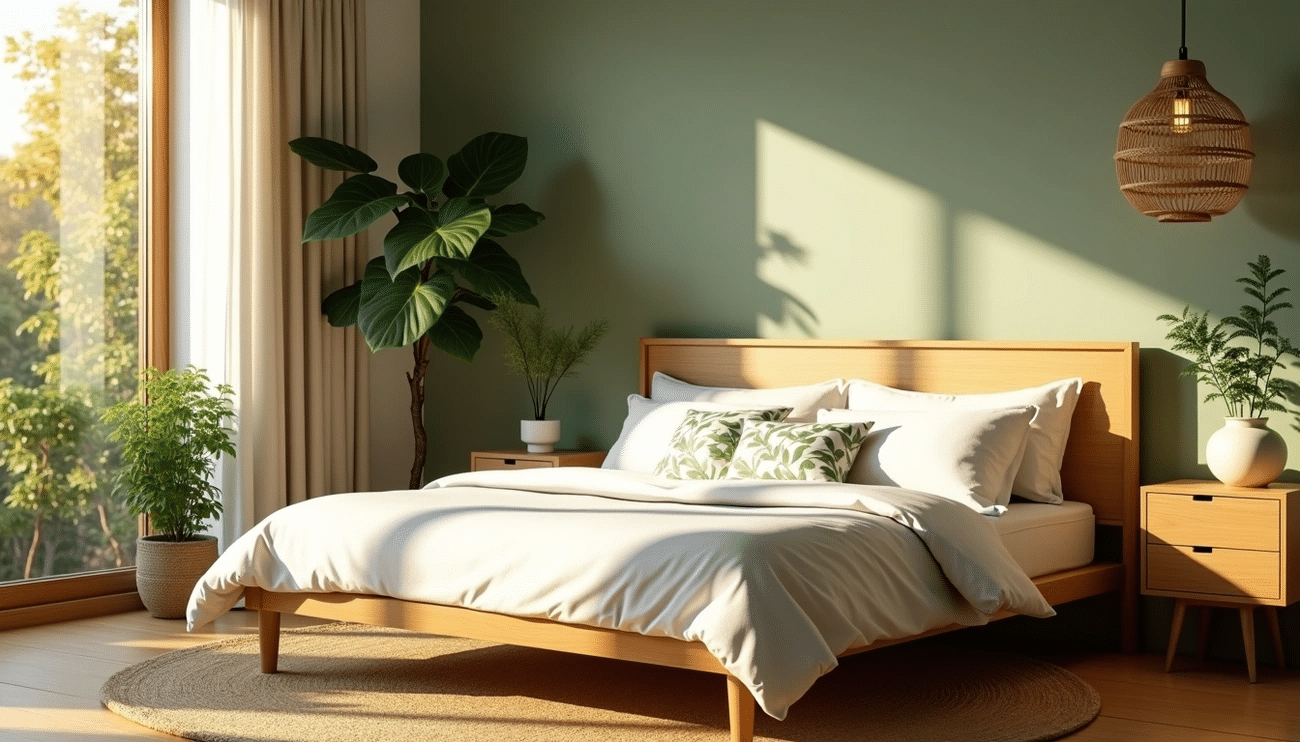
Your bedroom should be your personal sanctuary—a space where you can escape from the outside world. Yet with 84.64% of the UK population now living in urban areas, many bedrooms feel clinical and disconnected from nature.
Nature decor for bedroom design offers an exciting solution to this modern challenge. You can create a calming retreat that actively supports your wellbeing, and it all starts with understanding biophilic principles and anchoring the room with natural elements, from your lighting right down to your bed frame.
The numbers speak for themselves. Between 2019 and 2021, searches for biophilic bedroom design surged by 100%. This growing interest reflects what research has been telling us for years: natural elements help regulate sleep patterns, reduce stress, and support mental clarity.
The best part? You don’t need major renovations to bring these benefits into your bedroom. This guide explores practical ways to embrace biophilic design, whether you’re working with a small budget or a spacious master suite.
Understanding Biophilic Design for Better Wellbeing
What exactly is biophilic design?
Biophilic design integrates nature and natural patterns into buildings and spaces to improve human health, wellbeing, and creativity. The term stems from “biophilia” (translating to “love of life”), popularised in the 1960s to describe humanity’s innate affinity for all living beings. Because humans have an evolutionary dependence on nature, we possess a built-in need to connect with it.
This design philosophy works through three distinct categories:
- Nature in the Space: The direct presence of nature through plant life, water, natural light, breezes, sounds, and scents. Think of it as bringing the outdoors directly inside.
- Natural Analogues: Organic, non-living evocations of nature. This includes materials, colours, shapes, and patterns found in the natural world manifested through artwork, furniture, and textiles.
- Nature of the Space: Spatial configurations that mirror natural environments, such as expansive views and sheltered settings that provide a feeling of both prospect and refuge.
Biophilic design extends far beyond simply adding a few plants to a room. It requires a sensory approach that considers what a space looks, smells, and feels like over time.
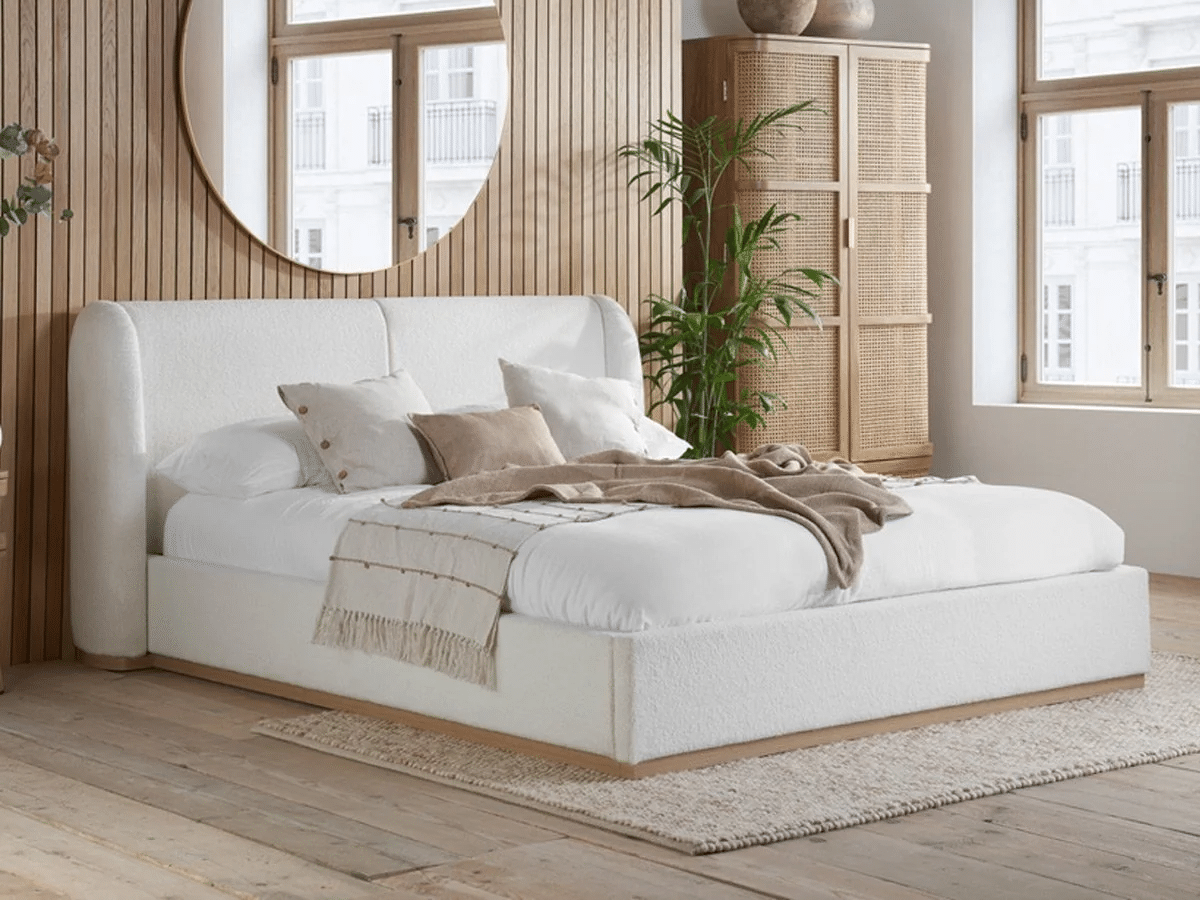
Pictured: Birlea Eden Boucle 4FT 6 Double Bed Frame. Priced £489 (Available from Bedstar)
How nature affects your health and wellbeing
The science behind nature’s impact on human health is compelling. Research demonstrates that exposure to nature improves attention, memory, and mood whilst reducing stress and fatigue.
Two major theories explain why:
- Attention Restoration Theory: Mental fatigue from modern life stems from a depleted capacity to direct attention. Spending time in natural environments restores this capacity.
- Stress Reduction Theory: Nature activates the parasympathetic nervous system, naturally reducing stress and physical arousal.
The physical impacts are measurable. Hospital patients with window views of nature recover faster. Studies consistently find that exposure to nature lowers blood pressure, reduces pain, and accelerates healing.
Even indirect exposure—like looking at pictures of outdoor scenes—can trigger similar mental responses to actually being outdoors.
Why start with your bedroom?
You begin and end each day in your bedroom, making it the ideal space for biophilic intervention. Because of this repeated daily exposure, even small natural touches accumulate significant restorative effects.
Sleep quality directly affects your mental, heart, brain, and immune health. Natural light exposure is key for regulating circadian rhythms—the internal 24-hour clocks that respond to light and darkness.
Nature decor allows you to harness these benefits within your most intimate environment. Furthermore, the bedroom’s private nature means you can experiment entirely for your own sensory comfort.
What You’ll Need to Create Your Nature Sanctuary
Four essential elements form the foundation of effective nature decor for bedroom design. Master these basics, and you’ll create a space that genuinely supports your wellbeing.
1. Maximise the natural light you already have
Your bedroom’s orientation determines your natural light. South-facing windows receive the most consistent light, whilst east-facing windows capture morning sun and west-facing ones invite an afternoon glow.
- Window Treatments: Solar shades filter natural light whilst providing UV protection. Sheer fabrics permit soft, diffused illumination whilst maintaining privacy. Choose light-coloured blinds in white, cream, or light wood to reflect and amplify available daylight.
- Paint Choices: Look for colours with a Light Reflectance Value (LRV) of 70 or higher. Soft neutrals and pastels in matte finishes work beautifully. Keep ceilings white with a flat finish to avoid glare.
Takeaway Tip: Position mirrors opposite or adjacent to windows to bounce sunlight deeper into your space. Light-coloured flooring also enhances reflection.
2. Choose the right plants for your bedroom
Not all plants suit bedroom environments. You want varieties that follow Crassulacean Acid Metabolism (CAM) photosynthesis. These plants open their stomata at night, producing oxygen while you sleep.
- Snake Plants: Rank among NASA’s top air-purifying options and release oxygen at night.
- Aloe Vera: Provides nighttime oxygen, plus its gel treats skin conditions.
- Orchids (Moth Orchids): Release oxygen throughout the night with minimal care requirements.
- ZZ Plants & Jade Plants: Highly forgiving plants that thrive on neglect while still producing nighttime oxygen.
- Spider Plants: Flourish in well-lit spaces and actively remove carbon monoxide and formaldehyde from indoor air.
3. Embrace natural materials that feel good
Wood introduces warmth whilst stone provides solidity, creating visual and emotional harmony. The silky touch of natural oak conveys immediate comfort, whereas cool marble adds serenity.
Exposure to natural materials reduces stress and improves mood. Wood acquires a unique patina over time, becoming richer, whilst stones reveal subtle veins that add character.
4. Keep water elements in their place
Water symbolises flow and abundance, yet actual water features belong outside the bedroom. Real fountains or aquariums introduce excessive kinetic energy that can disrupt the restful atmosphere needed for sleep.
Instead, bring water into the bedroom through colour. Soft blues and aquas reflect tranquillity, whilst deeper navy tones create sophisticated backdrops.
Create Your Perfect Natural Sanctuary with the Right Materials
The materials you choose will make or break your biophilic bedroom design. Whether you’re selecting a bed frame, fabrics, or colours, each decision either strengthens or weakens your connection to the natural world.
Which sustainable bed frame and furniture should you choose?
Your bed frame is the visual anchor of the room. When shopping for a new bed frame or bedside tables, look for FSC-certified wood, which ensures forests are managed ethically.
- Solid Hardwood Bed Frames: Avoid the harmful chemicals and glues often found in engineered woods. Oak offers immense strength with beautiful grain patterns, whilst teak provides exceptional durability. Mango wood offers dense grain and unique water resistance.
- Reclaimed Wood: Gives new life to older timber whilst reducing demand for fresh harvests, adding rustic, natural character to your sleeping space.
- Bamboo and Rattan: Both grow rapidly and require minimal pesticides. A rattan headboard or accent chair brings immediate warmth and authenticity to a nature-inspired scheme.
Why organic bedding makes a difference
Your skin spends eight hours every night in contact with your bedding. Natural fibres interact differently with heat and moisture compared to synthetic materials.
- Wool: Absorbs up to 30% of its weight in moisture without feeling damp, excelling at temperature regulation.
- Linen: Provides superior breathability and airflow.
- Organic Cotton: Offers familiar softness grown without harsh chemicals or toxic dyes.
- Hemp: Uses minimal water, requires no pesticides, and delivers natural antibacterial properties.
Always look for GOTS-certified organic bedding to guarantee at least 70% organic fibres and safe manufacturing conditions.
Embrace curves over corners
Sharp edges don’t exist in nature. Biomorphism mimics the rounded, organic shapes found in the natural world. Look for a bed frame with softened edges, curved headboards, or cocooning seating silhouettes to create visual softness. Your eyes absorb organic curves more easily than angular shapes, reducing visual tension and fostering calmness.
Ground your space with earth tones
Earth tones ground your space with visual calm.
- Natural browns evoke woodland floors and tree bark.
- Muted clay terracotta channels sunbaked soil.
- Forest green creates immediate balance.
- Slate grey mirrors mountains and riverbanks.
- Ochre yellow brings autumnal richness.
Takeaway Tip: Pair these earth tones with natural textures like a rattan bed frame, oak side tables, and wicker baskets to maintain an outdoorsy atmosphere.
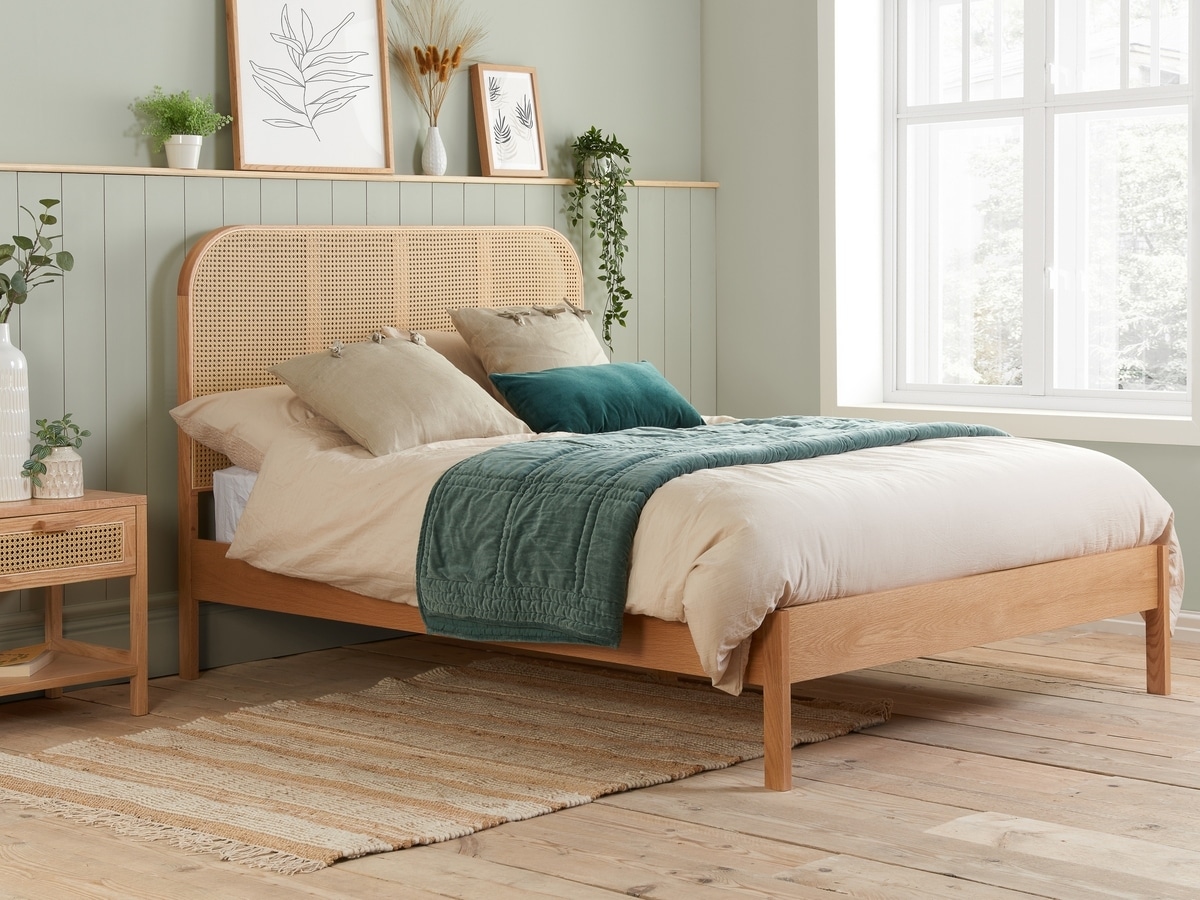
Pictured: Birlea Margot 4FT 6 Double Wooden Bed – Oak. Priced £504 (Bedstar online)
Ready to Start Your Nature Bedroom Makeover?
You don’t need to break the bank or tear down walls to create a nature-inspired bedroom. Small, strategic changes deliver impressive results.
- Start with affordable greenery: Houseplants under £20 bring instant life to your space. Stick to forgiving varieties like pothos, ZZ plants, and snake plants. (Group plants in odd numbers for a natural, less formal look).
- Double your natural light with mirrors: Position a mirror directly opposite your window to double your perceived brightness.
- Bring the outdoors inside with artwork: Choose non-reflective fine art prints featuring flowing water or peaceful landscapes to slow the room’s energy.
- Appeal to your senses: Use essential oils like lavender, chamomile, or eucalyptus to promote relaxation, paired with gentle nature soundscapes.
- Clear the clutter: Fewer items mean better light circulation and fewer distracting shadows.
Nature decor bridges the gap between urban living and your innate need for natural connection. By aligning your space with biophilic principles—from the plants in the corner to the wood of your bed frame—you’re creating more than just a place to sleep. You are building a personal sanctuary that nurtures your health every single day.
Ready to start your weekend project? Begin with one small change and watch how nature works its magic on your wellbeing.