
Thin hair is not a flaw. It is just hair that needs the right cut.
Most people with thin hair spend a lot on products, hoping for volume. But no serum or spray can do what a good haircut does.
The right haircuts for thin hair work with your strands, not against them. It removes weight from the right spots, adds shape, and creates fullness that actually lasts.
Studies show that nearly 50% of women experience visible hair thinning at some point in their lives.
This is exactly why hairstylists recommend focusing on the cut first before anything else.
What Your Stylist Needs to Know Before the Cut
Before you pick a cut, two things will determine which style actually suits you best.
| Fine Hair | Thin Hair | |
|---|---|---|
| What it means | Each strand is thin | Fewer strands overall |
| Best cut approach | Blunt cuts | Strategic layering |
| Avoid | Heavy layers | No layering at all |
| If you have both | Short to medium blunt cuts are your safest bet |
Volumizing Haircuts for Thin Hair
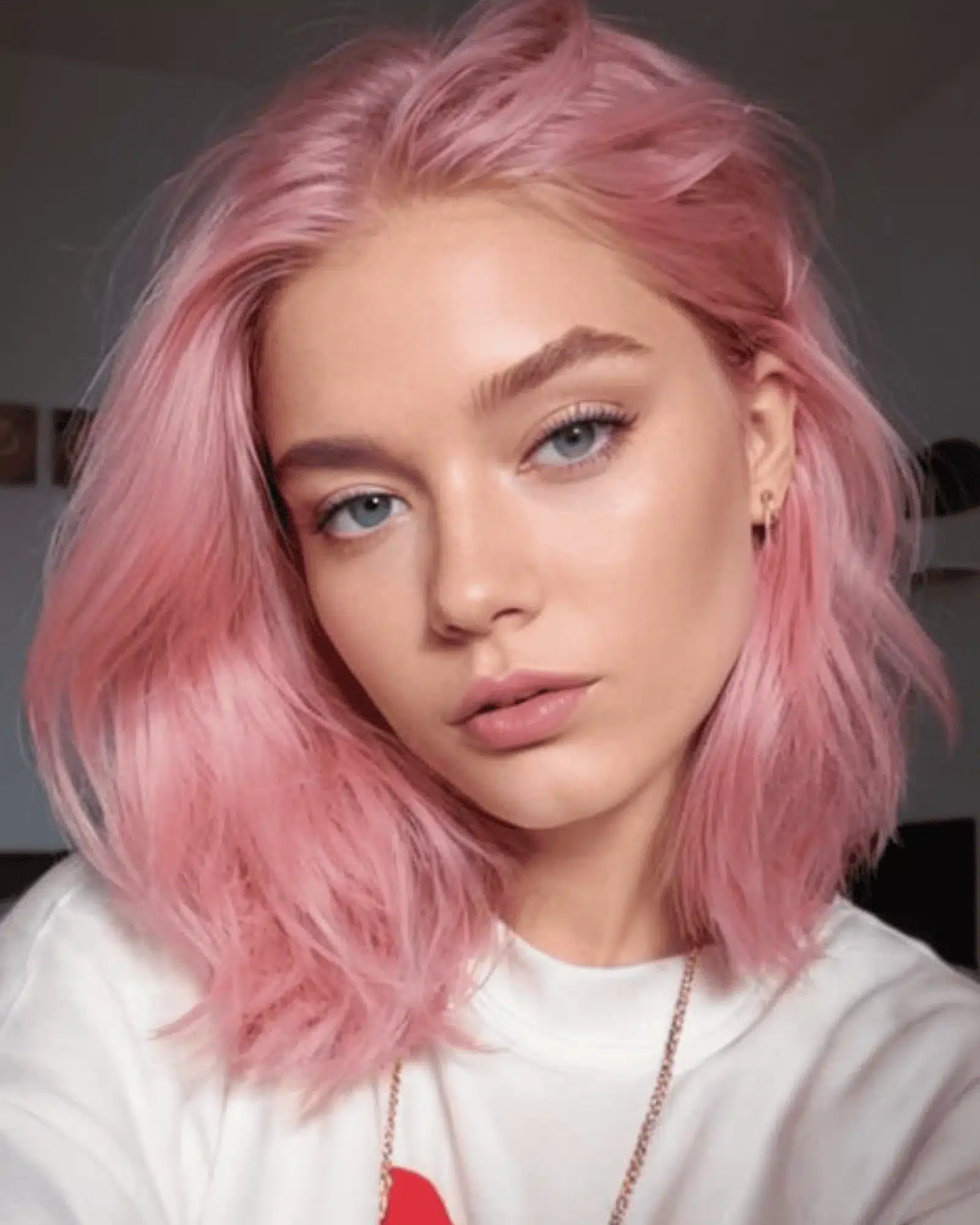
1. Blunt Bob
Credits: Weenon
A blunt bob sits between the chin and jaw. All strands are cut to one length with no layers. This single-length baseline creates a dense, thick-looking perimeter.
The uniform edge tricks the eye into seeing more hair than is actually there.
- Best for: Fine and thin hair combined, thinning throughout, and all face shapes.
- Avoid if: Your strands are thick and coarse. A blunt cut can look too heavy.
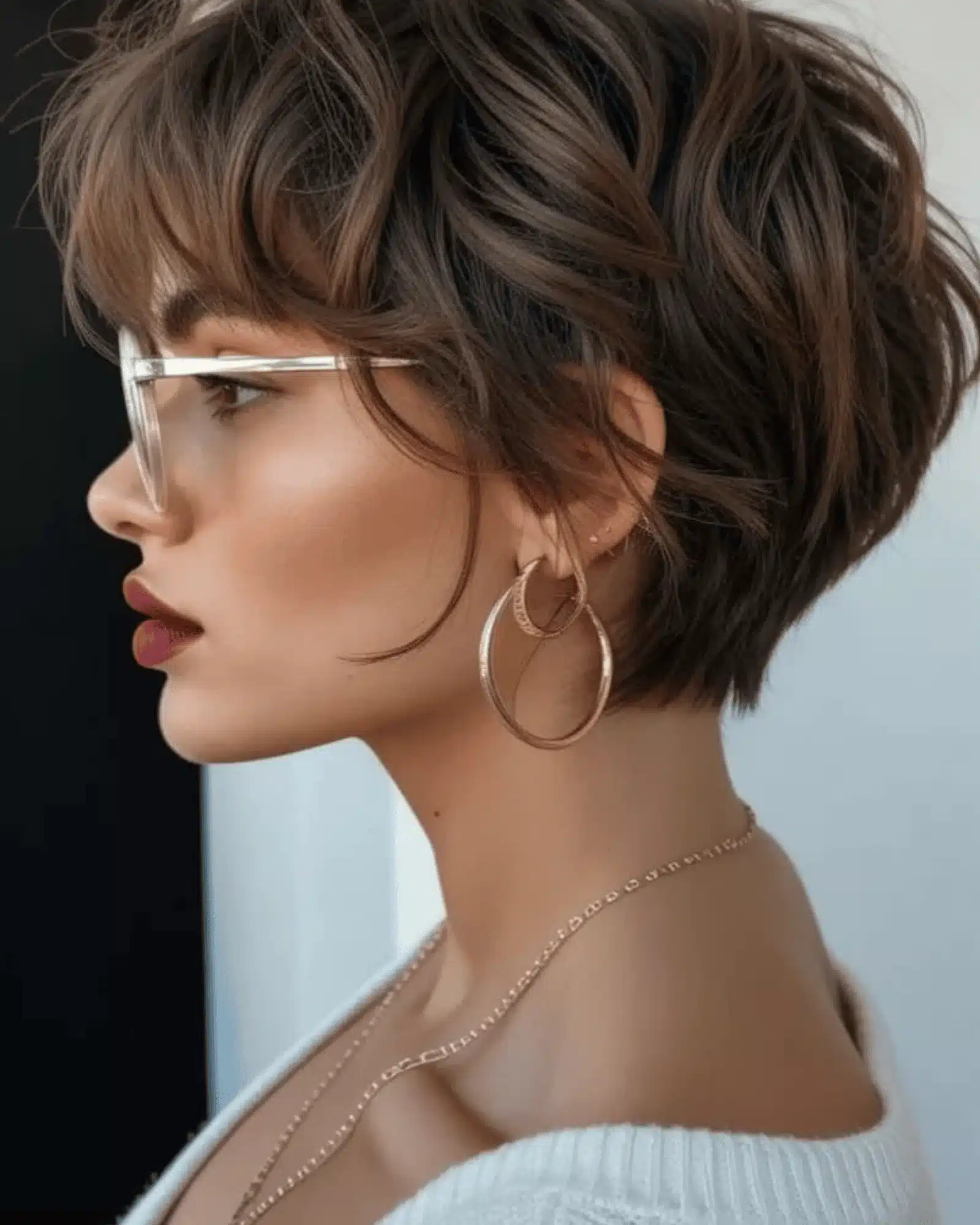
2. Textured Pixie
Credits: Fashion & Style Inspiration by Kateryna
Short length removes weight entirely.
Slightly longer pieces on top create natural lift at the roots. The shorter the cut, the more volume each strand delivers because gravity has very little to pull against.
- Best for: Severe thinning, thinning at the crown, those who love a bold look.
- Avoid if: You are not ready for a trim every 5 to 6 weeks. This cut loses its shape fast.
- Stylist tip: Ask for internal texture at the top layers rather than standard layering. This adds movement without taking away density.
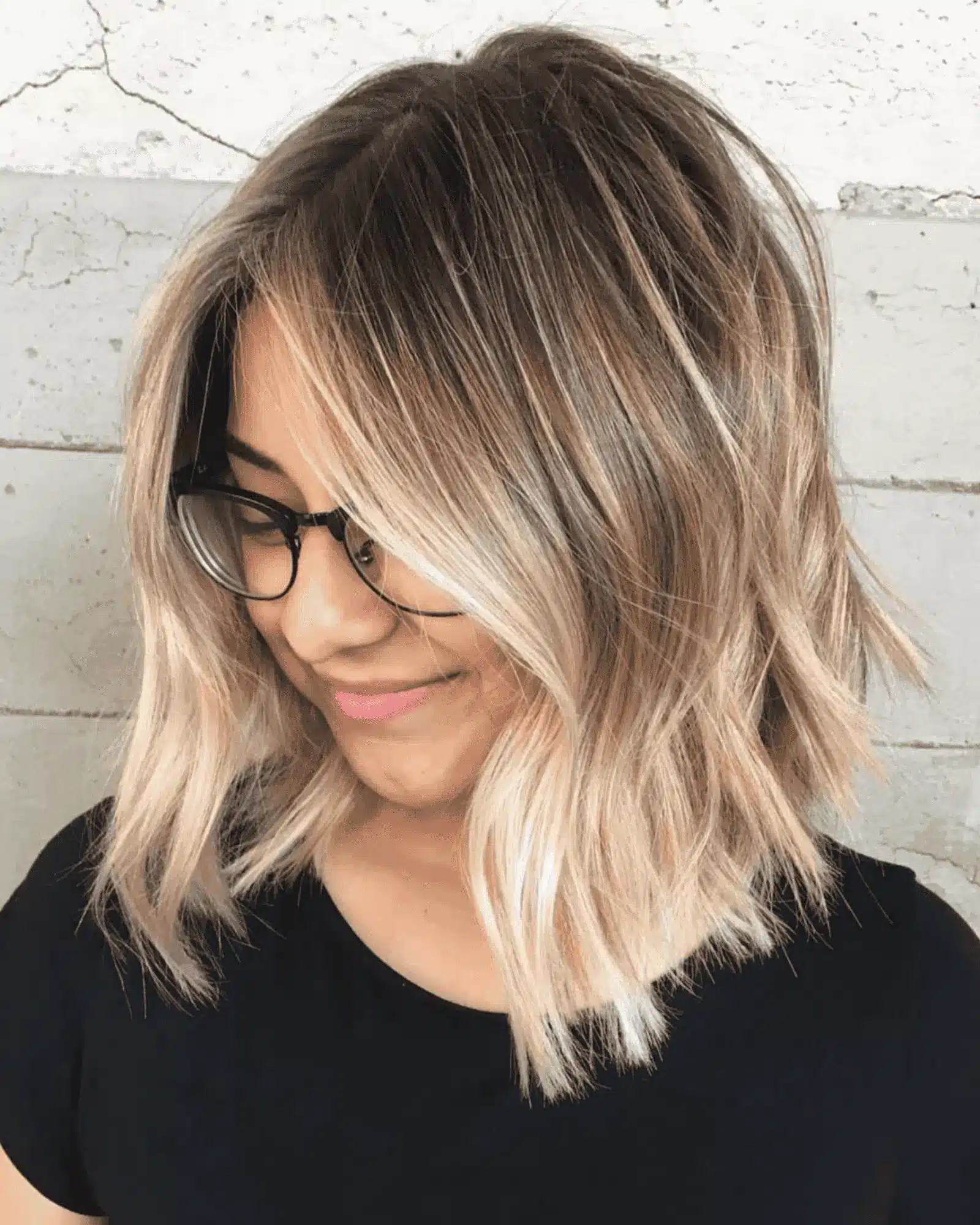
3. Asymmetrical Bob
Credits: Angela Moser
One side is longer than the other.
This creates visual movement that draws the eye across the hair rather than straight down. The shape reads as bold and intentional, which takes attention away from thinness.
- Best for: Thinning on one side, oval, heart, or square face shapes.
- Avoid if: You have a round face shape. Asymmetry can draw attention to roundness.
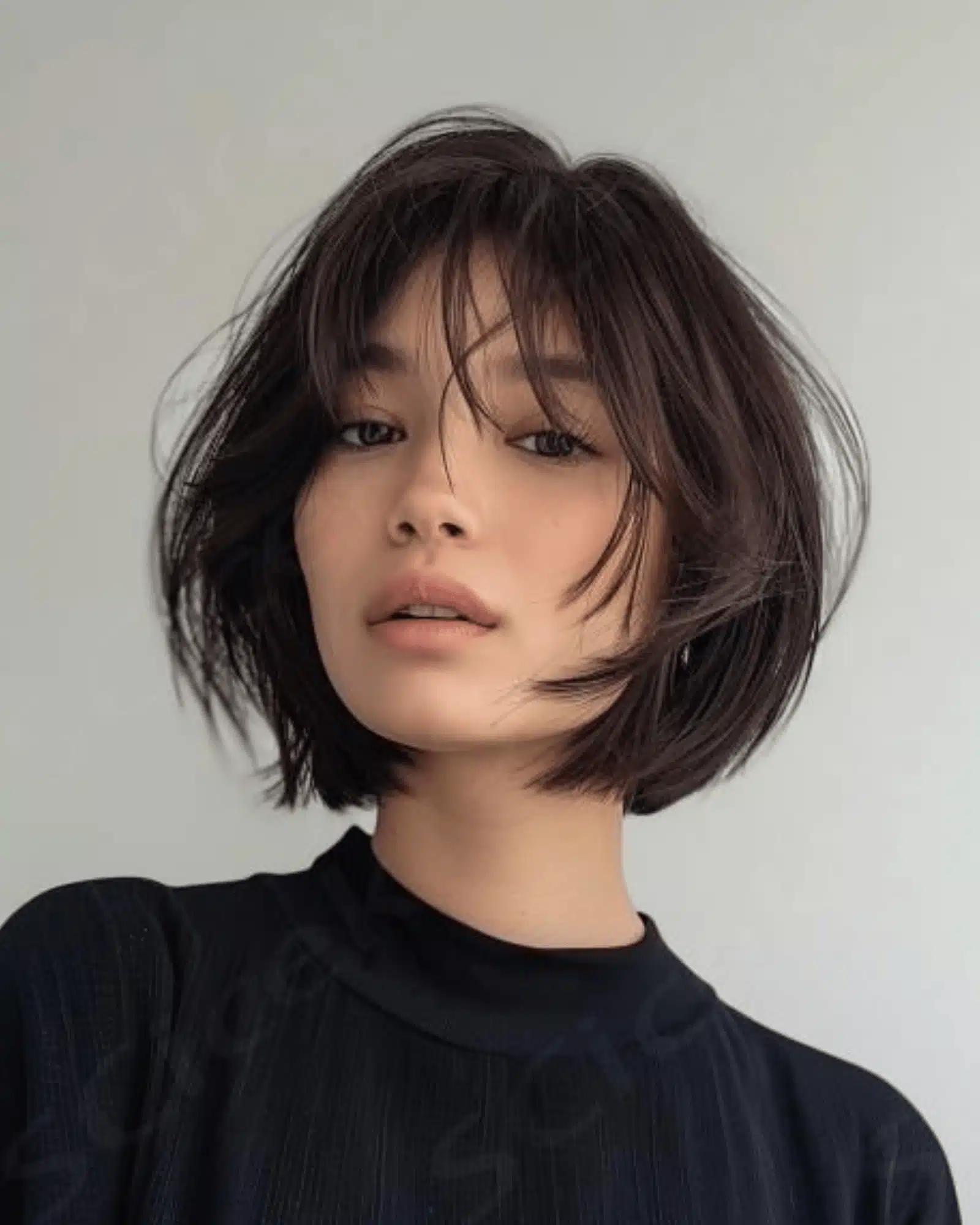
4. French Bob
Credits: Katherine Holt
The French bob sits between the earlobe and chin. The rounded shape at the ends builds fullness at the perimeter.
Often paired with blunt bangs, which add instant visible density at the front of the hair.
Best for: Thinning at the crown and temples; those who want a low-maintenance look.
Face Framing Layers for Thin Hair
Ever wonder why some haircuts seem to make the face look brighter and the hair look fuller at the same time?
That is what face-framing layers do.
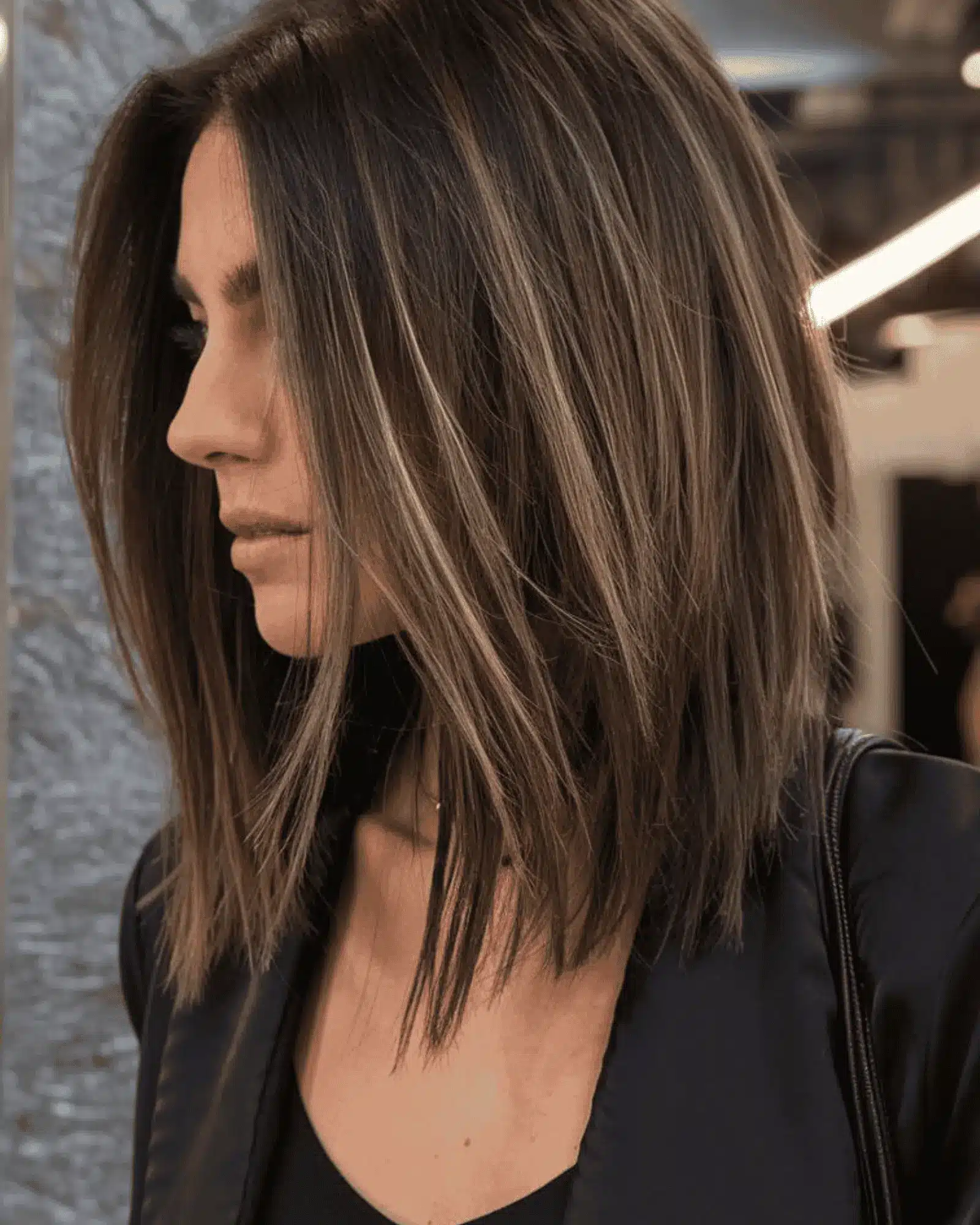
5. Angled Lob
Credits: ZNT – Women’s Fashion
The angled lob sits at collarbone length.
It is shorter at the back and longer at the front. This forward-length shape builds a visual triangle of fullness. The longer front pieces frame the face and create the appearance of more hair.
The shorter back lifts the nape and keeps the style from falling flat.
6. Shag Haircut

Credits: H
The shag sits at shoulder length. Its choppy, textured layers create visual fullness throughout the hair.
The curtain bangs that typically come with it add density right at the front, where people look first.
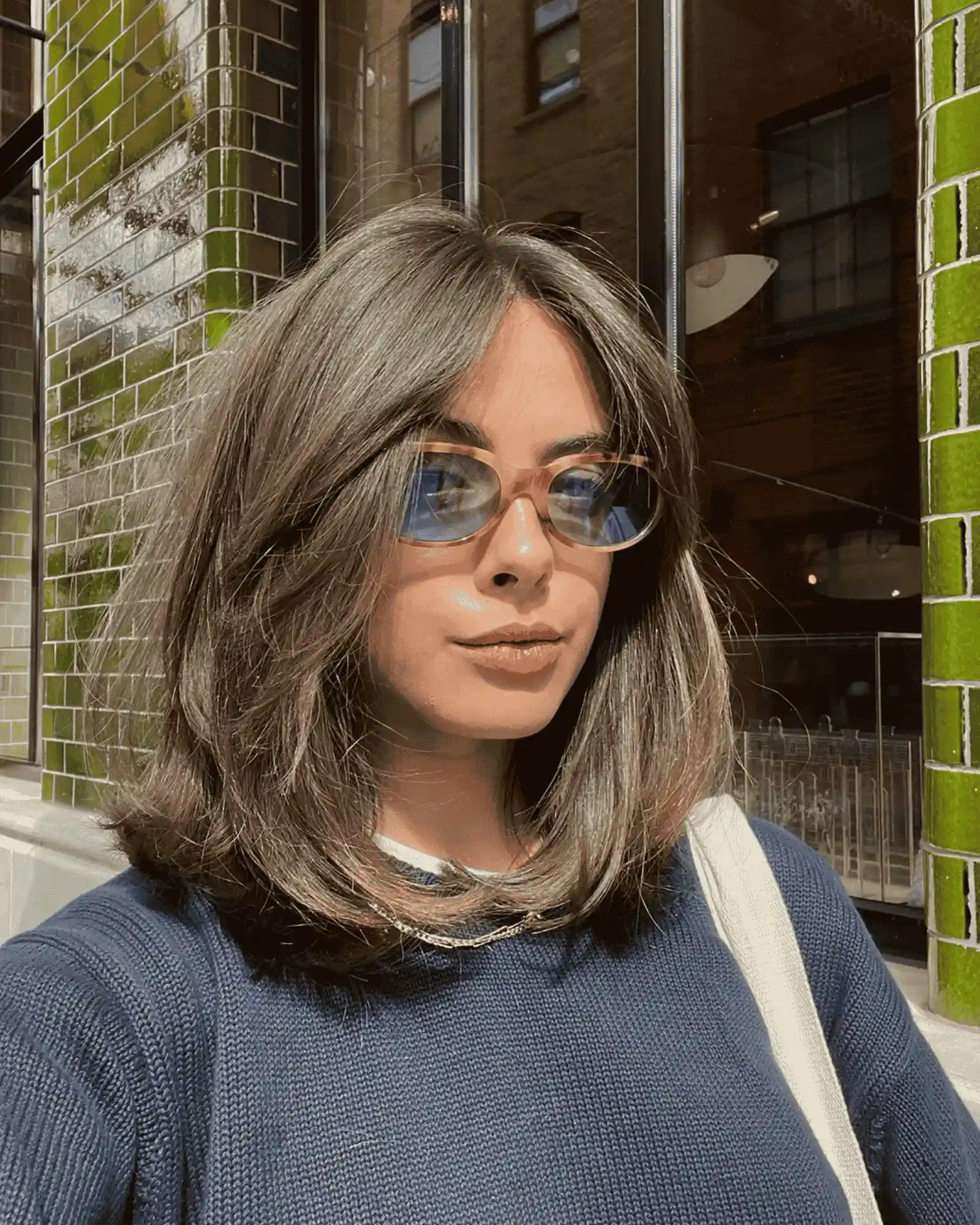
7. Layered Lob with Curtain Bangs
Credits: Tia Dewitt
Long layers starting below the chin add movement without taking away density at the ends.
Curtain bangs are the fastest way to add visible volume at the front of your hair without committing to a full fringe.
Volumizing Haircuts for Thin Medium Hair
Medium-length hair sits in a tricky spot for thin hair.
It is long enough for gravity to pull it flat but short enough that heavy layers can strip away what little density you have.
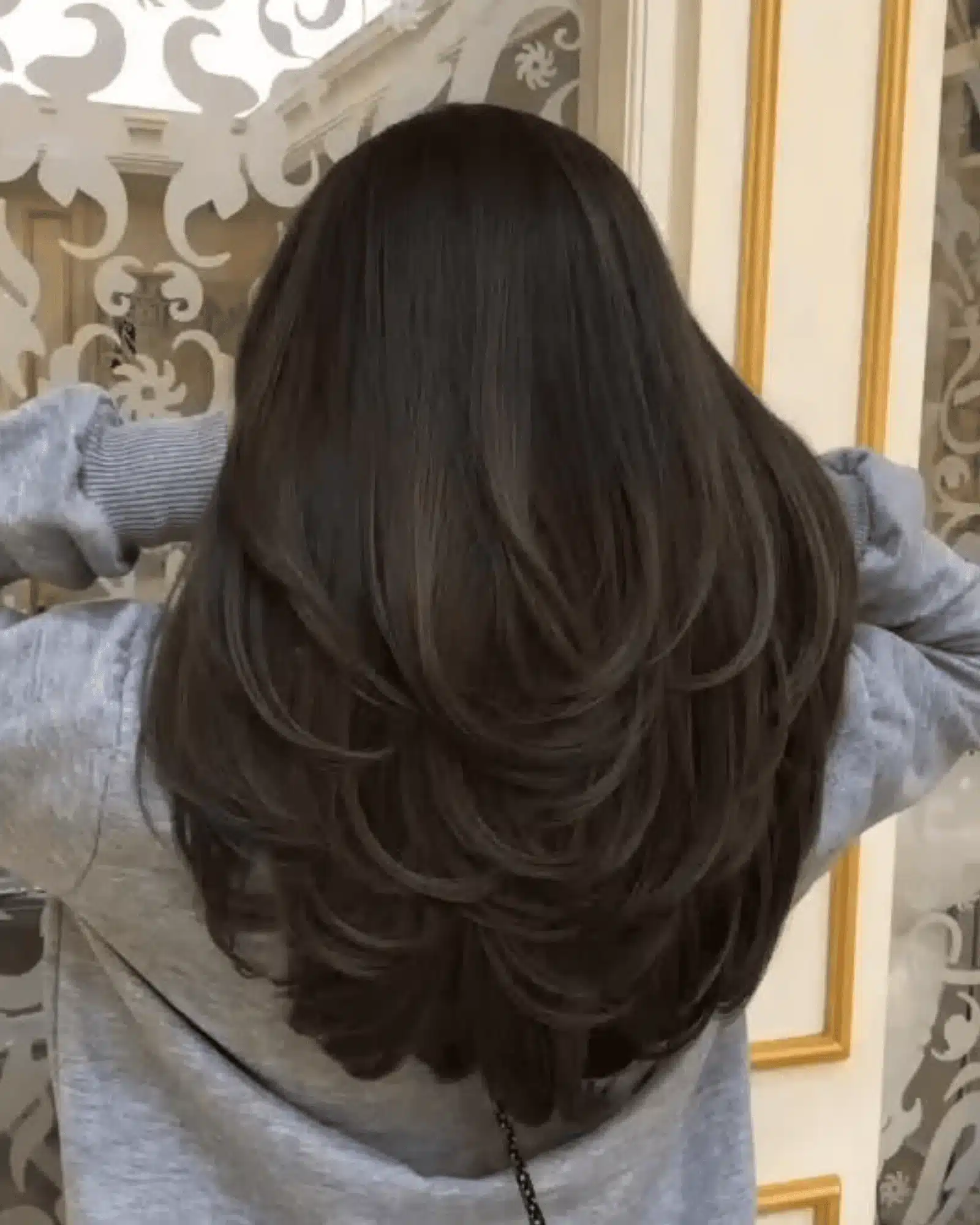
8. Long Layers with U Shape or V Shape Cut
Credits: Dian
A U or V shape removes weight from the bottom while keeping the overall length intact.
Without this shaping, long thin hair falls flat and looks stringy at the ends. The shape creates movement and stops the hair from hanging straight down with no volume.
Styling tip: Blow dry with a round brush starting at the roots. Flip sections outward as you dry to build movement at the ends.
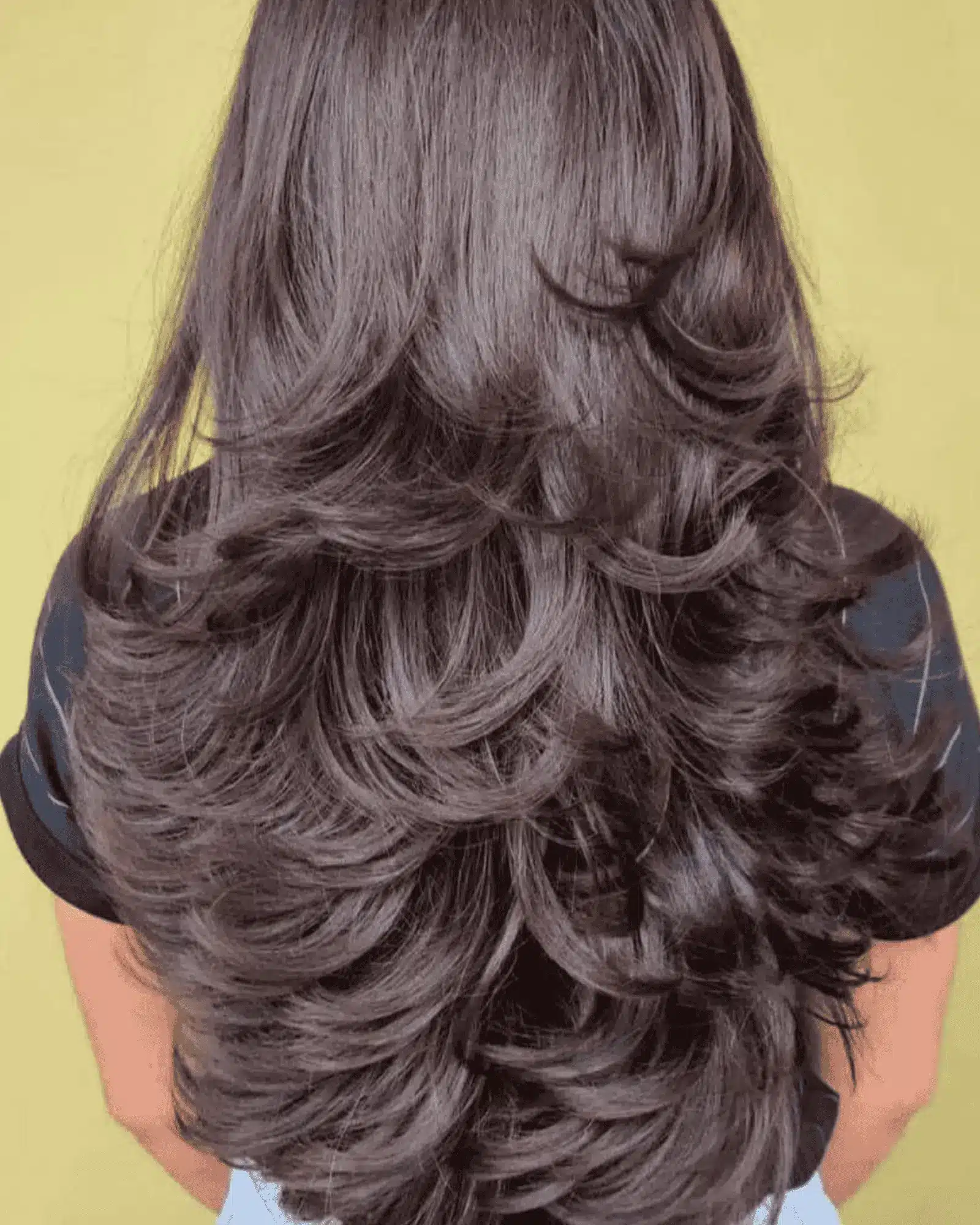
9. Long Feathered Layers
Credits: Ana
Feathered layers are cut to blend into the hair, creating a light, airy texture without removing visible density.
Unlike heavy layering, feathering keeps bulk at the ends while adding movement throughout the hair.
10. Half Up Volume with Crown Layers

Credits: Plurzo Hairstyles
Shorter, invisible layers placed only at the crown give the roots lift without affecting the length below. Crown layers are one of the most underused techniques for thin-to-medium hair.
They add volume exactly where it is needed most.
Styling tip: Place two or three velcro rollers at the crown right after blow-drying. Leave them for 10 minutes. The lift they create lasts all day.
11. Butterfly Cut
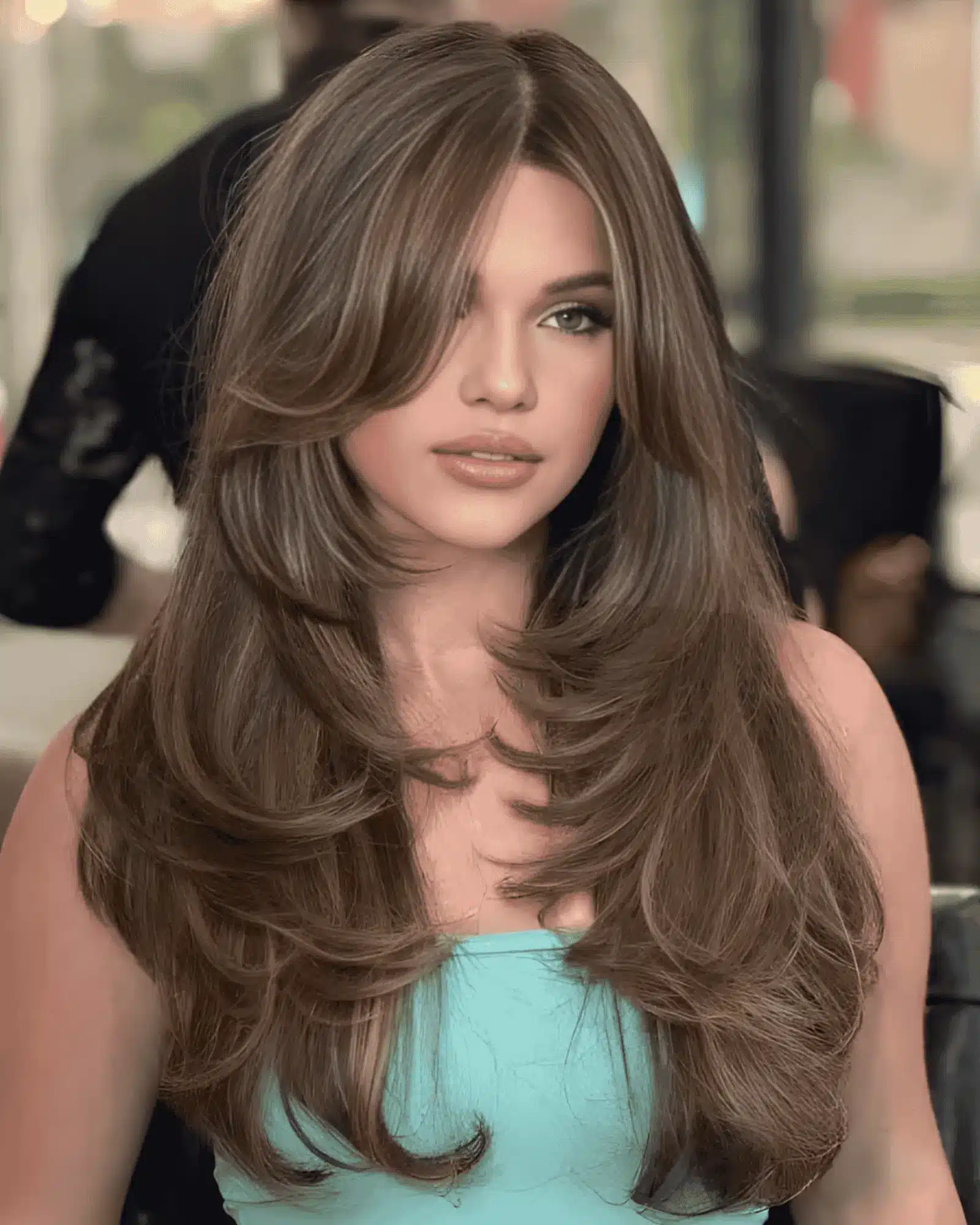
Credits: Renee George
Long layers placed around the face and crown create natural lift and movement. This is perfect if you have long hair.
When the hair falls, the layers fan out and add visible volume without removing density from the ends.
It builds shape right where thin medium hair needs it most.
Styling tip: Scrunch a small amount of texturizing spray into the mid-lengths after blow-drying.
Haircuts to Avoid With Thin Hair
Knowing what to avoid is just as important. Many people with thin hair have sat in a salon chair and walked out with a cut that made things look worse.
Have a look at what to stay away from:
Very Long One Length Hair
The weight of long, unlayered hair pulls everything flat. No product can fully fight gravity on long, thin hair with no shape built into it.
Heavy Blunt Layers Cut Too Aggressively
Too much layering removes so much density that the hair looks sparse rather than full. Layers need to be strategic and placed correctly, not cut in bulk.
Razor Cut Ends
Razoring thins the tip of each strand. On already thin hair, this creates wispy, see through ends that look sparse and flat.
Heavily Thinned Out Layers with Thinning Shears
Stylists sometimes reach for thinning shears to remove bulk. But thin hair has no bulk to remove. Overuse of thinning shears destroys the little density you have left.
Is Long Hair Length Right for Thin Hair?
Not ready to give up your length? That is completely fine.
Volumizing haircuts for thin long hair do work, but only if your hair is moderately thin or thinning at specific spots like the crown or temples.
If your hair is severely thin throughout, long hair will always pull flat regardless of the cut.
The right long cut removes weight from the bottom, builds shape through the length, and keeps density at the top.
If that sounds like a lot of effort, a shorter cut will always give you more volume with less work.
Conclusion
The best investment you can make for thin hair is not a new shampoo.
It is the right cut. Volumizing haircuts for thin hair work by removing weight from the right places and building shape into the hair itself.
That is something no bottle on a shelf can do.
Find your match from this list, use the stylist phrases, and go get the cut you actually deserve.
Frequently Asked Questions
1. What is the Best Haircut for Very Thin Hair?
A blunt bob at chin or jaw length. It creates the illusion of density without removing weight through layers.
2. Do Layers Help Thin Hair?
Yes, but only if placed correctly. Layers starting below the cheekbone add movement without sacrificing density.
3. Should Thin Hair be Cut Short or Long?
Short to medium lengths work best. Long hair pulls flat, but the right cut can still add volume.
4. What Should I Tell My Stylist if I Have Thin Hair?
Avoid thinning shears and razor cuts. Ask for layers below the cheekbone and a blunt baseline.
5. Does a Blunt Cut Make Thin Hair Look Thicker?
Yes. A blunt cut keeps all strands at one length, making the perimeter look denser and fuller.