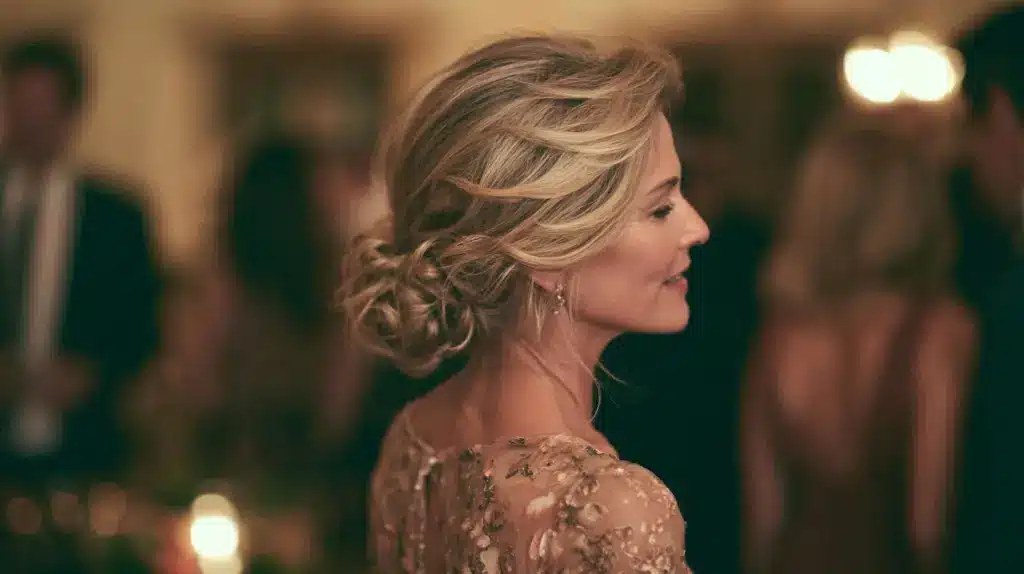

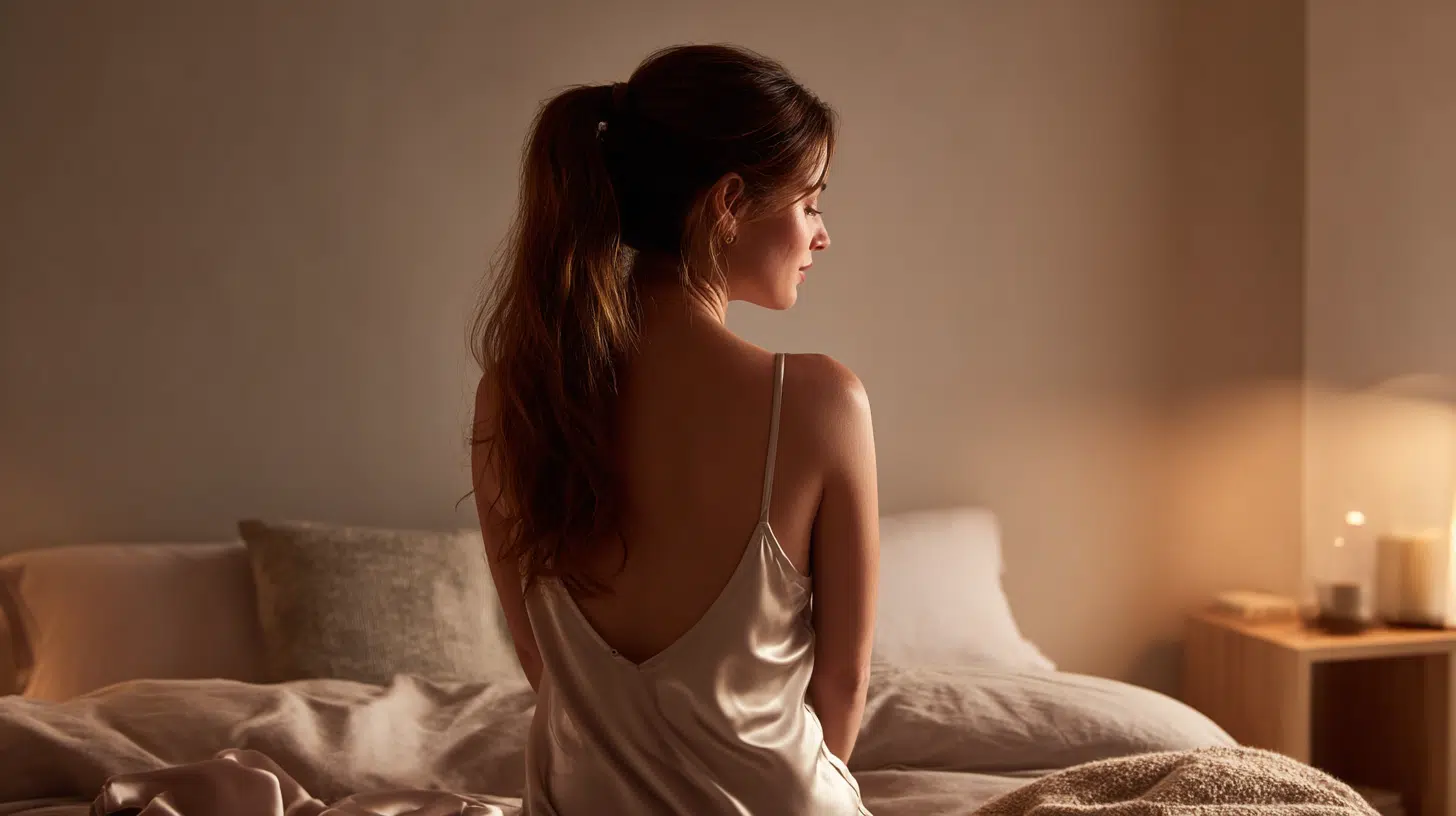
You’ve probably woken up with tangled, frizzy hair and thought, “Not again.”
It’s frustrating. All that effort you put into your hair is gone overnight.
But the right protective hairstyles for sleeping can completely change your mornings. No more fighting knots or frizz from dryness.
These styles actually keep your hair safe while you sleep, reducing breakage and frizz.
Protective Hairstyles: What are They?
Think about how much time you spend on your hair each day.
Now imagine losing all that progress while you sleep.
That’s exactly what happens when your hair rubs against a rough pillowcase all night. It causes breakage, split ends, and frizz, and over time, that adds up.
A good protective hairstyle for sleeping keeps your hair tucked away and safe. It reduces friction, retains moisture, and helps your hair stay healthier longer.
I know it sounds simple, but this one small habit can make a real difference.
Your hair deserves that extra bit of care, even while you rest.
Prepping Your Hair For a Protective Hairstyle Before Sleeping
- Gently detangle your hair with a wide-tooth comb before styling it for bed.
- Apply a light leave-in conditioner to keep your strands moisturised through the night.
- Make sure your hair is fully dry before putting it into any protective hairstyle.
- Use a soft hair tie without metal clasps to avoid unnecessary breakage at the roots.
- Smooth down any flyaways with a little hair oil before securing your chosen style.
- Switch to a satin or silk pillowcase to support your protective hairstyle while you sleep.
- Keep your style loose enough to avoid tension on your scalp and hairline overnight.
Hair is most vulnerable when it’s even slightly damp.
Wet hair swells the shaft and weakens the hydrogen bonds that give it structure, making it significantly more prone to snapping under any tension overnight.
Best Protective Hairstyles for Sleeping
Not all hairstyles protect your hair equally. These seven hairstyles are easy to do and genuinely work.
| Hairstyle | Best For | Key Benefit | Difficulty Level |
|---|---|---|---|
| Classic Plait (Single Braid) | All hair types | Reduces breakage and keeps hair together overnight | Easy |
| Low Ponytail | Most hair types | Prevents knotting and keeps hair smooth | Very Easy |
| Pineapple Updo | Curly and coily hair | Protects curl shape and reduces frizz overnight | Easy |
| Loose Bun | Dry and fine hair | Retains moisture and protects ends from damage | Very Easy |
| French Braids | Thick and long hair | Reduces friction and helps styles last longer | Moderate |
| Braided Crown | Medium to long hair | Protects ends and keeps hair in place all night | Moderate |
| Satin Scarf Wrap | All hair types | Locks in moisture and shields hair from friction | Very Easy |
Not all hairstyles protect your hair equally. These seven hairstyles are easy to do and genuinely work.
1. Classic Plait (Single Braid)
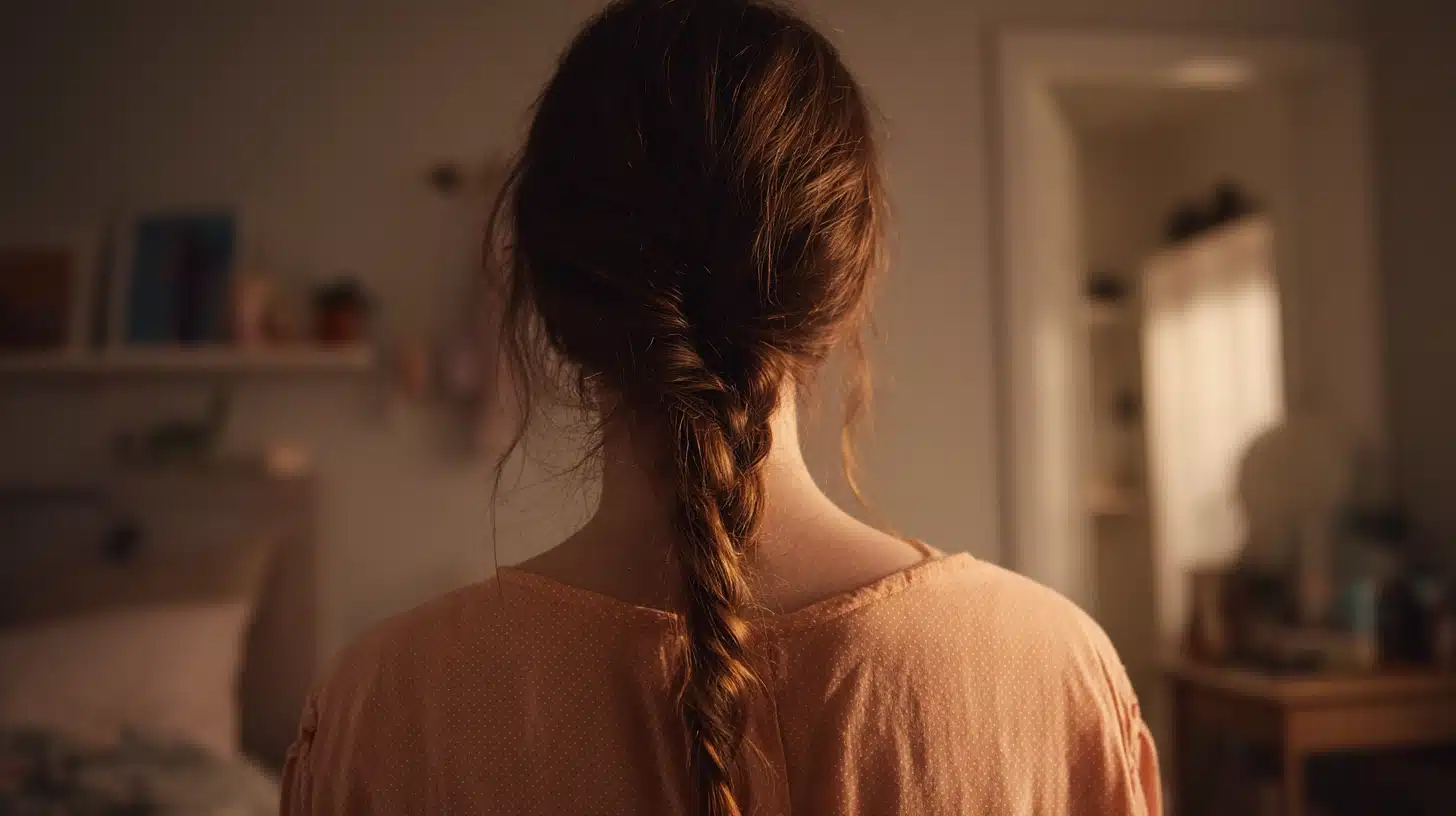
A single braid is one of the easiest protective hairstyles for sleeping. Just divide your hair into three sections, braid loosely, and tie the ends.
Works great for straight and wavy hair types.
The braid keeps strands aligned and stops them from rubbing against your pillow.
If your hair is on the thicker side, a single braid is a solid go-to option.
2. Low Ponytail
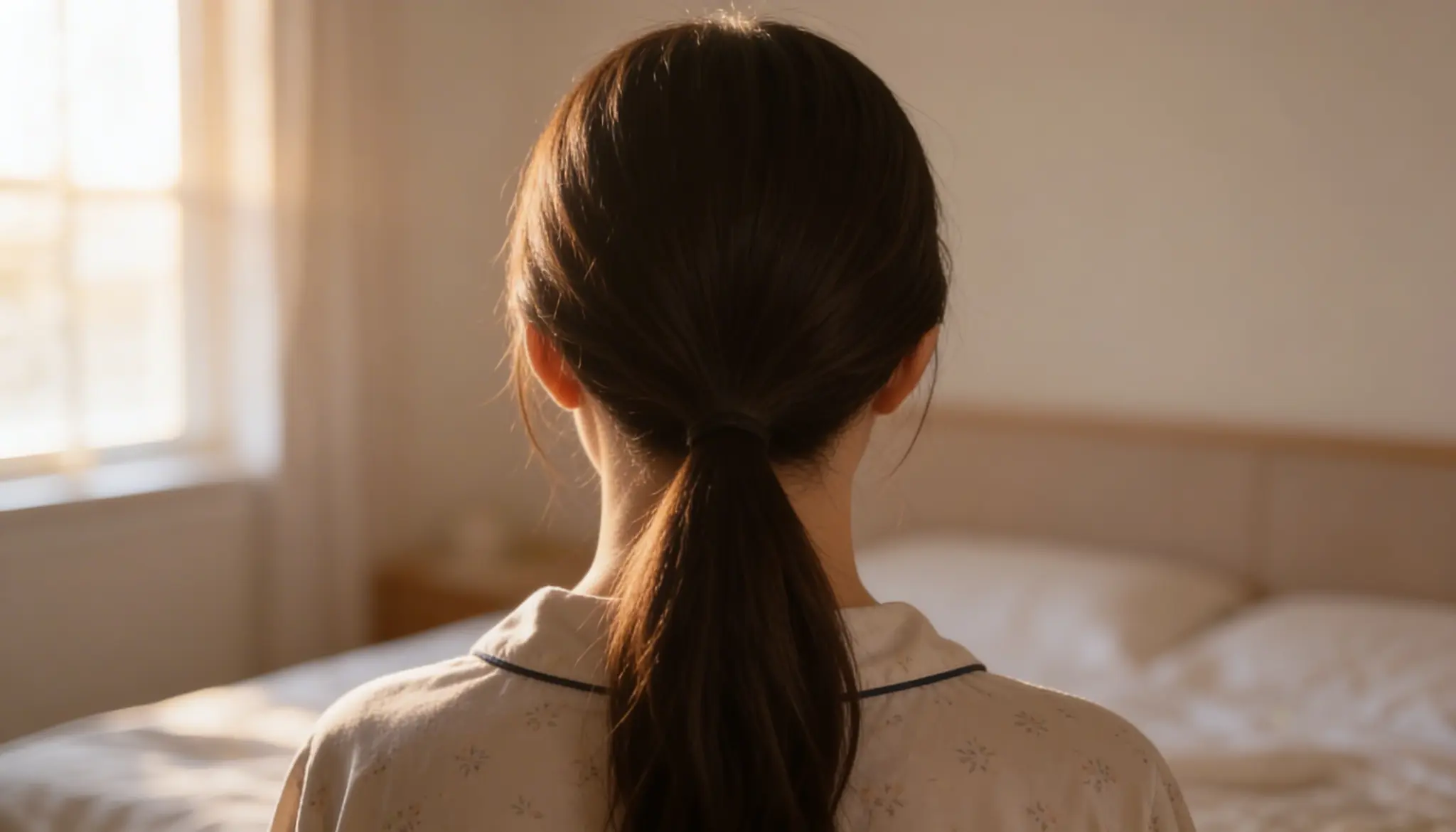
A low ponytail sits comfortably at the nape of your neck while you sleep. Simple, fast, and genuinely effective.
Suits straight, fine, and wavy hair particularly well.
It keeps everything in one place without putting too much stress on your strands.
It is one of those styles that just gets the job done every single night.
3. Pineapple Updo
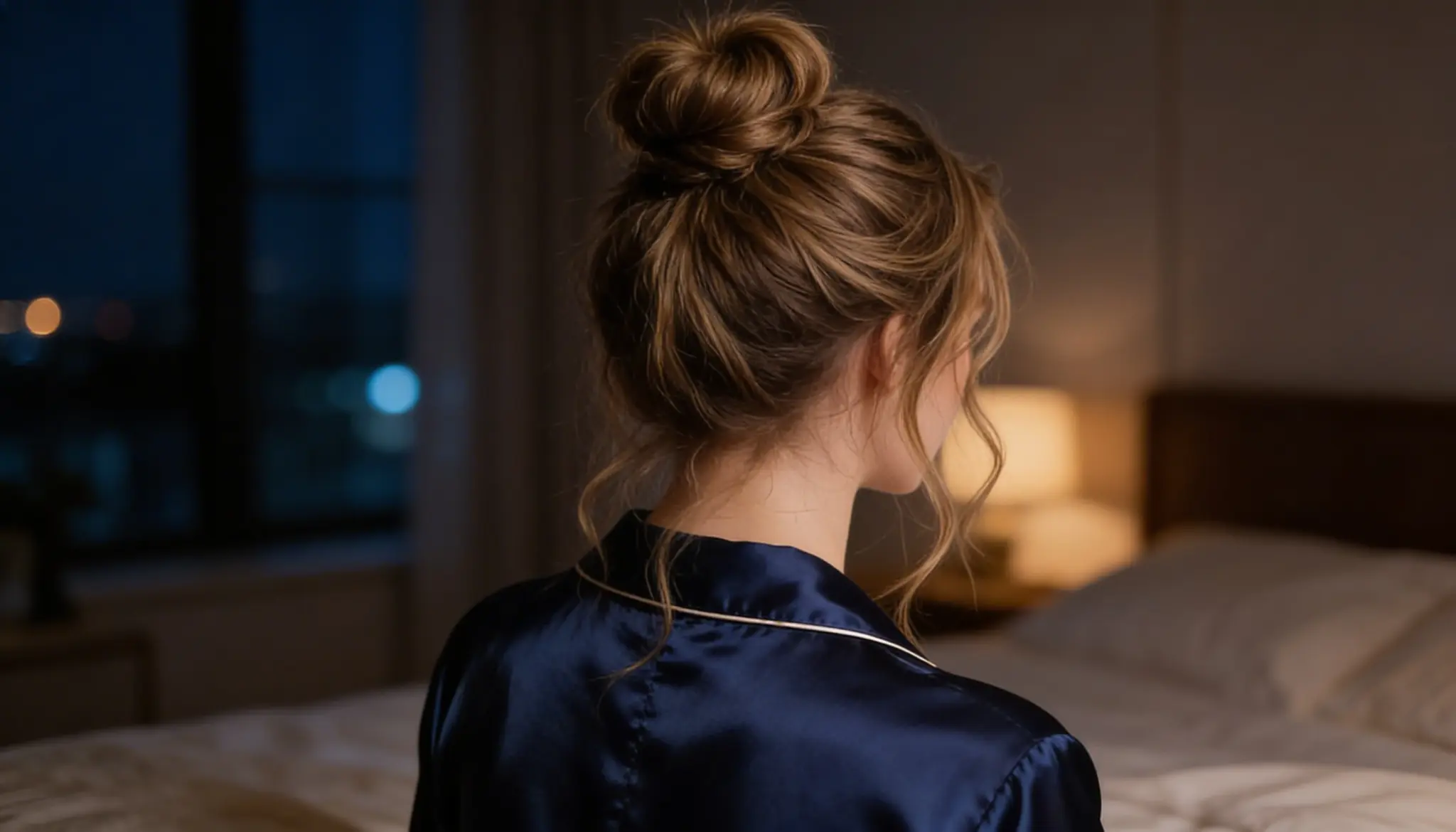
The pineapple updo gathers your hair loosely at the top of your head. It protects your curls beautifully, maintains the shape, and reduces frizz overnight.
Sleeping with your hair loose can crush and stretch your curls out of shape. The pineapple updo keeps them lifted and free from friction all night long.
This style is made for curly and coily hair types.
4. Loose Bun
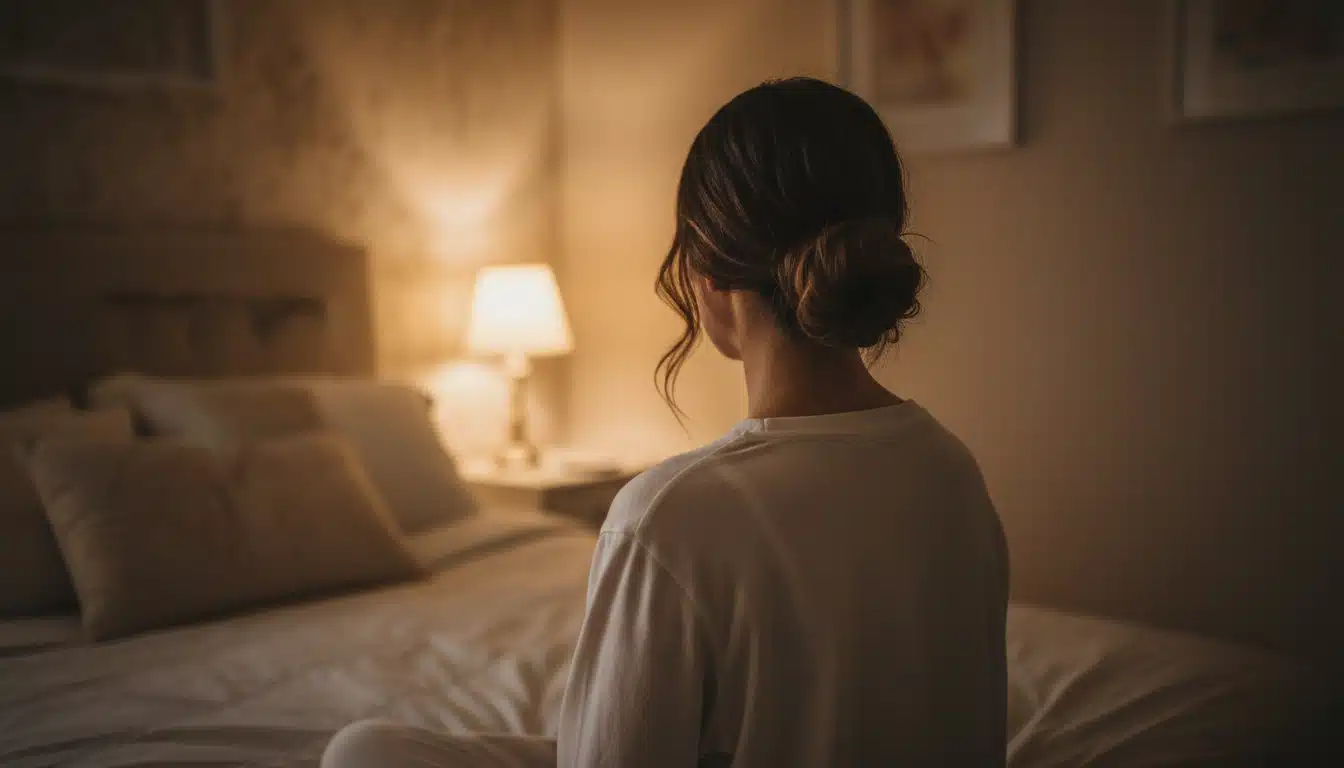
A loose bun is gentle on your hair and easy to put together. It keeps the ends protected, retains moisture, and prevents unnecessary tension on your scalp.
A solid choice for thick, dry, or chemically treated hair.
It keeps the fragile ends tucked away safely. It also works great for medium to long hair that tends to tangle easily overnight.
Just make sure the bun is loose enough so it does not put pressure on your roots.
5. French Braids
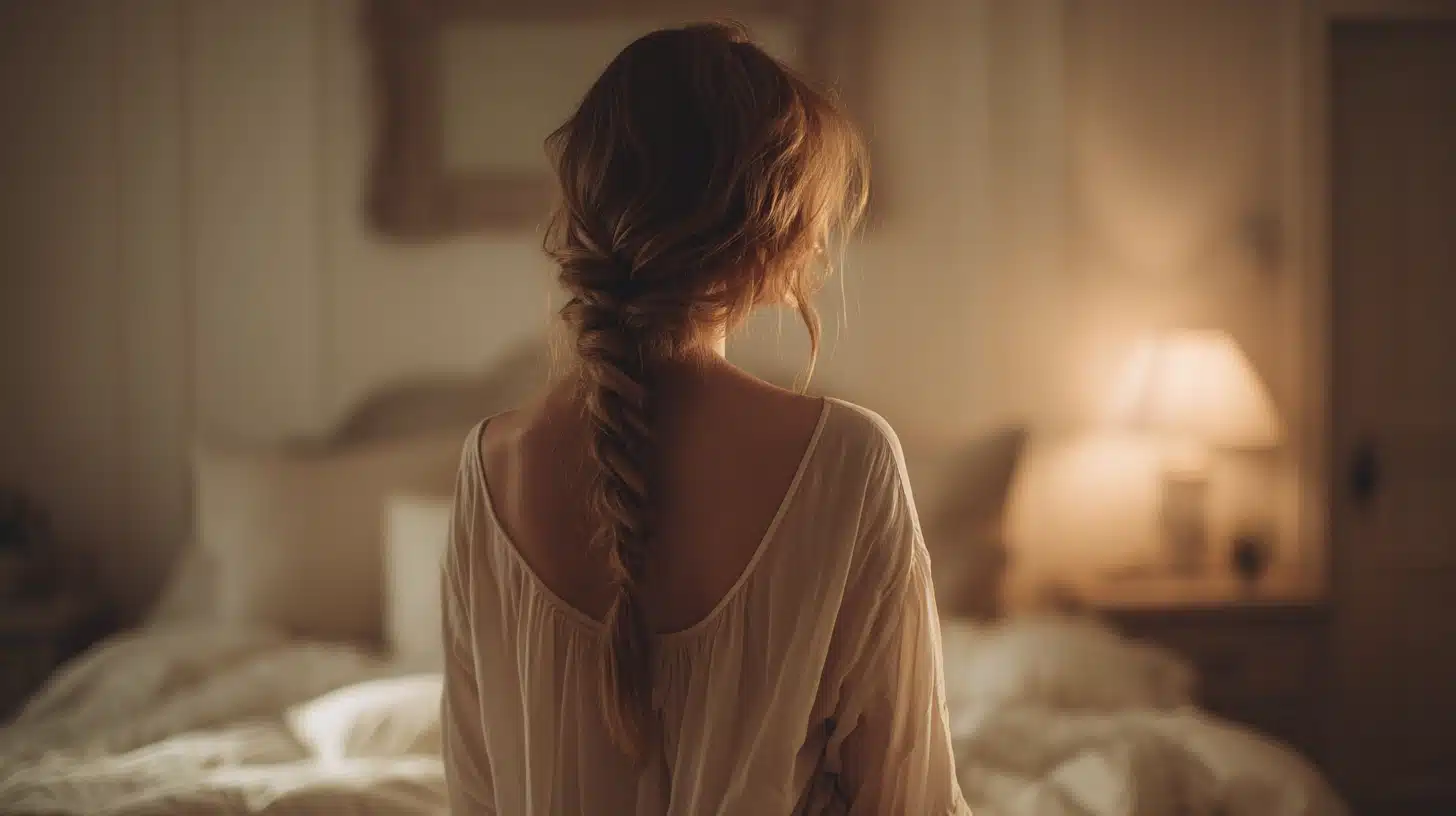
Two french braids protect your strands from friction, maintain smoothness, and help your blowout or style last longer between wash days.
French braids keep a lot of hair under control without bunching it all in one spot. They also give you soft, natural waves in the morning, which is always a nice bonus.
Ideal for thick, long, or wavy hair.
6. Braided Crown
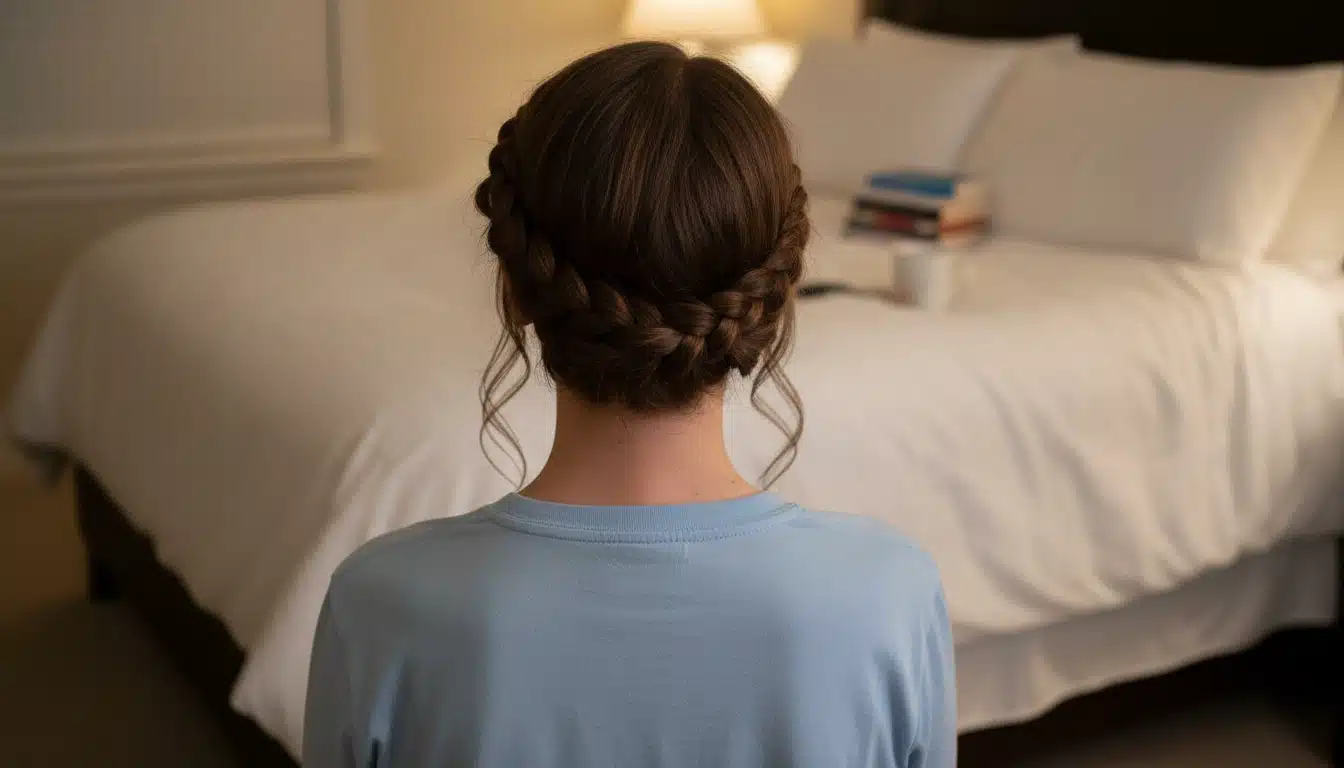
A braided crown wraps your hair around your head like a halo.
It protects your ends, keeps everything in place, and works especially well for medium to long hair a great overnight option.
It distributes the hair evenly across your head, which reduces friction on any one spot. Your ends stay fully protected the entire night, which helps with length retention over time.
Most suitable for straight, wavy, and loosely curly hair.
7. Satin Scarf Wrap (No-Braid Method)
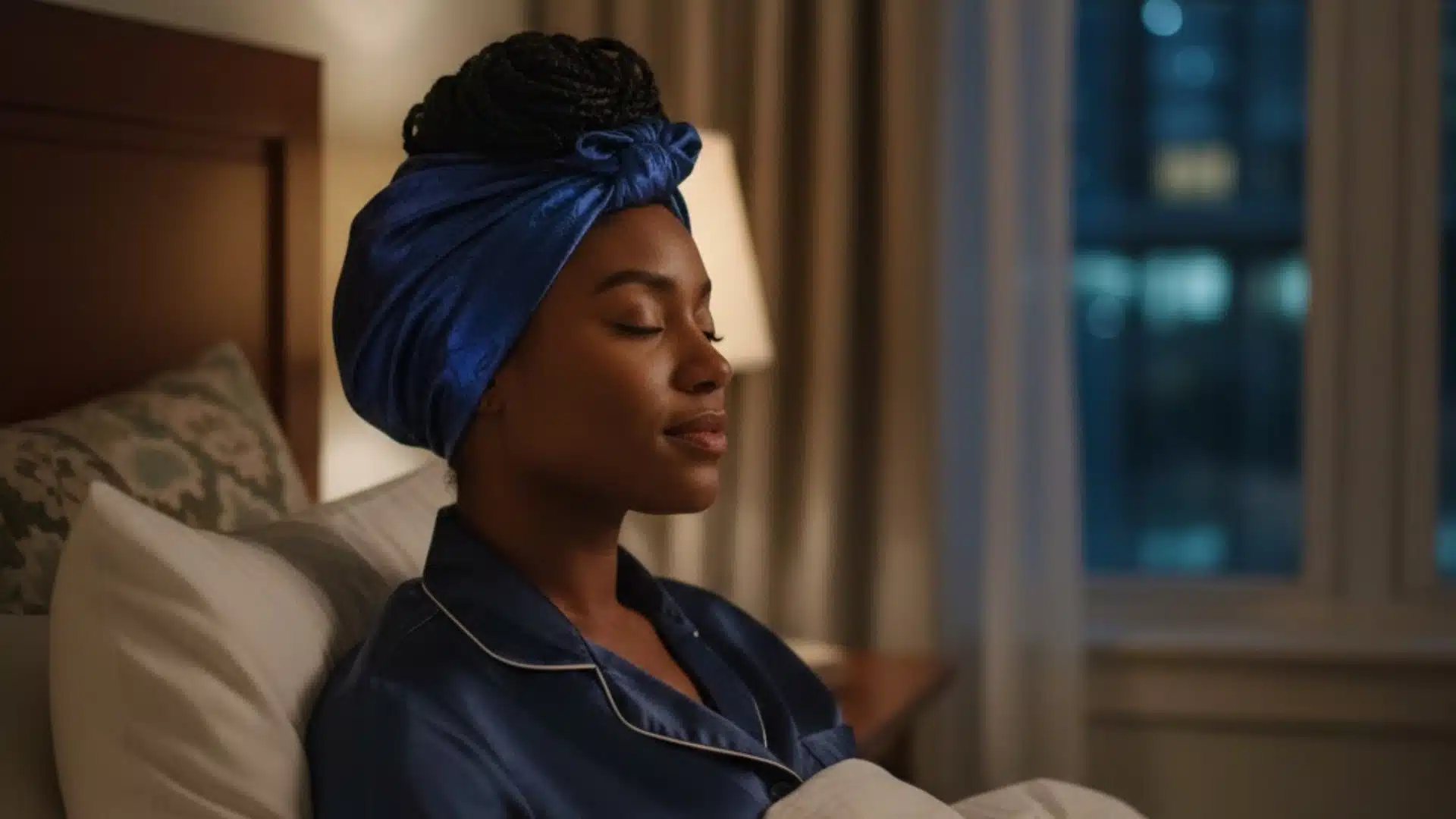
A satin scarf wrap or a silk hair cap is perfect if braiding isn’t your thing. It also keeps any products you have applied from rubbing off overnight, so your hair stays nourished until morning.
Works across all hair types, especially coily, curly, and color-treated hair.
The satin fabric creates a smooth barrier between your hair and your pillow.
Protective Hairstyle for Sleeping I Use the Most
I always come back to the low ponytail.
It takes me less than a minute, and my hair looks so much better in the morning.
No tangles, no frizz, just smooth, easy hair. I tie it loosely at the nape of my neck so there’s no tension on my scalp overnight. Simple and effective.
As for fabric, I swear by satin. I use a satin scarf on most nights, and the difference it makes is real.
My hair holds moisture so much better, and I wake up with far less breakage.
For my hair type, satin just works. It keeps my protective hairstyle in place while I sleep and keeps my strands feeling soft and healthy.
Benefits of Wearing Protective Hairstyles Overnight
Wearing the right hairstyles for sleeping does more than just keep your hair tidy. Here’s a look at what your hair actually gains overnight.
Reduces Breakage
Keeping your hair tucked away at night means less friction and far less breakage over time.
When your hair rubs against a rough pillowcase repeatedly, the strands weaken and snap. A simple protective style creates a barrier that keeps your hair safe and intact through the night.
Prevents Tangles and Knots
Loose hair moves around a lot while you sleep, and that constant movement creates stubborn knots that are hard to brush out in the morning.
A good hairstyle keep your strands grouped together and aligned. This means less forceful brushing, less pulling, and far less damage when you wake up.
Locks in Moisture
Protective hairstyles for sleeping help your hair hold onto its natural oils and any products you’ve applied, keeping strands hydrated through the night.
When hair is loose, moisture escapes quickly.
Keeping it tucked and covered slows that process down and gives your hair a better chance of staying soft and nourished.
Cuts Down on Frizz
When your hair stays in place overnight, it doesn’t rub against your pillow, which means you wake up with much smoother, calmer hair.
Friction worsens frizz.
A secure protective style stops that friction before it starts, so your hair stays smooth and manageable from the moment you open your eyes.
Helps Your Style Last Longer
A good protective hairstyle for sleeping can stretch the life of your blowout, twist-out, or braid-out by a couple of extra days.
Instead of restyling every single morning, you wake up with your hair still looking put together.
That adds up to a lot of saved time over the week.
Protects Your Ends
The ends of your hair are the oldest and most fragile part.
Keeping them tucked in overnight shields them from damage and helps you retain length over time. Split ends and dryness often start at the tips.
Protective hairstyles keep those ends away from rough surfaces and reduces the chance of further damage.
Supports Overall Hair Health
Consistently protecting your hair at night builds up healthier strands over time.
It’s one small habit that, honestly, I wish I had started much earlier in my hair care routine. Less breakage, better moisture, and fewer tangles all add up.
Over weeks and months, the difference in your hair’s strength and appearance becomes very clear.
Here’s How You Should Not Sleep
Some sleeping habits can quietly damage your hair without you even realising it.
Sleeping with loose, unstyled hair is one of the biggest mistakes you can make. Tossing and turning all night creates friction that weakens your strands.
Tight hair ties and metal clasps cause breakage right at the roots. Cotton pillowcases pull moisture straight out of your hair while you sleep.
And going to bed with wet hair makes your strands extra fragile and far more likely to snap.
Small habits like these add up and slow down your hair growth over time.
Silk, Satin, or Cotton: What’s Best for Sleeping?
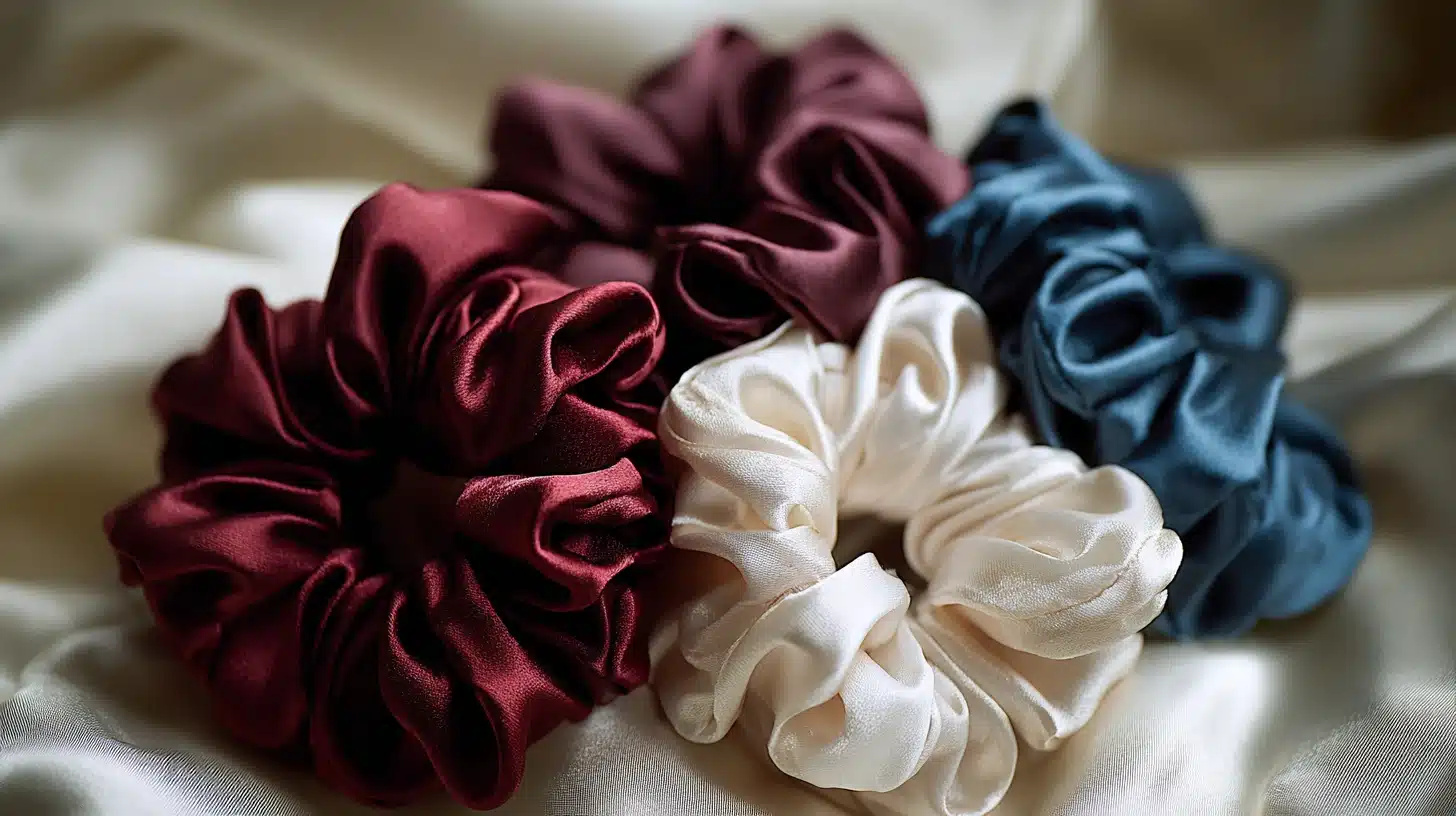
Choosing the right fabric for your hair at night matters just as much as the hairstyle itself.
Quick Overview
| Factor | Silk | Satin | Cotton |
|---|---|---|---|
| Friction Level | Very low | Low | High |
| Moisture Retention | Excellent | Good | Poor |
| Best Hair Type | Fine, color-treated, high-porosity | Curly, coily, thick | Not for dry or brittle hair |
| Cost | Premium | Budget-friendly | Affordable |
| Hair-Friendly | Yes | Yes | No |
Silk
Silk is a natural fabric that creates very little friction against your hair.
It works best for fine, color-treated, or high-porosity hair that loses moisture quickly.
Silk pillowcases and scarves help lock in hydration overnight, keeping strands smooth and less prone to breakage. It is a premium option, but worth it.
Satin
Satin is a more budget-friendly choice that offers many of the same benefits as silk.
It works well for curly, coily, and thick hair types that need consistent moisture retention.
The smooth surface reduces friction, reduces frizz, and helps your protective hairstyles for sleeping stay intact through the night.
Cotton
Cotton is the most common pillowcase fabric, but it is actually the least hair-friendly option.
It absorbs moisture straight from your strands and creates friction as you move in your sleep.
If you have dry, brittle, or chemically-treated hair, cotton can make breakage worse and undo the benefits of your hairstyles for sleeping.
Wrapping Up
A simple low ponytail, a loose bun, or a satin scarf wrap can make a real difference to the health of your hair over time.
The right protective hairstyles for sleeping reduce breakage, lock in moisture, and save you so much time in the morning.
I have seen the difference firsthand, and it really does come down to small, consistent habits.
Pick one hairstyle from this list that feels right for your hair type and stick with it. Your hair will be healthier, stronger, and easier to manage.
Frequently Asked Questions
1. What is the Most Protective Hairstyle to Sleep in?
A loose braid or low ponytail works best. Both reduce friction, prevent tangles, and protect your hair overnight.
2. Is a Bun or a Braid Better to Sleep in?
Both are great, but a loose braid offers slightly more protection. It keeps hair secure without putting pressure on your scalp.
3. What’s the Healthiest Way to Sleep With Hair?
Wearing protective hairstyles for sleeping on a satin pillowcase is the healthiest option. It reduces friction and locks in moisture.
4. What to Wear to Protect Hair When Sleeping?
A satin scarf or satin pillowcase works really well. They protect your hair and keep your chosen hairstyle intact overnight.