

Best Peptides for Hair Growth (2026)
By Agatha Holder, a biochemistry writer who has covered the research peptide market since 2019. Fact-checked by Linnet Jonathan, Editor.
Spend 10 minutes in any hair-loss thread, and someone brings up peptides: Copper peptides, GHK-Cu, GLOW stacks, the whole lot. If you have been trying to work out the best peptides for hair growth, the confusion is not your fault.
We pulled the primary studies behind each one, including the research surrounding peptides offered by Kylo Peptides. Hair growth is not a single process but 5 processes running at once: follicle activity, the scalp environment, inflammation, the collagen and extracellular matrix scaffolding beneath, and the timing of the growth cycle. Peptides, in theory, are signaling molecules and can affect several of those processes simultaneously.
Best hair growth peptides compared:
| Peptide | Researched Hair Benefit | Strongest Hair Evidence | Direct Hair Data? |
|---|---|---|---|
| GHK-Cu | Angiogenesis, ECM remodeling, follicle size | Human clinical study, 45 AGA patients | Yes |
| AHK-Cu | Dermal papilla cell survival | Ex vivo human follicle elongation, 2007 | Yes |
| BPC-157 | Angiogenesis, tissue repair, inflammation | No hair-specific studies | No |
| TB-500 | Cell migration, tissue remodeling | Parent protein only, thymosin β4 | Indirect |
| CJC-1295 + Ipamorelin | GH and IGF-1 pathway signaling | No hair-specific studies | No |
Key Takeaways
- GHK-Cu is the only peptide for hair growth research with human clinical data.
- Copper peptides work on the scalp environment and leave DHT alone, so the hormonal driver behind pattern hair loss goes untouched.
- The strongest human copper-peptide result came from combination therapy with minoxidil and dutasteride, involving 7 patients and no control arm.
- BPC-157, TB-500, and CJC-1295 + Ipamorelin have zero hair-specific studies. Their relevance is inferred from repair and growth-factor pathways.
- No peptide is FDA-approved for hair loss. An advisory panel voted in July 2026 on expanding access to compounding for three of them, but the vote was non-binding.
- Kylo Peptides is a reliable RUO vendor for hair growth peptides. Every lot carries a COA with a lab accession number, seven assays run per batch, and three accredited labs re-test what the in-house lab already ran.
How We Ranked These Peptides
We ran every contender through a six-point filter, called the Peptide Evidence Screen. A peptide either clears all six or does not make the list.
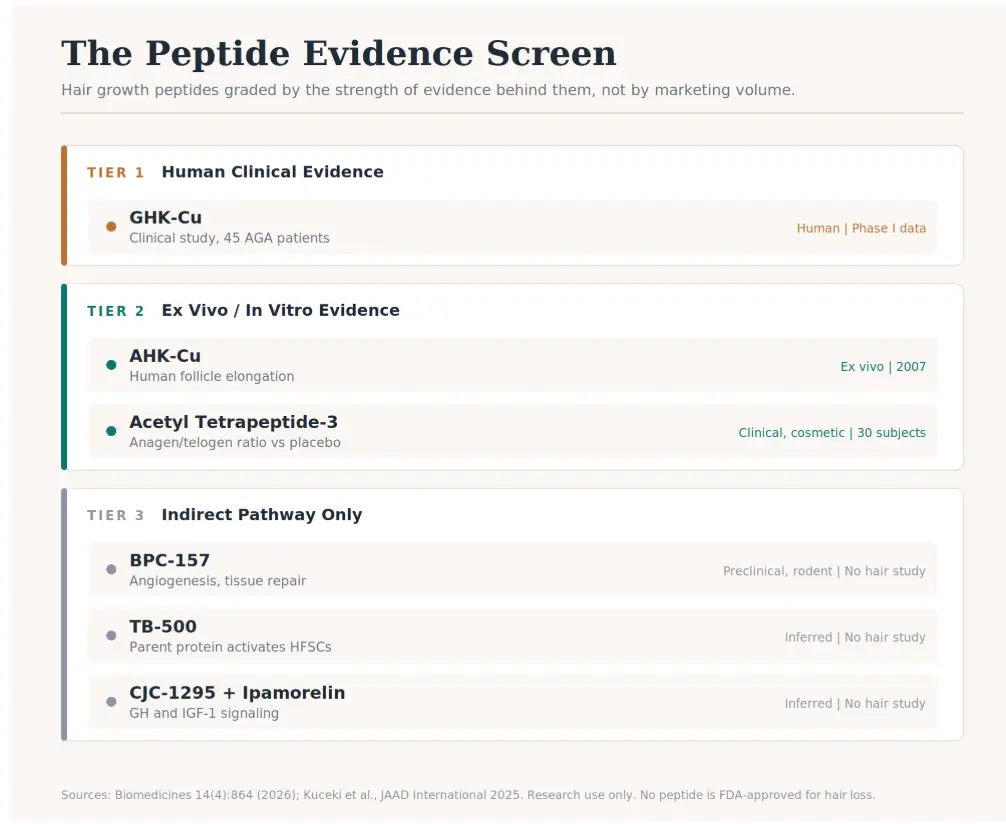
Research Evidence and Biological Mechanism
We started with what has been published, and on which model. A peptide needed a documented mechanism tied to follicle activity, tissue regeneration, collagen production, or scalp health. We also logged whether the finding came from a cell line, an ex vivo human follicle, a mouse, or a person, because those four are wildly different things.
Relevance to Hair Growth Pathways
Plenty of peptides do interesting work nowhere near a follicle. We prioritized those with plausible routes in: the follicular environment, growth factor signaling such as VEGF and IGF-1, extracellular matrix support, and regulation of inflammation.
Research Availability and Data Quality
Next, how much there is to read and how good it is. Preclinical studies, peer-reviewed publications, and ongoing scientific interest all scored. A peptide with one 2011 mouse study and silence since then ranks below one with a live research trail.
Purity and Quality Standards
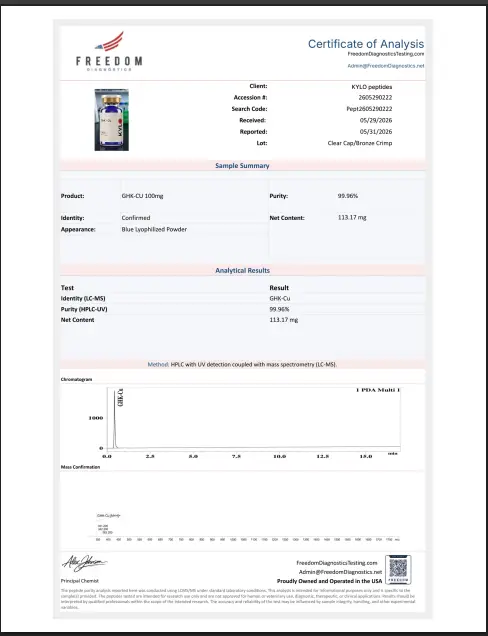
We weighted third-party testing, a COA matched to the lot number on the vial, HPLC purity verification, and traceable sourcing. Vials of 99% powder and 80% powder look identical on a bench, so paperwork is the only visible difference. As a benchmark, Kylo Peptides publishes the COA for every lot, along with the testing lab’s accession number. Janoshik Labs, Freedom Diagnostics, and Vanguard re-test what Kylo’s own lab already ran.
Practical Research Applications
We considered how each peptide is studied today: regenerative research, skin and tissue support, aging-related change, and cellular health. A peptide already embedded in active programs has more supporting literature and better odds of fresh data next year.
Evidence Limitations
Last filter. We drew a hard line between peptides with direct relevance to hair research and those with indirect potential through broader regenerative pathways. Both have been mentioned below.
What Are Hair Growth Peptides?
Hair growth peptides are short chains of amino acids studied for their effect on the follicle and the scalp around it. They behave more like messages, binding to receptors and telling cells what to do next.
Research divides them into 3 categories, so let us split them:
- Cosmetic hair peptides: Biotinoyl Tripeptide-1 and Acetyl Tetrapeptide-3, the ones in over-the-counter density serums. Regulated as cosmetics, applied topically, built for consumers.
- Research peptides: GHK-Cu, BPC-157, TB-500, and AHK-Cu, sold as lyophilized powder for laboratory work, with no consumer product status.
- Growth hormone-related peptides: CJC-1295 and Ipamorelin, acting on the GH and IGF-1 axis, one step removed from the follicle itself.
How Peptides May Support Hair Growth
Peptides reach hair through three routes: the follicle itself, the scalp environment around it, and the structure of the strand. Here is what the research looks at in each.
Supporting Hair Follicle Activity
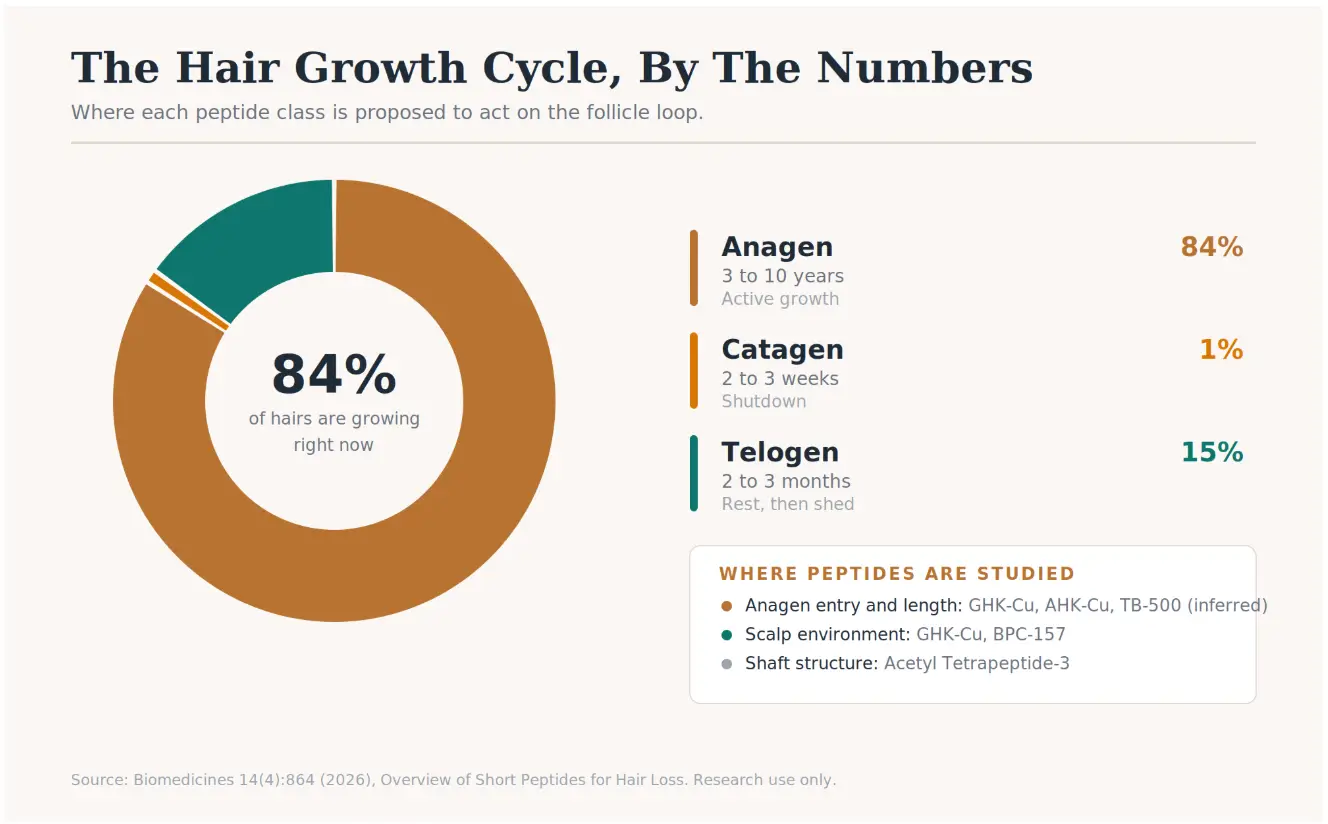
Every follicle runs a three-phase loop. Anagen is the growth phase, and roughly 84% of your hair is in it at any given moment, for three to ten years. Catagen is the shutdown phase, affecting about 1% of follicles, lasting two to three weeks. Telogen is the resting phase, comprising around 15% of hairs, lasting 2 to 3 months.
Then the hair sheds and the cycle restarts (Biomedicines, 2026). Some peptides are studied to determine whether they nudge follicles into anagen sooner or hold them there longer.
Improving Scalp Environment
A follicle is only as good as the ground it sits in. Research in scalp environment works on four levers: keeping inflammation in check, supporting the extracellular matrix that holds everything in place, promoting collagen production, and promoting angiogenesis, meaning new blood vessels feeding the dermal papilla. Copper peptides touch several areas at once.
Supporting Hair Thickness and Strength
Thickness comes down to keratin production, the architecture of the follicle, and the quality of the shaft that gets extruded. The peptides studied target building materials.
Best Peptides for Hair Growth
Five peptides have enough hair-growth research to discuss seriously.
1. GHK-Cu (Copper Peptide): Most Studied Peptide for Hair Support
GHK-Cu is a tripeptide, glycyl-L-histidyl-L-lysine, bound to a copper ion. Loren Pickart identified it in human plasma in 1973. Copper does real work here because copper-dependent enzymes are part of the tissue repair machinery.
How GHK-Cu May Affect Hair Follicles
The mechanisms are well-mapped. GHK-Cu raises VEGF production in dermal fibroblasts, driving microvascular angiogenesis and collagen synthesis at the follicle. It also supports extracellular matrix turnover by activating matrix metalloproteinases. In plain terms, the research points to blood supply, scaffolding, scalp inflammation, and a possibly longer growth phase.
GHK-Cu for Different Hair Concerns
Thinning is the first research area, with follicle miniaturization as the problem and vascular support as the target. Aging-related change comes second, where plasma GHK falls from roughly 200 ng/mL at age 20 to 80 ng/mL at 60. Scalp recovery is third, where repair and anti-inflammatory pathways matter more than growth itself.
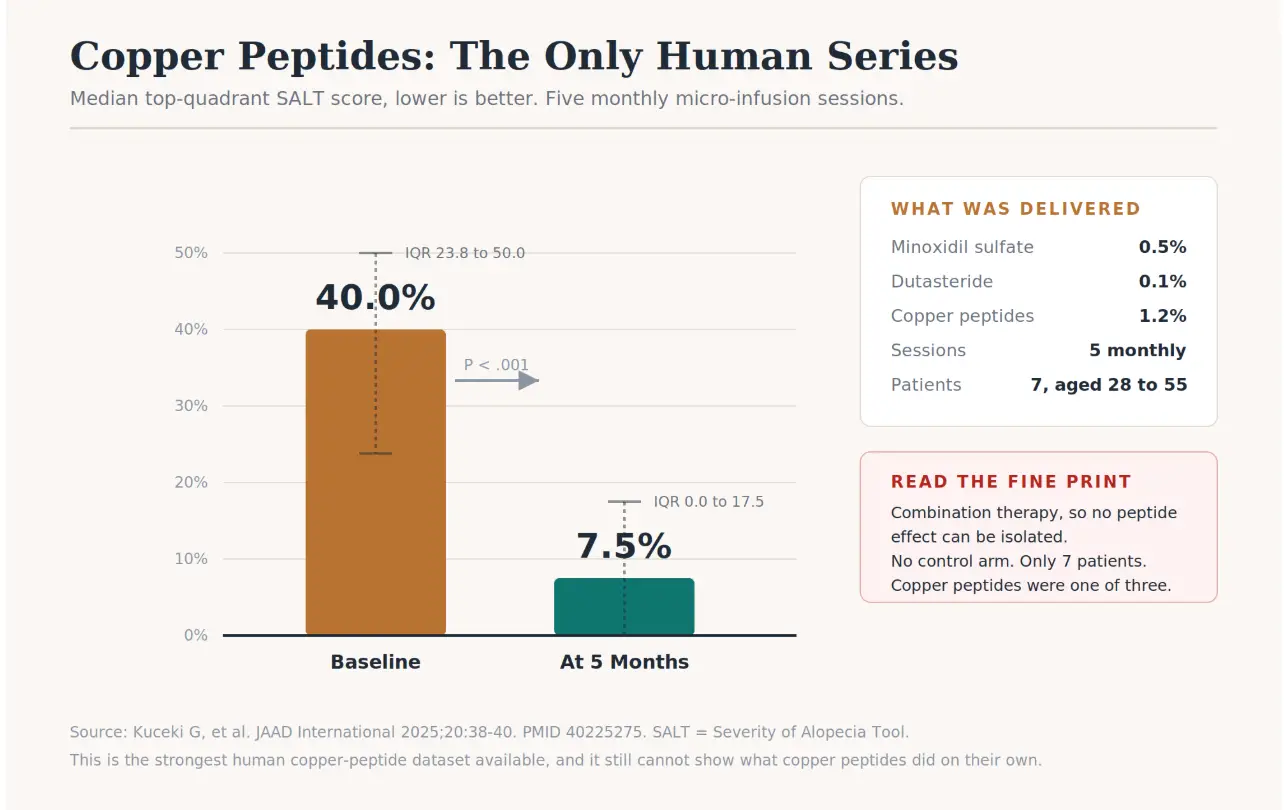
In 2025, Kuceki and colleagues published a study on five monthly sessions delivering 0.5% minoxidil sulfate, 0.1% dutasteride, and 1.2% copper peptides via micro-infusion. Median top-quadrant SALT score fell from 40.0% to 7.5% at five months, and 71.4% of patients hit a median TSAR above 10% (JAAD International, 2025).
Kylo supplies GHK-Cu in 50 mg and 100 mg vials starting at $39.95.
2. BPC-157: Tissue Repair and Scalp Support Peptide
BPC-157 is a pentadecapeptide, a 15-amino acid chain matching part of a protein found in gastric juice. Its reputation was built on tendon, ligament, and gut models, where nearly all of its literature lives.
Potential Hair-Related Mechanisms
Three pathways make people curious. Angiogenesis support, since new vessels feed the dermal papilla. Tissue repair signaling via nitric oxide and VEGFR2 overlaps with GHK-Cu’s machinery, and inflammation regulation.
Limitations of BPC-157 Research for Hair Growth
There are no direct human-hair studies on BPC-157; the evidence is preclinical and mostly from rodent studies.
BPC-157 5 mg and 10 mg vials are available at Kylo with lot-matched COA on the website.
3. TB-500: Cell Migration and Regeneration Support
TB-500 is a synthetic fragment of thymosin β4, a protein found in most animal cells. Its research profile focuses on cell movement, tissue remodeling and repair, and is driven by actin-binding activity.
Possible Role in Hair Follicle Health
In 2004, Philp and colleagues showed thymosin β4 activated hair follicle stem cells and promoted hair growth. TB-500 is a 43-amino-acid segment of the peptide.
Current Evidence Limitations
No clinical hair studies have been conducted on TB-500 itself. Its place in the category rests on the parent protein’s stem-cell activity and a general regeneration profile.
Kylo ships 10 mg TB-500 vials for research use, starting at $34.95.
4. CJC-1295 + Ipamorelin: Growth Hormone Pathway Support
These two are growth hormone secretagogues that prompt the body’s own GH release. CJC-1295 mimics growth hormone-releasing hormone. Ipamorelin acts on the ghrelin receptor. Paired, they are studied for GH pulses and downstream IGF-1.
Connection Between IGF-1 and Hair Growth
IGF-1 is a key player in follicle biology, involved in follicle cycling, dermal papilla cell proliferation, and the signaling that maintains follicles in anagen. Several peptides in the hair literature get measured partly on whether they raise it.
Who May Consider This Research Area
This is suited to research into recovery, aging, or body composition, where hair is one readout among many. It is not a hair loss treatment.
CJC-1295 + Ipamorelin Stack 10mg (No DAC) is available at Kylo at $89.95.
5. AHK-Cu and Other Copper Peptides
GHK-Cu’s lesser-known sibling AHK-Cu has more direct hair evidence than most people realize. AHK-Cu is L-Ala-L-His-L-Lys bound to copper, one amino acid apart from GHK-Cu.
In 2007, Pyo and colleagues showed AHK-Cu stimulated ex vivo elongation of human hair follicles, active from 10⁻¹³ M to 10⁻⁷ M, and improved dermal papilla cell survival with Bcl-2 up and Bax down. Copper’s broader role encompasses collagen formation, antioxidant pathways, and support for scalp tissue.
How to Choose a Peptide for Hair Goals
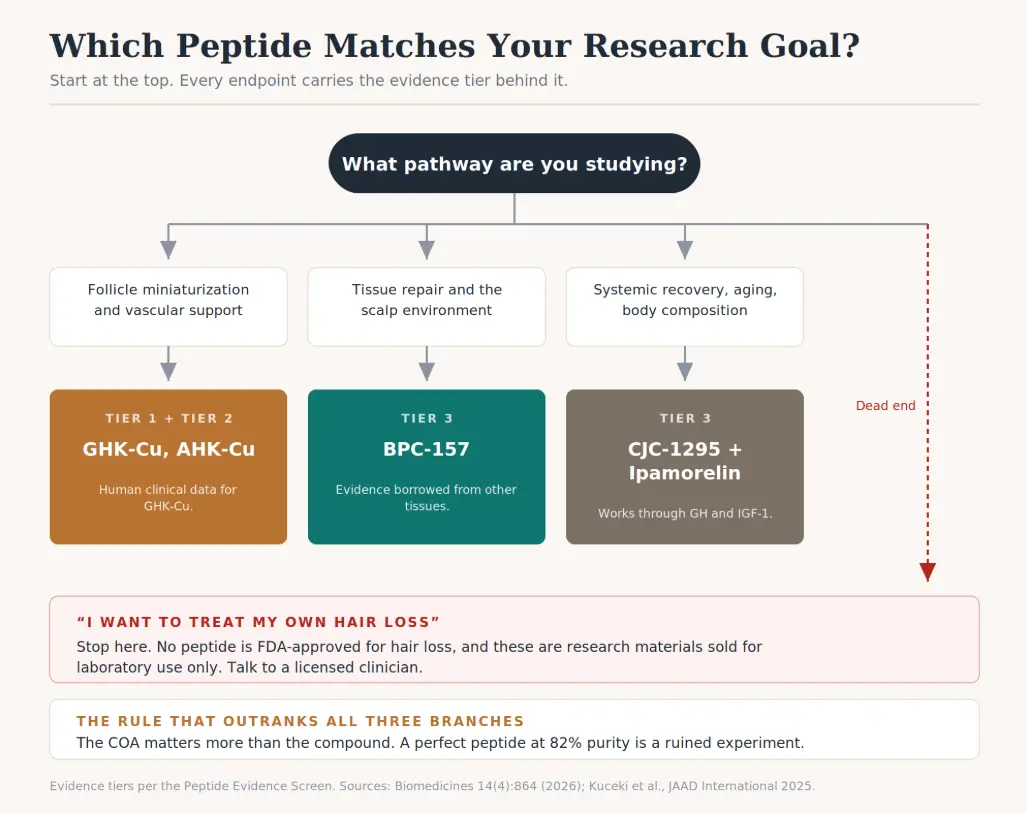
Match the peptide to the pathway you are studying.
For General Hair Thinning
Research into follicle miniaturization and vascular support points first to GHK-Cu and the copper peptide family. They carry the most hair-specific literature, the clearest angiogenesis and ECM mechanisms, and the only human clinical data in this guide. AHK-Cu belongs in the same bucket for work on dermal papilla cell survival, though its supporting evidence stops at the ex vivo stage.
For Scalp Recovery
Work centered on the tissue environment leans toward BPC-157 and the regenerative peptides. Angiogenesis, repair signaling, and inflammation control are the mechanisms under study. Just remember you are borrowing evidence from tendon and gut models, so hold your conclusions loosely and design the protocol accordingly.
For Broader Anti-Aging Goals
Research spanning recovery, body composition, and aging points to CJC-1295 + Ipamorelin, working through GH and IGF-1. Hair becomes one readout among several here.
Are Peptides Safe?
Safety differs by delivery route.
Topical peptides in cosmetic serums carry the longest consumer safety record. Every peptide to reach Phase I trials for hair, including acetyl tetrapeptide-3 and GHK, was delivered topically.
Injectable research peptides carry a different risk profile, with concerns including product quality, contamination risk, thin long-term data, and individual reaction.
Are Peptides FDA Approved for Hair Loss?
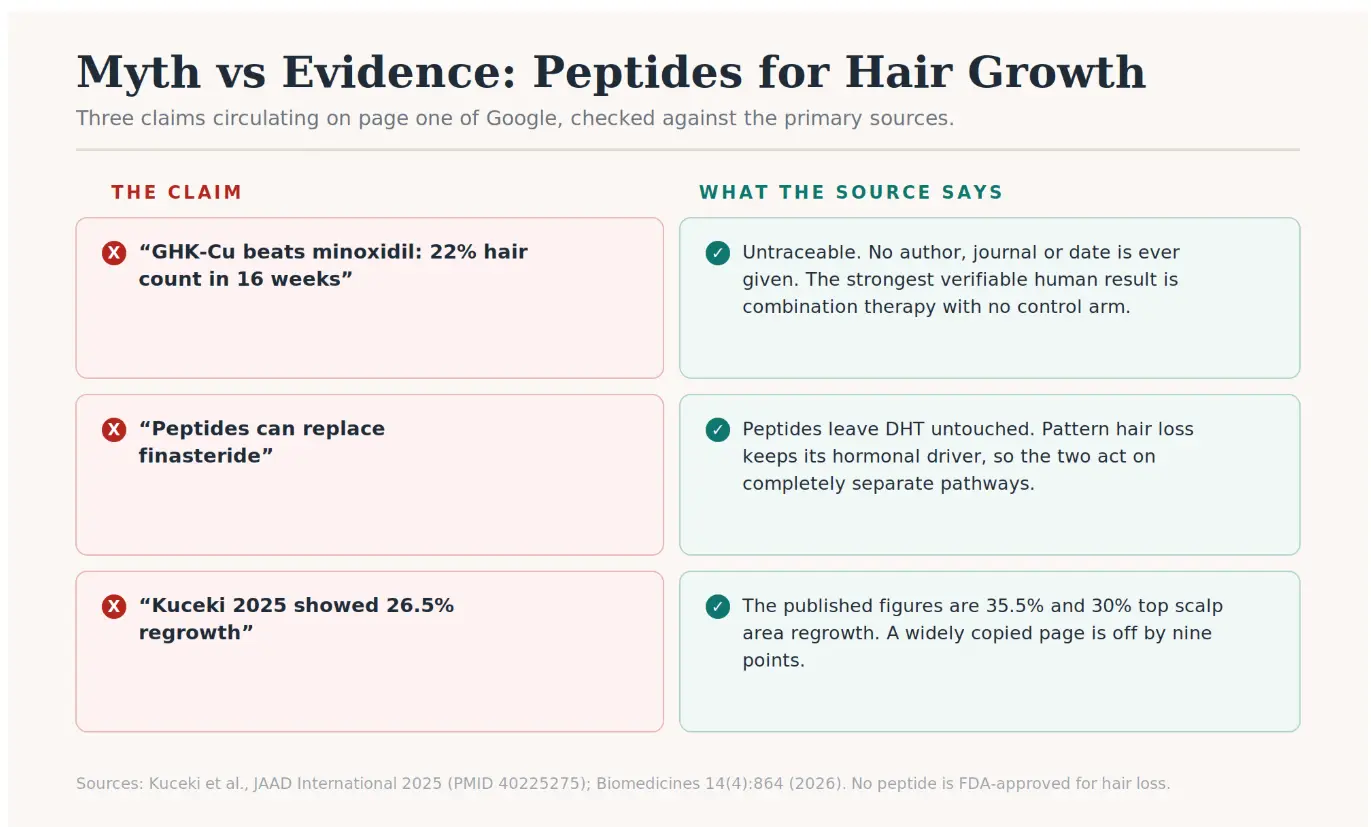
No, not a single peptide is FDA-approved to treat hair loss. These applications stay investigational. However, the regulatory landscape has recently shifted. On July 23 and 24, 2026, the FDA’s Pharmacy Compounding Advisory Committee reviewed seven peptides for the 503A Bulks List, which governs what compounding pharmacies may legally prepare.
The panel voted 8 to 6 to recommend BPC-157, KPV, and TB-500, over the written objections of the FDA’s own career scientists. The vote is non-binding; it concerns eligibility for compounding. Formal rulemaking must occur before any changes.
Frequently Asked Questions
Which Peptide Is Best for Hair Growth?
GHK-Cu has the strongest evidence among peptides for hair growth. It is the only one here with human clinical hair data, including a study of 45 patients with androgenetic alopecia, and its VEGF, extracellular matrix, and inflammatory mechanisms are the best-documented. AHK-Cu comes second on ex vivo follicle data.
Does GHK-Cu Help With Hair Loss?
Research suggests GHK-Cu supports the scalp environment while leaving the hormonal cause alone. It increases VEGF in dermal fibroblasts, supports angiogenesis and collagen synthesis, and is being studied to extend the growth phase. Human data on copper peptides for hair exists but remains limited and early-stage.
Can Peptides Regrow Lost Hair?
No peptide has been shown to regrow lost hair on its own reliably. The strongest human copper-peptide result came from a combination therapy with minoxidil and dutasteride in seven patients, without a control group. Follicles that have scarred over stay closed to any known compound.
How Long Do Peptides Take to Work for Hair?
Published hair growth peptide studies typically run 16 to 24 weeks before measuring outcomes, and the Kuceki series was assessed at five months. Follicle cycles are slow by design, since telogen alone lasts two to three months, so nothing here shows up in weeks.
Are injectable peptides better than topical peptides?
Topical has more hair-specific evidence. Every peptide that reached Phase I trials for hair loss, including acetyl tetrapeptide-3 and GHK, was delivered topically. Peptides penetrate membranes poorly, which is why delivery research matters as much as the molecule.
Can Peptides Replace Minoxidil or Finasteride?
No. Peptides leave DHT untouched and bypass the vascular mechanism that minoxidil uses, so both pathways go unaddressed. Research treats peptides for hair loss as complementary to proven therapies, never as substitutes.
Are Peptide Hair Treatments Safe?
Cosmetic topical peptides have the longest safety record. Research peptides carry real risks around purity, contamination, and sparse long-term data, and gray market vials are the biggest variable. Anything without a lot-matched COA from an accredited lab is a genuine unknown.
Final Thoughts
Among the best peptides for hair growth, GHK-Cu stands on the strongest ground. It has human clinical data behind it, with mechanisms mapped down to VEGF and extracellular matrix turnover. Its sibling in AHK-Cu’s ex vivo follicle work deserves far more attention than it currently gets.
If you are sourcing research peptides, Kylo Peptides publishes a lot-matched COA with a lab accession number for every batch, runs seven assays, has three accredited labs re-test in-house work, and lists prices openly. Hold every vendor to that standard.
Research Use Only Disclaimer: The compounds discussed here are sold as laboratory research materials. They are not for human or veterinary use. This article is for information only and is not medical advice. The FDA has not approved any peptide for the treatment of hair loss. Talk to a licensed clinician about your own hair before making any decisions.