
You brushed past some plants on a hike. But a day later, your skin is red, itchy, and covered in blisters.
That’s what poison ivy on the skin looks like, and it is very common.
The moment you know what to look for, you can spot it fast and take care of your skin the right way.
Read on to find out the key symptoms and the simple steps you can take to feel better.
What Does One get Poison Ivy Allergic Reaction?
Poison ivy is a plant that grows in woods, fields, and backyards.
This plant contains an oil called urushiol. It’s invisible, sticky, and stays active for a long time.
The moment this oil touches your skin, your body reacts, which causes redness, itching, and blisters.
It can happen to almost anyone. And the thing is, you may not even notice it right away. The rash can take 12 to 72 hours to show up.
You don’t even need to touch the plant directly. Brushing against clothing or a pet that touched it can cause the same reaction.
It’s not contagious, but it can spread if the oil is still on your skin.
How Does Poison Ivy Reaction Looks Like?
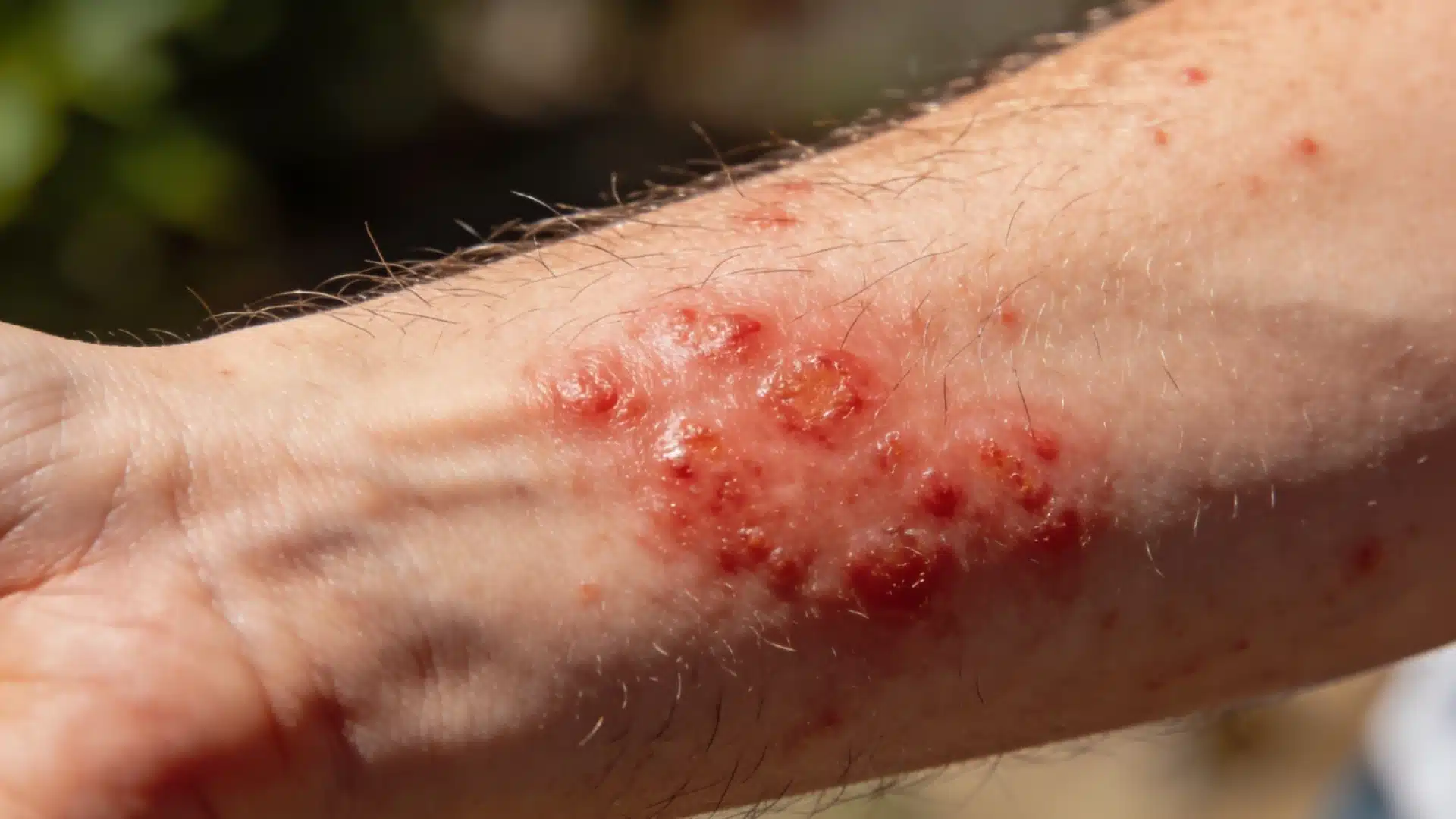
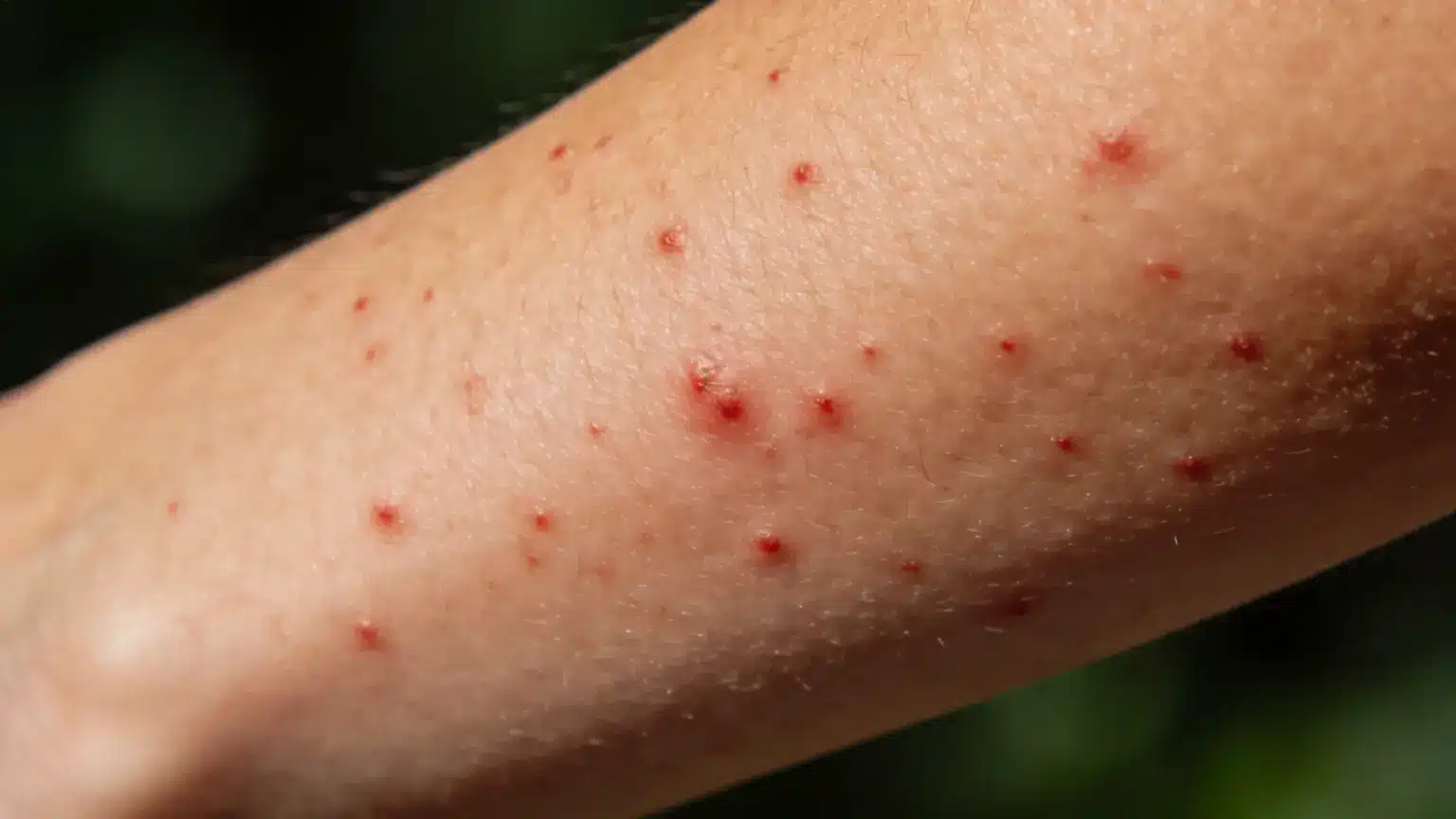
The skin usually turns red first. Then small bumps or blisters start showing up. These blisters can ooze fluid and crust over time.
The affected area feels intensely itchy, sometimes unbearable.
You might get swelling too, especially around the eyes or face. The rash often appears in streaks or patches.
That happens because urushiol, the oily substance in poison ivy, spreads along the skin during contact.
Symptoms usually show up 12 to 72 hours after exposure.
More Symptoms to Watch for
Poison ivy symptoms don’t always show up right away. In fact, the skin can take anywhere from a few hours to three days to react.
- Redness: The skin turns red and feels warm to the touch.
- Itching: Intense, sometimes keeping people up at night.
- Blisters: Small, fluid-filled bumps that may ooze.
- Swelling: Especially common on the face, eyelids, or hands.
- Crusting: Blisters dry out and crust over as healing begins.
The rash doesn’t spread through blister fluid. It spreads because urushiol stays on the skin or clothing.
The severity depends on how much oil touched your skin and how sensitive your body is to it
Key Things to Keep in Mind About Poison Ivy on Skin
Dealing with it can be stressful. But a few key things can make it easier to handle.
1. Don’t scratch
It feels tempting, but scratching can break the skin and lead to infection.
It can also make the rash spread to other parts of your body.
2. Wash right away
If you think you touched poison ivy, rinse the area with soap and cold water immediately. The sooner, the better.
3. The rash is not contagious
You can’t pass it to someone else by touch. But the oil on your skin or clothes can spread it further.
4. See a doctor if it gets worse
If the rash covers a large area of your face, or if breathing feels difficult, get medical help right away.
The same goes if breathing feels difficult or your eyes start to swell.
5. Wash everything
Your clothes, shoes, and even your pet can carry the oil. Clean them thoroughly to avoid getting a rash all over again.
Prevention Tips for Poison Ivy on Skin
Avoiding poison ivy is far easier than treating it. A few simple steps can save someone from days of itching and discomfort.
- Learn to identify it: Poison ivy has three leaflets. “Leaves of three, let it be” is a good rule to remember
- Cover up: Wearing long sleeves, pants, and gloves in wooded areas helps a lot
- Wash exposed skin: Rinsing with soap and water within 10 minutes of contact reduces the reaction
- Wash clothing and gear: Urushiol clings to fabric, pets, and tools
- Avoid burning it: Inhaling smoke from burning poison ivy can irritate the lungs badly
Poison Ivy vs Oak vs Sumac
Not every itchy rash from a plant comes from poison ivy. There are three common culprits, and telling them apart can save a lot of confusion.
| Feature | Poison Ivy | Poison Oak | Poison Sumac |
|---|---|---|---|
| Leaves | 3 leaflets | 3 leaflets, oak-shaped | 7-13 leaflets |
| Habitat | Woods, roadsides | West/Southeast US | Swamps, wetlands |
| Berries | Whitish-yellow | Whitish-yellow | Pale yellow |
| Rash Cause | Urushiol | Urushiol | Urushiol |
| Severity | Moderate | Moderate | Often more severe |
Conclusion
Poison ivy on the skin is painful, itchy, and frustrating. But it’s manageable.
Knowing what the reaction looks like, catching the symptoms early, and taking the right steps can make a real difference.
Prevention is always better than treatment. Learning to spot poison ivy, covering up in wooded areas, and washing skin quickly after exposure goes a long way.
If you found this helpful, then share it with someone who loves spending time outdoors.
And if the rash gets severe, swelling, trouble breathing, or widespread blistering, see a doctor right away.
Frequently Asked Questions
1. How Long Does Poison Ivy on Skin Last?
It usually lasts between one and three weeks. Mild cases clear up faster. Severe cases may take longer, especially without treatment.
2. Can Poison Ivy on Skin Spread to Other People?
No, it cannot spread from person to person.
3. When Should I See a Doctor for Poison Ivy on Skin?
See a doctor if the rash covers a large area, appears on your face, or causes trouble breathing.