
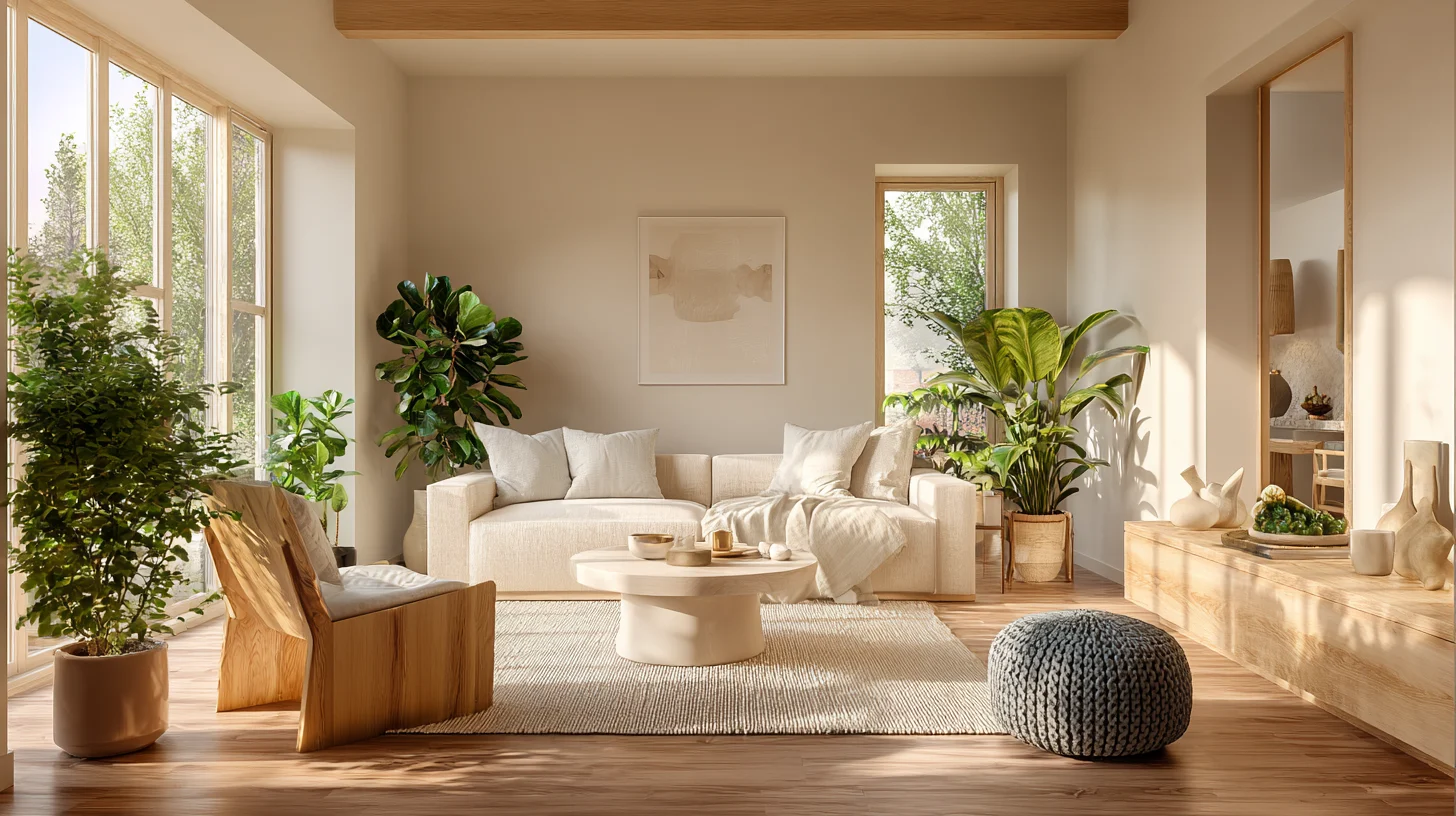
Your living room says a lot about how you feel at home.
But what if the way you arrange it could actually affect your mood and energy? That’s exactly what feng shui living room design is all about.
And this is not a superstition or magic.
It’s just a simple, practical way to arrange your space so it feels calm, balanced, and welcoming, which affects the vibe of the room.
What is Feng Shui?
Feng shui is an old Chinese philosophy.
It’s built around the idea that energy flows through every space we live in. That energy is called Chi.
When Chi moves freely, a space feels calm and balanced. When it gets blocked, things within the room can feel heavy or uncomfortable.
Your living room is one of the most important spaces in your home.
It carries what feng shui calls “Yang” energy, which is active, social, and full of life. It’s where conversations flow, and real connections grow stronger.
And the way you set up your living room shapes the Yang within.
Core Feng Shui Principles for the Living Room
A few key principles sit at the heart of feng shui.
Once you understand them, setting up your space becomes much easier. These aren’t complicated rules.
They’re simple ideas that help energy flow well and make your living room feel right.
| Principle | What It Means | Quick Tip |
|---|---|---|
| Chi Flow | Energy must move freely through the room | Keep pathways clear and avoid cluttering. |
| Commanding Position | Sit where you can see the door without facing it directly. | Place your sofa against a solid wall, facing the entrance. |
| Yin & Yang Balance | A mix of calm Yin and active Yang energy keeps the room feeling balanced. | Pair soft textures with natural light. |
Feng Shui Living Room Layouts & Furniture Placement
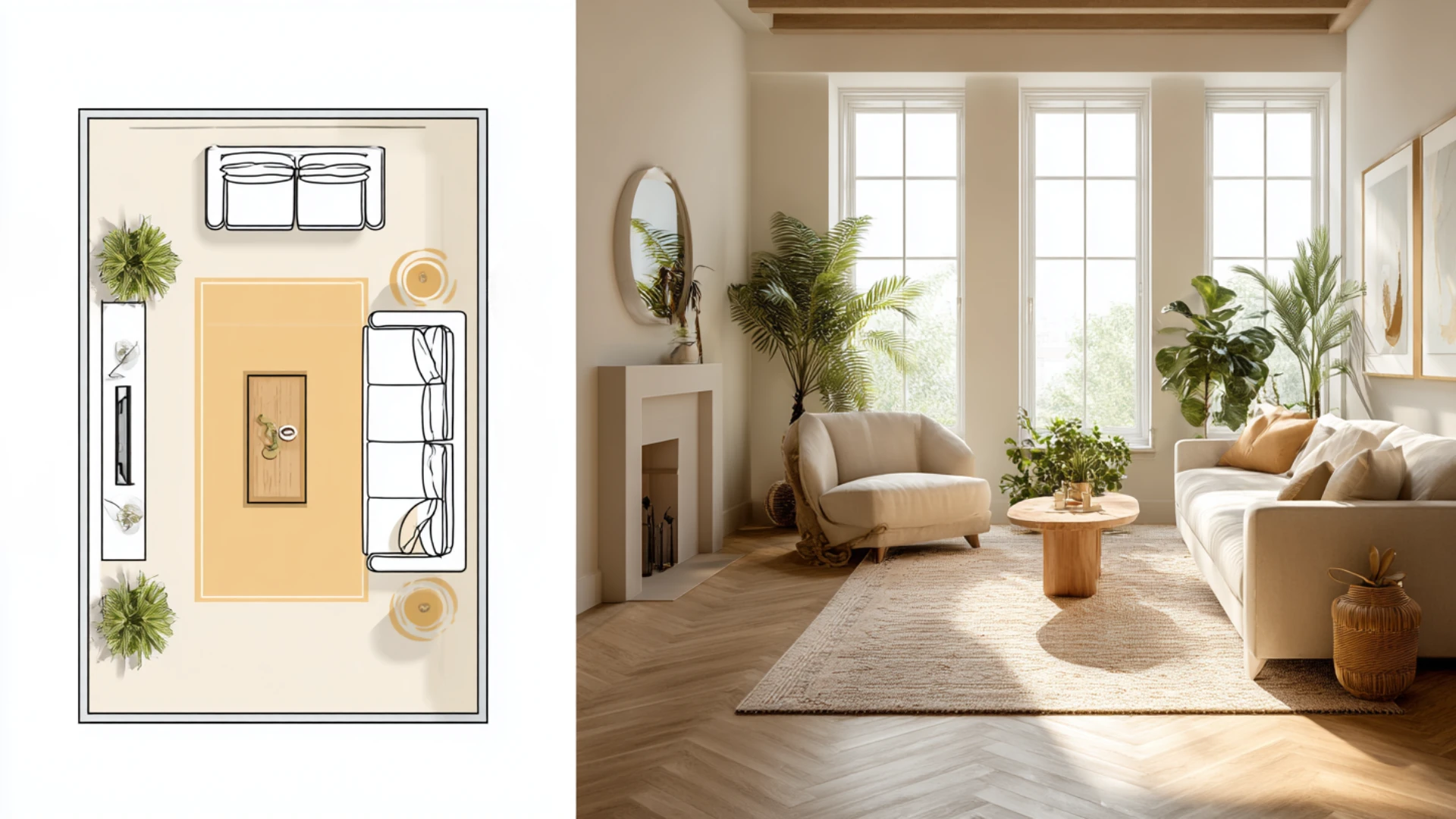
Where you place your furniture is what feng shui is all about.
In feng shui, the layout of your living room directly affects how energy moves through the space. A well placed sofa or a clear walkway makes a big impact.
1. Sofa Placement
Your sofa is the most important piece of furniture in the room.
In feng shui, placing it against a solid wall gives you a sense of security and support. It also helps Chi flow around the room without getting blocked.
Avoid floating your sofa in the middle of the room with nothing behind it.
Always place your sofa against a solid wall. If that’s not possible, a low console table behind it works just as well.
2. Avoid Blocking Pathways
Clear pathways are key to good energy flow.
When furniture blocks the natural walking routes in your living room, Chi gets stuck. That can make the room feel heavy and uncomfortable.
Walk through, and anywhere you feel squeezed or blocked, that’s where energy gets stuck, too.
3. Focal Point
Every living room needs a clear focal point.
In feng shui, this helps anchor the energy in the room. A fireplace is ideal, it brings warmth and draws people in.
If your TV is the focal point, balance it out with a plant or a piece of art nearby. It softens the energy around the screen.
Feng Shui Elements in Living Room Design
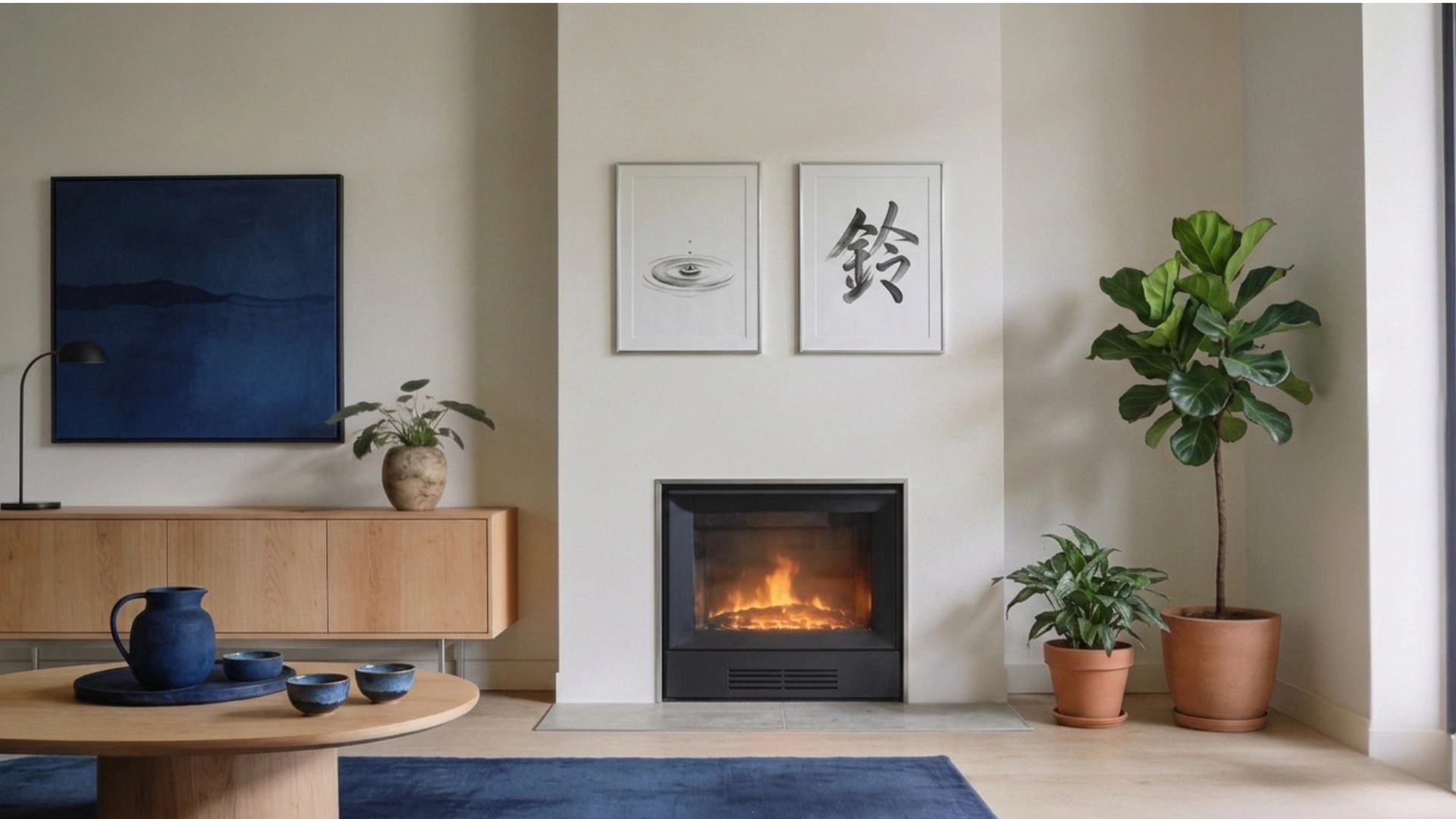
Feng shui is built around five natural elements.
Each one brings a different kind of energy to your living room, and together they create balance.
And you don’t need all five in equal amounts. A mix of them all is as good as it can get.
- Wood: Brings growth and vitality. Add it through houseplants or wooden furniture.
- Fire: Brings warmth and energy. Add it through a fireplace, or shades of red and orange.
- Earth: Brings stability and calm. Add it through earthy tones or natural stone accessories.
- Metal: Brings clarity and focus. Add it through metal frames or white and grey tones.
- Water: Brings flow and calm. Add it through a small indoor fountain or deep blue tones.
How to Feng Shui Your Living Room?
Creating a feng shui living room doesn’t have to be an overwhelming process.
And redecorating from scratch or buying new furniture isn’t necessary. A few thoughtful steps create all the impact.
Step 1: Declutter
Cluttering your living room is the biggest enemy of good energy.
When your living room is full of things you don’t need, Chi has nowhere to go. It gets stuck, and the room starts to feel heavy.
Go through your space and remove anything that doesn’t belong. Clear floors and surfaces.
Cluttered space blocks chi flow and makes the room feel heavy. Clear surfaces regularly and keep only what you need.
Step 2: Fix the Layout
Once the clutter is gone, look at how your furniture sits.
Make sure your sofa is against a solid wall. Check that walkways are clear and easy to move through.
Your seating should face the door, but not directly in line with it. Small shifts in furniture placement can completely change the energy of the room.
Common mistake: Avoid blocking doors and windows, as it will stop fresh energy from entering the room. Keep entrances and windows clear at all times.
Step 3: Add the Five Elements
This is where you use the five elements: wood, fire, earth, metal, and water.
You don’t need to go overboard. A plant here, a candle there, a ceramic bowl on the shelf, and such small touches go a long way.
See what feels missing. Adding even two or three elements can shift the energy noticeably.
Common mistake: Swap sharp edged decor for softer, rounded alternatives, as too many sharp objects creates harsh, unsettling energy in the space.
Step 4: Adjust Lighting and Colors
Lighting plays a big role in how a room feels.
Bright, natural light lifts the energy and keeps the space feeling open. Use layered lighting, a mix of overhead lights, floor lamps, and softer side lights.
Colors are important as well.
Warm, earthy tones work well for a balanced feel. Avoid very dark or very stark colors, as they can make the energy feel flat.
Common mistake: Add layered lighting to brighten and balance the space. Avoid poor lighting as it dulls the energy and makes the room feel flat.
Step 5: Personalize With Intention
Feng shui isn’t about making your room look like a showroom.
It’s about making it feel like yours. Add things that bring you genuine happiness, family photos, artwork you love, mirrors, or objects that hold good memories.
Every item you place in your room carries energy, so be intentional about what you keep.
Common mistake: Avoid placing mirrors opposite doors or directly facing seating, as incorrect mirror placement reflects energy in the wrong direction.
Feng Shui Living Room Decor Ideas
The right decor completely changes the energy of your living room.
In feng shui, every item you place in a room has a purpose. It’s not just about looks. It’s about how each piece shapes the space.
1. Add Plants
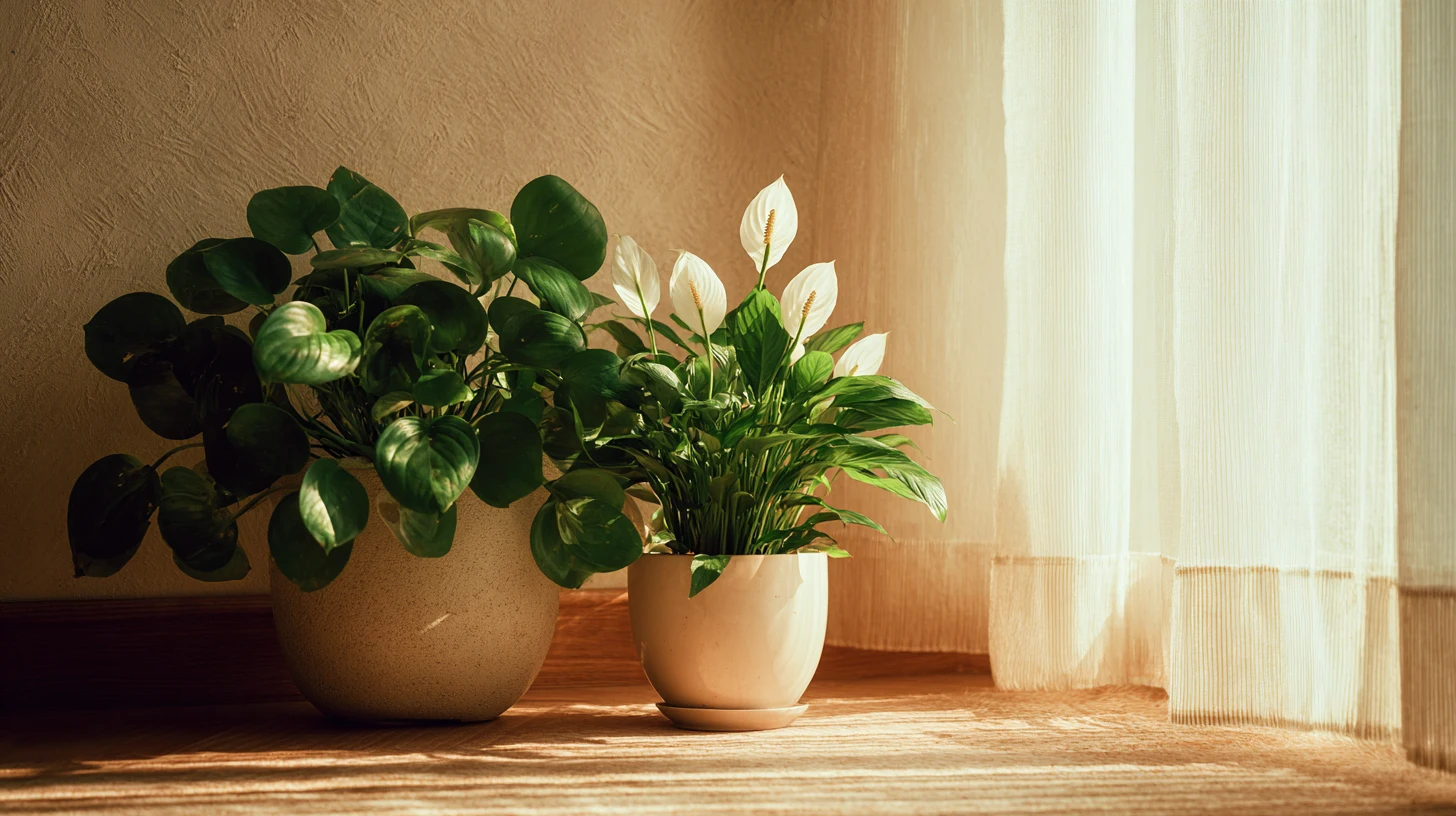
Plants bring life and fresh energy into your living room.
In feng shui, plants with soft, rounded leaves are the best choice. They keep the energy gentle and flowing.
Avoid spiky plants like cacti, as they can create sharp, unsettling energy.
Place your plants in corners or near windows where they get good light and help Chi move freely around the room.
A money plant or a peace lily works really well in a feng shui living room. Both have soft leaves and are easy to care for.
2. Use Mirrors
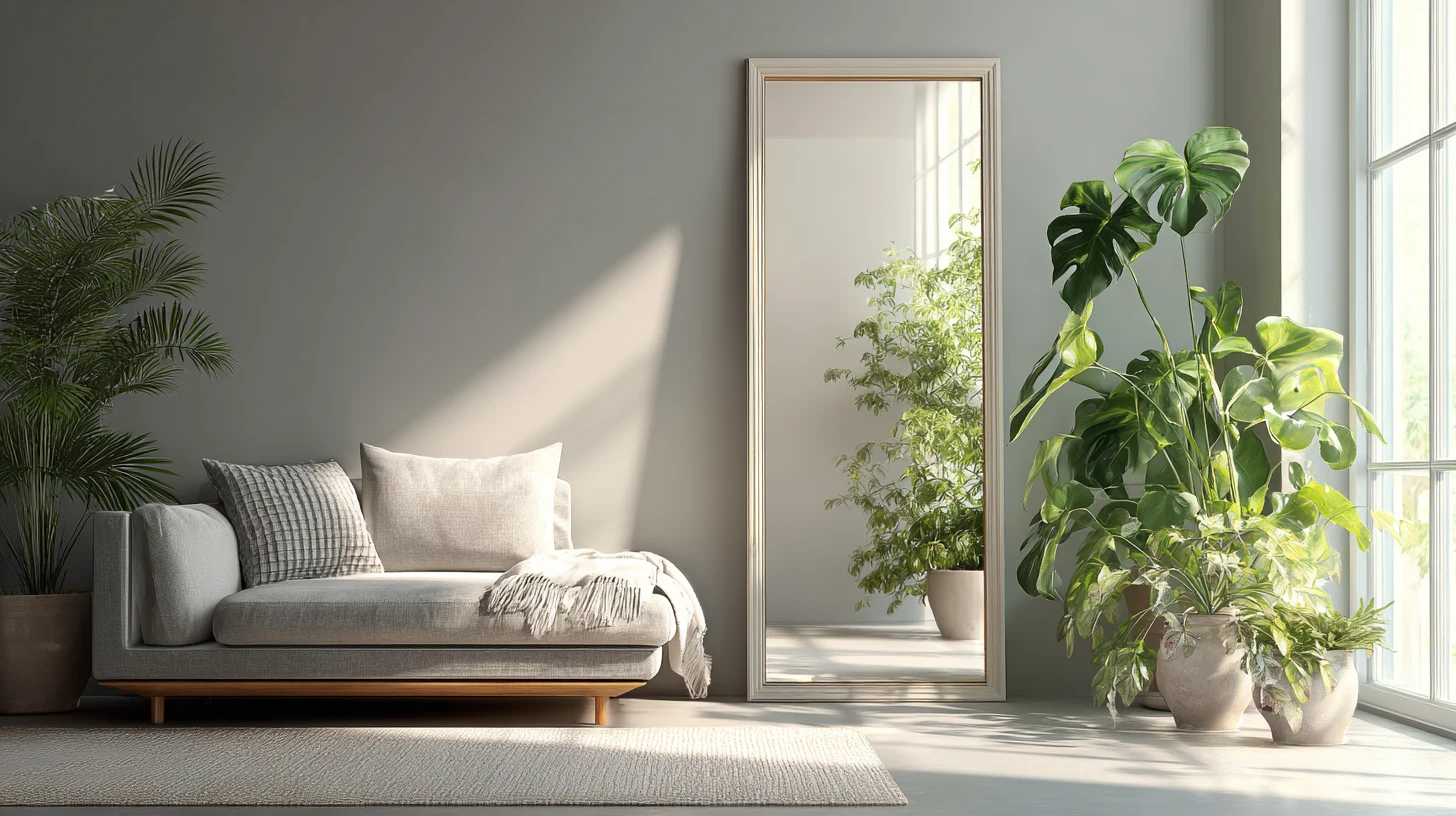
Mirrors are important features of feng shui.
They reflect energy and can make a room feel bigger and brighter. But placement of the mirrors matters a lot.
A mirror that reflects a beautiful view or natural light works well.
Avoid placing mirrors directly opposite the front door, as this pushes energy straight back out, and mirrors that face your seating area directly.
3. Soft Lighting Helps
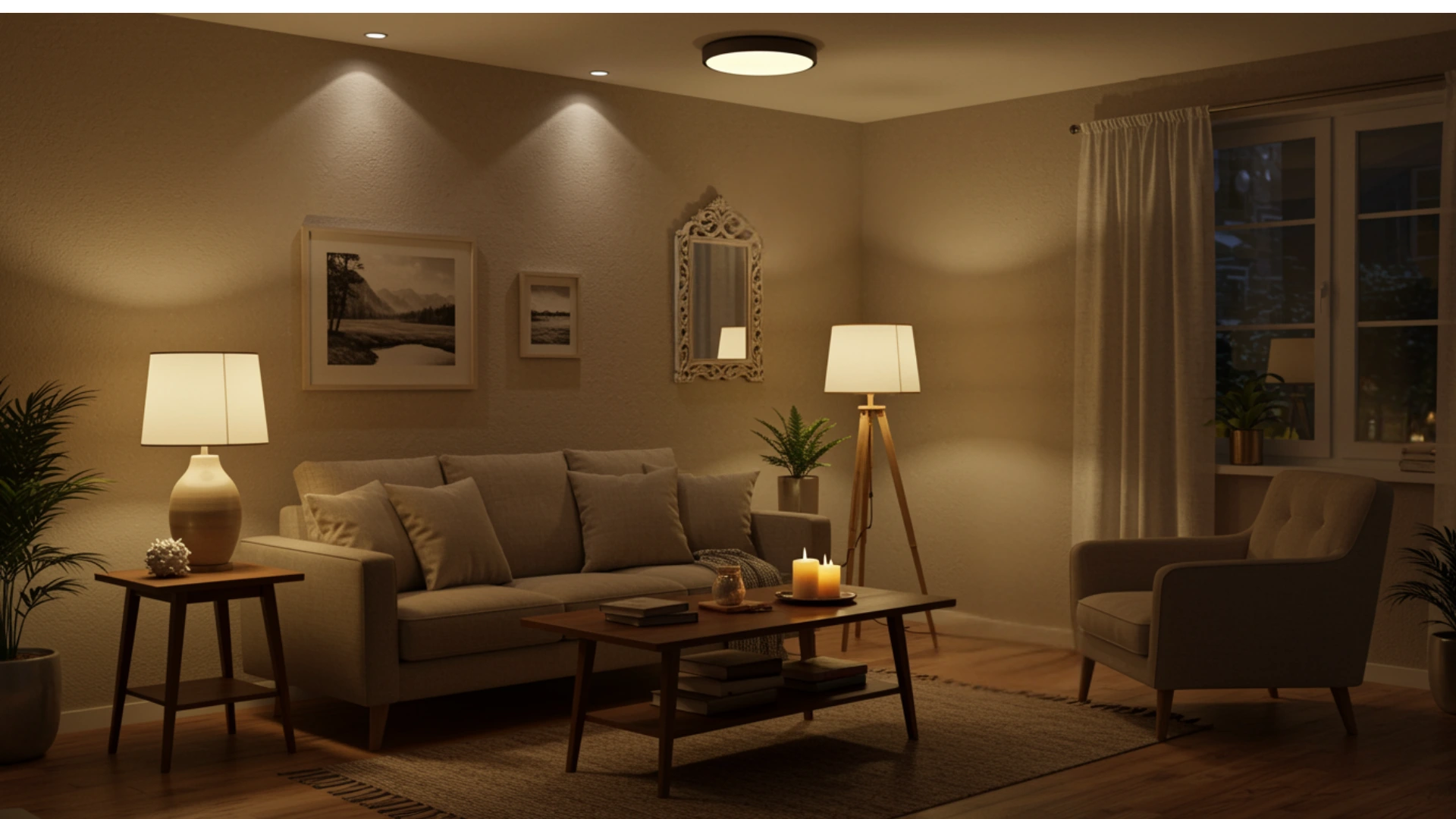
Good lighting keeps the energy in your living room feeling alive and warm.
A single overhead light is rarely enough. In feng shui, layered lighting works best: a mix of ceiling lights, floor lamps, and softer table lamps.
This gives you total control over the mood of the room.
Bright light lifts energy during the day. Softer light in the evening helps the room wind down naturally.
4. Wall Art
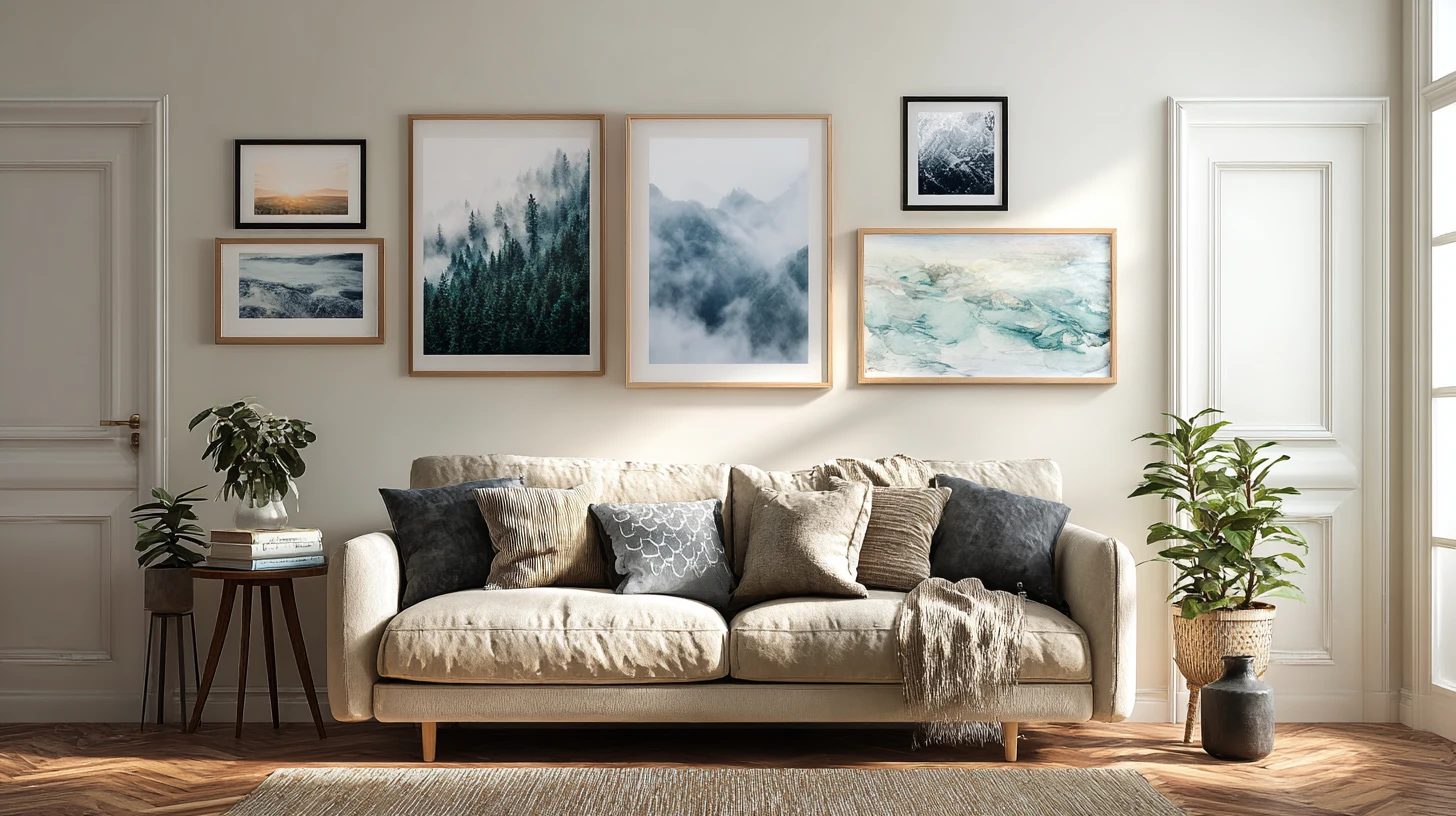
What hangs on your walls affects the energy of your room more than most people realise.
In feng shui, wall art should make you feel good every time you look at it, so choose images that feel calm, positive, and uplifting.
Nature scenes, soft landscapes, or meaningful personal artwork all work well.
Avoid anything dark, chaotic, or aggressive. Your walls set the tone for the whole room.
Feng Shui Living Room Colors
Colors do more than just make a room look good; they make it feel alive.
In feng shui, they directly affect the energy flowing through your living room, and choosing the right colors can make the space feel calm, warm, and balanced.
Each color connects to one of the five elements and brings its own kind of energy.
| Color | Element | Effect |
|---|---|---|
| Green | Wood | Brings growth and fresh energy |
| Blue | Water | Creates calm and steady flow |
| Orange | Fire | Adds warmth and social energy |
| Terracotta | Earth | Grounds the space and adds stability |
| Light Grey | Metal | Brings clarity and a clean, open feel |
Final Thoughts
Creating a feng shui living room is not as complicated as it seems.
It’s not about strict rules. It’s about balance, intention, and making your space feel like a good place to be in.
Feng shui is flexible. It works around your life, not against it.
Keep what you love, remove what drains you, and add what brings you calm.
One small change, and you might be surprised at the psychological impact it creates.
Frequently Asked Questions (FAQs)
1. What is the Best Feng Shui Layout for a Living Room?
Place your sofa against a solid wall, keep pathways clear, and arrange seating so people face each other. A good feng shui living room layout keeps energy moving freely.
2. Which Color is Lucky for a Living Room?
Green and blue are considered lucky. Green brings growth, while blue brings calm. Warm earthy tones like beige and terracotta also work well for balance.
3. What Color Attracts Wealth?
Purple, green, and deep blue are linked to wealth in feng shui. Add them through cushions, artwork, or small decor pieces to keep it subtle.