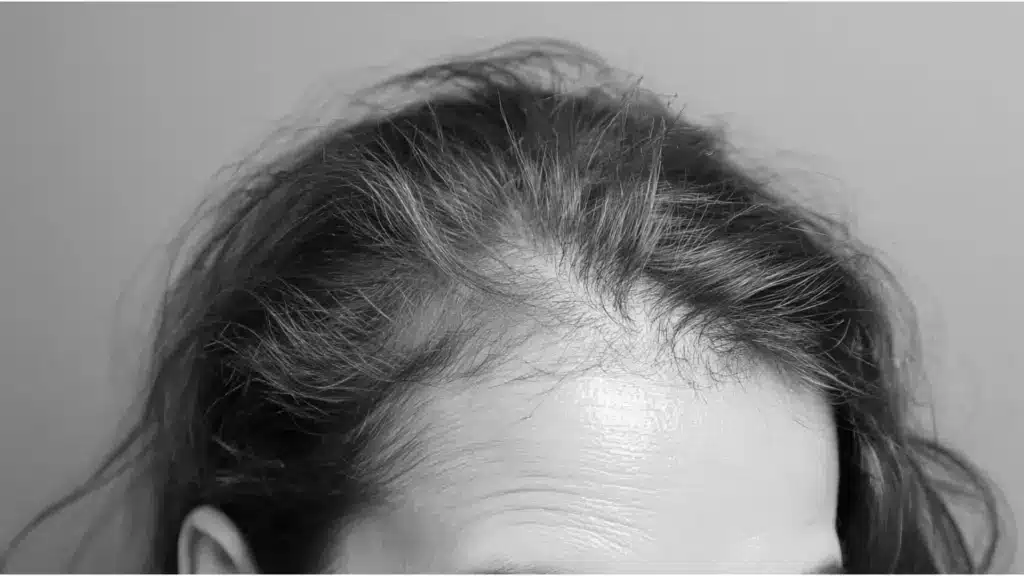


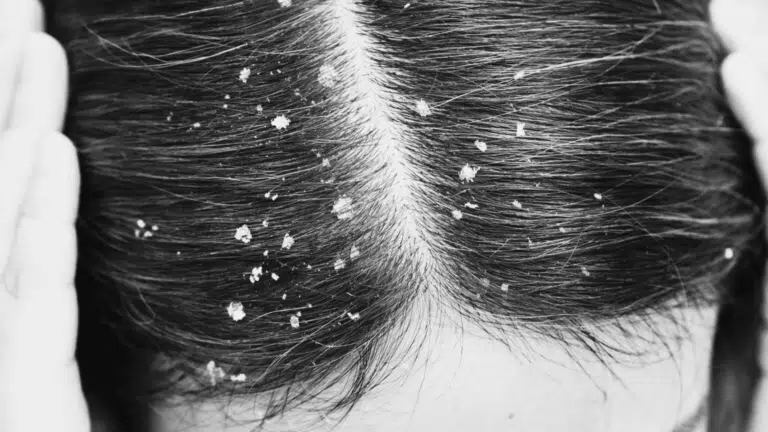
Wondering why you have dandruff suddenly?
You’ve been fine for months, maybe years. Then suddenly, your scalp feels itchy, and those white flakes appear everywhere.
You’re scratching in meetings, brushing off your clothes constantly. It’s frustrating and embarrassing.
There are clear reasons behind it, and I’m going to show you exactly what’s causing yours.
Why do I Have Dandruff all of a Sudden? Explained
Sudden dandruff doesn’t just happen for no reason. Your scalp’s natural balance has shifted, and several factors could be behind it.
Common triggers include:
Stress Spikes
Hormone changes affect your scalp’s oil production. Too much oil creates a perfect environment for yeast to thrive.
Too little oil dries out the scalp, leading to flaky skin.
New Hair Products
That styling gel, dry shampoo, or new conditioner might be irritating your scalp.
Diet Changes
Low levels of zinc, B vitamins, or healthy fats can show up as flakes on your shoulders.
If you’ve recently changed your eating habits, your scalp may be reacting first.
Hormonal Shifts
Pregnancy, menopause, birth control pills, or new medications can alter your scalp’s chemistry and trigger sudden dandruff.
Yeast Overgrowth
Malassezia naturally lives on everyone’s scalp and feeds on skin oils.
When it multiplies too quickly, it causes inflammation, itching, and visible flakes.
Your scalp produces oil called sebum. When something throws this off balance, dead skin cells clump together instead of shedding as usual.
Why do I Have Dandruff all of a Sudden in Winter?
You might have been flake-free all summer, then December hits, and your shoulders look like it snowed.
Your scalp loses moisture fast, and dry skin flakes more. The humidity drops to desert levels in heated rooms.
Winter dandruff triggers:
| Trigger | How It Affects Your Scalp |
|---|---|
| Hot showers | Strip natural oils, causing your scalp to overproduce sebum that feeds yeast. |
| Indoor heating | Dehydrates your scalp for hours, especially overnight. |
| Hat wearing | Traps sweat and create a warm, damp breeding ground for yeast. |
| Less sunlight | Reduces natural UV rays that control scalp fungi. |
| Infrequent washing | Let’s oils and dead cells build up while heavy products don’t rinse out. |
The fix? Turn down your shower temperature to lukewarm. Use a humidifier in your bedroom.
Wash your hair regularly, even in winter, and keep up with your anti-dandruff routine.
Reason Behind Sudden Dandruff and an Itchy Scalp
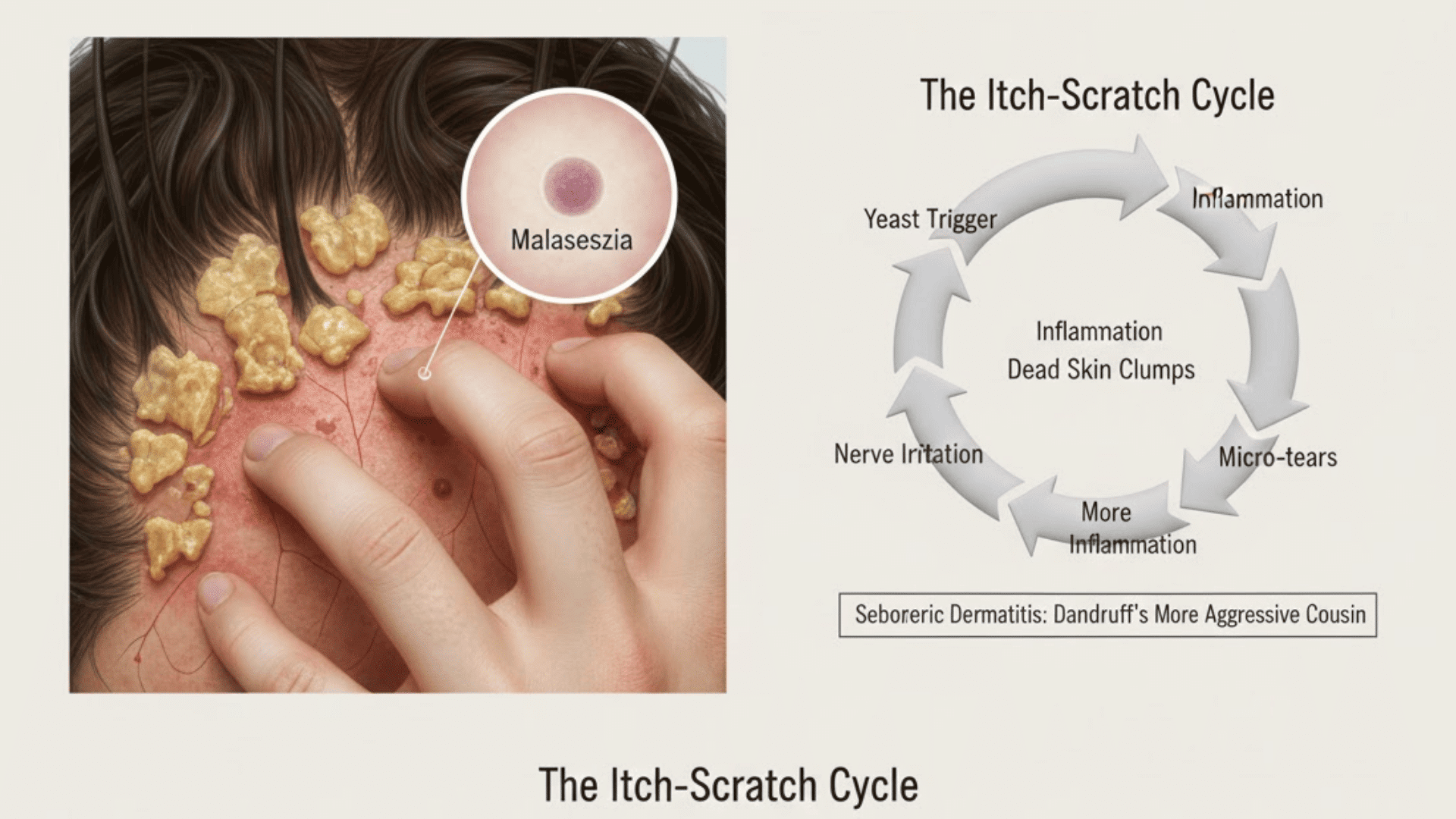
When dandruff comes with intense itching, your scalp is inflamed.
The itch-scratch cycle makes everything worse.
Dead skin clumps irritate nerve endings. You scratch for relief, but this removes your scalp’s protective layer. Your fingernails create tiny tears.
More inflammation equals more itching.
Warning signs to watch for:
- Redness or soreness along with flakes
- Greasy, yellow scales instead of dry white ones
- Itching that keeps you up at night
- Hair loss in patches where you scratch most
Sometimes the itch is worse than the flakes. That usually means seborrheic dermatitis, which is dandruff’s more aggressive cousin.
The same yeast triggers an immune response, creating inflammation that drives you crazy.
Can you Get Rid of Dandruff?
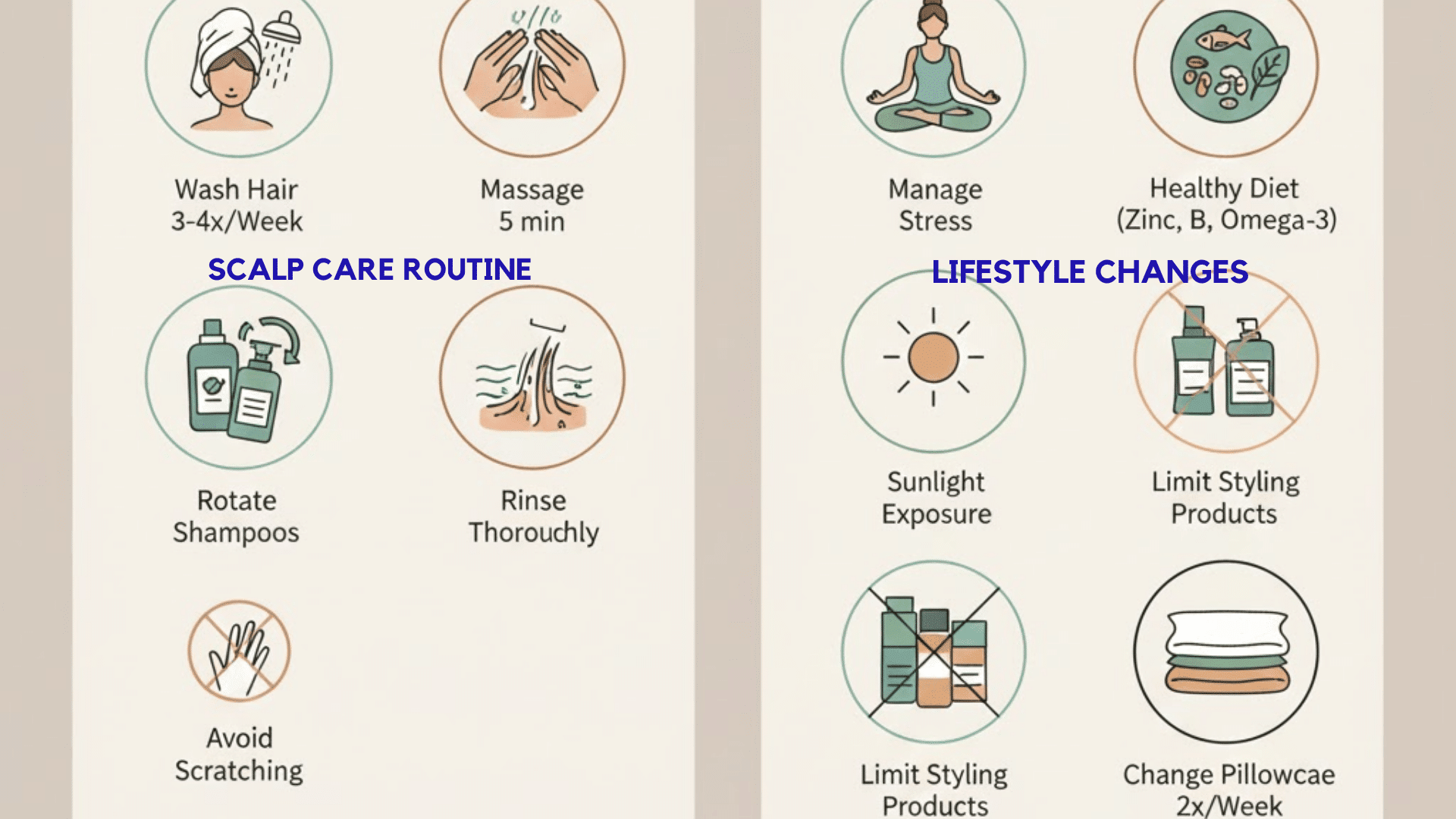
Yes, you can control dandruff. Most people see improvement within a few weeks with the right approach.
How to get rid of your dandruff:
- Wash your hair 3-4 times per week, minimum
- Massage shampoo into your scalp for 5 minutes, not just your hair
- Let it sit and work – most people rush through in 30 seconds
- Rinse thoroughly so no residue remains
- Avoid scratching with your nails
Some people need to rotate between two different shampoos because their scalps adapt to one formula.
Use one for a few weeks, then switch to another with a different active ingredient.
Lifestyle changes that help:
- Manage stress through exercise or meditation
- Eat foods rich in zinc, B vitamins, and omega-3 fatty acids
- Get regular sunlight exposure
- Limit the use of harsh styling products
- Change your pillowcase twice weekly
For stubborn cases, prescription treatments might be necessary. A dermatologist can test for conditions like psoriasis or eczema that mimic dandruff.
Effective Ways to Treat and Manage Dandruff
Managing dandruff requires both immediate treatment and long-term care. You can start with natural options or go straight to medical solutions, depending on severity.
Home Remedies
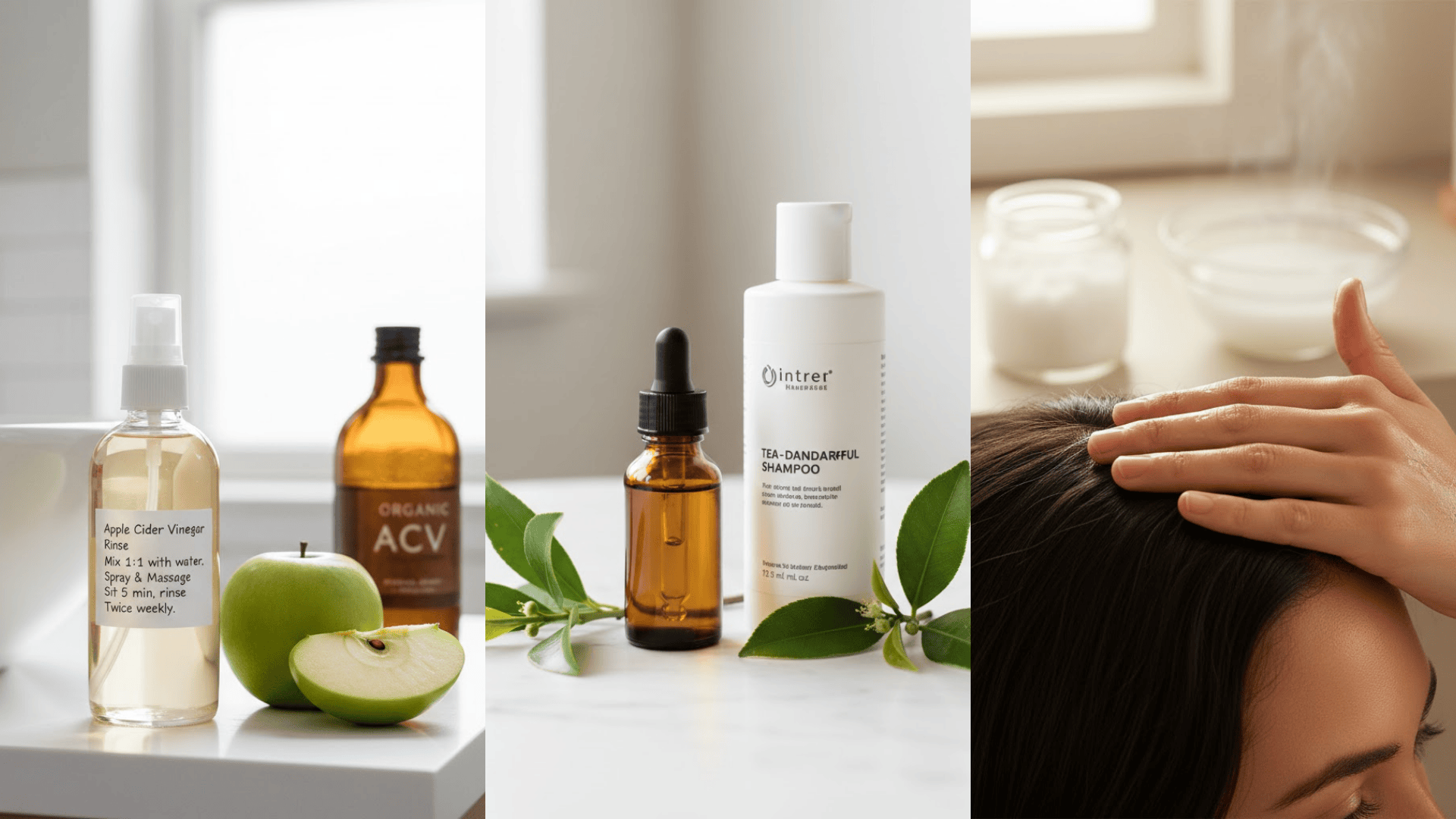
Natural DIY treatments work well for mild dandruff and cost less than store-bought products.
These remedies use ingredients you probably already have at home.
Apple Cider Vinegar
Mix equal parts vinegar and water.
After shampooing, spray this on your scalp and massage for two minutes. Let it sit for five minutes, then rinse with cool water.
The acidity balances your scalp’s pH and reduces yeast. Use twice weekly for best results.
Tea Tree Oil
Add 5-10 drops to your shampoo bottle. Shake well before use. Massage into your scalp and leave for three minutes before rinsing.
This natural antifungal fights the yeast causing dandruff. You’ll see less flaking within two weeks of regular use.
Coconut Oil
Warm two tablespoons until liquid. Apply directly to your scalp in sections.
Massage for five minutes, then leave on for 30 minutes or overnight. Wash out with a gentle shampoo.
This moisturizes dry scalp and kills microbes causing flakes.
Medical Solutions
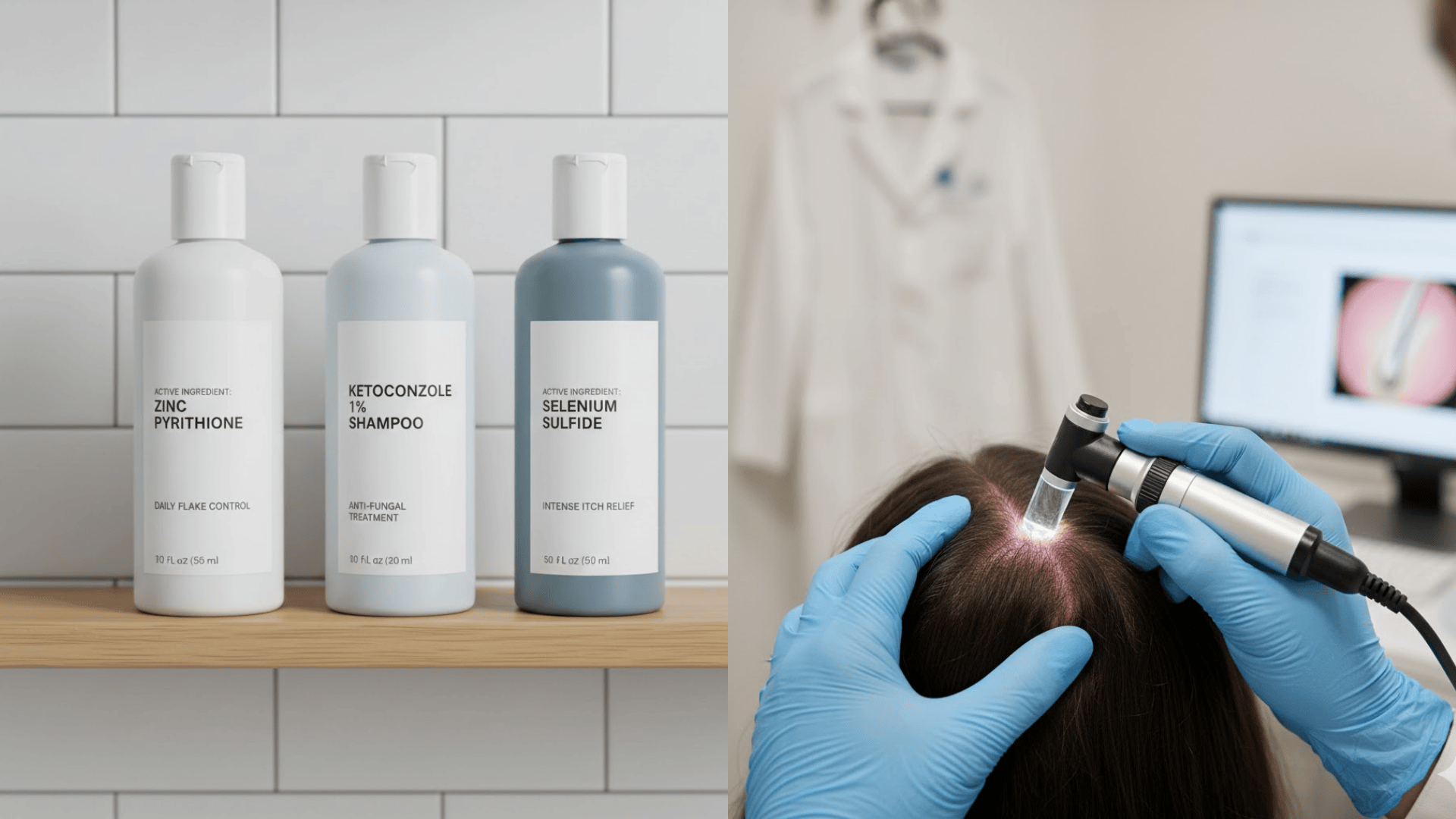
When home remedies don’t work or your dandruff is severe from the start, medical treatments offer faster and stronger results.
Over-the-Counter Shampoos
Anti-dandruff shampoos contain ingredients like pyrithione zinc or ketoconazole that kill fungus.
Apply to wet hair, focus on your scalp, and leave for five minutes. Rinse completely. Use twice weekly, even after improvement, to prevent return.
Prescription Treatments
When drugstore options fail after four weeks, dermatologists prescribe stronger solutions.
Topical steroids reduce inflammation fast. Two percent ketoconazole kills stubborn fungal infections. Medicated foams treat severe cases.
These show improvement within one to two weeks.
Best Shampoos for Treating Dandruff
1. Head & Shoulders: This shampoo contains pyrithione zinc that reduces fungus and bacteria on your scalp. It works well for mild to moderate dandruff.
2. Nizoral: This is the strongest antifungal shampoo you can buy without a prescription. It contains ketoconazole that actually kills the yeast instead of just controlling it.
3. Selsun Blue: This shampoo slows down how fast your skin cells shed and reduces yeast effectively with selenium sulfide. Just be careful if you have light or gray hair.
4. Neutrogena T/Gel: This shampoo uses coal tar to slow how fast your scalp cells flake off. It has a strong medicinal smell, but it’s very effective if you have thick scales or severe dandruff.
5. Neutrogena T/Sal: This shampoo breaks down flakes with salicylic acid so they rinse away more easily. It works well, but it can dry out your scalp.
Wrapping Up
So, why do I have dandruff all of a sudden?
You now know the triggers of stress, such as weather changes, new products, or hormonal shifts.
Start with the right shampoo, wash consistently, and give it two weeks. Your scalp will thank you.
Still struggling after a month? Time to see a dermatologist. Take action today and get those flakes under control.