

I know that feeling when you run your fingers through your hair, and it comes away in clumps. My uncle went through this.
It’s scary, and when you’re on HRT, it feels even more confusing.
You started hormone therapy hoping for positive changes, not this. The connection between HRT and hair loss isn’t something most doctors explain upfront.
Once you know why it happens, you can actually do something about it.
What is Hormone Replacement Therapy (HRT)?
Hormone replacement therapy helps balance hormone levels in the body.
Doctors prescribe it for menopause symptoms, gender transition, or other hormonal issues.
HRT adds estrogen, progesterone, or testosterone, depending on what the body needs. These treatments come in pill, patch, gel, or injection form.
Each person’s dosage differs based on their health goals and current hormone levels.
Benefits of Starting HRT
HRT doesn’t just stop hair loss; it actually helps new growth come back.
1. Thicker Hair Strands
My uncle’s individual hair strands got stronger and thicker. He could literally feel the difference when he touched his hair.
It wasn’t as fragile or brittle anymore, and it no longer broke so easily.
2. Reduced Shedding
The clumps of hair in his brush got smaller each week.
He wasn’t finding hair everywhere anymore. It was such a relief.
3. New Baby Hair
Small new hairs started sprouting along the hairline. They looked like little fuzzy bits at first.
These baby hairs were a sign that the follicles were waking up and growing again.
4. Improved Hair Texture
Hair felt softer and smoother. The dry, straw-like texture slowly disappeared.
Styling became easier because hair was healthier and more manageable overall.
5. Fuller Appearance
The bald spots started filling in.
Hair looked fuller and healthier, which boosted his confidence so much during the transition.
Side Effects of HRT
Hormone replacement therapy affects the body in many ways beyond hair. Knowing the potential side effects helps people make informed treatment decisions.
Estrogen-related side effects:
- Breast tenderness and swelling
- Headaches or migraines
- Bloating or water retention
- Blood clot risk increases
- Vaginal bleeding and spotting
Progesterone-related side effects:
- Mood changes and depression
- Acne breakouts
- Weight gain
- Dizziness
- Change in menstrual bleeding pattern
Other related side effects:
- Leg cramps
- Hot flashes
- Changes in libido
- Gallbladder problems
- Skin irritation
When HRT Helps and When it Does Not?
HRT can be genuinely beneficial for women experiencing menopause, easing hot flashes, night sweats, mood swings, vaginal dryness, and bone loss.
For men with clinically low testosterone, it can restore energy, libido, and muscle mass.
However, HRT is not ideal for everyone.
It may carry risks for those with hormone-sensitive cancers, blood clot history, or cardiovascular disease.
It also won’t resolve symptoms unrelated to hormonal imbalance. Proper diagnosis and medical supervision are essential before starting any HRT regimen.
Can HRT Trigger Hair Loss?
HRT changes the body’s hormone levels. These shifts can trigger hair loss in several ways. The reasons differ from person to person.
Hormonal Imbalances During HRT
The body needs time to adjust when new hormones enter the system. These imbalances confuse hair follicles.
They might stop growing hair or push strands into a resting phase too early.
The follicles react to unstable hormone signals, which lead to increased shedding.
Increased Sensitivity to Androgens (DHT)
Some people’s hair follicles are extra sensitive to DHT, a powerful androgen.
When HRT introduces testosterone or changes how the body processes hormones, DHT levels can rise.
This hormone shrinks hair follicles over time. The follicles produce thinner, weaker strands.
Eventually, they may stop producing hair altogether in sensitive areas.
Estrogen Fluctuations and Hair Shedding
Estrogen helps hair stay in its growth phase longer.
When estrogen levels drop or fluctuate during HRT, hair enters the shedding phase sooner than normal.
Many strands fall out at once. This creates noticeable thinning. The link between HRT and hair loss often shows up when estrogen changes.
Progesterone and Testosterone Changes
Progesterone and testosterone work together to affect hair growth. Too much testosterone can trigger hair loss on the scalp.
Meanwhile, progesterone can either protect hair or contribute to shedding.
When HRT changes hormone levels, the hair follicles respond by changing their growth patterns, leading to unwanted hair loss.
Incorrect HRT Dosage or Formulation
The wrong dose can cause more problems than it solves. Too much or too little hormone throws the body off balance.
Different formulations (pills, patches, gels) absorb at different rates.
What works for one person might not work for another. Finding the right combination takes time and testing.
Types of Hair Loss Linked to HRT
Hair loss from HRT shows up in different patterns. Each type has its own causes and characteristics.
1. Telogen Effluvium (Temporary Shedding)
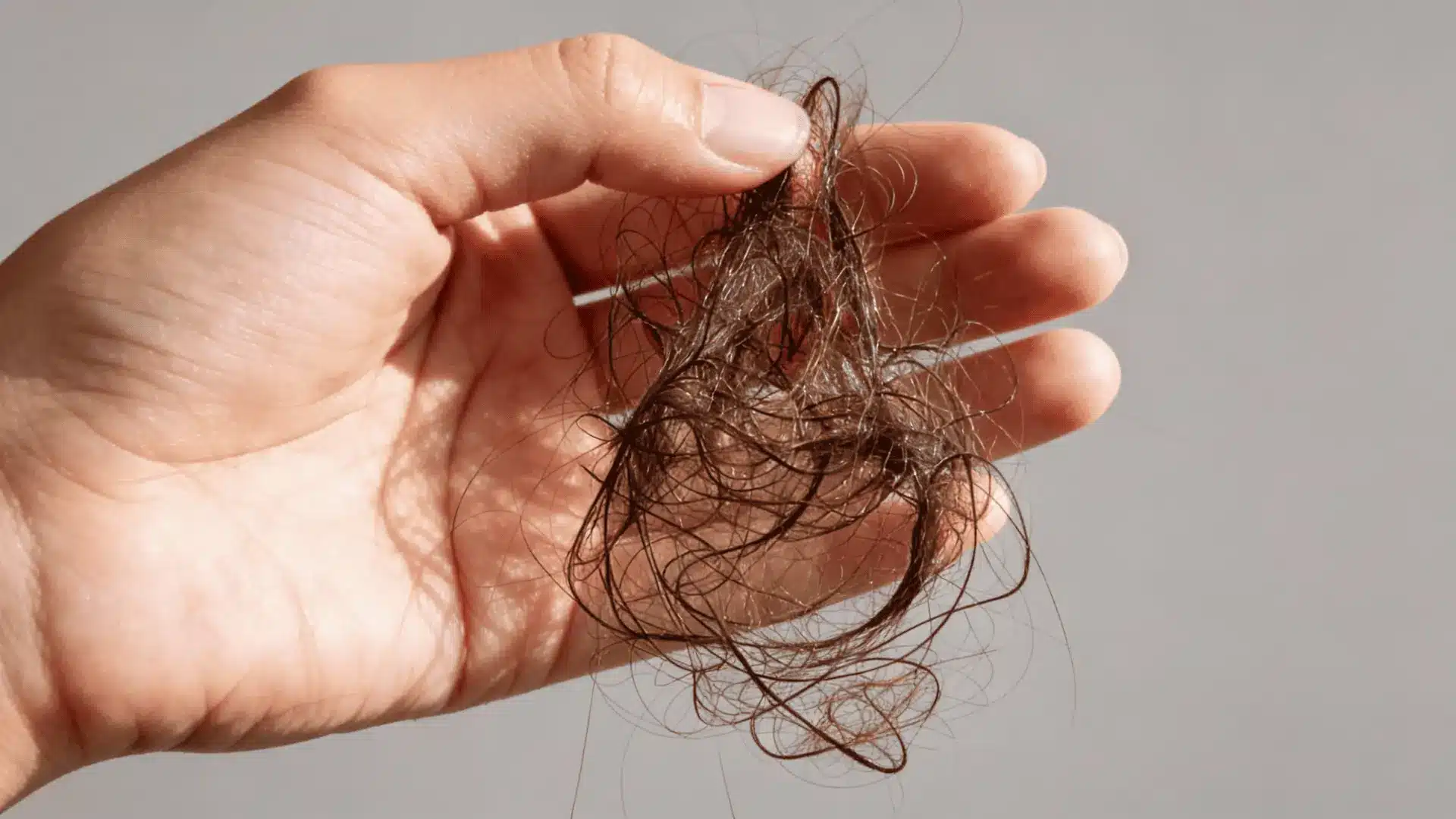
This type occurs when hormones trigger many hair follicles to enter rest simultaneously. Hair falls out in clumps after two to three months.
It looks alarming, but it usually reverses itself.
Once hormones stabilize, new hair grows back. The shedding stops within six months for most people.
2. Androgenetic Alopecia Triggered by HRT
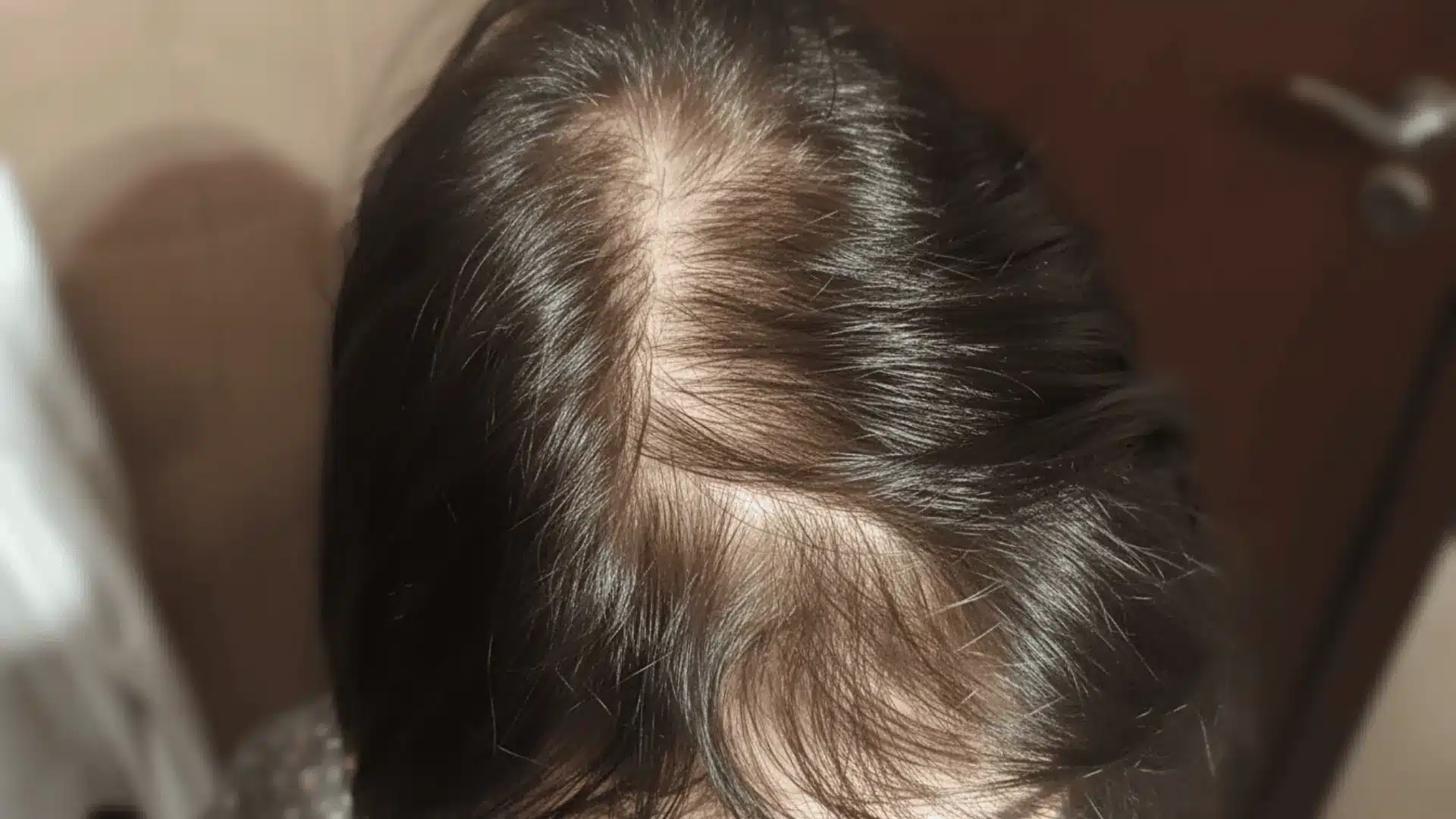
HRT can activate genetic hair loss patterns that were dormant before, like Androgenetic Alopecia.
The hair follicles shrink gradually over time, causing the hair to grow more slowly. This type affects the scalp in specific areas.
Men typically lose hair at the temples and crown. Women experience thinning across the top of the head.
3. Thinning at the Crown
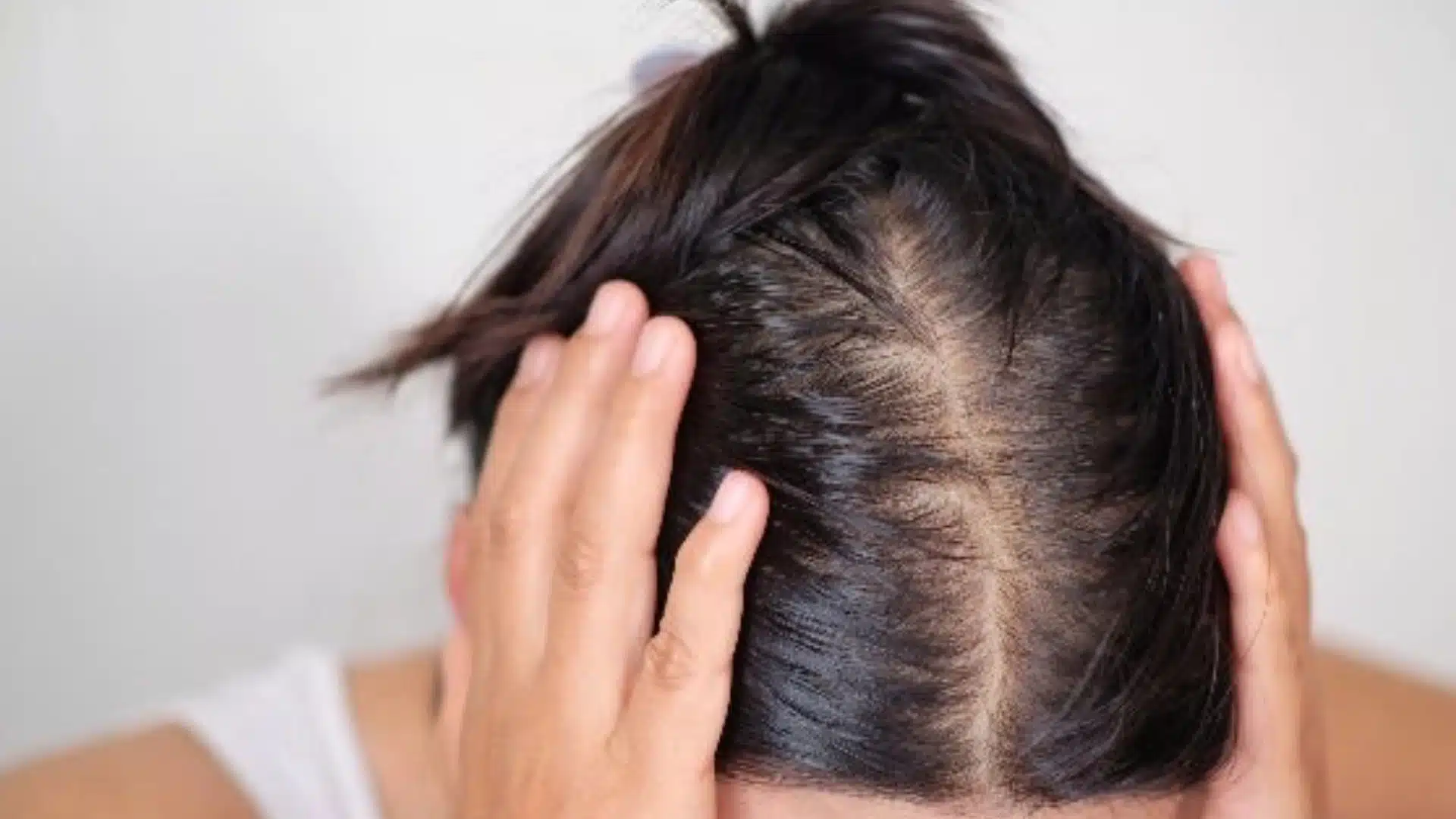
The top of the head and hairline are most vulnerable to hormone changes.
These areas contain follicles that are extra sensitive to androgens. Hair starts to thin noticeably in these spots first.
The scalp becomes more visible through the hair. This pattern often signals that HRT and hair loss are connected.
4. Diffuse Hair Thinning Across the Scalp
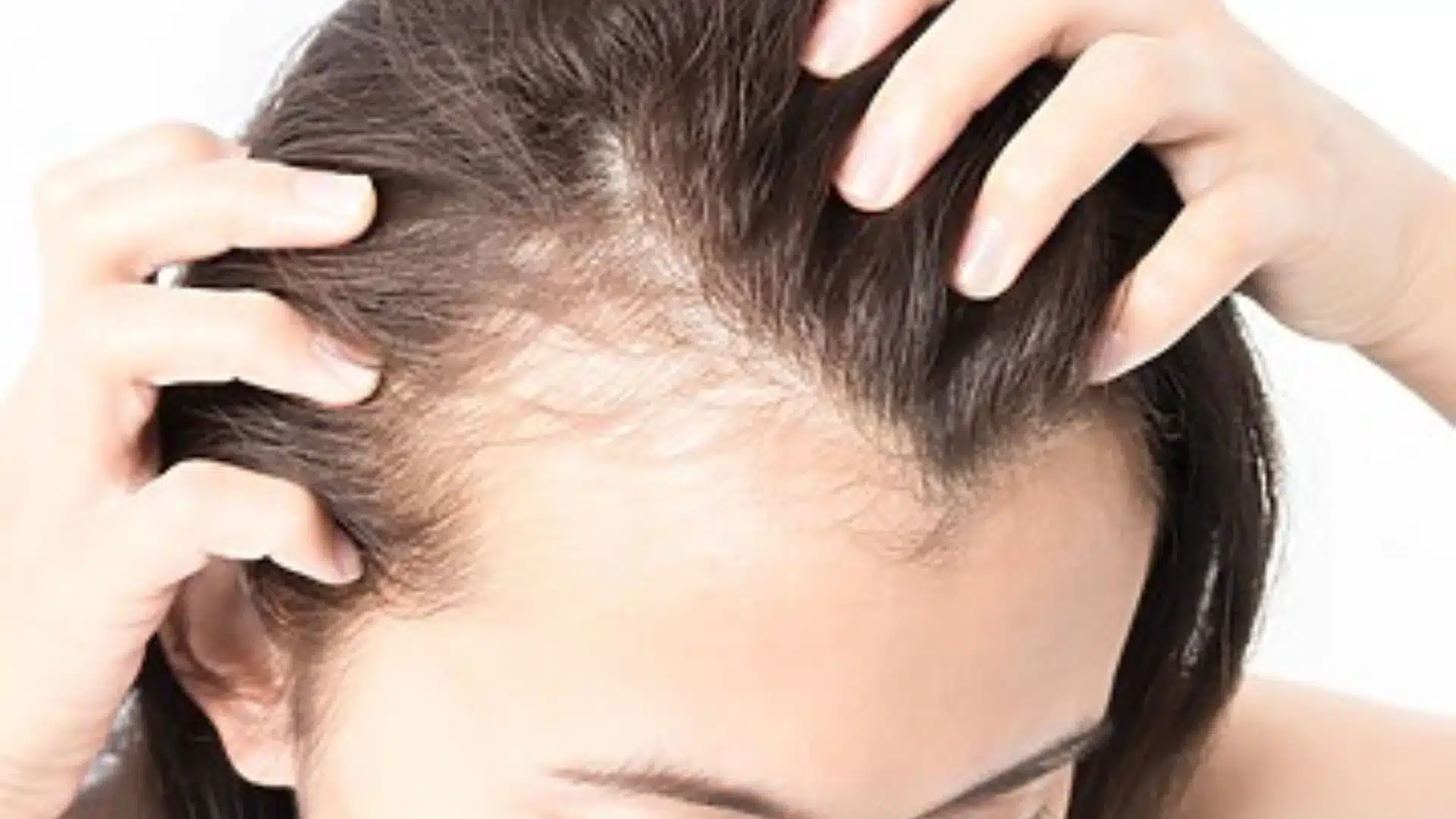
Some people lose hair evenly all over their head instead of in patches. The overall volume decreases gradually.
This pattern makes it harder to notice at first. By the time it becomes obvious, significant thinning has already occurred.
How Much Hair Shedding During HRT is Normal?
Some shedding in the first few months of HRT is completely normal.
My uncle lost hair during his initial adjustment period, and his doctor assured him it was temporary. Your follicles are reacting to hormonal shifts.
So does HRT help with hair loss in the long run? Yes, but you need to give it time.
However, if shedding continues past six months or you notice bald patches, that’s not normal.
Excessive loss could mean your dosage needs to be adjusted or there’s another underlying issue.
Don’t ignore persistent shedding and talk to your doctor immediately.
Who is More at Risk of Hair Loss on HRT?
Certain groups have a higher chance of losing hair during hormone therapy. Knowing these risk factors helps prevent problems early on.
1. Postmenopausal Women
Women going through menopause already deal with dropping estrogen levels.
When they start HRT, their bodies experience additional hormone shifts, especially during menopause. The scalp becomes sensitive due to menopause.
Adding HRT creates more opportunities for shedding. Many postmenopausal women notice thinner hair within the first year of treatment.
2. Women with a Family History of Hair Loss
Genetics and hair play a significant role in hormone levels. If parents or grandparents experienced thinning hair, the risk increases significantly.
The inherited sensitivity to hormones means follicles react more strongly to changes.
Even small fluctuations in hormones can trigger noticeable shedding in these individuals.
3. Individuals with Thyroid or PCOS Conditions
Thyroid problems and PCOS already disrupt hormone balance on their own.
Adding HRT creates even more complexity in the body’s hormone system.
These conditions make hair follicles more vulnerable to changes. The combination often results in faster or more severe hair loss.
4. Those Starting or Stopping HRT Suddenly
Abrupt hormone changes shock the body’s system.
Starting HRT without gradual adjustment overwhelms hair follicles. Stopping suddenly does the same damage.
The body needs time to adapt to new hormone levels. Gradual transitions significantly reduce the risk of HRT and hair loss.
Managing and Reducing Hair Loss While on HRT
Hair loss doesn’t have to be permanent or severe. Several strategies can protect hair while continuing hormone therapy.
Adjusting Hormone Dosage Safely
Working with a doctor to fine-tune hormone levels can stop hair loss.
Lowering the dose slightly might reduce shedding without losing treatment benefits. Blood tests help identify the root cause.
Changes should happen gradually to avoid shocking the system again.
Choosing Hair-Friendly HRT Options
Not all HRT formulations affect hair the same way. Some delivery methods cause less disruption than others.
Patches and gels absorb more steadily than pills. Bioidentical hormones may work better for some people.
Doctors can switch formulations if one causes too much shedding.
Supporting Hair Growth with Nutrition
Hair needs specific nutrients to grow strong and healthy. Protein, iron, zinc, and B vitamins are essential.
A balanced diet feeds the follicles from within. Supplements can fill gaps if diet alone isn’t enough. Drinking plenty of water helps, too.
Good nutrition won’t fix hormonal issues on its own, but it supports overall hair health.
Medical Treatments that can Be Combined with HRT
Minoxidil promotes blood flow to the scalp and stimulates growth.
Low-level laser therapy strengthens existing follicles. Spironolactone blocks androgens that damage hair.
These treatments work alongside HRT to minimize loss. Many people see improvement when they address HRT and hair loss from multiple angles.
Myths vs Reality About HRT and Hair Loss
| Myths | Reality |
| HRT always causes permanent hair loss. | Hair loss from HRT is usually temporary. Most people see regrowth after their hormones stabilize. My uncle got his hair back after six months. |
| You’ll go bald if you start HRT. | HRT can actually reverse male pattern baldness in some cases. It stopped my receding hairline and helped new hair grow back. |
| Hair loss means HRT isn’t working. | Initial shedding shows your body is responding to hormonal changes. It’s often a sign that HRT is actually working as intended. |
| Only older people lose hair on HRT. | Hair loss can happen at any age during HRT. Your age doesn’t determine whether you’ll experience shedding or not during treatment. |
| All HRT types cause the same hair issues. | Different HRT formulations affect hair differently. Estrogen-based HRT often promotes hair growth, while some progestins may trigger shedding in some people. |
Wrapping It Up
Hair loss doesn’t mean HRT is failing you. It’s just your body adjusting to hormonal changes.
Track what’s happening, talk to your doctor, and be patient with yourself.
Thousands of people have dealt with the same thing and come out the other side.
Drop your experience with HRT and hair loss in the comments so that others can relate and know they are not alone.
FAQs
1. Does Estrogen Cause Hair Loss?
Estrogen usually protects hair. However, fluctuating estrogen levels during HRT can trigger temporary shedding in some people.
2. Is Hair Loss from HRT Permanent?
Most hair loss from HRT is temporary. Hair often grows back once hormone levels stabilize and the body adjusts.
3. Can Hair Grow Back After HRT?
Yes. Hair typically regrows after the body adapts to new hormone levels. This process can take several months.
4. Which HRT is Best for Thinning Hair?
Estrogen-dominant formulations with lower androgen activity work best. Patches and gels may cause less disruption than pills.
5. Will Taking HRT Make my Hair Thicker?
HRT can improve hair thickness for some people, especially if low estrogen was causing thinning. Results vary by individual.