


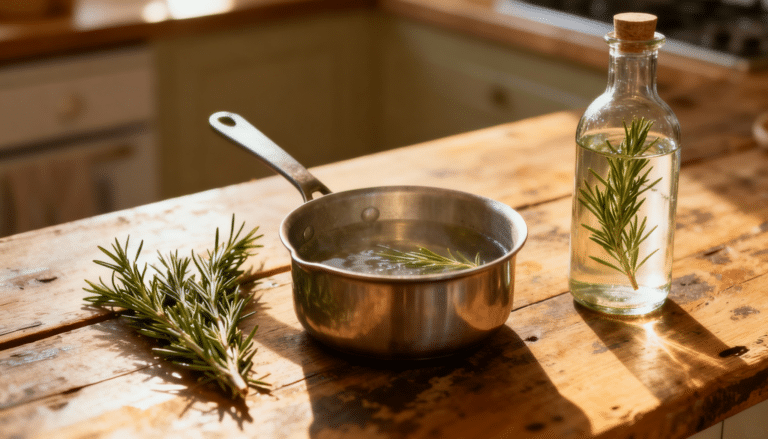
Want thicker, healthier hair without spending a fortune?
Many people struggle with hair that won’t grow. They try expensive products, but nothing seems to work. Hair feels thin and lifeless. It’s frustrating when simple solutions feel out of reach.
Rosemary water might be the answer. This simple home remedy has been used for centuries. It’s easy to make, costs very little, and works wonders for hair growth. People who use it often see real results within weeks.
So, how to make rosemary water for hair at home? And does it actually work?
This blog will show the exact steps to create this hair treatment. Plus, it covers why rosemary is so good for hair health.
The Science Behind Rosemary Water & Hair Growth
Rosemary contains compounds that directly affect hair growth.
The main active ingredient is carnosic acid.
This compound helps repair nerve tissue and improves blood flow to the scalp. Better circulation means hair follicles get more nutrients and oxygen.
Rosemary also has anti-inflammatory properties. It reduces scalp irritation, which can slow hair growth. A calm, healthy scalp creates the right environment for hair to thrive.
Research shows rosemary works similarly to minoxidil, a standard hair growth treatment. One study found that people using rosemary oil saw the same hair growth results as those using minoxidil after six months.
The herb also fights DHT, a hormone linked to hair loss. By blocking DHT, rosemary helps prevent thinning hair.
How to Make Rosemary Water for Hair
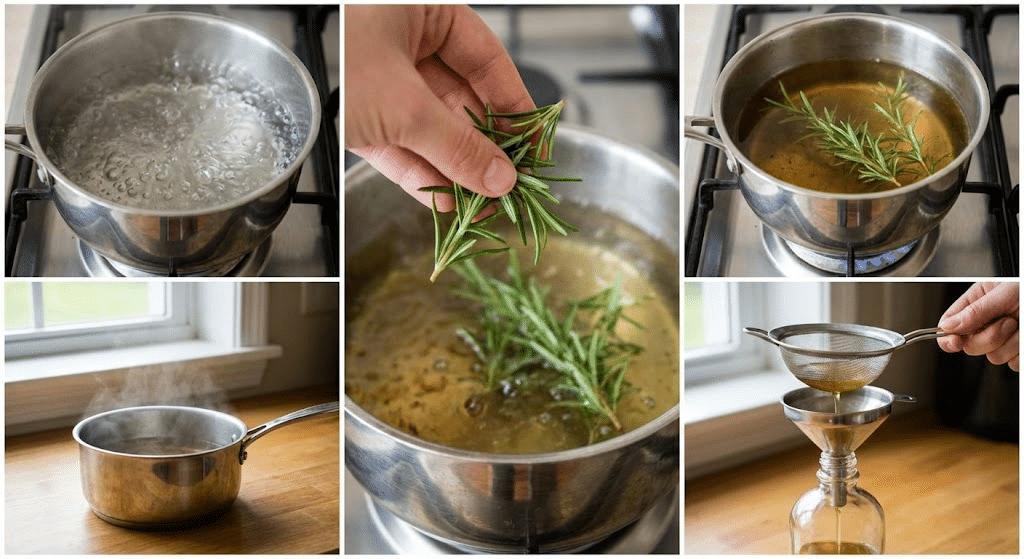
Step 1: Boil the water. Pour 2 cups of water into a pot. Place it on the stove and turn the heat to high. Wait until the water reaches a rolling boil.
Step 2: Add rosemary. Once the water boils, add the rosemary to the pot. Fresh sprigs work best, but dried rosemary is fine too.
Step 3: Simmer. Reduce the heat to low. Let the mixture simmer for 15 to 20 minutes. The water will turn golden brown as the rosemary releases its oils.
Step 4: Cool down. Turn off the heat and remove the pot from the stove. Let the water cool to room temperature. This takes about 30 minutes.
Step 5: Strain and store. Use a strainer to remove all rosemary pieces. Pour the liquid into a clean glass bottle or spray bottle. Store it in the fridge for up to two weeks.
Key Benefits of Rosemary Water for Hair
- Promotes hair growth: The herb stimulates blood circulation in the scalp. This brings more oxygen and nutrients to hair follicles, which means healthier hair growth.
- Reduces hair loss: Rosemary strengthens hair from the roots. People often see less hair in their brushes after a few weeks of use.
- Treats dandruff: The natural properties in rosemary calm irritation and reduce flakes. A clean scalp is key to good hair growth.
- Adds shine: Hair looks more vibrant after regular treatments. The water conditions hair naturally without heavy products.
- Safe and gentle: Unlike chemical treatments, rosemary rarely causes side effects. Most people can use it daily.
Best Ways to Use

There are several effective ways to apply rosemary water to hair.
The simplest method is to use it as a hair rinse.
After shampooing, pour rosemary water over the hair and scalp. Massage it in gently for a minute or two, then leave it in without rinsing. This works well for overall hair health.
Another popular way is the spray method. Pour the water into a spray bottle and spray it directly onto the scalp and roots. Massage it in with fingertips. This can be done daily for best results.
For deeper treatment, apply to the scalp before bed.
Massage it in circular motions for five minutes. Leave it overnight and wash your hair in the morning. This gives the treatment more time to work.
For best results, use it at least three times a week.
Combining Rosemary with Other Natural Remedies
Rosemary water works even better when combined with other natural ingredients. Here are some effective combinations:
| Ingredient | How to Use | Benefits |
|---|---|---|
| Aloe Vera Gel | Mix equal parts with rosemary water. Apply to the scalp for 30 minutes before washing. | Soothes scalp and adds moisture |
| Coconut Oil | Apply oil to hair first, then spray rosemary water on the scalp. | Condition hair while stimulating roots |
| Peppermint Oil | Add 2-3 drops per cup of rosemary water. | Boosts circulation with a cooling effect |
| Apple Cider Vinegar | Mix 1 part vinegar with 3 parts rosemary water. Use as a final rinse. | Adds shine and balances scalp pH |
| Honey | Add 1 tablespoon of honey to half a cup of rosemary water. Apply as a mask for 20 minutes. | Moisturizes hair and locks in nutrients |
Common Issues & How to Overcome Them
Some people face challenges when using rosemary water for hair. Here are common problems and their solutions.
No visible results:
Hair growth takes time. Most people need to use rosemary water for at least four to six weeks before seeing changes. Be patient and stay consistent with applications.
Scalp irritation:
This occurs when the solution is too strong. Dilute the water with more plain water. Start with a weaker mix and increase strength gradually.
Unpleasant smell:
Fresh rosemary smells better than dried. Add a few drops of lavender oil to improve the scent. This also adds extra benefits for the scalp.
Water spoils quickly:
Always store water in the fridge. Make smaller batches that can be used within a week. Clean bottles prevent bacterial growth.
Discussions and Personal Experiences of People on Rosemary Water
People have shared mixed experiences with rosemary water for hair care.
Positive Experiences
Many users report noticing less hair fall within the first month. They find fewer strands on their pillows and in the shower drain. This improvement motivates them to stick with the routine.
Others talk about new hair growth along the hairline after two to three months of consistent use. Small baby hairs start appearing and gradually grow thicker and longer.
People with dandruff share relief stories too, with significantly reduced itching and fewer flakes.
Some mention their hair feels softer and looks shinier after regular use.
Negative Experiences
Some people see no results even after months of dedicated use. They feel disappointed and stop the treatment. A few experience scalp irritation, redness, or dryness from the rosemary water.
This happens especially when the solution is too strong. Others find the smell unpleasant or the routine too time-consuming to maintain daily.
Some mention the water spoils quickly, which wastes ingredients and effort.
Neutral Experiences
Some users notice subtle improvements, but nothing life-changing. Their hair feels slightly healthier, and the scalp seems calmer, but growth remains about the same.
They appreciate that it’s natural and affordable. These people continue using it as a gentle maintenance option without expecting dramatic transformations.
They view it as a safe addition to their regular hair care routine rather than a miracle cure.
Conclusion
Learning how to make rosemary water for hair is one of the simplest steps toward healthier, stronger hair.
It requires just two basic ingredients and less than thirty minutes to prepare.
The benefits speak for themselves: reduced hair fall, better scalp health, and visible new growth. Many people see real improvements within weeks of regular use.
It doesn’t matter if someone uses it as a rinse, spray, or overnight mask; rosemary water fits easily into any routine.