

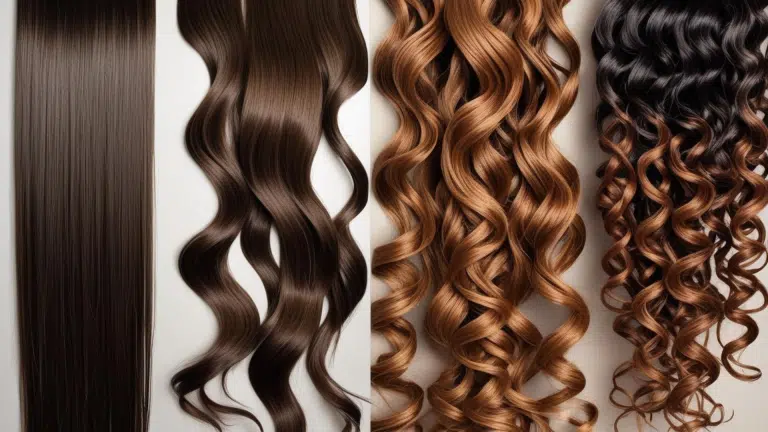
Ever catch a glimpse of your reflection and wonder what your actual hair type is? You’re not alone. Most of us guess or go by what our hairdresser once mentioned, but there’s actually a systematic way of how to find hair type.
The hair type scale takes the guesswork out of identifying your unique hair characteristics. And honestly, knowing your hair type changes everything; from which products work best to how you should style and care for your locks.
In this blog, we’ll walk through exactly how to determine hair type using this simple yet effective system. No more trial and error with products that don’t suit you. Let’s get your hair type nailed down once and for all.
The Andre Walker Hair Typing System Explained
The Andre Walker Hair Typing System, introduced by Andre Walker, is a widely recognized method used to categorize hair textures, primarily focusing on curl patterns.
This system was created to help individuals and hairstylists identify and understand the unique characteristics of different hair types, from straight to curly, coily, and everything in between. Before this system, there was no standardized way to determine hair type scale, leading to confusion and poor hair care advice.
This system revolutionized the hair industry by providing a simple, universal method to identify different hair types and better serve clients’ needs.
The system’s mainstream popularity skyrocketed after Oprah featured it on her show, making it a go-to resource for hairstylists and individuals worldwide. The inclusion of multiple curl categories helped consumers understand their hair better and use the right techniques for styling.
Breakdown of Hair Type Scale
The hair type scale most commonly used today classifies hair into four main types (1–4) and divides each type into subcategories A, B, and C.
These subcategories indicate finer gradations relating to texture, volume, and curl or coil tightness.
Type 1: Straight Hair
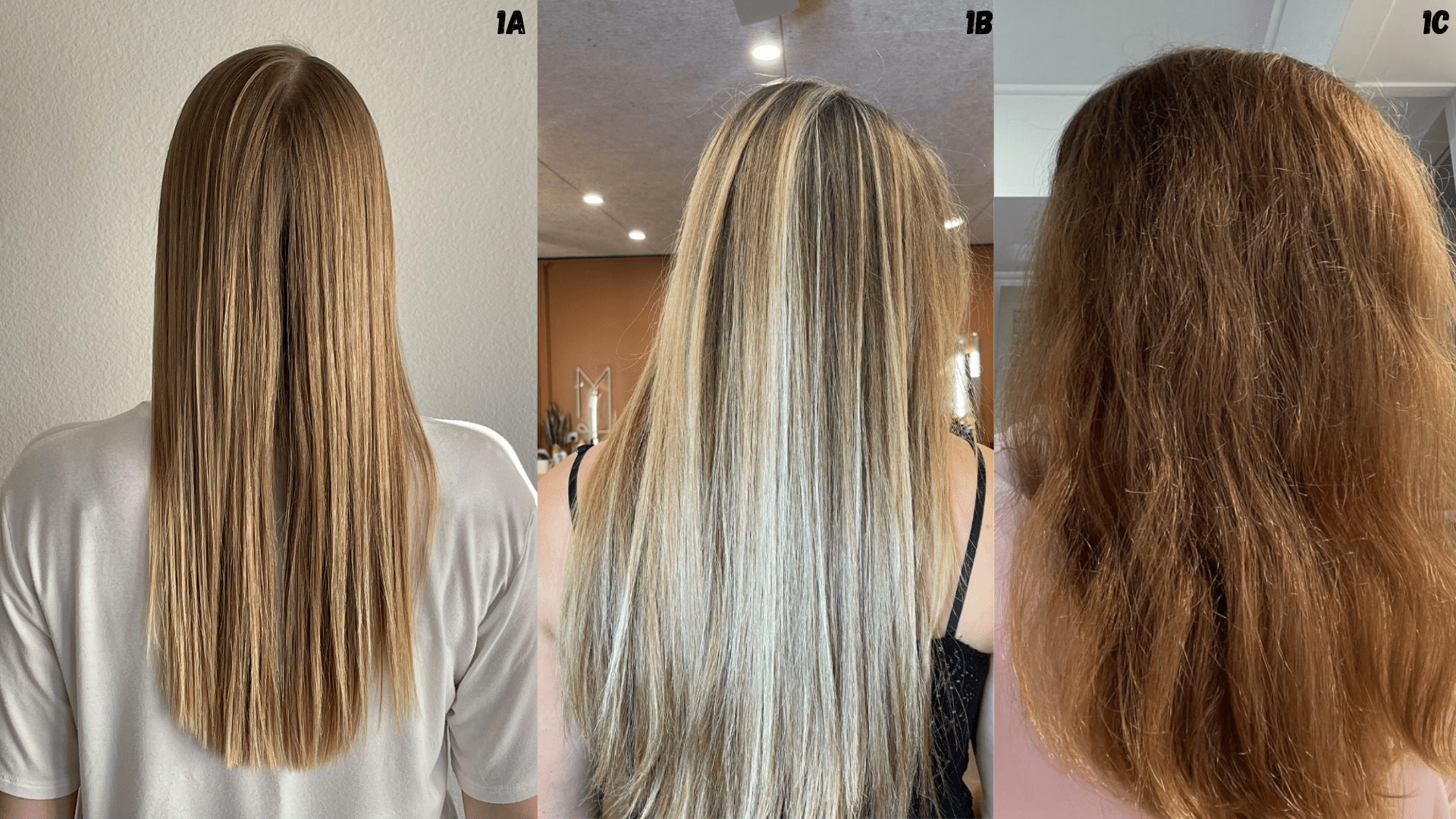
Characteristics:
- No curl or wave.
- Appears smooth, sleek, and shiny.
- Tends to be oily and doesn’t hold curls well.
- Often fine and has less volume compared to other hair types.
Subcategories:
- 1A (Fine): Ultra-smooth, very fine, and soft. Lacks volume and tends to get oily quickly.
- 1B (Medium): Slightly thicker than 1A, with more volume. Can hold curls with the right products but still has a naturally straight texture.
- 1C (Coarse): Thicker and more resistant to styling. Has some volume and texture but is still straight.
Product Recommendations:
Lightweight shampoos, conditioners, and styling creams that don’t weigh hair down. Volumizing products are often beneficial.
Type 2: Wavy Hair
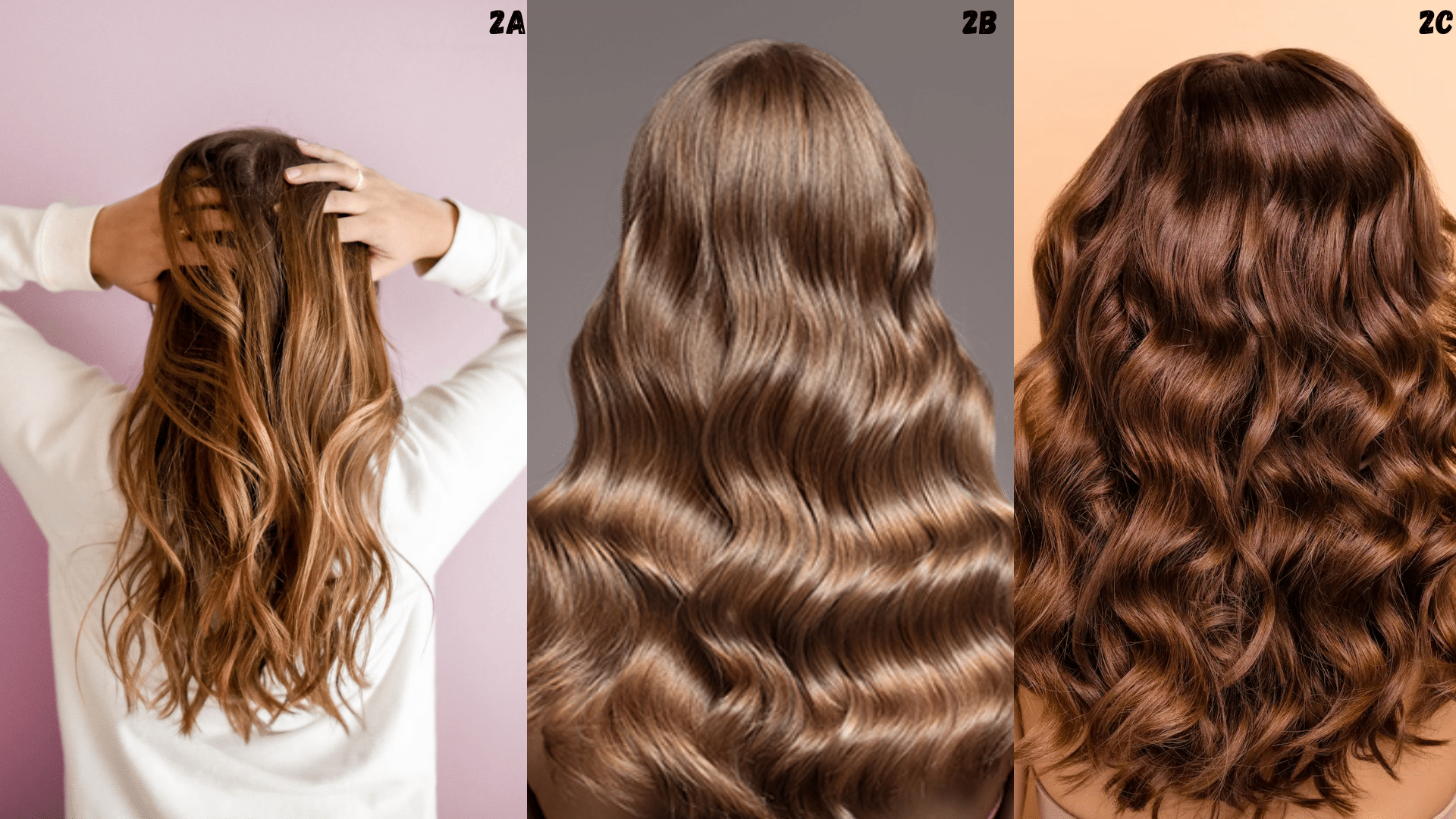
Characteristics:
- Forms a loose “S” wave pattern.
- Tends to frizz and can have volume but is less structured than curly or coily hair.
- Can be prone to flatness or lifelessness, especially if it’s weighed down by heavy products.
Subcategories:
- 2A (Fine): Loose waves that are soft and light. Very easy to manage but prone to frizz in humid conditions.
- 2B (Medium): Defined waves with more texture. It can hold a curl but still lacks the definition of curly hair.
- 2C (Coarse): Waves that are more defined and thicker, with more volume. Can get frizzy easily and may require more control.
Product Recommendations:
Lightweight mousse or texturizing sprays to enhance waves without frizz. Avoid heavy creams that can weigh down the hair.
Type 3: Curly Hair
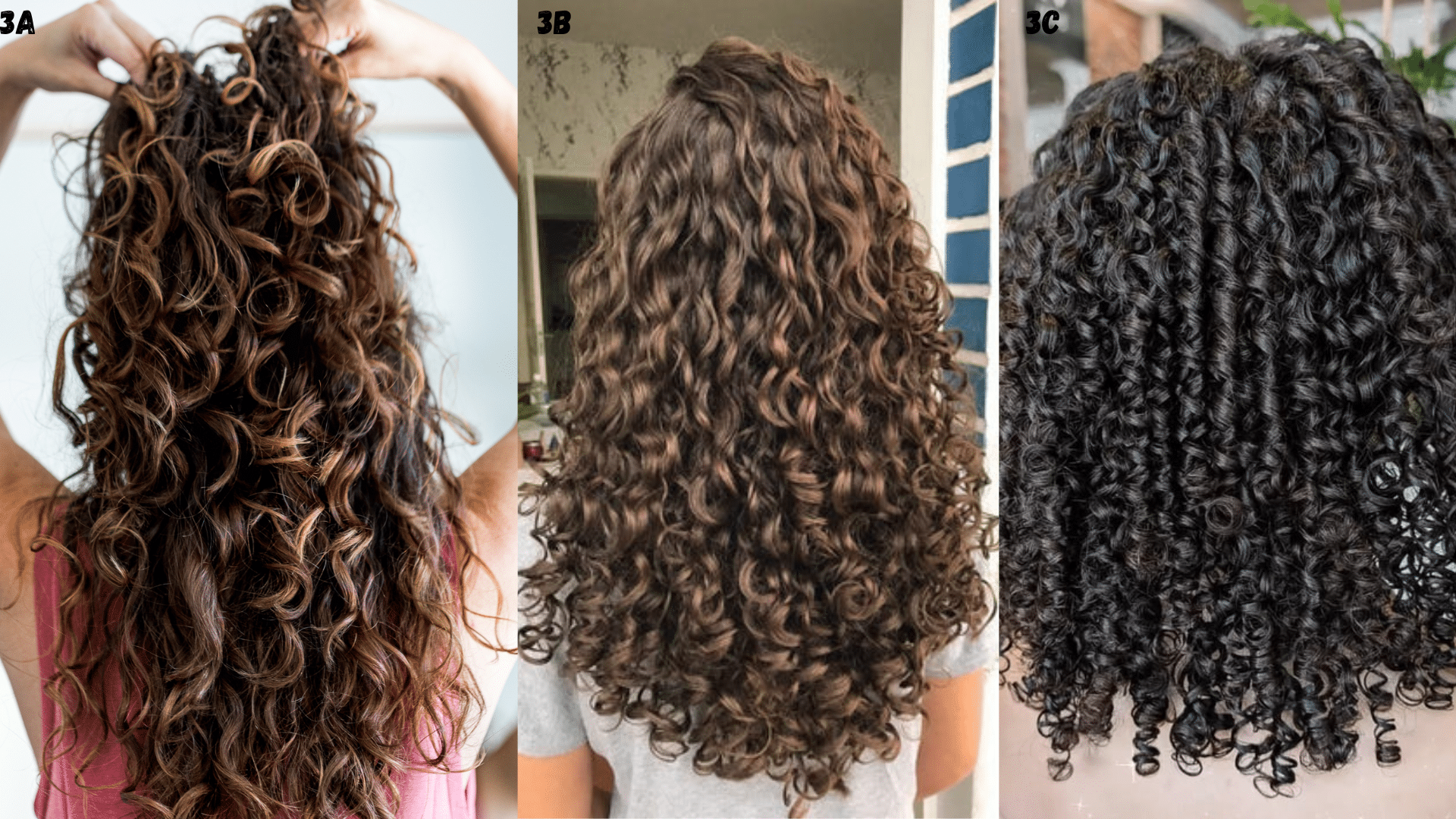
Characteristics:
- Defined, bouncy curls that are often voluminous.
- More textured and structured than wavy hair, with noticeable curl patterns.
- Tends to frizz more than straight or wavy hair due to the curl’s natural shape.
Subcategories:
- 3A (Loose Curls): Soft, loose curls that have a gentle, wave-like structure. Hair may be fine to medium in texture.
- 3B (Tight Curls): Curly hair with more definition, usually thicker than 3A. Curls are springy and can have a bit of frizz.
- 3C (Coily Curls): Tighter, corkscrew curls with more volume. The texture can be thick and dense, and curls are tighter than 3B but looser than 4A.
Product Recommendations:
Moisturizing shampoos and conditioners, curl creams, and gels to define curls and control frizz. Leave-in conditioners can be great for added hydration.
Type 4: Coily/Kinky Hair
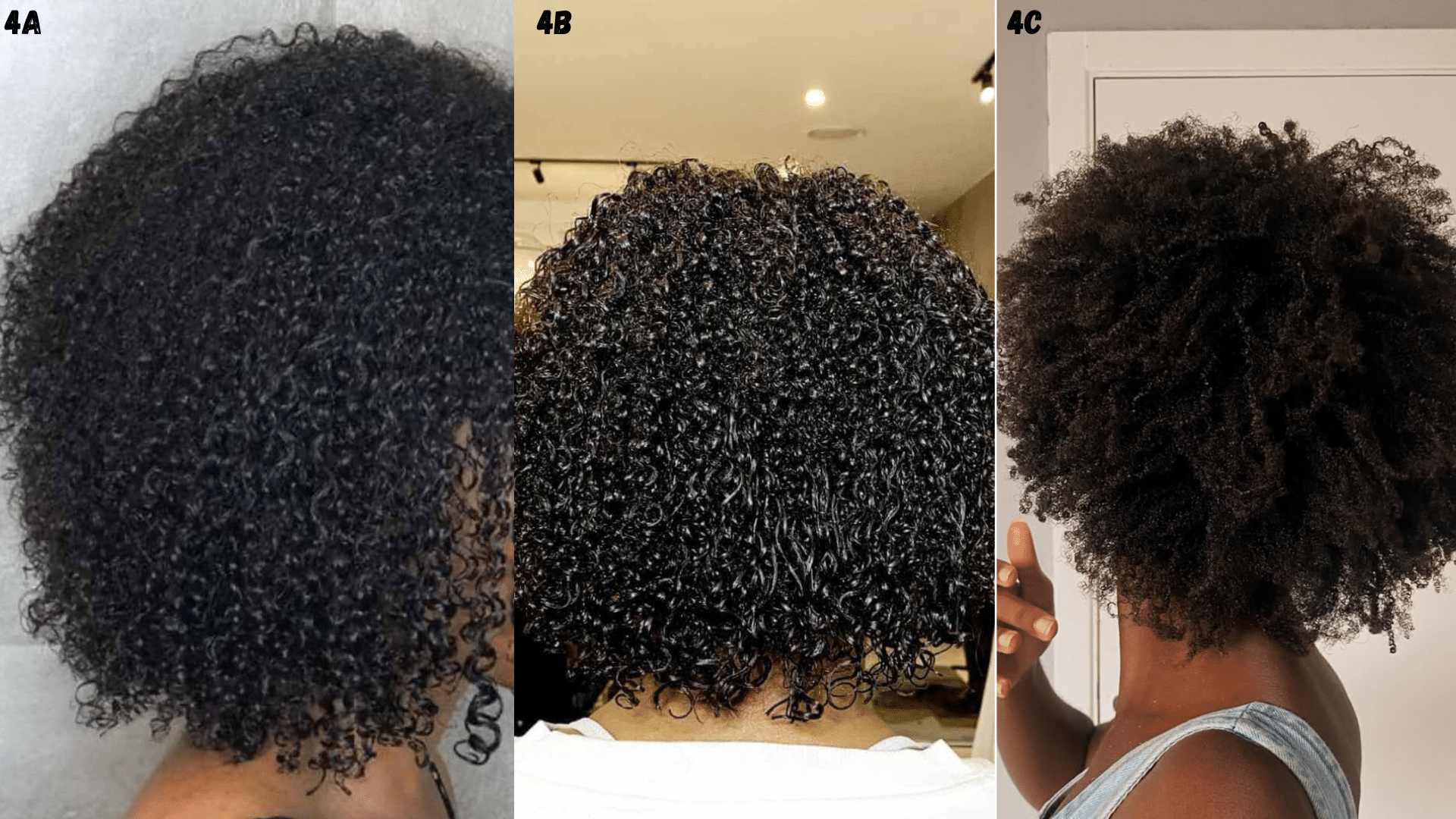
Characteristics:
- Tightly coiled or zigzagged curl pattern, often very textured and dense.
- It can appear frizzy or unruly and is the most delicate type of hair, requiring extra care and moisture.
- Often very dry and fragile due to the natural shape of the curl, which makes it harder for oils to travel down the hair shaft.
Subcategories:
- 4A (Soft Coils): Defined, soft coils that may form “S” shapes. The hair is more manageable than other coily types but still requires moisture and care.
- 4B (Zigzag Coils): Tighter zigzag curl patterns. This type tends to be more fragile, so gentle handling is necessary.
- 4C (Tight, Thick Coils): Extremely tight and dense curls that may not form a clear curl pattern. Often, the most fragile and difficult to manage, requiring extensive hydration and protection.
Product Recommendations:
Heavier oils, creams, and butters for deep hydration. Leave-in conditioners, curl activators, and anti-frizz serums work well to define coils without causing breakage.
How to Determine Your Hair Type
Are you ready to figure out where you fit on the hair type scale? This isn’t rocket science, but doing it right means getting accurate results. Let’s walk through the process step by step.
Step 1: Preparing Your Hair for the Test
The first thing you need is a clean slate. Wash your hair with a clarifying shampoo to remove any product buildup, oils, or styling residue. Skip the conditioner for now, and definitely don’t use any leave-in products or styling aids.
Let your hair air dry completely, without towel scrunching, diffusing, or touching it while it dries. Just let it do its natural thing. This gives you the most accurate picture of your hair’s true texture and pattern.
Step 2: Check Your Curl Pattern
Look at your hair from different angles and focus on the middle sections, not the pieces around your face (they’re often different). Ask yourself:
- Is it straight with no bends or waves?
- Does it have gentle waves that form an S-shape?
- Are there defined spirals or corkscrews?
- Do you see tight zigzag patterns or coils?
Step 3: Assess Your Hair Texture
Take a single strand between your fingers. How does it feel?
- Fine hair feels almost invisible and breaks easily
- Medium hair has some substance but isn’t thick
- Coarse hair feels strong and substantial, like thread
Step 4: Test Your Hair’s Porosity
Drop a clean strand of hair into a glass of water.
| Porosity Test Result | What It Means |
| Hair floats (Low Porosity) | Your hair resists moisture |
| Hair sinks slowly (Normal Porosity) | Your hair absorbs and retains moisture well |
| Hair sinks quickly (High Porosity) | Your hair absorbs moisture too quickly, but may dry out fast |
Quick Styling Tips and Techniques
Master effortless styling methods that work with your specific hair type scale, not against it. From quick refresh techniques to time-saving tricks, these tips help you get great results without spending hours in front of the mirror.
| Hair Type | Styling Tip | Technique |
| Straight | Use lightweight mousse for volume | Blow-dry with a round brush |
| Wavy | Enhance waves with texturizing spray | Diffuse or plop for volume |
| Curly | Use curl cream and gels for definition | Finger-coil or use a diffuser |
| Coily | Use oils and butters for hydration | Twist-outs, bantu knots, or finger-coiling |
Conclusion
Finding your place on the hair type scale isn’t just about labels; it’s about finally understanding what your hair actually needs.
If you found you’re a 2B with waves that need encouragement or a 4C with coils that crave moisture, you now have a clear starting point for better hair care.
Your hair type might be a combination; it might change over time, but now you know how to adapt.
Stop guessing. Start with your hair type and build from there.