

Exosomes are tiny vesicles that cells release naturally. They contain proteins, lipids, and genetic material.
When they travel from one cell to another, they alter the receiving cell’s behavior. In your body, exosomes play an important role.
According to National Library of Medicine, stem cell-derived exosomes can stimulate tissue regeneration and reduce inflammation, a process that researchers have been studying closely in the context of hair follicle regulation.
Most clinical-grade exosomes used in hair treatments are derived from mesenchymal stem cells (MSCs).
What are the Benefits of Exosomes?
Exosomes for people with hair loss work as magic. It not only helps with hair growth but also gives people hope and confidence.
- Cellular-level treatment that reactivates inactive follicles naturally.
- Non-surgical procedure.
- Reduces inflammation that damages hair follicles.
- Improves blood circulation to deliver nutrients to hair roots.
- Strengthens existing hair while promoting new growth.
- Increases hair density in thinning areas.
- Mild side effects compared to medications or surgery.
- Long-lasting results with occasional maintenance.
Exosome also work by upregulating Wnt/β-catenin signaling, a known pathway in hair follicle cycling.
Exosomes don’t just “cover up” the problem; instead, they focus on improving your scalp environment, where healthy hair growth begins.
How Does Exosome Therapy Actually Happen?
If you’re investing in a treatment, you deserve to know what’s going into your scalp and what the process actually looks like.
It’s a very simple procedure. Let’s go through it one by one.
Step 1: Consultation: Your provider evaluates your hair loss pattern and discusses your goals. They assess whether you’re a good candidate for the treatment.
Step 2: Scalp Preparation: The treatment area is cleaned thoroughly. A numbing cream may be applied to lower discomfort during injections.
Step 3: Exosome Preparation: The exosome solution is prepared and brought to the proper temperature. Quality clinics use medical-grade exosomes from verified sources.
Step 4: Injection Process: Your provider uses fine needles to inject exosomes directly into your scalp, normally a 32-gauge needle for scalp injections. The entire process usually takes 30-45 minutes.
Step 5: Post-Treatment Care: You’ll receive aftercare instructions. Most people can resume normal activities immediately, though you should avoid washing your hair for 24 hours.
Step 6: Follow-Up Sessions: You’ll return for additional sessions as scheduled, normally 3-4 treatments total spaced weeks apart.
The follow-up part is what makes this feel like a real treatment plan, not just a one-time thing.
Many people see the best results after consistent sessions.
Exosomes for Hair Loss Before and After
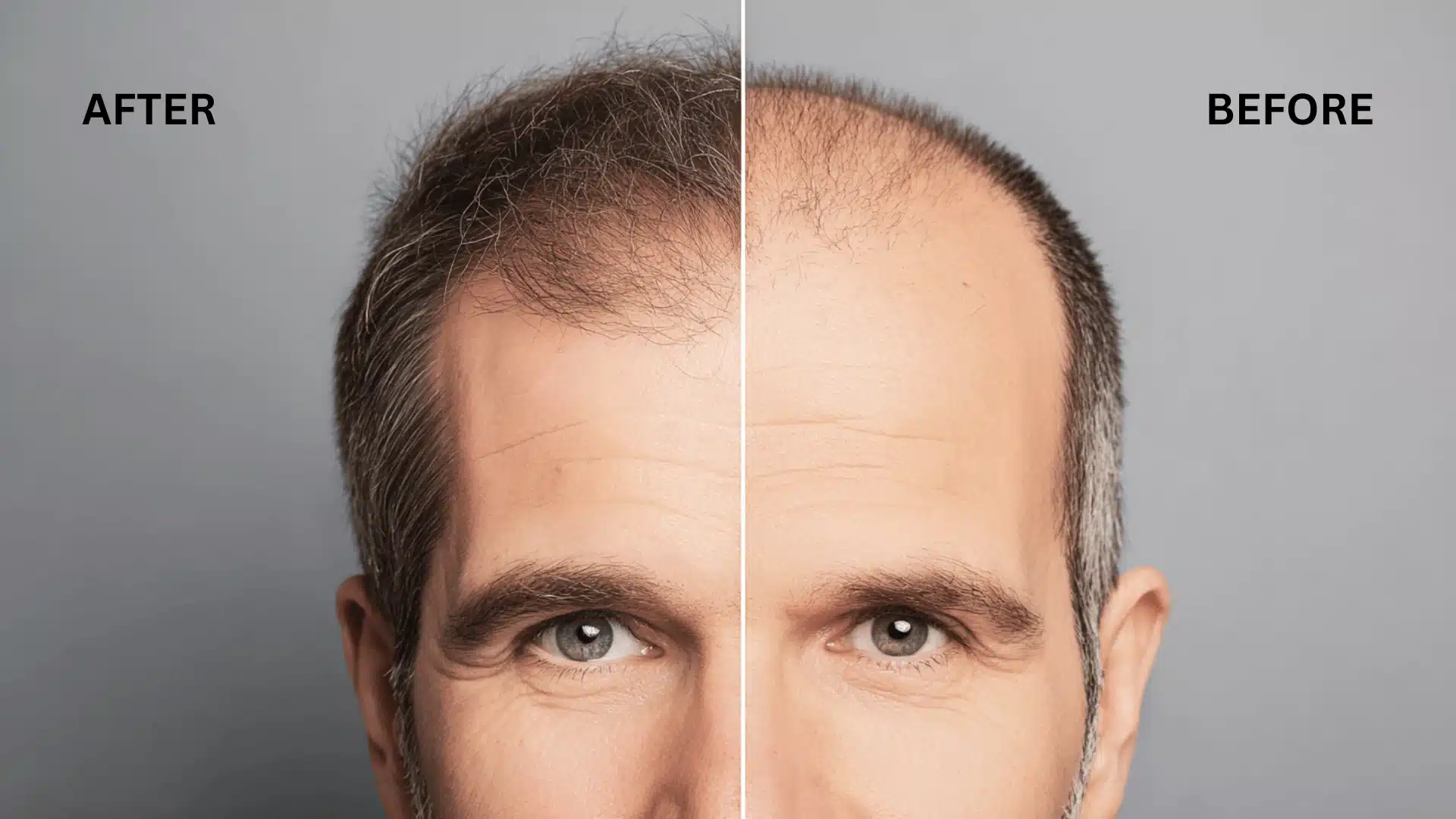
See, your hair doesn’t grow overnight. Even if the follicles are responding, it takes time before you actually see the difference in the mirror.
So just keep a little patience, and let the exosome do its work.
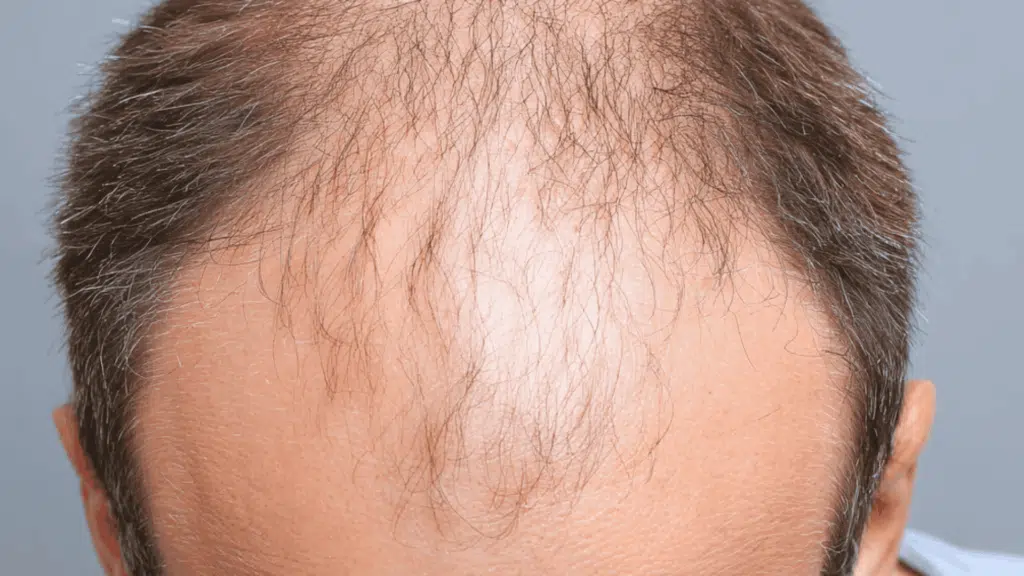
Before Treatment:
- Visible scalp showing through hair.
- Thinning patches on the crown and temples.
- Weak, brittle strands that break easily.
- Lack of volume and fullness.
- Hair appears lifeless and dull.
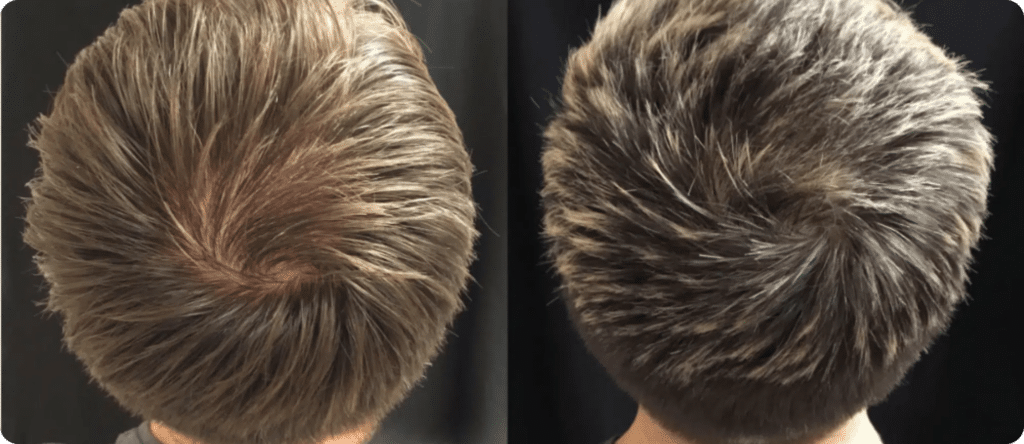
After Treatment (3-6 months):
- Increased hair density in previously light areas.
- Thicker, stronger strands.
- Improved scalp coverage.
- Better hair texture and shine.
- New growth in dormant follicles.
These changes aren’t just anecdotal.
A prospective clinical study, especially examining androgenetic alopecia, found measurable improvements in hair density and thickness after exosome treatment, which aligns with what many patients report during their 3-6 month window.
What are the Side Effects of Exosomes?
Exosome therapy is considered safe, poeple have some side effects.
- Mild redness at the injection sites that usually fades within a few hours
- Swelling in the treated areas, which resolves in a day or two
- Tenderness or soreness on your scalp where the injections were administered
- Minor bruising that disappears on its own within a week
- Temporary itching as your scalp adjusts to the treatment
- Slight discomfort during the injection process, though most people tolerate it well
- Headaches in rare cases, usually mild and short-lived
Most of these side effects are similar to what you’d expect from any scalp injection treatment. The good part is that downtime is usually minimal, so it doesn’t disrupt daily life much.
Cost of Exosomes Treatment
Exosome therapy for hair loss typically ranges from $1,500 to $5,000 per session depending on the clinic, location, and exosome concentration used.
Most patients require 3–4 sessions, bringing the total investment anywhere between $3,000 and $15,000.
Premium clinics using higher particle concentrations (measured in billions/mL) charge more. Since it’s not FDA-approved as a standard treatment, insurance does not cover it.
However, many find the long-lasting results justify the cost over time.
Exosomes for Hair Loss vs Other Hair Loss Options
This is how exosomes work against popular treatments like minoxidil and other hair transplants.
But before that, let’s know if it’s safe to use.
Are Exosomes for Hair Safe?
Yes, exosomes are safe for your hair.
The treatment uses naturally occurring particles, so your body recognizes and accepts them easily, lowering the risk of rejection.
However, safety depends heavily on the quality of the source and proper handling of exosomes.
- Choose licensed clinics with experienced practitioners.
- People with medical conditions should consult their doctor first.
Most side effects are mild and temporary, like slight redness or swelling.
Exosomes vs Traditional Hair Treatments
| Exosomes | Traditional Treatments |
|---|---|
| Regenerates follicles at the cellular level | Blocks hormones or stimulates surface growth |
| 3-4 sessions | Daily/ongoing use |
| Results in 3-6 months | Results in 6-12 months |
| Occasional touch-ups | Continuous use required |
| Uses the body’s own healing | Chemical or hormonal intervention |
| Expensive | Cheaper |
| Targets the root cause | Manages symptoms |
If you’ve ever tried traditional treatments, you probably know the biggest issue: consistency. Daily application sounds easy, but in real life, most people fall off after a few weeks.
That’s one reason exosomes feel appealing: they don’t rely on daily discipline.
Are Exosomes Better than Minoxidil?
Exosomes and minoxidil work differently.
Exosomes are emerging as a potentially superior alternative to Minoxidil in hair loss treatment. But just know that Minoxidil, an FDA-approved topical solution, works by prolonging the hair growth phase and increasing blood flow to follicles.
Whereas exosomes are derived from stem cells, they work at a biological level by delivering growth factors and signaling proteins that regenerate and repair hair follicles from within.
Minoxidil
- requires daily application.
- stops working if you quit using it.
- Results take 6-12 months to appear.
- It’s affordable.
Exosomes
- Has fewer sessions.
- No daily maintenance.
- Results last longer.
If you’re weighing your options, it helps to look at what the clinical data actually says.
A review of clinical studies on exosomes for hair loss suggests that the therapy shows real potential, particularly for people who haven’t responded well to conventional treatments like minoxidil.
Things You Should Know Before Using Exosomes
This section is important because it keeps expectations realistic before you commit to exosome therapy:
- It’s not a one-time fix: You’ll need multiple sessions for best results.
- Results take time: Wait 3-6 months before seeing any changes.
- Cost can be high: These treatments range from hundreds to thousands of dollars.
- Not FDA-approved yet: The treatment is still considered experimental in some regions.
- Individual results vary: What works for others might not work for you.
- Maintenance may be needed: Some people require touch-up sessions to maintain results.
- Insurance won’t Cover It: You’ll need to pay out of pocket for the entire treatment.
Is Exosome Therapy Worth it for Your Hair Loss Stage?
This is the question most people are actually asking, even if they don’t say it directly.
Because no one wants to spend money on a treatment that isn’t meant for their type of hair loss.
Exosomes may be worth considering if:
- You’re noticing early thinning at the crown or temples
- Your hairline is slowly receding
- Your hair feels weaker, flatter, or less dense than before
- You want a non-surgical option before considering transplants
- You’ve tried topical products and didn’t see much improvement
Exosomes may not be the best option if:
- The area is completely bald with no active follicles
- Your hair loss is very advanced
- You’re looking for the cheapest solution
- You want instant, visible results
In most cases, exosomes work best when there’s still something to “wake up.” If follicles are fully dead, even the best treatment won’t magically bring them back.
Are Exosomes for Hair the Solution?
Yes, Exosome therapy is for people struggling with thinning hair.
Is it right for you? That depends on your budget, patience, and the severity of your hair loss.
The investment is important, but many find the results worth it.
Just make sure you work with qualified professionals who use high-quality exosomes.
Frequently Asked Questions (FAQs)
1. Are Exosomes the Same as Stem Cells?
No, they’re not the same. Exosomes are tiny particles released by stem cells, which are actual living cells.
2. How Many Exosome Sessions are Required?
Most people need 3-4 treatment sessions for the best results. Sessions are typically spaced a few weeks apart.
3. What is Exosomes for Hair Loss Injection?
Exosomes are delivered directly into your scalp through injections.
4. Do Exosomes Regrow Hair Completely?
Exosomes can promote new hair growth and thicken existing strands, but results vary from person to person.