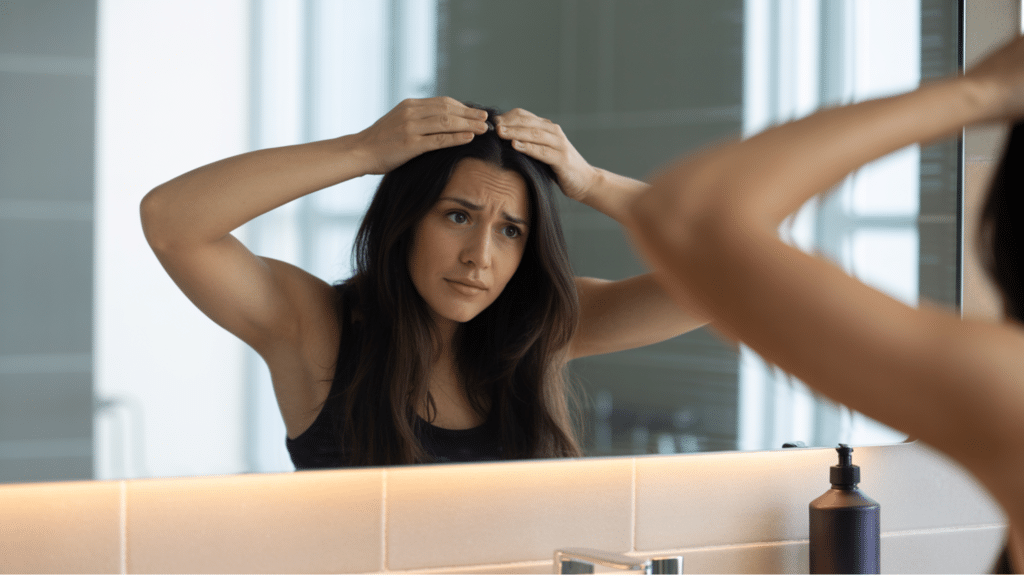

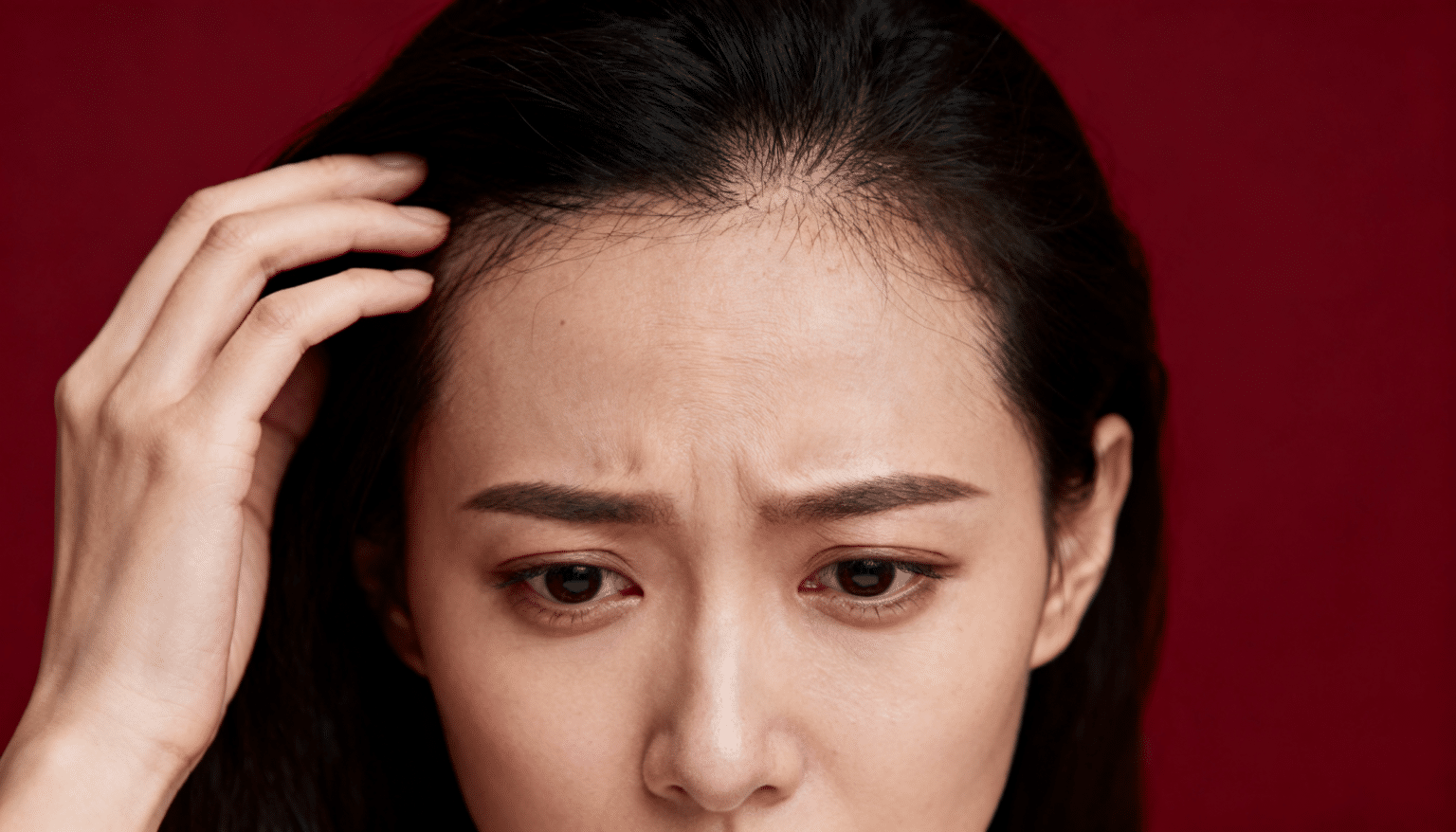
Losing hair on your scalp while growing it everywhere else?
If you have PCOS, this frustrating contradiction isn’t in your head; it’s hormonal.
The same imbalance that causes unwanted facial and body hair is also thinning your scalp. For millions of women living with this, hair loss undermines their confidence daily.
But knowing the connection is your first step toward reclaiming your hair.
Let’s find out why PCOS causes hair loss and what you can actually do about it.
What is PCOS and its Hormonal Effects?
PCOS stands for polycystic ovary syndrome. It’s a common condition that affects how a woman’s ovaries work.
The main issue involves hormonal imbalance. Women with PCOS often produce too much androgen. Androgens are male hormones that all women have in small amounts.
When androgen levels get too high, problems start. The ovaries may develop small cysts.
Periods become irregular or stop completely. Insulin resistance often occurs alongside PCOS. This means the body struggles to use insulin properly.
High insulin levels can worsen androgen production. This hormonal chaos affects many body functions. Hair growth patterns change as a direct result.
Decoding: Can PCOS Cause Hair Loss?
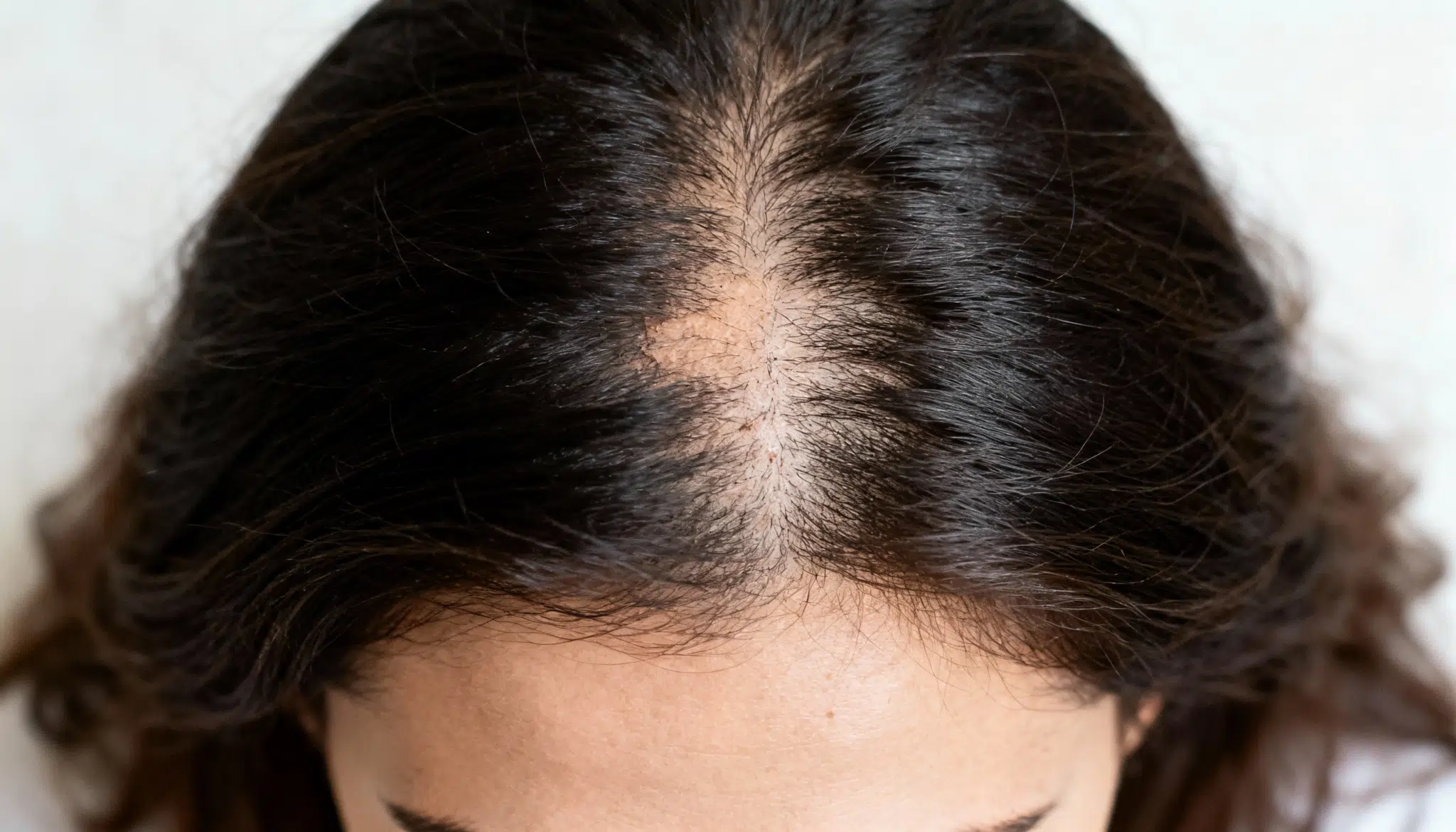
Yes, PCOS can cause hair loss, and high androgen levels are the main culprit.
These hormones shrink hair follicles on your scalp. Smaller follicles produce thinner, weaker hair. Eventually, they may stop producing hair altogether.
The medical term is androgenic alopecia.
Key points about PCOS-related hair loss:
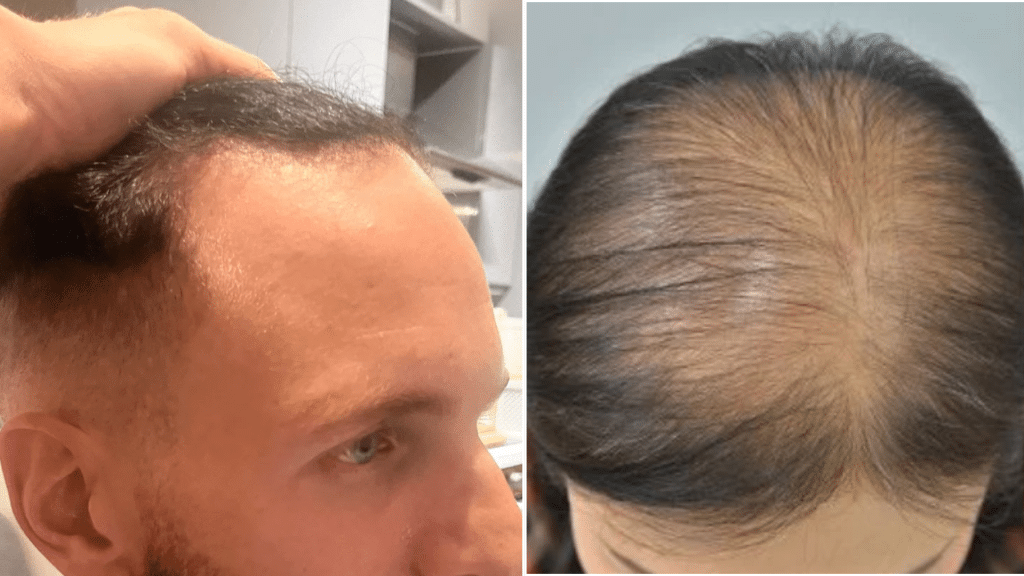
- Hair thins on the top and crown
- The hairline usually stays intact
- Not every woman with PCOS loses hair
PCOS creates a frustrating contradiction. Scalp hair falls out while facial and body hair grows thicker. The same androgens cause both problems in different areas of the body.
Signs of Hair Loss from PCOS
Women with PCOS may notice several changes in their hair. These signs often appear gradually.
Thinning at the crown
The top of the head loses volume, and parting lines look wider. Women notice this when they style their hair or take photos.
The crown area becomes noticeably sparse over time.
Visible scalp
More scalp shows through the hair, especially under bright lights or when wet.
Bathroom mirrors and camera flashes reveal areas that once looked full.
Slow hair growth
Hair takes longer to grow back, and new strands seem shorter and finer.
What used to grow quickly now barely changes length. The texture feels different and weaker than before.
Excess shedding
More hair collects in the brush or shower drain daily. Clumps appear on pillows and clothing.
The amount increases beyond what seems normal.
Thinner ponytails
Hair ties wrap around more, and ponytails look smaller.
The thickness decreases noticeably over months. What once felt heavy now feels light and thin.
Why Some Women With PCOS Lose Hair While Others Don’t
PCOS affects women differently, and hair loss is not universal among those diagnosed. The variation depends on several factors.
Androgen levels play a major role.
Women with higher testosterone levels are more likely to develop thinning hair. These hormones shrink hair follicles on the scalp.
Genetics also determines hair loss patterns.
Some women inherit sensitivity to androgens, while others have protective factors. Family history often indicates a higher risk.
Insulin resistance worsens symptoms.
High insulin levels trigger more androgen production, creating a cycle that accelerates hair loss.
Stress, poor diet, and lack of sleep worsen thinning. Women who manage their condition through healthy choices often experience milder symptoms.
PCOS Hair Loss vs. Other Types of Hair Loss
| Feature | PCOS Hair Loss | Androgenic Alopecia | Telogen Effluvium | Alopecia Areata | Thyroid Hair Loss |
|---|---|---|---|---|---|
| Cause | Excess androgens from PCOS | Genetic, DHT sensitivity | Stress, illness, childbirth | Autoimmune condition | Thyroid dysfunction |
| Pattern | Crown and top thinning | Receding hairline, crown | Overall scalp thinning | Round bald patches | Diffuse thinning |
| Other Symptoms | Irregular periods, acne, and excess facial hair | Usually none | Usually none | May affect eyebrows | Fatigue, weight changes |
| Reversibility | Partially with treatment | Difficult, can be slowed | Fully reversible | May regrow | Reversible with treatment |
| Treatment | Birth control, anti-androgens | Minoxidil, finasteride | Address trigger, time | Corticosteroids | Thyroid medication |
Diagnosis: How Doctors Confirm PCOS Hair Loss?
Doctors use several methods to diagnose PCOS-related hair loss and rule out other causes.
Medical History: Doctors ask about menstrual cycles, weight changes, family history of PCOS, and current medications.
Scalp Biopsy: Rarely needed, but can confirm androgenic alopecia. This examines hair follicles under a microscope to identify specific patterns of miniaturization associated with hormonal hair loss.
Physical Examination: They check for excess facial or body hair, acne, and examine the scalp for thinning patterns and hair density.
Blood Tests: These measure hormone levels, including testosterone, DHEA-S, and androstenedione. Doctors also check insulin levels, blood sugar, and thyroid function.
Pelvic Ultrasound: This checks for ovarian cysts. Multiple small cysts on the ovaries support a PCOS diagnosis, though not all women with PCOS have visible cysts.
Doctors use these findings together to confirm PCOS and determine if hair loss is hormone-related or caused by another condition.
Can Hair Loss from PCOS be Reversed?
The answer depends on timing and treatment. Early action makes a big difference.
Hair loss from PCOS can improve with proper care. Follicles caught early can bounce back and produce thicker strands. Treatment must address the root hormonal issues.
Fixing insulin resistance helps. Lowering androgen levels makes a real difference. Many women see their hair become fuller after starting treatment.
Complete reversal isn’t always possible. Follicles that have been dormant for years may never reactivate.
Dead follicles cannot be brought back to life.
Results vary from person to person. Hair may not return to its original thickness. But most women notice improvement once they treat their PCOS properly.
Timing matters most. Starting treatment when symptoms first appear gives the best chance for regrowth.
Treatment Options for PCOS Hair Loss

Multiple approaches can help women manage hair loss from PCOS. Combining different methods often brings the best results.
Medical Treatments
Doctors prescribe specific medications to tackle hormonal imbalances. These treatments work from the inside out.
- Metformin: This drug improves insulin sensitivity. Better insulin control reduces androgen production.
- Birth control pills: These regulate hormones and lower androgen levels. The right pill can significantly slow hair loss.
- Spironolactone: This medication blocks androgens from affecting hair follicles. It stops further thinning and may promote regrowth.
- Finasteride: This drug reduces DHT, the hormone that shrinks follicles. Doctors prescribe it less often for women.
Dermatologist-Recommended Therapies
Skin and hair specialists offer targeted treatments for the scalp itself. These methods focus on directly stimulating follicles.
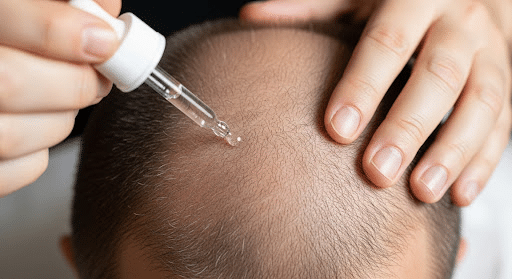
- Minoxidil: Applied to the scalp twice daily, minoxidil wakes up dormant follicles. Results appear after four to six months.
- Platelet-rich plasma therapy: Doctors inject concentrated platelets into the scalp. This stimulates hair follicles and improves blood flow.
- Low-level laser therapy: Special devices shine red light on the scalp. The light energizes follicles and promotes growth.
Super Food and Lifestyle Adjustments That Support Hair Growth
Eating right won’t fix PCOS overnight, but the right foods help your body fight back against hormonal imbalance.
Small daily choices add up to create an environment where hair can actually thrive again.
Protein-rich foods: Hair needs protein to grow strong. Include eggs, fish, chicken, and beans in daily meals.
A lack of protein weakens strands and significantly slows growth.
Omega-3 fatty acids: Found in salmon, walnuts, and flaxseeds. These healthy fats reduce inflammation and nourish hair follicles from within for better growth.
Iron-rich foods: Spinach, lentils, and red meat boost iron levels. Low iron worsens hair loss in women with PCOS.
Regular exercise: Physical activity improves insulin sensitivity and reduces androgen levels.
Aim for 30 minutes most days of the week for hormonal balance.
Special tip: Combine strength training with cardio for best results.
Stress management: High stress triggers more hair shedding.
Try yoga, meditation, or deep breathing exercises daily to keep cortisol levels down and protect your hair.
Final Thoughts
Can PCOS cause hair loss? Yes, understanding this connection helps women take control.
The key lies in staying consistent with whatever approach works best for you. Regular checkups ensure treatments remain effective as the body changes.
Progress isn’t always linear. Some months bring more improvement than others.
What matters most is not giving up on hair health.
Schedule an appointment with a healthcare provider to discuss personalized options. You’ve got this!