
And when you’re buying paint, check the label, and it says: it covers up to 400 sq ft per gallon.
But how accurate is that? How much does a gallon of paint cover?
A gallon of paint covers 350-400 square feet on a smooth, previously painted wall with one coat.
But when you switch to a rough texture, bare drywall, or a dramatic color change, that same gallon might stretch to 250 sq ft or less.
Let me save you from this chaotic situation. Now, follow along.
How Much Does a Gallon of Paint Cover? Quick Overview
One gallon of paint covers 350-400 square feet under ideal conditions, such as smooth, clean walls that have already been painted.
That’s approximately a standard 10×10 room with one coat, minus the doors and windows.
But not all rooms are the same, and some might even need a second coat, a textured wall, or a raw drywall, which can take your coverage down to 250–300 square feet per gallon, sometimes less.
- Smooth walls, 1 coat: 350–400 sq ft
- Textured walls or 2 coats: 250–300 sq ft
- Bare/unprimed surfaces: 200–250 sq ft
What Really Affects Your Paint Coverage?
That 400 sq ft number you see on the can labels is measured in a lab under perfect, smooth surfaces and controlled conditions.
But in reality, certain factors affect how much paint is actually needed.
1. Surface Texture
Smooth, previously painted walls absorb paint evenly, giving you the best coverage.
Whereas rough or textured surfaces, like orange peel, knockdown, or brick, have more surface area than they appear, so paint sinks into every ridge and groove.
A heavily textured wall can consume up to 20-30% more paint than a flat one.
If your walls have texture, then subtract 50-75 sq ft from that gallon estimate before you start.
2. Surface Porosity (New or Bare Walls)
Fresh drywall, bare wood, and unprimed plaster are thirsty surfaces, which means they soak up the first coat like a sponge.
This is one of the most common reasons people run short on paint.
Always prime bare surfaces first. A coat of primer seals the surface and can save you an entire extra gallon of paint.
Also, know that it depends on the paint brand, as well.
3. Color Change
Painting a deep navy over a pale grey? That’s at least two coats, or possibly three.
Going from a dark wall to a light one and without a tinted primer? It could take three to four coats before the old color stops bleeding through.
If you’re making a big color change, ask the paint store to tint your primer to match your topcoat color.
4. Paint Quality and Sheen
Cheaper paints tend to have lower pigment density, meaning less coverage per coat.
Higher-quality paints, while pricier, often cover in one solid coat, whereas budget options require two.
Sheen matters too, flat and matte finishes hide imperfections and spread further, while gloss and semi-gloss are thinner in consistency and may need an extra coat.
5. Application Method
A roller gives you the most consistent, efficient coverage.
Whereas a brush uses more paint per square foot due to uneven pressure and stroke overlap.
And sprayers, while fast, waste a significant amount of paint through overspray, sometimes 20-30% depending on technique and wind conditions.
If you’re spraying indoors, always buy 15–20% extra paint to account for that loss.
Does Primer Count as a Coat?
Yes and no.
Okay so, primer isn’t paint, but it doesn’t add color or sheen, but it absolutely counts as a layer that affects how many topcoats you’ll need.
A properly primed surface almost always means one fewer coat of actual paint.
You need a primer when:
- Painting over bare drywall, wood, or plaster.
- Covering stains, markers, or water damage.
- Making a color change in either direction.
- Painting over glossy surfaces that need adhesion help.
- Working with deep colors that need a grey or tinted base.
Skipping primer to save time almost always costs you more paint, more coats, and more time in the end.
How to Calculate Paint Coverage? A Step-by-Step Overview
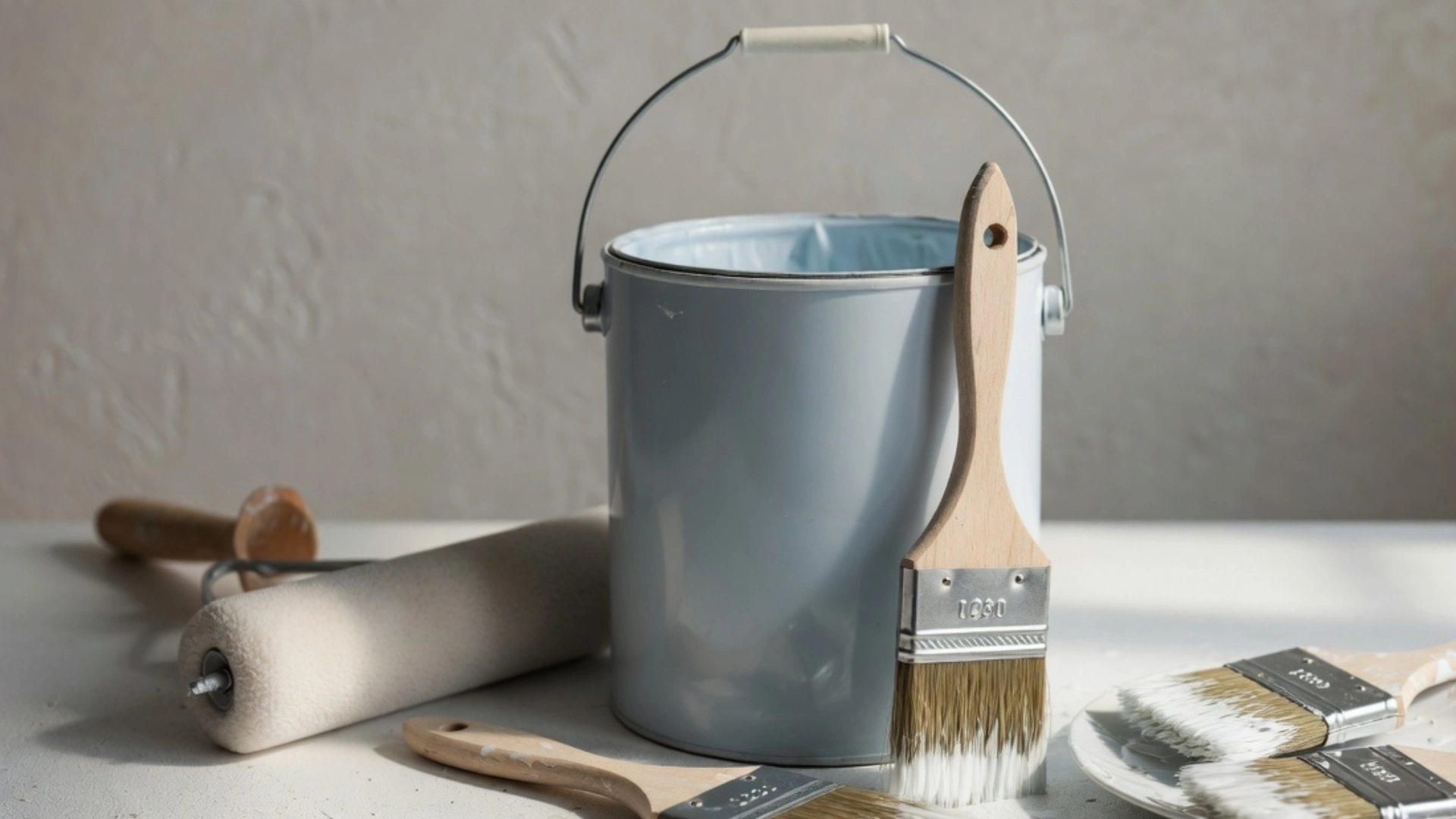
“I’ll just grab two cans and see” approach has to end.
Getting your paint quantity right before you buy saves you money and reduces the need for extra store trips.
Step 1: Measure Your Wall Area
Grab a tape measure and note the width of each wall in your room. Then multiply each wall’s width by the ceiling height to get its square footage.
Then add all walls together for your total paintable area.
Example:
A 12×14 ft room with 9 ft ceilings:
- Two 12 ft walls: 12 × 9 = 108 sq ft × 2 = 216 sq ft
- Two 14 ft walls: 14 × 9 = 126 sq ft × 2 = 252 sq ft
So, Total wall area = 468 sq ft
If your room isn’t a perfect rectangle, break it into smaller rectangles, calculate each section separately, and add them together.
Step 2: Subtract Doors and Windows
Subtract your doors and windows, as it gives you a much more accurate number and often saves you from buying an unnecessary extra gallon.
Use these standard estimates if you don’t want to measure each one individually:
- Standard interior door: ~20 sq ft
- Average window: ~15 sq ft
- Large or double window: ~25–30 sq ft
- Sliding glass door: ~40 sq ft
For example: 468 sq ft – 1 door (20 sq ft) – 2 windows (30 sq ft) = 418 sq ft
Step 3: Account for Coats
One coat rarely covers completely, and especially over a color change, on fresh drywall, or with a lower-sheen paint.
Be honest with yourself about how many coats your project needs, and don’t be a miser.
Multiply your adjusted square footage by the number of coats:
- 1 coat: 418 sq ft
- 2 coats: 418 × 2 = 836 sq ft
- 3 coats: 418 × 3 = 1,254 sq ft
If you’re unsure whether you’ll need two or three coats, always calculate for three. You can stop at two if the coverage is solid.
Step 4: Divide by Coverage Rate
In real-world conditions with normal walls, 350 sq ft per gallon is a reliable number.
It accounts for slight texture, normal roller absorption, and the inevitable imperfections of an actual room.
Continuing the example: 836 ÷ 350 =2.38 gallons. Round that up to 3 gallons.
Always round up to the nearest whole gallon, never down.
The cost difference between 2 and 3 gallons is far less painful than stopping mid-wall because you ran out.
For heavily textured walls, drop your coverage rate further to275–300 sq ft per gallon to stay safe.
Step 5: Add a 10% Buffer
Even with perfect measurements, real painting projects have variables, like a roller that soaks up more than expected, a small spill, or touch-ups six months later when you nick a wall moving furniture.
A 10% buffer covers all of that without affecting your budget.
Final calculation: 3 gallons + 10% (0.3 gallons) = 3.3 gallons (buy 4 gallons)
If your paint comes in quart sizes, too, this is where buying 3 gallons + 1 quart makes more sense than a full 4th gallon.
How Many Coats of Paint do You Need?
Two coats are never the answer.
Grab the brush, roll it twice, and done. But it depends on what’s already on your walls, what your color change is, and what kind of paint you’re working with.
When You Should go for One Coat
One coat works, but the conditions should be kept in mind, such as a smooth, clean, previously painted wall, a same-color or very similar color refresh, and a high-quality paint with a solid pigment density.
Where one coat genuinely holds up:
- Same color repaint on walls in good condition.
- High-hide or self-priming paints on already-sealed surfaces.
- Accent walls are being refreshed with the same or a similar shade.
- Ceilings are being repainted in the same white or off-white.
Even then, do a quick check once the first coat dries completely.
When You Should go for Two Coats
Two coats are the baseline for virtually every normal painting project, and for good reason.
The first coat establishes the base and seals the surface. The second coat evens out the sheen, fills in any thin spots, and gives you that finished look.
Plan for two coats when:
- You’re making a moderate color change.
- Painting new construction walls that have been primed.
- Using standard or mid-range paints that aren’t labeled high-hide.
- Working on ceilings with any staining, even after a primed base.
- Painting trim, doors, or cabinets where the finish quality really shows.
Between coats, let the paint dry fully, not just to the touch, but fully cured. Most paints need at least 2–4 hours between coats.
And Three Coats
I know that sounds a lot until you’re on coat two and the old color is still showing.
You need three coats when:
- Going from a dark, saturated color to a light one.
- Painting over water stains, smoke damage, or nicotine-yellowed walls.
- Coveringbright or vivid colors.
- Working on bare, unprimed drywall that wasn’t properly sealed first.
- Using low-quality or heavily thinned paint that has poor hiding power.
Once your final coat is fully dry, walk the room with a portable LED work light held at a low angle to the wall. This side lighting reveals thin spots, roller marks, and an uneven sheen.
How Much Does a Gallon of Paint Cover – Smaller Project Edition
For smaller projects, a single accent wall, a bathroom, trim, or a piece of furniture, a full gallon is usually more.
Measure your surface area the same way (width × height), subtract any openings, and divide by 350.
Most accent walls and small bathrooms are well under 200 sq ft, so a quart of paint covers them comfortably in one coat.
And if you need two coats? Then grab two quarts, still cheaper than a gallon you won’t finish.
How to Calculate the Amount of Paint Needed for the Exteriors?
Exterior projects need more paint.
The rough siding, wood grain, and weathered surfaces take up the coverage fast.
Measure each wall’s width × height, add them together, then subtract large openings like garage doors and windows.
Divide by 300 sq ft per gallon instead of 350, outdoor surfaces are rarely smooth enough to justify the higher number.
Add a solid 15% buffer on top. Exterior paint is expensive; running short mid-project is worse.
Final Thoughts
Finding out how much does a gallon of paint cover, isn’t complicated, but it does need a little brain.
A gallon covers 350-400 sq ft under ideal conditions, and real walls are rarely ideal.
Surface texture, color change, porosity, application method, and every one of these chips away everything, even before you’ve opened the can.
Stick to planning, measure accurately, multiply by the number of coats, divide by a realistic coverage rate, and add a buffer.
In the comments, share your experiences. We’d love to hear them.
Frequently Asked Questions (FAQs)
1. How Much Paint is Needed for a 12×12 Room?
A 12×12 room with 9 ft ceilings has roughly 400 sq ft of wall space. Subtract doors and windows, and two gallons cover it comfortably for two coats.
2. What Colors Help Sell a House Faster?
Neutral tones, like soft whites, warm greys, and greige, are the best.
3. What is the Hardest Color to Paint Over?
Red is the hardest. Its pigment bleeds through layers, often requiring a stain-blocking primer and three topcoats before it stops affecting the new color.
4. Do Professional Painters Spray or Roll Walls?
Most professionals roll interior walls for better control and less waste. Sprayers are reserved for large open spaces, cabinets, or exteriors.